Kirjojen hintavertailu. Mukana 11 241 044 kirjaa ja 12 kauppaa.

Kirjahaku

Etsi kirjoja tekijän nimen, kirjan nimen tai ISBN:n perusteella.

3 kirjaa tekijältä Simone C. Drake

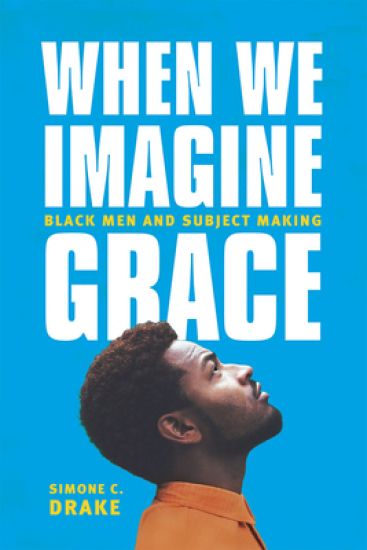
When We Imagine Grace

When We Imagine Grace

Simone C. Drake

University of Chicago Press
2016
sidottu
Simone C. Drake spent the first several decades of her life learning how to love and protect herself, a black woman, from the systems designed to facilitate her harm and marginalization. But when she gave birth to the first of her three sons, she quickly learned that black boys would need protection from these very same systems systems dead set on the static, homogenous representations of black masculinity perpetuated in the media and our cultural discourse. In When We Imagine Grace, Drake borrows from Toni Morrison's Beloved to bring imagination to the center of black masculinity studies allowing individual black men to exempt themselves and their fates from a hateful, ignorant society and open themselves up as active agents at the center of their own stories. Against a backdrop of crisis, Drake brings forth the narratives of black men who have imagined grace for themselves. We meet African American cowboy, Nat Love, and Drake's own grandfather, who served in the first black military unit to fight in World War II. Synthesizing black feminist and black masculinity studies, Drake analyzes black fathers and daughters, the valorization of black criminals, the denigration and celebration of gay men, Cornelius Eady, Antoine Dodson, and Kehinde Wiley. With a powerful command of its subjects and a passionate dedication to hope, When We Imagine Grace gives us a new way of seeing and knowing black masculinity sophisticated in concept and bracingly vivid in telling.
When We Imagine Grace

When We Imagine Grace

Simone C. Drake

University of Chicago Press
2016
nidottu
Simone C. Drake spent the first several decades of her life learning how to love and protect herself, a black woman, from the systems designed to facilitate her harm and marginalization. But when she gave birth to the first of her three sons, she quickly learned that black boys would need protection from these very same systems systems dead set on the static, homogenous representations of black masculinity perpetuated in the media and our cultural discourse. In When We Imagine Grace, Drake borrows from Toni Morrison's Beloved to bring imagination to the center of black masculinity studies allowing individual black men to exempt themselves and their fates from a hateful, ignorant society and open themselves up as active agents at the center of their own stories. Against a backdrop of crisis, Drake brings forth the narratives of black men who have imagined grace for themselves. We meet African American cowboy, Nat Love, and Drake's own grandfather, who served in the first black military unit to fight in World War II. Synthesizing black feminist and black masculinity studies, Drake analyzes black fathers and daughters, the valorization of black criminals, the denigration and celebration of gay men, Cornelius Eady, Antoine Dodson, and Kehinde Wiley. With a powerful command of its subjects and a passionate dedication to hope, When We Imagine Grace gives us a new way of seeing and knowing black masculinity sophisticated in concept and bracingly vivid in telling.
Critical Appropriations

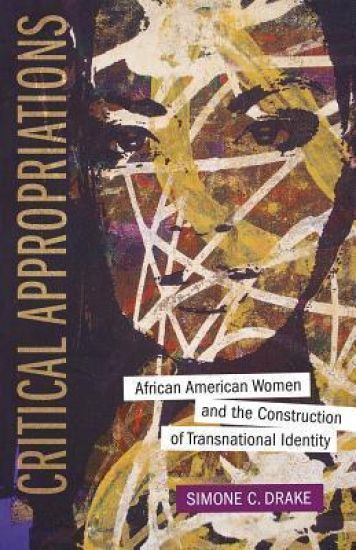
Critical Appropriations

Simone C. Drake

Louisiana State University Press
2014
sidottu
From the novels of Toni Morrison to the music of Beyoncé Knowles, the cultural prevalence of a transnational black identity, as created by African American women, is more than a product of geographic mobility. Rather, as author Simone C. Drake shows, these constructions illuminate our understanding of a chronically marginalized demographic. In Critical Appropriations, Drake contends that these fluid and hetero-geneous characterizations of black females arise from multiple creative outlets - literature, film, and music videos - and reflect African Ameri-can women's evolving concept of home, community, gender, and family.Through a close examination of Toni Morrison's Paradise, Danzy Senna's Caucasia, Gayl Jones's Corregidora, Erna Brodber's Louisiana, and Kasi Lemmons's film Eve's Bayou, as well as Beyoncé Knowles's B-Day album and music-video collaboration with Shakira, ""Beautiful Liar,"" Drake reveals how concepts of hybridity - whether positioned as créolité, Candomblé, négritude, Latinidad, or Brasilidade - are appropriated in each work of art as a way of challenging the homogeneous paradigm of black cultural studies. This redefined notion of identity enables African American women to embrace a more complex, transnational blackness that is not only more liberating but also more pertinent to their experiences. Drawing from this borderless exchange of ideas and a richer concept of self, Critical Appropriations offers a rewarding reconsideration of the creative implications for African American women, mapping new directions in black women's studies.