Kirjojen hintavertailu. Mukana 11 234 096 kirjaa ja 12 kauppaa.

Kirjahaku

Etsi kirjoja tekijän nimen, kirjan nimen tai ISBN:n perusteella.

99 kirjaa tekijältä Simone Weil

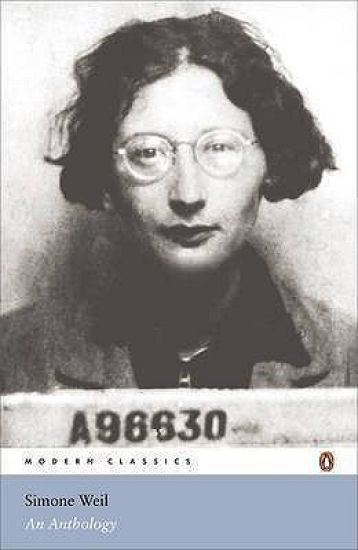
Simone Weil: An Anthology

Simone Weil: An Anthology

Simone Weil

Penguin Classics
2005
pokkari
Simone Weil was one of the foremost thinkers of the twentieth century: a philosopher, theologian, critic, sociologist and political activist. This anthology spans the wide range of her thought, and includes an extract from her best-known work 'The Need for Roots', exploring the ways in which modern society fails the human soul; her thoughts on the misuse of language by those in power; and the essay 'Human Personality', a late, beautiful reflection on the rights and responsibilities of every individual. All are marked by the unique combination of literary eloquence and moral perspicacity that characterised Weil's ideas and inspired a generation of thinkers and writers both in and outside her native France.
Simone Weil

Simone Weil

Simone Weil

University of Notre Dame Press
2015
nidottu
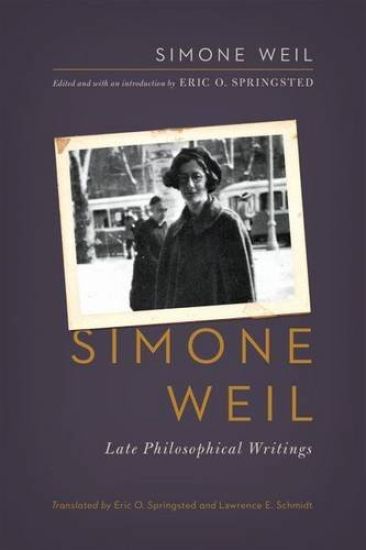
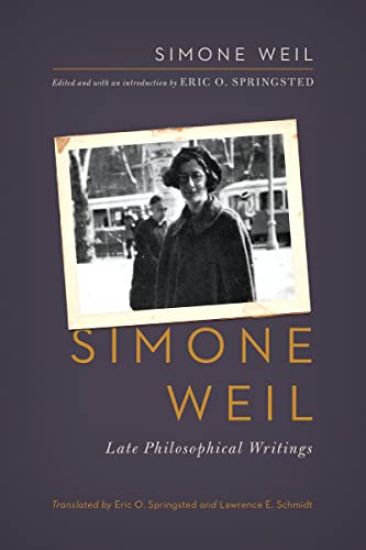
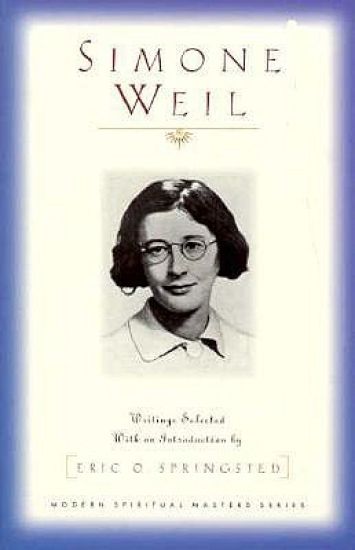
Although trained as a philosopher, Simone Weil (1909–43) contributed to a wide range of subjects, resulting in a rich field of interdisciplinary Weil studies. Yet those coming to her work from such disciplines as sociology, history, political science, religious studies, French studies, and women's studies are often ignorant of or baffled by her philosophical investigations. In Simone Weil: Late Philosophical Writings, Eric O. Springsted presents a unique collection of Weil's writings, one concentrating on her explicitly philosophical thinking. The essays are drawn chiefly from the time Weil spent in Marseille in 1940-42, as well as one written from London; most have been out of print for some time; three appear for the first time; all are newly translated. Beyond making important texts available, this selection provides the context for understanding Weil's thought as a whole. This volume is important not only for those with a general interest in Weil; it also specifically presents Weil as a philosopher, chiefly one interested in questions of the nature of value, moral thought, and the relation of faith and reason. What also appears through this judicious selection is an important confirmation that on many issues respecting the nature of philosophy, Weil, Wittgenstein, and Kierkegaard shared a great deal.
Simone Weil

Simone Weil

Simone Weil

UNIVERSITY OF NOTRE DAME PRESS
2024
sidottu
Although trained as a philosopher, Simone Weil (1909–43) contributed to a wide range of subjects, resulting in a rich field of interdisciplinary Weil studies. Yet those coming to her work from such disciplines as sociology, history, political science, religious studies, French studies, and women's studies are often ignorant of or baffled by her philosophical investigations. In Simone Weil: Late Philosophical Writings, Eric O. Springsted presents a unique collection of Weil's writings, one concentrating on her explicitly philosophical thinking. The essays are drawn chiefly from the time Weil spent in Marseille in 1940-42, as well as one written from London; most have been out of print for some time; three appear for the first time; all are newly translated. Beyond making important texts available, this selection provides the context for understanding Weil's thought as a whole. This volume is important not only for those with a general interest in Weil; it also specifically presents Weil as a philosopher, chiefly one interested in questions of the nature of value, moral thought, and the relation of faith and reason. What also appears through this judicious selection is an important confirmation that on many issues respecting the nature of philosophy, Weil, Wittgenstein, and Kierkegaard shared a great deal.
The Notebooks of Simone Weil

The Notebooks of Simone Weil

Simone Weil

Routledge
2003
sidottu
Simone Weil (1909-1943) was a defining figure of the twentieth century; a philosopher, Christian, resistance fighter, anarchist, feminist, Labour activist and teacher. She was described by T. S. Eliot as 'a woman of genius, of a kind of genius akin to that of the saints', and by Albert Camus as 'the only great spirit of our time'. Originally published posthumously in two volumes, these newly reissued notebooks, are among the very few unedited personal writings of Weil's that still survive today. Containing her thoughts on art, love, science, God and the meaning of life, they give context and meaning to Weil's famous works, revealing an unique philosophy in development and offering a rare private glimpse of her singular personality.
Simone Weil on Colonialism

Simone Weil on Colonialism

Simone Weil

Rowman Littlefield Publishers
2003
nidottu
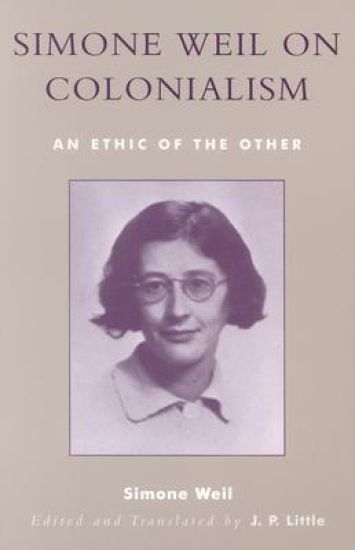
In 1931, Simone Weil read an article by Louis Roubaud in the Petit Parisien that exposed the Yen Bay massacre in Indochina. That article opened Weil's eyes, and from then until her death in exile in 1943, she cared most deeply about the French colonial situation. Weil refused to accept the contradiction between the image of France as champion of the rights of man and the reality of France's exploitation and oppression of the peoples in its territories. Weil wrote thirteen articles or letters about the situation, writings originally published in French journals or in French collections of her work. J. P. Little's fluid and clear translations finally introduce to English-speaking scholars and students this important element of Weil's political consciousness.
Simone Weil: Basic Writings

Simone Weil: Basic Writings

Simone Weil

TAYLOR FRANCIS LTD
2023
nidottu
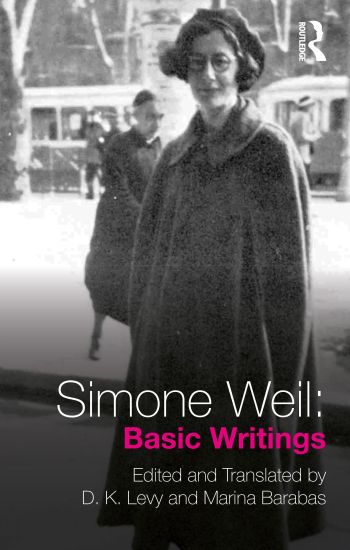
Simone Weil is one of the most profound and thought-provoking thinkers of the 20th century. A teacher, factory and farm labourer, a political activist at home and abroad, a loving friend, daughter and sister—all these manifest a life devoted to the good in its many forms. Her writings explore the good open to us and the various routes to it, spanning philosophy, politics, science and spirituality. While she saw her vocation primarily as a philosopher—examining questions concerning human faculties, action and thought, the limits of language and our need of mediation, suffering and beauty for contact with reality—her startlingly original thought is often obscured by her having been too readily categorized as a Christian mystic.Simone Weil: Basic Writings is an expertly edited anthology of Weil’s most important writings, presenting her philosophy as it relates to the architecture of human nature, politics, work, necessity, beauty, goodness and God. Working from the definitive French edition of Weil’s complete writings, D. K. Levy and Marina Barabas have translated the essays anew or for the first time, adding important notes and references absent from existing English language editions of Weil’s work.Following an extensive introduction that gives an overview of Weil's life and thought, each part opens with a short preface situating the selected essays within Weil’s oeuvre.Simone Weil: Basic Writings provides an excellent entry point to Weil’s philosophy, as well as a reference for students and scholars of Weil's thought in philosophy and related disciplines.
Simone Weil: Basic Writings

Simone Weil: Basic Writings

Simone Weil

TAYLOR FRANCIS LTD
2023
sidottu
Simone Weil is one of the most profound and thought-provoking thinkers of the 20th century. A teacher, factory and farm labourer, a political activist at home and abroad, a loving friend, daughter and sister—all these manifest a life devoted to the good in its many forms. Her writings explore the good open to us and the various routes to it, spanning philosophy, politics, science and spirituality. While she saw her vocation primarily as a philosopher—examining questions concerning human faculties, action and thought, the limits of language and our need of mediation, suffering and beauty for contact with reality—her startlingly original thought is often obscured by her having been too readily categorized as a Christian mystic.Simone Weil: Basic Writings is an expertly edited anthology of Weil’s most important writings, presenting her philosophy as it relates to the architecture of human nature, politics, work, necessity, beauty, goodness and God. Working from the definitive French edition of Weil’s complete writings, D. K. Levy and Marina Barabas have translated the essays anew or for the first time, adding important notes and references absent from existing English language editions of Weil’s work.Following an extensive introduction that gives an overview of Weil's life and thought, each part opens with a short preface situating the selected essays within Weil’s oeuvre.Simone Weil: Basic Writings provides an excellent entry point to Weil’s philosophy, as well as a reference for students and scholars of Weil's thought in philosophy and related disciplines.
Sannhet for enhver pris; Simone Weils politiske filosofi
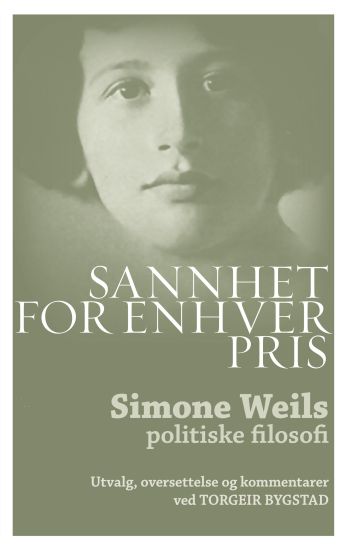
Finnes det en troverdig fremgangsmåte for å kjenne rettferdigheten? Er det mulig å tale om sannhet i etiske spørsmål? Og har etikk og rettferdighet egentlig noe med politikkens maktspill å gjøre? Den franske filosofen Simone Weil svarer bekreftende på disse spørsmålene. At sannhet og rettferdighet eksisterer i ordenes mest opphøyede betydning, er ifølge henne selve grunnlaget for politikken. Og Weil legger stor vekt på å gi rettferdigheten et konkret uttrykk i begrepet forpliktelse. Noe av det mest tankevekkende i Weils filosofi er at hun tar til orde for en korrigering av den europeiske menneskerettighetstenkningen; det vi har oversett helt siden 1700-tallet, er at det ikke er våre rettigheter som er det mest grunnleggende, men vår forpliktelse overfor medmennesket. Simone Weil er en av 1900-tallets mest betydelige politiske tenkere. I Frankrike er det en fornyet interesse for henne. Mange ser på Simone Weil som en alliert i vår tids idékamper. Denne boken gir et nært og fyndig møte med kvinnen som nobelprisvinner Albert Camus kalte «den eneste store ånd i vår tid». «En viktig bok, velskrevet og intelligent.» Nils Heyerdahl, idéhistoriker og tidligere sjef for Radioteatret, NRK.
Simone Weil

Simone Weil

Simone Weil

Orbis Books (USA)
1998
nidottu
Simone Weil was a French philosopher, activist, and mystic who repeatedly sought to enter into the world of the workers and the poor. Though her mystical experiences brought her to the threshold of the Church, she chose not to enter. Yet many consider her one of the most significant religious witnesses of our time. In this short book Stephen Plant explores her life and the paradoxes of her work from a sympathetic, but not uncritical perspective. Her value lies not simply in the content of her thought but, as she would say, in "the amount of illumination thrown upon the things of this world."
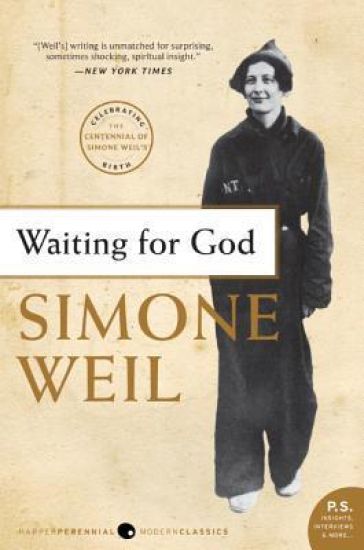
Waiting for God

Waiting for God

Simone Weil

HARPER PERENNIAL
2009
nidottu
Emerging from the thought-provoking discussions and correspondence Simone Weil had with the Reverend Father Perrin, this classic collection of essays contains the renowned philosopher and social activist's most profound meditations on the relationship of human life to the realm of the transcendent. An enduring masterwork and "one of the most neglected resources of our century" (Adrienne Rich), Waiting for God will continue to influence spiritual and political thought for centuries to come.
The Need for Roots

The Need for Roots

Simone Weil

Penguin Classics
2023
pokkari
A new translation of Simone Weil's best-known work: a political, philosophical and spiritual treatise on what human life could beWhat do humans require to be truly nourished? Simone Weil, one of the foremost philosophers of the last century, envisaged us all as being bound by unconditional, eternal obligations towards every other human being. In The Need for Roots, her most famous work, she argued that our greatest need was to be rooted: in a community, a place, a shared past and collective future hopes. Written for the Free French movement while she was exiled in London during the Second World War, Weil's visionary combination of philosophy, politics and mysticism is her answer to the question of what life without occupation - and oppression - might be.'The patron saint of all outsiders' Andre Gide'The only great spirit of our time' Albert Camus Translated by Ros Schwartz, with an introduction by Kate Kirkpatrick.
The Power of Words

The Power of Words

Simone Weil

Penguin Classics
2020
nidottu
'There are certain words which possess, in themselves, when properly used, a virtue which illumines and lifts up towards the good'The philosopher and activist Simone Weil was one of the most courageous thinkers of the twentieth century. Here she writes, with honesty and moral clarity, about the manipulation of language by the powerful, the obligations of individuals to one another and the needs - for order, equality, liberty and truth - that make us human.One of twenty new books in the bestselling Penguin Great Ideas series. This new selection showcases a diverse list of thinkers who have helped shape our world today, from anarchists to stoics, feminists to prophets, satirists to Zen Buddhists.
Waiting for God

Waiting for God

Simone Weil

Routledge
2021
nidottu
'You cannot get far in these essays without sensing yourself in the presence of a writer of immense intellectual power and fierce independence of mind.' - Janet Soskice, from the Introduction to the Routledge Classics editionSimone Weil (1909–1943) is one of the most brilliant and unorthodox religious and philosophical thinkers of the twentieth century. She was also a political activist who worked in the Renault car factory in France in the 1930s and fought briefly as an anarchist in the Spanish Civil War. Hailed by Albert Camus as 'the only great spirit of our times,' her work spans an astonishing variety of subjects, from ancient Greek philosophy and Christianity to oppression, political freedom and French national identity. Waiting for God is one of her most remarkable books, full of piercing spiritual and moral insight. The first part comprises letters she wrote in 1942 to Jean-Marie Perrin, a Dominican priest, and demonstrate the intense inner conflict Weil experienced as she wrestled with the demands of Christian belief and commitment. She then explores the 'just balance' of the world, arguing that we should regard God as providing two forms of guidance: our ability as human beings to think for ourselves; and our need for both physical and emotional 'matter.' She also argues for the concept of a 'sacred longing'; that humanity's search for beauty, both in the world and within each other, is driven by our underlying desire for a tangible god. Eloquent and inspiring, Waiting for God asks profound questions about the nature of faith, doubt and morality that continue to resonate today.This Routledge Classics edition includes a new Introduction by Janet Soskice and retains the Foreword to the 1979 edition by Malcolm Muggeridge.
Waiting for God

Waiting for God

Simone Weil

Routledge
2021
sidottu
'You cannot get far in these essays without sensing yourself in the presence of a writer of immense intellectual power and fierce independence of mind.' - Janet Soskice, from the Introduction to the Routledge Classics editionSimone Weil (1909–1943) is one of the most brilliant and unorthodox religious and philosophical thinkers of the twentieth century. She was also a political activist who worked in the Renault car factory in France in the 1930s and fought briefly as an anarchist in the Spanish Civil War. Hailed by Albert Camus as 'the only great spirit of our times,' her work spans an astonishing variety of subjects, from ancient Greek philosophy and Christianity to oppression, political freedom and French national identity. Waiting for God is one of her most remarkable books, full of piercing spiritual and moral insight. The first part comprises letters she wrote in 1942 to Jean-Marie Perrin, a Dominican priest, and demonstrate the intense inner conflict Weil experienced as she wrestled with the demands of Christian belief and commitment. She then explores the 'just balance' of the world, arguing that we should regard God as providing two forms of guidance: our ability as human beings to think for ourselves; and our need for both physical and emotional 'matter.' She also argues for the concept of a 'sacred longing'; that humanity's search for beauty, both in the world and within each other, is driven by our underlying desire for a tangible god. Eloquent and inspiring, Waiting for God asks profound questions about the nature of faith, doubt and morality that continue to resonate today.This Routledge Classics edition includes a new Introduction by Janet Soskice and retains the Foreword to the 1979 edition by Malcolm Muggeridge.
Oppression and Liberty

Oppression and Liberty

Simone Weil

Routledge
2001
nidottu
The remarkable French thinker Simone Weil is one of the leading intellectual and spiritual figures of the twentieth century. A legendary essayist, political philosopher and member of the French resistance, her literary output belied her tragically short life. Most of her work was published posthumously, to widespread acclaim. Always concerned with the nature of individual freedom, Weil explores in Oppression and Liberty its political and social implications. Analyzing the causes of oppression, its mechanisms and forms, she questions revolutionary responses and presents a prophetic view of a way forward. If, as she noted elsewhere, 'the future is made of the same stuff as the present', then there will always be a need to continue to listen to Simone Weil.
Letter to a Priest

Letter to a Priest

Simone Weil

TAYLOR FRANCIS LTD
2002
sidottu
Letter to a Priest encapsulates the sharp wit and questioning nature of Simone Weil. Regarded by Susan Sontag as 'one of the most uncompromising and troubling witnesses to the modern travail of the spirit', Weil grips the moral imagination as few others before or since. She was only thirty four when she died in 1943, yet despite her short life she left behind an incredible body of literature. Letter to a Priest, addressed to Father Joseph-Marie Perrin, a Catholic priest who Weil met in Marseilles, is one of her most powerful pieces. Written at a time when those who knew her considered her to be 'like a soul in torment whose thinking had all the signs of a deep inner conflict', it contains thirty five powerful expressions of opinion on matters concerning Catholic faith, dogma and institutions. Vehement and controversial, yet eloquent and moving, it is essential reading for anyone who has questions about faith and belief.
Letter to a Priest

Letter to a Priest

Simone Weil

Routledge
2002
nidottu
Letter to a Priest encapsulates the sharp wit and questioning nature of Simone Weil. Regarded by Susan Sontag as 'one of the most uncompromising and troubling witnesses to the modern travail of the spirit', Weil grips the moral imagination as few others before or since. She was only thirty four when she died in 1943, yet despite her short life she left behind an incredible body of literature. Letter to a Priest, addressed to Father Joseph-Marie Perrin, a Catholic priest who Weil met in Marseilles, is one of her most powerful pieces. Written at a time when those who knew her considered her to be 'like a soul in torment whose thinking had all the signs of a deep inner conflict', it contains thirty five powerful expressions of opinion on matters concerning Catholic faith, dogma and institutions. Vehement and controversial, yet eloquent and moving, it is essential reading for anyone who has questions about faith and belief.
The Need for Roots

The Need for Roots

Simone Weil

Routledge
2001
sidottu
Hailed by Andre Gide as the patron saint of all outsiders, Simone Weil's short life was ample testimony to her beliefs. In 1942 she fled France along with her family, going firstly to America. She then moved back to London in order to work with de Gaulle. Published posthumously The Need for Roots was a direct result of this collaboration. Its purpose was to help rebuild France after the war. In this, her most famous book, Weil reflects on the importance of religious and political social structures in the life of the individual. She wrote that one of the basic obligations we have as human beings is to not let another suffer from hunger. Equally as important, however, is our duty towards our community: we may have declared various human rights, but we have overlooked the obligations and this has left us self-righteous and rootless. She could easily have been issuing a direct warning to us today, the citizens of Century 21.
The Need for Roots

The Need for Roots

Simone Weil

Routledge
2001
nidottu
Hailed by Andre Gide as the patron saint of all outsiders, Simone Weil's short life was ample testimony to her beliefs. In 1942 she fled France along with her family, going firstly to America. She then moved back to London in order to work with de Gaulle. Published posthumously The Need for Roots was a direct result of this collaboration. Its purpose was to help rebuild France after the war. In this, her most famous book, Weil reflects on the importance of religious and political social structures in the life of the individual. She wrote that one of the basic obligations we have as human beings is to not let another suffer from hunger. Equally as important, however, is our duty towards our community: we may have declared various human rights, but we have overlooked the obligations and this has left us self-righteous and rootless. She could easily have been issuing a direct warning to us today, the citizens of Century 21.