Kirjojen hintavertailu. Mukana 11 244 527 kirjaa ja 12 kauppaa.

Kirjahaku

Etsi kirjoja tekijän nimen, kirjan nimen tai ISBN:n perusteella.

6 kirjaa tekijältä Simonetta Falasca-Zamponi

Fascism, the War, and Structures of Feeling in Italy, 1943-1945

Fascism, the War, and Structures of Feeling in Italy, 1943-1945

Simonetta Falasca-Zamponi

Oxford University Press
2023
sidottu
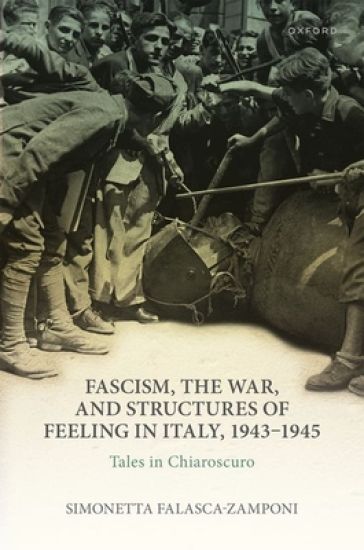
On July 25, 1943, news of Mussolini's resignation and subsequent arrest stunned Italians leaving them dumbfounded. After two decades, fascism had fallen without any advance warning. As festive events marked the incredible outcome and reminders of the past were destroyed, an uncontainable joy seemed to pervade Italians. But what did people actually celebrate? How did they understand the bygone dictatorship, which was soon to be reincarnated in the Italian Social Republic (RSI)? Drawing on more than one hundred diaries written by ordinary citizens (and some prominent figures as well) and inspired by Raymond Williams's concept of structures of feeling, the book examines Italians' perspectives on fascism at a very critical moment in their history. With the country mired in a devastating war further complicated by the September 8, 1943 armistice with the Allies and subsequent German occupation--followed by the eruption of an Italian-against-Italian conflict, the switching of alliances, and the declaration of war against Germany on October 13, 1943--the fast pace of history seemed to deflect Italians' attention from their immediate past. Amidst the daily experience of bombings, hunger, displacement, and death, coming to terms with twenty years of dictatorship turned out to be an arduous enterprise. Whether those who had lived under the fascist regime wished 'not to think of it and not to speak any more about it' as philosopher Benedetto Croce maintained, it is hard to ascertain. In truth, little is known of what Italians felt and thought about fascism after its precipitous demise. This book remedies the gap in historical scholarship by assessing how Italians confronted their present and negotiated their past during the two years from the fall of the regime to the definitive defeat of the RSI and the end of the world war in May 1945. By bringing to life the cultural imaginaries and practices of the past, the book raises ostensibly intractable questions on the epochal impact of what often appears as inconsequential: the typically unseen and seemingly banal power of everyday experiences.
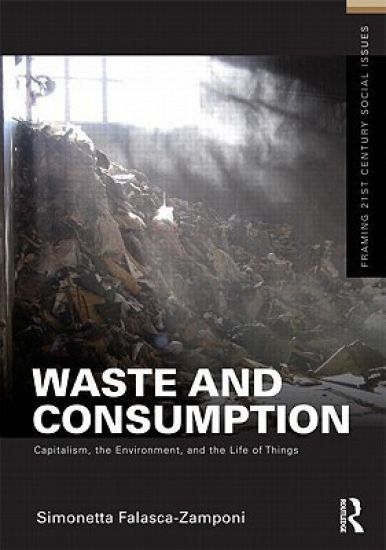
Waste and Consumption

Waste and Consumption

Simonetta Falasca-Zamponi

Routledge
2010
nidottu
This book examines the link between waste and consumption through a cultural approach that integrates environmental concerns with reflections on the role that consumption has come to occupy in our contemporary capitalist societies. The mutual relationship between capitalism and consumption is addressed along with early critiques of industrialization that exposed environmental problems. Toxic waste and its illegal dumping are examined, along with the problem of abuse of poorere areas and nations when it comes to disposing of toxic material. The question of solutions to the problems created by consumption and waste is raised and the claim is advanced that we do not necessarily need to stop being consumers. This timely book can be used in introductory sociology, social problems, and classes on environment and sustainability.This book is part of the Framing 21st Century Social Issues Series which offers readable, teachable "thinking frames" on today’s social problems and social issues by leading scholars, all in short 60 page or shorter formats, and available for view on http://routledge.customgateway.com/routledge-social-issues.html. For instructors teaching a wide range of courses in the social sciences, the Routledge Social Issues Collection now offers the best of both worlds: originally written short texts that provide "overviews" to important social issues as well as teachable excerpts from larger works previously published by Routledge and other presses.
Fascist Spectacle

Fascist Spectacle

Simonetta Falasca-Zamponi

University of California Press
2000
pokkari
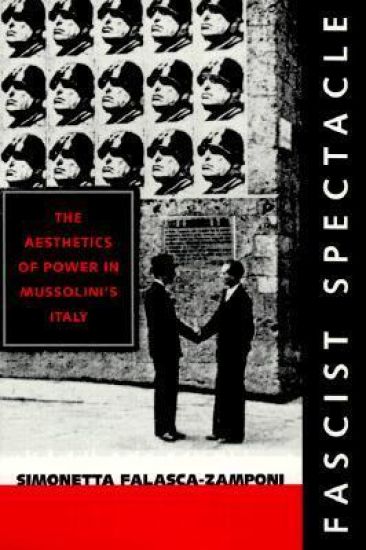
This richly textured cultural history of Italian fascism traces the narrative path that accompanied the making of the regime and the construction of Mussolini's power. Simonetta Falasca-Zamponi reads fascist myths, rituals, images, and speeches as texts that tell the story of fascism. Linking Mussolini's elaboration of a new ruling style to the shaping of the regime's identity, she finds that in searching for symbolic means and forms that would represent its political novelty, fascism in fact brought itself into being, creating its own power and history. Falasca-Zamponi argues that an aesthetically founded notion of politics guided fascist power's historical unfolding and determined the fascist regime's violent understanding of social relations, its desensitized and dehumanized claims to creation, its privileging of form over ethical norms, and ultimately its truly totalitarian nature.
Rethinking the Political

Rethinking the Political

Simonetta Falasca-Zamponi

McGill-Queen's University Press
2011
sidottu
Rethinking the Political demonstrates that the College de Sociologie's quest to create a new place for the sacred in modern collective life ostensibly entailed avoiding the theorization of both aesthetics and politics. While the College condemned manipulation by totalitarian regimes, its understanding of community also led to a rejection of democratic and communist forms of political organization, leaving the group open to accusations of flirting with fascism. Acknowledging these political ambiguities, the author goes beyond a narrow ideological reading to reveal the College's important contribution to our thinking about the relationships between community formation, politics, aesthetics, and the sacred in the modern world. She expands her historical account of the members' thought, including their relationship to Surrealism, beyond the group's dissolution, and shows how the work of Claude Lefort extends, but also resolves, many of the College's key theoretical insights. A fascinating study of some of the twentieth-century's most daring thinkers, Rethinking the Political offers crucial insights into the contradictions at play in modern notions of community that still resonate today.
Rethinking the Political

Rethinking the Political

Simonetta Falasca-Zamponi

McGill-Queen's University Press
2011
nidottu
Rethinking the Political demonstrates that the College de Sociologie's quest to create a new place for the sacred in modern collective life ostensibly entailed avoiding the theorization of both aesthetics and politics. While the College condemned manipulation by totalitarian regimes, its understanding of community also led to a rejection of democratic and communist forms of political organization, leaving the group open to accusations of flirting with fascism. Acknowledging these political ambiguities, the author goes beyond a narrow ideological reading to reveal the College's important contribution to our thinking about the relationships between community formation, politics, aesthetics, and the sacred in the modern world. She expands her historical account of the members' thought, including their relationship to Surrealism, beyond the group's dissolution, and shows how the work of Claude Lefort extends, but also resolves, many of the College's key theoretical insights. A fascinating study of some of the twentieth-century's most daring thinkers, Rethinking the Political offers crucial insights into the contradictions at play in modern notions of community that still resonate today.
Waste and Consumption

Waste and Consumption

Simonetta Falasca-Zamponi

Routledge
2016
sidottu
This book examines the link between waste and consumption through a cultural approach that integrates environmental concerns with reflections on the role that consumption has come to occupy in our contemporary capitalist societies. The mutual relationship between capitalism and consumption is addressed along with early critiques of industrialization that exposed environmental problems. Toxic waste and its illegal dumping are examined, along with the problem of abuse of poorere areas and nations when it comes to disposing of toxic material. The question of solutions to the problems created by consumption and waste is raised and the claim is advanced that we do not necessarily need to stop being consumers. This timely book can be used in introductory sociology, social problems, and classes on environment and sustainability.This book is part of the Framing 21st Century Social Issues Series which offers readable, teachable "thinking frames" on today’s social problems and social issues by leading scholars, all in short 60 page or shorter formats, and available for view on http://routledge.customgateway.com/routledge-social-issues.html. For instructors teaching a wide range of courses in the social sciences, the Routledge Social Issues Collection now offers the best of both worlds: originally written short texts that provide "overviews" to important social issues as well as teachable excerpts from larger works previously published by Routledge and other presses.