Kirjojen hintavertailu. Mukana 12 362 652 kirjaa ja 12 kauppaa.

Kirjahaku

Etsi kirjoja tekijän nimen, kirjan nimen tai ISBN:n perusteella.

5 kirjaa tekijältä Sirkkaliisa Jetsonen

Alvar Aalto Libraries

Alvar Aalto Libraries

Sirkkaliisa Jetsonen

Rakennustieto
2018
sidottu
Jari and Sirkkaliisa Jetsonen's monograph on the libraries of Alvar Aalto presents all 18 of his completed libraries as well as the Academic Bookstore. Chronologically the sites range from Viipuri Library in the 1930s to Alajärvi Library in the 1990s, which was realised after Aalto's death. Some of the libraries are part of larger administrative or cultural centres. In an introductory essay, Teija Isohauta writes about Aalto's unrealised library projects. Aalto's libraries have served various needs. Some of them are public libraries, such as those in Seinäjoki, Rovaniemi and Wolfsburg. The libraries at the University of Jyväskylä, Helsinki University of Technology and the Mount Angel monastery are scholarly libraries. The libraries in private houses such as Villa Mairea and Maison Carré, offered a tranquil work space. The book also describes the changes in use that the libraries have undergone. In the libraries it was important to create spaces for different kinds of functions and users. In some of them Aalto arranged the functional differences by means of combinations of fan shapes for the main library spaces together with a strict rectangularity for the work rooms. Side by side one encounters visibility and openness and, on the other hand, also sheltered and tranquil places to sit and read. Both natural and artificial light fulfil their respective purposes. Skylights and clerestory windows bring natural light into the core of even deep building frames. Natural light creates a strong positive ambience in the reading and lending halls. The individual lamps on the reading tables in turn create enchanted circles of light. Aalto felt a particular affinity for designing libraries. He himself was interested in literature and reading. Nowadays almost half of all Finns are regular users of libraries, the functions of which, however, have changed and continue to change - in addition to books, many other services have become integral parts of the libraries.
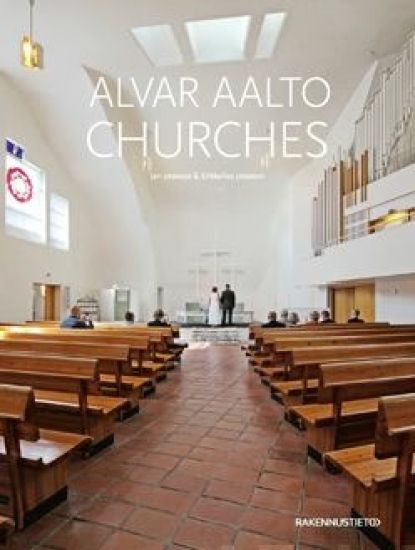
Alvar Aalto Churches

Alvar Aalto Churches

Sirkkaliisa Jetsonen

Rakennustieto
2020
sidottu
“I am often asked the question: What is light? I don't know. I have some idea of how light behaves, of how it can be made to vibrate. For example, in Vuoksenniska Church daylight enters the interior from several directions: warm light from one direction and cool light from another. The spaces are designed to produce reflections and reflections of reflections, or after-reflections. In Vuoksenniska Church the light vibrates ...” Juha LeiviskäAlvar Aalto Churches presents all 14 completed church buildings and parish centres designed by Aalto in Finland, Germany and Italy, from the 1920s to the 1970s. The earliest projects, from the 1920s, are the Kauhajärvi bell tower and four restoration projects. Aalto's first completed church building is the classic, Italian-influenced Muurame Church in the late 1920s. Aalto's next completed church was only in the late 1950s, the iconic Church of the Three Crosses in Vuoksenniska, which heralded a series of churches by Aalto over the next twenty years, built in different parts of Finland, in Seinäjoki, Alajärvi and Lahti, as well as abroad, in Wolfsburg in Germany and Riola di Vergato in Italy.Jari Jetsonen's colour photos - most of them taken especially for this book - together with Aalto's original drawings and old photographs, reveal the solemn, yet intimate and modest atmosphere of each church. The mostly white or light-coloured churches together with their tall bell towers stand out in the landscape, full of exquisite beauty. Sirkkaliisa Jetsonen's descriptions of each of the churches is complemented by architect Professor Simo Paavilainen's detailed essay on Aalto's unrealised church designs. In the foreword the award-winning architect, academician Juha Leiviskä absorbingly relates his impressions of Aalto's church architecture that is immersed with light and music.Tutkija, arkkitehti Sirkkaliisa Jetsosen ja valokuvaaja Jari Jetsosen Alvar Aalto Churches päättää perusteellisen Aalto-trilogian, jonka kaksi ensimmäistä osaa Alvar Aalto Homes ja Alvar Aalto Libraries, ilmestyivät 2018. Trilogiassa Aalto on nimenomaan kansainvälinen arkkitehti, jonka kohteet tunnettiin laajalti jo 1930-luvulta alkaen. Monet kohteista sijaitsevat ulkomailla: Yhdysvalloissa, Ranskassa, Saksassa ja Italiassa. Jetsoset ovat matkustaneet Aallon kohteiden perässä lähes 40 vuoden ajan ja tallentaneet vaikutteitaan - Sirkkaliisa Jetsonen tukijan tekstein ja Jari Jetsonen valokuvin. Näistä tutkimusmatkoista on syntynyt useita kirjoja, luentosarjoja ja työpajoja.
Alvar Aalto Homes

Alvar Aalto Homes

Sirkkaliisa Jetsonen

Rakennustieto
2021
sidottu
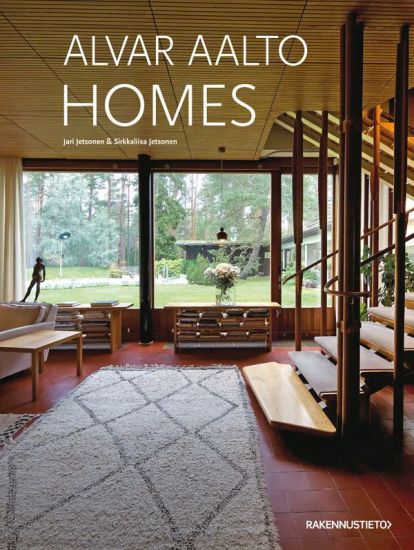
Kirjassa esitellään 30 kohdetta. Yhden perheen taloja on 12 tehtaanjohtajien asunnoista ystäville suunniteltuihin yksilöllisiin koteihin. Paritaloista on mukana vaatimattomat Asevelitalot Tampereella. Kerros- ja rivitaloja on 14. Tornitalot Bremenissä Saksassa, Luzernissa Sveitsissä ja Jyväskylässä näyttävät, että myös korkea rakentaminen on mahdollista toteuttaa ihmisen mittakaavaan sopivaksi. Rivi- ja terassitalot eri puolella Suomea ovat esimerkkejä luonnon ja rakennetun ympäristön läheisestä vuorovaikutuksesta. Kirjassa esitellyt kolme kesähuvilaa ovat Aaltojen omat huvilat Villa Flora (yhdessä Aino Aallon kanssa) ja Muuratsalon Koetalo sekä Aallon varhaistyö Villa Vekara. Koetalossa ja Riihitien kotitalossa on näkyvillä paitsi Aaltojen perhe-elämää myös kokeiluja, joiden avulla Aalto kehitteli ideoitaan. Englanninkielinen. Kuvat Jari Jetsonen; teksti Sirkkaliisa Jetsonen Johdantoartikkeli Jussi Rautsi.
Eliel Saarinen Public Buildings

Eliel Saarinen Public Buildings

Sirkkaliisa Jetsonen

Rakennustieto
2024
sidottu
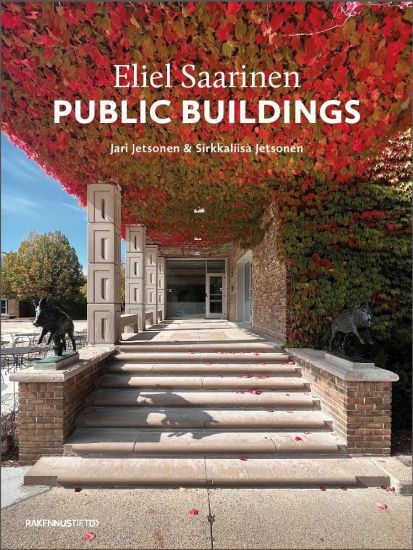
Eliel Saarinen's career can be divided into two periods of roughly equal length. His Finnish period from 1896 to 1922, was followed by his American period from 1923 to 1950. Saarinen was the first major European architect to relocate to the United States, where he paved the way for modern architecture. From his early works to the final projects, Saarinen's architecture was characterised by a holistic approach that encompassed everything, from large-scale concepts to the smallest details. He believed that the forms arising from architectural design should be an authentic reflection of human life - of feelings, thoughts and aspirations - to truly resonate and be persuasive. “Eliel Saarinen was not only a participant in the pioneering era, his works reflect the entire arc of development. It gradually comes to include a social element without undermining its monumental power, and the integration of ‘national' from the old [style of national romanticism] with universality is distinctly visible. His work preserves both the new movement's monumentality and its masterful control of detail.” - Alvar Aalto, 21 July 1950 Eliel Saarinen Public Buildings showcases 20 buildings designed by Eliel Saarinen between 1900 and 1950 in Finland, Estonia and the United States. Featured among these are the iconic National Museum of Finland and Helsinki Railway Station. Also highlighted are the exquisite and beautiful buildings of the Cranbrook Educational Community in Bloomfield Hills, the significant Kleinhans Music Hall in Buffalo, and prominent churches such as St Paul's Church in Tartu, Estonia, First Christian Church in Columbus, and Christ Church Lutheran in Minneapolis. Jari Jetsonen has taken over 300 superb full-colour photographs specifically for this book. Together with Eliel Saarinen's original drawings, they convey a vivid sense of the distinctive character of the buildings. Sirkkaliisa Jetsonen's descriptions provide a wealth of information about the history and features of each project. The volume also includes an insightful introductory essay by Gregory Wittkopp, Director of the Cranbrook Center for Collections and Research.
Eliel and Eero Saarinen Homes

Eliel and Eero Saarinen Homes

Sirkkaliisa Jetsonen

Rakennustieto
2025
sidottu
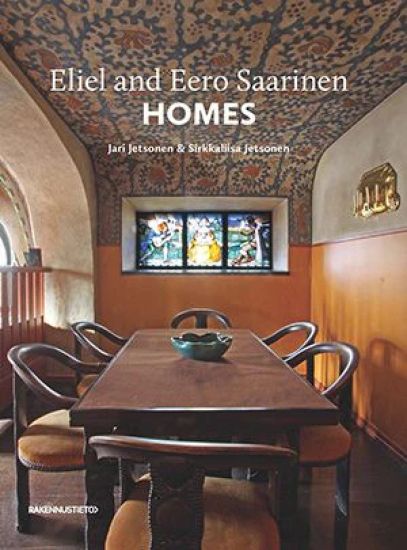
Kirja ilmestyy elokuussa 2025.Eliel and Eero Saarinen are renowned as the most famous father-son duo in architecture: Eliel, the father, was celebrated for triumphs such as the Art Nouveau railway station in Helsinki, Finland, whereas his son, Eero, was the designer of masterpieces like the TWA Terminal Building at John F. Kennedy Airport in New York.Both Eliel and Eero Saarinen stressed the importance of a building's relationship to its surroundings. This is most clearly demonstrated in their private residences, often sited in woodland or rocky outcrops near water, where architecture merges effortlessly with the natural landscape. Nature is also reflected in decorative motifs, both within the interiors and on facades. Regardless of style, the Saarinens' residential architecture expresses a belief in the house as a total work of art.For the first time, Eliel and Eero Saarinen Homes presents 33 residential buildings designed by Eliel and Eero Saarinen between 1897 and 1962, located in Finland, Russia, Germany, the United States and Canada. The featured projects range from Eliel's early twentieth-century Art Nouveau apartment buildings and villas to Eero's mid-century modern designs. The Saarinen family homes, Hvitträsk and Saarinen House, exemplify their approach to domestic design: harmonious, cosy spaces with carefully considered details that create a unique atmosphere and a balanced living environment.Jari Jetsonen has contributed over 250 new superb full-colour photographs for this book. Combined with original drawings and archival images, they convey a vivid sense of each building's distinctive character. Sirkkaliisa Jetsonen's accompanying texts provide a wealth of information about the history and features of every project. The volume also includes a perceptive introductory essay by Eeva-Liisa Pelkonen, Assistant Dean and Professor at Yale School of Architecture.