

Kirjahaku
Etsi kirjoja tekijän nimen, kirjan nimen tai ISBN:n perusteella.
91 kirjaa tekijältä Slavoj Zizek

'One of our best-known living philosophers' GuardianHow do we respond to the refugee crisis - by opening our doors, or pulling up the drawbridge? Both solutions, argues Slavoj Zizek, offer ideological blackmail, and both are wrong. He proposes that instead we see the crisis as an opportunity: a unique chance for Europe to redefine itself and its future. 'Zizek identifies the refugee crisis as one of the major global challenges of our time ... he argues for a politics of solidarity' The Times Literary Supplement
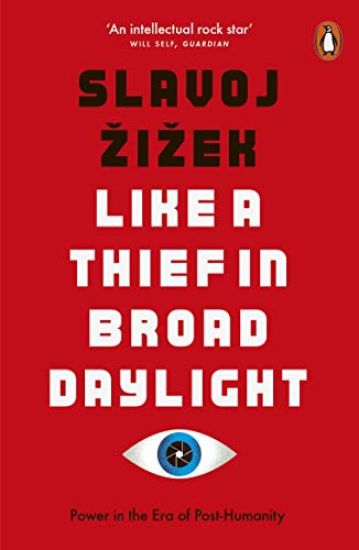
In our brave new world of Big Tech, work is automated and money melts into air. What comes next as the global capitalist edifice crumbles? Slavoj Zizek shows how the answer is already stealing into sight, like a thief in broad daylight. What we must do is wake up and see it. 'In a world determined to crush hope of radical change, where moral corruption poses as pragmatism and systemic oppression as the new freedom, Slavoj Zizek's excellent new book serves humanity in a way that only authentic philosophy can' Yanis Varoufakis.'The Elvis of cultural theory' New Statesman.'Master of the counterintuitive observation' New Yorker.

Philosopher, cultural critic, and agent provocateur Slavoj Zizek constructs a fascinating new framework to look at the forces of violence in our world. Using history, philosophy, books, movies, Lacanian psychiatry, and jokes, Slavoj Zizek examines the ways we perceive and misperceive violence. Drawing from his unique cultural vision, Zizek brings new light to the Paris riots of 2005; he questions the permissiveness of violence in philanthropy; in daring terms, he reflects on the powerful image and determination of contemporary terrorists. Violence, Zizek states, takes three forms--subjective (crime, terror), objective (racism, hate-speech, discrimination), and systemic (the catastrophic effects of economic and political systems)--and often one form of violence blunts our ability to see the others, raising complicated questions. Does the advent of capitalism and, indeed, civilization cause more violence than it prevents? Is there violence in the simple idea of "the neighbour"? And could the appropriate form of action against violence today simply be to contemplate, to think? Beginning with these and other equally contemplative questions, Zizek discusses the inherent violence of globalization, capitalism, fundamentalism, and language, in a work that will confirm his standing as one of our most erudite and incendiary modern thinkers.
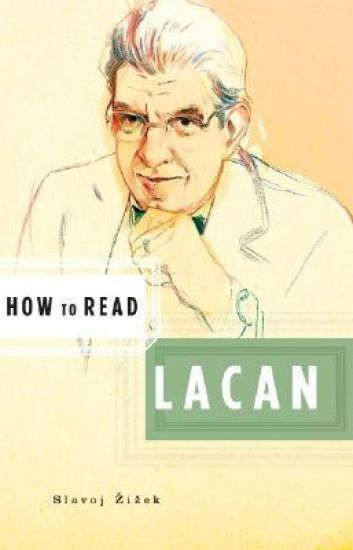
The How to Read series provides a context and an explanation that will facilitate and enrich your understanding of texts vital to the canon. These books use excerpts from the major texts to explain essential topics, such as Jacques Lacan's core ideas about enjoyment, which re-created our concept of psychoanalysis. Lacan s motto of the ethics of psychoanalysis involves a profound paradox. Traditionally, psychoanalysis was expected to allow the patient to overcome the obstacles which prevented access to "normal" sexual enjoyment; today, however, we are bombarded by different versions of the injunction "Enjoy!" Psychoanalysis is the only discourse in which you are allowed not to enjoy. Slavoj i ek s passionate defense of Lacan reasserts Lacan s ethical urgency. For Lacan, psychoanalysis is a procedure of reading and each chapter reads a passage from Lacan as a tool to interpret another text from philosophy, art or popular ideology."

What is the basis of belief in an era when globalization, multiculturalism and big business are the new religion? Slavoj Zizek, renowned philosopher and irrepressible cultural critic takes on all comers in this compelling and breathless new book.From 'cyberspace reason' to the paradox that is 'Western Buddhism', On Belief gets behind the contours of the way we normally think about belief, in particular Judaism and Christianity. Holding up the so-called authenticity of religious belief to critical light, Zizek draws on psychoanalysis, film and philosophy to reveal in startling fashion that nothing could be worse for believers than their beliefs turning out to be true.

Gets behind the contours of the way we normally think about belief, in particular Judaism and Christianity.

Hoe kunnen we nog geloven en regels hebben in dit postmoderne tijdperk waarin naar verluidt niets is om in te geloven en geen regels zijn. De beroemde filosoof en onstuitbaar cultuurcriticus Slavoj Zizek daagt iedereen uit in dit overtuigende en adembenemende nieuwe boek.In Geloof, dat van 'cyberspace-denken' tot de paradox van het 'westerse boeddhisme' gaat, legt Zizek de vooronderstellingen bloot achter de manier waarop we gewoonlijk over geloof denken, met name in judaïsme en christendom. Door de zogenaamde authenticiteit van het religieuze geloof tegen een kritisch licht te houden en te putten uit psychoanalyse, film en filosofie, laat hij op schokkende wijze zien dat de basis van onze fundamenteelste overtuigingen minder rotsvast is dan wij denken.

With a new introduction by the authorIn this deliciously polemical work, a giant of cultural theory immerses himself in the ideas of a giant of French thought. In his inimical style, Zizek links Deleuze's work with both Oedipus and Hegel, figures from whom the French philosopher distanced himself. Zizek turns some Deleuzian concepts around in order to explore the 'organs without bodies' in such films as Fight Club and the works of Hitchcock. Finally, he attacks what he sees as the 'radical chic' Deleuzians, arguing that such projects turn Deleuze into an ideologist of today's 'digital capitalism'. With his brilliant energy and fearless argumentation, Zizek sets out to restore a truer, more radical Deleuze than the one we thought we knew.

The title is just the first of many startling asides, observations and insights that fill this guide to Hollywood on the Lacanian psychoanalyst’s couch. Zizek introduces the ideas of Jacques Lacan through the medium of American film, taking his examples from over 100 years of cinema, from Charlie Chaplin to The Matrix and referencing along the way such figures as Lenin and Hegel, Michel Foucault and Jesus Christ. Enjoy Your Symptom! is a thrilling guide to cinema and psychoanalysis from a thinker who is perhaps the last standing giant of cultural theory in the twenty-first century.
The latest book by the Slovenian critic Slavoj Zizek takes the work of French philosopher Gilles Deleuze as the beginning of a dazzling inquiry into the realms of radical politics, philosophy, film (Hitchcock, Fight Club ), and psychoanalysis. Of Organs without Bodies Joan Copjec (Imagine There's No Woman ) has written: With all his ususal humor and invention, Zizek -- the acknowledged master of the 180 degree turn -- here takes a trip into enemy territory to deliver Deleuze of a marvelously rebellious child, one that seriously challenges Deleuze's other progeny with a surprising but convincing bid for succession. Those who thought Deleuze's forward march into the future would follow a straight path are forced to rethink their stance. From now on all readings of Deleuze will have to take a detour through this important -- even necessary -- book. Eric Santner (On the Psychopathology of Everyday Life ) describes Organs without Bodies as offering an entirely new degree of conceptual clarity and political urgency. Through his deep engagement with the logic of Deleuze's project, Zizek opens up new possibilities of thought beyond the terms of the current political debates on globalization, democratization, war on terror. Once again, Zizek has produced an utterly timely and radically untimely meditation. Recently profiled in The New Yorker , and hailed by the Village Voice as the giant of Ljubljana, Zizek is one of the most provocative and entertaining thinkers at work today.
The latest book by the Slovenian critic Slavoj Zizek takes the work of French philosopher Gilles Deleuze as the beginning of a dazzling inquiry into the realms of radical politics, philosophy, film (Hitchcock, Fight Club ), and psychoanalysis. Of Organs without Bodies Joan Copjec (Imagine There's No Woman ) has written: With all his ususal humor and invention, Zizek -- the acknowledged master of the 180 degree turn -- here takes a trip into enemy territory to deliver Deleuze of a marvelously rebellious child, one that seriously challenges Deleuze's other progeny with a surprising but convincing bid for succession. Those who thought Deleuze's forward march into the future would follow a straight path are forced to rethink their stance. From now on all readings of Deleuze will have to take a detour through this important -- even necessary -- book. Eric Santner (On the Psychopathology of Everyday Life ) describes Organs without Bodies as offering an entirely new degree of conceptual clarity and political urgency. Through his deep engagement with the logic of Deleuze's project, Zizek opens up new possibilities of thought beyond the terms of the current political debates on globalization, democratization, war on terror. Once again, Zizek has produced an utterly timely and radically untimely meditation. Recently profiled in The New Yorker , and hailed by the Village Voice as the giant of Ljubljana, Zizek is one of the most provocative and entertaining thinkers at work today.

What do we know about Hegel? What do we know about Marx? What do we know about democracy and totalitarianism? Communism and psychoanalysis? What do we know that isn't a platitude that we've heard a thousand times - or a self-satisfied certainty? Through his brilliant reading of Hegel, Slavoj Zizek - one of the most provocative and widely-read thinkers of our time - upends our traditional understanding, dynamites every cliché and undermines every conviction in order to clear the ground for new ways of answering these questions. When Lacan described Hegel as the ‘most sublime hysteric’, he was referring to the way that the hysteric asks questions because he experiences his own desire as if it were the Other's desire. In the dialectical process, the question asked of the Other is resolved through a reflexive turn in which the question begins to function as its own answer. We had made Hegel into the theorist of abstraction and reaction, but by reading Hegel with Lacan, Zizek unveils a Hegel of the concrete and of revolution - his own, and the one to come. This early and dazzlingly original work by Zizek offers a unique insight into the ideas which have since become hallmarks of his mature thought. It will be of great interest to anyone interested in critical theory, philosophy and contemporary social thought.

What do we know about Hegel? What do we know about Marx? What do we know about democracy and totalitarianism? Communism and psychoanalysis? What do we know that isn't a platitude that we've heard a thousand times - or a self-satisfied certainty? Through his brilliant reading of Hegel, Slavoj Zizek - one of the most provocative and widely-read thinkers of our time - upends our traditional understanding, dynamites every cliché and undermines every conviction in order to clear the ground for new ways of answering these questions. When Lacan described Hegel as the ‘most sublime hysteric’, he was referring to the way that the hysteric asks questions because he experiences his own desire as if it were the Other's desire. In the dialectical process, the question asked of the Other is resolved through a reflexive turn in which the question begins to function as its own answer. We had made Hegel into the theorist of abstraction and reaction, but by reading Hegel with Lacan, Zizek unveils a Hegel of the concrete and of revolution - his own, and the one to come. This early and dazzlingly original work by Zizek offers a unique insight into the ideas which have since become hallmarks of his mature thought. It will be of great interest to anyone interested in critical theory, philosophy and contemporary social thought.

Where are we today and what is to be done? Slavoj Zizek ponders these questions in this unique and timely book. Based on live interviews, the book captures Zizek at his irrepressible best, elucidating such topics as the uprisings of the Arab Spring, the global financial crisis, populism in Latin America, the rise of China and even the riddle of North Korea. Zizek dazzles readers with his analyses of Hollywood films, Venezuelan police reports, Swedish crime fiction and much else. Wherever the conversation turns, his energetic mind illuminates unexpected horizons. While analyzing our present predicaments, Zizek also explores possibilities for change. What sort of society is worth striving for? Why is it difficult to imagine alternative social and political arrangements? What are the bases for hope? A key obligation in our troubled times, argues Zizek, is to dare to ask fundamental questions: we must reflect and theorize anew, and always be prepared to rethink and redefine the limits of the possible. These original and compelling conversations offer an engaging and accessible introduction to one of the most important thinkers of our time.

Where are we today and what is to be done? Slavoj Zizek ponders these questions in this unique and timely book. Based on live interviews, the book captures Zizek at his irrepressible best, elucidating such topics as the uprisings of the Arab Spring, the global financial crisis, populism in Latin America, the rise of China and even the riddle of North Korea. Zizek dazzles readers with his analyses of Hollywood films, Venezuelan police reports, Swedish crime fiction and much else. Wherever the conversation turns, his energetic mind illuminates unexpected horizons. While analyzing our present predicaments, Zizek also explores possibilities for change. What sort of society is worth striving for? Why is it difficult to imagine alternative social and political arrangements? What are the bases for hope? A key obligation in our troubled times, argues Zizek, is to dare to ask fundamental questions: we must reflect and theorize anew, and always be prepared to rethink and redefine the limits of the possible. These original and compelling conversations offer an engaging and accessible introduction to one of the most important thinkers of our time.
In the space of barely more than five years, with the publication of four pathbreaking books, Slavoj Žižek has earned the reputation of being one of the most arresting, insightful, and scandalous thinkers in recent memory. Perhaps more than any other single author, his writings have constituted the most compelling evidence available for recognizing Jacques Lacan as the preemient philosopher of our time.In Tarrying with the Negative, Žižek challenges the contemporary critique of ideology, and in doing so opens the way for a new understanding of social conflict, particularly the recent outbursts of nationalism and ethnic struggle. Are we, Žižek asks, confined to a postmodern universe in which truth is reduced to the contingent effect of various discursive practices and where our subjectivity is dispersed through a multitude of ideological positions? No is his answer, and the way out is a return to philosophy. This revisit to German Idealism allows Žižek to recast the critique of ideology as a tool for disclosing the dynamic of our society, a crucial aspect of which is the debate over nationalism, particularly as it has developed in the Balkans-Žižek's home. He brings the debate over nationalism into the sphere of contemporary cultural politics, breaking the impasse centered on nationalisms simultaneously fascistic and anticolonial aspirations. Provocatively, Žižek argues that what drives nationalistic and ethnic antagonism is a collectively driven refusal of our own enjoyment.Using examples from popular culture and high theory to illuminate each other-opera, film noir, capitalist universalism, religious and ethnic fundamentalism-this work testifies to the fact that, far more radically than the postmodern sophists, Kant and Hegel are our contemporaries.
In the space of barely more than five years, with the publication of four pathbreaking books, Slavoj Žižek has earned the reputation of being one of the most arresting, insightful, and scandalous thinkers in recent memory. Perhaps more than any other single author, his writings have constituted the most compelling evidence available for recognizing Jacques Lacan as the preemient philosopher of our time.In Tarrying with the Negative, Žižek challenges the contemporary critique of ideology, and in doing so opens the way for a new understanding of social conflict, particularly the recent outbursts of nationalism and ethnic struggle. Are we, Žižek asks, confined to a postmodern universe in which truth is reduced to the contingent effect of various discursive practices and where our subjectivity is dispersed through a multitude of ideological positions? No is his answer, and the way out is a return to philosophy. This revisit to German Idealism allows Žižek to recast the critique of ideology as a tool for disclosing the dynamic of our society, a crucial aspect of which is the debate over nationalism, particularly as it has developed in the Balkans-Žižek's home. He brings the debate over nationalism into the sphere of contemporary cultural politics, breaking the impasse centered on nationalisms simultaneously fascistic and anticolonial aspirations. Provocatively, Žižek argues that what drives nationalistic and ethnic antagonism is a collectively driven refusal of our own enjoyment.Using examples from popular culture and high theory to illuminate each other-opera, film noir, capitalist universalism, religious and ethnic fundamentalism-this work testifies to the fact that, far more radically than the postmodern sophists, Kant and Hegel are our contemporaries.

The title is just the first of many startling asides, observations and insights that fill this guide to Hollywood on the Lacanian psychoanalyst’s couch. Zizek introduces the ideas of Jacques Lacan through the medium of American film, taking his examples from over 100 years of cinema, from Charlie Chaplin to The Matrix and referencing along the way such figures as Lenin and Hegel, Michel Foucault and Jesus Christ. Enjoy Your Symptom! is a thrilling guide to cinema and psychoanalysis from a thinker who is perhaps the last standing giant of cultural theory in the twenty-first century.

With a new introduction by the authorIn this deliciously polemical work, a giant of cultural theory immerses himself in the ideas of a giant of French thought. In his inimical style, Zizek links Deleuze's work with both Oedipus and Hegel, figures from whom the French philosopher distanced himself. Zizek turns some Deleuzian concepts around in order to explore the 'organs without bodies' in such films as Fight Club and the works of Hitchcock. Finally, he attacks what he sees as the 'radical chic' Deleuzians, arguing that such projects turn Deleuze into an ideologist of today's 'digital capitalism'. With his brilliant energy and fearless argumentation, Zizek sets out to restore a truer, more radical Deleuze than the one we thought we knew.