Kirjojen hintavertailu. Mukana 11 342 296 kirjaa ja 12 kauppaa.

Kirjahaku

Etsi kirjoja tekijän nimen, kirjan nimen tai ISBN:n perusteella.

2 kirjaa tekijältä Smith Anne-Marie

Julia Kristeva

Julia Kristeva

Smith Anne-Marie

PLUTO PRESS
1998
pokkari
‘Makes an excellent introduction to Kristeva in its enthusiasm and generosity ... lucid and well-conceived.’ TLS Julia Kristeva’s most remarkable contribution to modern thought has been her revelation of how pre-verbal experience - poetic, infantile, maternal and spiritual, or simply the experience of suffering - enters language through the processes of literature, art and psychoanalysis. Anne-Marie Smith’s concise introductory study examines Kristeva in the light of her contemporary activity as writer, teacher and psychoanalyst. Tracing the evolution of Kristeva’s thinking over the last thirty years she draws attention to its conceptual coherence and value as a work-in-progress of cultural critique. Smith provides close readings of the original texts, new translations and first-hand accounts of Kristeva’s lectures. Kristeva’s influence in Anglo-American thought is set against her place in the French intellectual tradition. She emphasizes Kristeva’s involvement in public cultural activity and personal commitment to psychoanalytic practice as well as her insistent interrogation of the place of women and of foreignness in social structures.
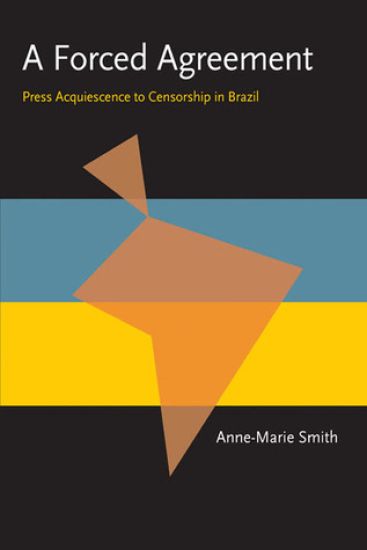
Forced Agreement, A

Forced Agreement, A

Smith Anne-Marie

UNIVERSITY OF PITTSBURGH PRESS
1997
nidottu
During much of the military regime in Brazil (1964-1985), an elaborate but illegal system of restrictions prevented the press from covering important news or criticizing the government. In this intriguing new book, Anne-Marie Smith investigates why the press acquiesced to this system, and why this state-administered system of restrictions was known as \u201cself-censorship.\u201d Smith argues that it was routine, rather than fear, that kept the lid on Brazil's press. The banality of state censorship-a mundane, encompassing set of automatically repeated procedures that functioned much like any other state bureaucracy-seemed impossible to circumvent. While the press did not consider the censorship legitimate, they were never able to develop the resources to overcome censorship's burdensome routines.