Kirjojen hintavertailu. Mukana 12 083 983 kirjaa ja 12 kauppaa.

Kirjahaku

Etsi kirjoja tekijän nimen, kirjan nimen tai ISBN:n perusteella.

5 kirjaa tekijältä Solon Simmons

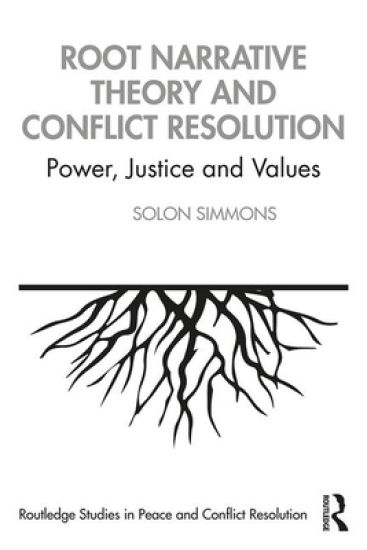
Root Narrative Theory and Conflict Resolution
This book introduces Root Narrative Theory, a new approach for narrative analysis, decoding moral politics, and for building respect and understanding in conditions of radical disagreement.This theory of moral politics bridges emotion and reason, and, rather than relying on what people say, it helps both the analyst and the practitioner to focus on what people mean in a language that parties to the conflict understand. Based on a simple idea—the legacy effects of abuses of power—the book argues that conflicts only endure and escalate where there is a clash of interpretations about the history of institutional power. Providing theoretically complex but easy-to-use tools, this book offers a completely new way to think about storytelling, the effects of abusive power on interpretation, the relationship between power and conceptions of justice, and the origins and substance of ultimate values. By locating the source of radical disagreement in story structures and political history rather than in biological or cognitive systems, Root Narrative Theory bridges the divides between reason and emotion, realism and idealism, without losing sight of the inescapable human element at work in the world’s most devastating conflicts.This book will be of much interest to students of conflict resolution, peace studies and International Relations, as well as to practitioners of conflict resolution.The Open Access version of this book, available at http://www.taylorfrancis.com, has been made available under a Creative Commons Attribution-Non Commercial-No Derivatives (CC-BY-NC-ND) 4.0 license.
Root Narrative Theory and Conflict Resolution
This book introduces Root Narrative Theory, a new approach for narrative analysis, decoding moral politics, and for building respect and understanding in conditions of radical disagreement.This theory of moral politics bridges emotion and reason, and, rather than relying on what people say, it helps both the analyst and the practitioner to focus on what people mean in a language that parties to the conflict understand. Based on a simple idea—the legacy effects of abuses of power—the book argues that conflicts only endure and escalate where there is a clash of interpretations about the history of institutional power. Providing theoretically complex but easy-to-use tools, this book offers a completely new way to think about storytelling, the effects of abusive power on interpretation, the relationship between power and conceptions of justice, and the origins and substance of ultimate values. By locating the source of radical disagreement in story structures and political history rather than in biological or cognitive systems, Root Narrative Theory bridges the divides between reason and emotion, realism and idealism, without losing sight of the inescapable human element at work in the world’s most devastating conflicts.This book will be of much interest to students of conflict resolution, peace studies and International Relations, as well as to practitioners of conflict resolution.The Open Access version of this book, available at http://www.taylorfrancis.com, has been made available under a Creative Commons Attribution-Non Commercial-No Derivatives (CC-BY-NC-ND) 4.0 license.
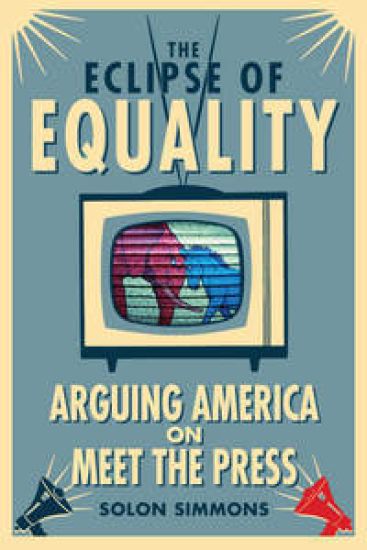
The Eclipse of Equality

The Eclipse of Equality

Solon Simmons

Stanford University Press
2013
sidottu
Red state vs. blue state. Republican vs. Democrat. Fox News vs. The Daily Show. The so-called culture wars have become such a fixture of American politics that dividing the country into rival camps seems natural and political gridlock seems inevitable. Entering the fray, Solon Simmons offers an intriguing twist on the debate: Our disagreements come not from unbridgeable divides, but from differing interpretations of a single underlying American tradition—liberalism. Both champions of traditional liberal values, Republicans have become the party of individual freedom while Democrats wear the mantle of tolerance. Lost in this battle of sides is the third pillar of liberalism—equality. Simmons charts the course of American politics through the episodes of Meet the Press. On the air since 1945, Meet the Press provides an unparalleled record of living conversation about the most pressing issues of the day. In weekly discussions, the people who directly influenced policy and held the reins of power in Washington set the political agenda for the country. Listening to what these people had to say—and importantly how they said it—Meet the Press opens a window on how our political parties have become so divided and how notions of equality were lost in the process. Telling the story of the American Century, Simmons investigates four themes that have defined politics and, in turn, debate on Meet the Press—war and foreign affairs, debt and taxation, race struggles, and class and labor relations—and demonstrates how political leaders have transformed these important political issues into symbolic pawns as each party advocates for their own understanding of liberty, whether freedom or tolerance. Ultimately, with The Eclipse of Equality, he looks to bring back to the debate the question lurking in the shadows—how can we ensure the protection of a peaceful civil society and equality for all?
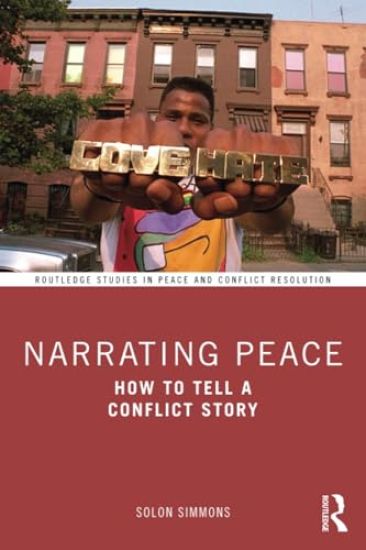
Narrating Peace

Narrating Peace

Solon Simmons

TAYLOR FRANCIS LTD
2024
nidottu
This book provides practical tools, models, and frameworks for thinking about how a story is structured, all in order to help us think about conflict. Using examples from literature and films for developing narrative competence in everyday life, the book illustrates a new model of four basic plot types that can push a reader/viewer either toward political struggle (a justice or vindication story) or toward a journey of self-realization (a peace or reconciliation story). The examples used in the book span a wide array of conflict situations, from climate change to native American genocide, from reproductive rights and gender-based violence to Algerian independence and Arab identity, from Jim Crow segregation and civil rights to the Vietnam War and colonial collapse, from Latino educational opportunities to the liberation of Bengal and the emergence of the idea of the Global South. This simple-to-use model of story grammar is integral for the practice of both politics and peacemaking and opens a new window on literary analysis and the craft of storytelling. Along the way, it provides us with a new way to understand human purpose and offers precise definitions of the concepts of peace and justice.This book will be of great interest to students and practitioners of international relations, security studies, political theory, and peace and conflict/justice studies.
Narrating Peace

Narrating Peace

Solon Simmons

TAYLOR FRANCIS LTD
2024
sidottu
This book provides practical tools, models, and frameworks for thinking about how a story is structured, all in order to help us think about conflict. Using examples from literature and films for developing narrative competence in everyday life, the book illustrates a new model of four basic plot types that can push a reader/viewer either toward political struggle (a justice or vindication story) or toward a journey of self-realization (a peace or reconciliation story). The examples used in the book span a wide array of conflict situations, from climate change to native American genocide, from reproductive rights and gender-based violence to Algerian independence and Arab identity, from Jim Crow segregation and civil rights to the Vietnam War and colonial collapse, from Latino educational opportunities to the liberation of Bengal and the emergence of the idea of the Global South. This simple-to-use model of story grammar is integral for the practice of both politics and peacemaking and opens a new window on literary analysis and the craft of storytelling. Along the way, it provides us with a new way to understand human purpose and offers precise definitions of the concepts of peace and justice.This book will be of great interest to students and practitioners of international relations, security studies, political theory, and peace and conflict/justice studies.