Kirjojen hintavertailu. Mukana 11 699 587 kirjaa ja 12 kauppaa.

Kirjahaku

Etsi kirjoja tekijän nimen, kirjan nimen tai ISBN:n perusteella.

12 kirjaa tekijältä Sonallah Ibrahim

Warda

Warda

Sonallah Ibrahim

Yale University Press
2021
sidottu
Sonallah Ibrahim’s 2000 masterpiece offers readers a view of twentieth-century world events through the diary pages of his titular character 1950s Cairo: the intersection of conflicting dreams and political destinies. In this classic novel translated for the first time into English, idealistic reporter Rushdy encounters the enchanting Warda and her brother Yaarib at a clandestine leftist meeting. Their fates would be forever linked. Decades after Warda goes missing, Rushdy immerses himself in her diaries in a quest to uncover her whereabouts. The search takes him to the hills of Dhofar, Oman, where he discovers Warda’s guerrilla role in a regional uprising and secret involvement in revolutions with echoes around the globe. Piece by revelatory piece, Rushdy uncovers the truth about Warda—and the fiery commitment that drove her to choose the life she lived. Widely acknowledged as a masterpiece by one of Egypt’s most important novelists, this is an unforgettable story of intrigue, passion, and revolution.
That Smell and Notes from Prison

That Smell and Notes from Prison

Sonallah Ibrahim

New Directions Publishing Corporation
2013
nidottu
That Smell is Sonallah Ibrahim’s modernist masterpiece and one of the most influential novels written in Arabic since WWII. Composed after a five-year term in prison, the semi-autobiographical story follows a recently released political prisoner as he wanders through Cairo, adrift in his native city. Living under house arrest, he tries to write of his tortuous experience, but instead smokes, spies on the neighbors, visits old lovers, and marvels at Egypt’s new consumer culture. Published in 1966, That Smell was immediately banned and the print-run confiscated. The original, uncensored version did not appear in Egypt for another twenty years. For this edition, translator Robyn Creswell has also included an annotated selection of the author’s Notes from Prison, Ibrahim’s prison diaries—a personal archive comprising hundreds of handwritten notes copied onto Bafra-brand cigarette papers and smuggled out of jail. These stark, intense writings shed unexpected light on the sources and motives of Ibrahim’s groundbreaking novel. Also included in this edition is Ibrahim’s celebrated essay about the writing and reception of That Smell.
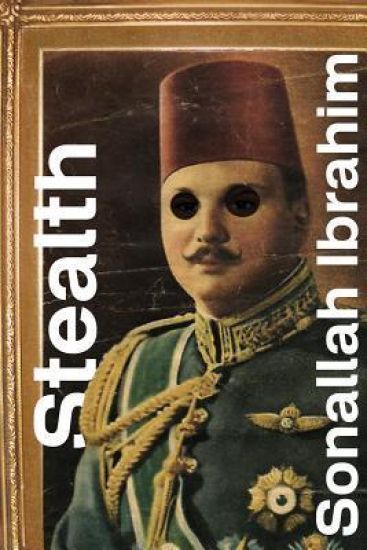
Stealth

Stealth

Sonallah Ibrahim

New Directions Publishing Corporation
2014
nidottu
Set in the turbulent years before the 1952 revolution that would overthrow King Farouk and bring Gamal Abdel Nasser to power, Stealth — by Sonallah Ibrahim, one of Egypt’s most respected and uncompromising novelists — is a gripping story seen through the eyes of an eleven-year-old boy. A young Egyptian’s coming of age proves halting and uncertain as he fails to outgrow dependence on his aging father and tries to come to terms with the absence of his mother. Through the boy’s memories, fantasies, and blunt observations, we experience his attempts at furtively spying on the world of Egyptian adults. His adventures portray a Cairo full of movie stars, royalty, revolutionaries, and ordinary people trying to survive in the decaying city.
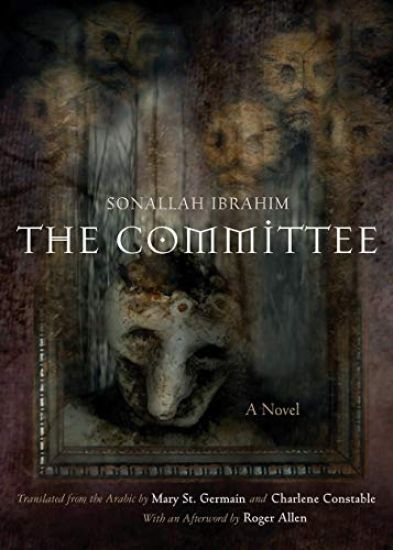
The Committee

The Committee

Sonallah Ibrahim

Syracuse University Press
2001
sidottu
Writing in an intriguingly symbolic and minimalist style, author Sonallah Ibrahim has been called the Egyptian Kafka. And no wonder. This wry take on Kafka’s The Trial revolves around its narrator’s attempts to petition successfully the elusive ruling body of his country, known simply as "the committee." Consequences for his actions range from the absurd to the hideous.In Kafkaesque fashion, Ibrahim offers an unbroken first-person narrative rendered in brief, crisp prose framed by a conspicuous absence of vivid imagery. Furthermore, the petitioner is a man without identity. The ideal anti-hero, he remains, as does his country, unnamed throughout the intricate plot with a locale suggestive of 1970s Cairo.Considered a major work, The Committee sardonically pierces the inflammatory terrain between ordinary men, unbridled displays of power, and other, broader concerns of the author’s native Egypt. The novel’s corrosive, shocking conclusion catapults satiric surrealism into a new realm.
The Committee

The Committee

Sonallah Ibrahim

SYRACUSE UNIVERSITY PRESS
2026
pokkari
This wry take on Kafka’s novel The Trial revolves around its narrator’s attempts to petition successfully the elusive ruling body of his country, known simply as "the Committee." Consequences for his actions range from the absurd to the hideous. Ibrahim offers an unbroken first-person narrative rendered in brief, crisp prose framed by a conspicuous absence of vivid imagery. Furthermore, the petitioner is a man without identity. The ideal antihero, he remains, as does his country, unnamed throughout the intricate plot with a locale suggestive of 1970s Cairo. The Committee pierces the inflammatory terrain between ordinary men, unbridled displays of power, and other broader concerns of the author’s native Egypt. The novel’s corrosive, shocking conclusion catapults satiric surrealism into a new realm.
Ice

Ice

Sonallah Ibrahim

Seagull Books London Ltd
2019
sidottu
The year is 1973. An Egyptian historian, Dr. Shukri, pursues a year of non-degree graduate studies in Moscow, the presumed heart of the socialist utopia. Through his eyes, the reader receives a guided tour of the sordid stagnation of Brezhnev-era Soviet life: intra-Soviet ethnic tensions; Russian retirees unable to afford a tin of meat; a trio of drunks splitting a bottle of vodka on the sidewalk; a Kirgiz roommate who brings his Russian girlfriend to live in his four-person dormitory room; black-marketeering Arab embassy officials; liberated but insecure Russian women; and Arab students’ debates about the geographically distant October 1973 War. Shukri records all this in the same numbly factual style familiar to fans of Sonallah Ibrahim’s That Smell, punctuating it with the only redeeming sources of beauty available: classical music LPs, newly acquired Russian vocabulary, achingly beautiful women, and strong Georgian tea. Based on Ibrahim’s own experience studying at the All-Russian Institute of Cinematography in Moscow from 1971 to 1973, Ice offers a powerful exploration of Arab confusion, Soviet dysfunction, and the fragility of leftist revolutionary ideals.
The Turban and the Hat

The Turban and the Hat

Sonallah Ibrahim

SEAGULL BOOKS LONDON LTD
2022
sidottu
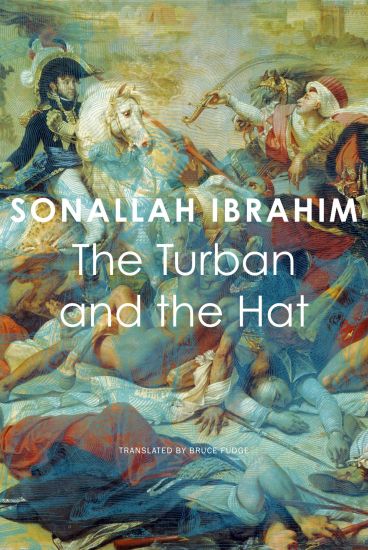
A novel of the invasion and occupation of Egypt by Napoleonic France as seen through the eyes of a young Egyptian. The Napoleonic-era French invasion and occupation of Egypt are often seen as the Arab world’s first encounter with the military and technological prowess of the West—and it came as a terrible shock. The Turban and the Hat tells the story of those three tumultuous years from the perspective of a young Egyptian living in late-eighteenth-century Cairo. Knowing some French, he works as a translator for the occupiers. He meets their scientists and artists, has an affair with Bonaparte’s mistress, and accompanies the disastrous campaign to take Syria, where he witnesses the ravages of the plague and the horrific barbarism of war. He is astonished by the invaders’ lies and propaganda, but he finds that much of what he thought he knew about his fellow Egyptians was also an illusion. Convincing in its history but rich in themes that resonate today, The Turban and the Hat is a story of resistance, but also of collaboration, cooperation, and corruption. Sonallah Ibrahim, one of Egypt’s foremost novelists, gives us a marvelous account of the Western occupation of an Arab land, one that will resonate with contemporary readers. His portrayal of this tragic—and at times comic—“clash of civilizations” is never didactic, even as it reminds us that so many lessons of history go unlearned.
Komiteen

Komiteen

Sonallah Ibrahim

Solum
2009
sidottu
Jeg-personen i boken blir stilt ovenfor en mystisk komitee. Det er en ting komiteens medlemmer fortsatt ikke vet om han, nemlig hvor han var det spesielle året. Forfatteren ser på den rollen som de multinasjonale selskapene spiller i verdenssamfunnet.
Augustistjärnan

Augustistjärnan

Sonallah Ibrahim

Alhambra Förlag AB
1990
sidottu
Byggandet av Höga Dammen i Egypten och en skoningslös klappjakt på oppositionella representerar två sidor av Nassers regim; å ena sidan vilja till ökat välstånd för de många, industrialisering och nationellt oberoende, å andra sidan den totalitära statens repression. Under de 18 år det tog att bygga dammen från 1952 till 1970, dvs hela Nassers epok, tjänade den som metafor för tidens alla förhoppningar, ständigt speglade och reflekterade i radio, press och TV, till en drömväv av myt och propaganda. Till denna fiktiva verklighetsbeskrivning bidrog också Sonallah Ibrahim och två av hans tidigare cellkamrater i ett reportage om Höga Dammens människa 1967, där dammen genom poetiska bilder och hyperboler får evig och mänsklig gestalt. Om lägren med tusentals politiska fångar och tortyren skrevs dock inte en rad. I Augustistjärnan dekonstrueras myten. Dammen blir grus och makadam och klippblock, dagsverken, maskiner och teknik avskalad alla symbolvärden till dess vi nalkas själva kärnan, byggandet i sig som skapelseakt och födelse. De djupaste drömmarna, de som kvävdes i repression, censur och personkult, blir de som skjuter in som drömbilder i texten. I fiktionen återfår verkligheten sina rätta proportioner, som de kolossala Ramsesstatyerna utanför Abu Simbel-templet sedda underifrån med sina basreliefer av tortyrscener och krigspropaganda. Sonallah Ibrahim (f. i Kairo 1938) fängslades i 20-årsåldern för att ha delat ut politiska pamfletter. Fem och ett halvt år tillbringade han i ett fångläger i öknen väster om Assuan. Under dessa år såg han medfångar torteras till döds, bland dem hans mentor och förebild Shuhdi Atiyya. Sonallah Ibrahim, som debuterade 1966, fick sitt publika erkännande i Egypten först 1994, med de första rejäla helsidorna i egyptisk press. Nästan alla Sonallahs verk hade då redan översatts till andra språk. 2004 vägrade han ta emot det egyptiska kulturministeriets årliga litteraturpris.
Kommittén

Kommittén

Sonallah Ibrahim

Alhambra Förlag AB
1994
sidottu
Hur bevarar en människa sin självkänsla och integritet, när han eller hon livet igen utsätts för grova kränkningar? Vad finns det för överlevnadsstrategier? Berättarjaget i Kommittén fogar sig till bristningsgränsen i de kränkande villkoren, men utan att förlora sin innersta kärna, sitt jag. Att han finner sig i alla förödmjukelser, och anstränger sig så att vara till lags, göra ett gott intryck och göra sitt bästa, beror på att han hyser ganska höga tankar om sig själv och inte tappar tron på systemet. Han tror på möjligheten att överlista det och de dunkal spelreglerna, med flit och förnuft. Det är förstås en illusion. Men den bär hjälten över kränkningarna. Han uthärdar dem för att vinna en större sak. Tills det brister..... Sonallah Ibrahim (f. i Kairo 1938) fängslades i 20-årsåldern på politiska grunder. Fem och ett halvt år tillbringade han i ett fångläger i öknen väster om Assuan. Under dessa år såg han medfångar torteras till döds, bland dem hans mentor och förebild Shuhdi Atiyya. Sonallah Ibrahim, som debuterade 1966, fick sitt publika erkännade i Egypten först 1994, med de första rejäla helsidorna i egyptisk press. Nästan alla Sonallahs verk hade då redan översatts till andra språk.
The Committee

The Committee

Sonallah Ibrahim

The American University in Cairo Press
2002
nidottu
Sonallah Ibrahim has been called the Egyptian Kafka. And no wonder: this wry tale revolves around its narrator's attempts to petition successfully the elusive "Committee." Consequences for his actions range from the absurd to the hideous. In an intriguingly symbolic and minimalist style Ibrahim offers an unbroken first-person narrative rendered in brief, crisp prose framed by a conspicuous absence of vivid imagery. Furthermore, the petitioner is a man without identity. The ideal antihero, he remains unnamed throughout the intricate plot, with a locale suggestive of 1970s Cairo.The Committee, first published in Arabic in 1981, sardonically pierces the inflammatory terrain between ordinary men, unbridled displays of power, and other broader concerns of the author's native Egypt. The novel's corrosive, shocking conclusion catapults satiric surrealism into a new realm.
Star of August

Star of August

Sonallah Ibrahim

SEAGULL BOOKS LONDON LTD
2026
nidottu
A piercing portrait of the Egyptian nation in upheaval in the 1960s—and a powerful critique of progress made at a human cost. In the summer of 1965, a journalist newly released from prison finds himself stranded at the sprawling site of the Aswan High Dam, the flagship project of Gamal Abdel Nasser’s modern Egypt. Amid oppressive heat, unreliable transport, a mysterious epidemic, and the oppressive gaze of state surveillance, he confronts a dramatic transformation underway: villages erased, communities displaced, and a rich past disappearing beneath the waters of a new lake. As the journalist journeys south along the Nile, his observations illuminate a key moment in Cold War politics and a society wrestling with the promises and perils of progress. Originally published in Arabic in 1974, Star of August is a masterwork by Sonallah Ibrahim—a writer who lived through these upheavals firsthand—and a timeless exploration of ideology, power, and the price of change.