Kirjojen hintavertailu. Mukana 11 627 220 kirjaa ja 12 kauppaa.

Kirjahaku

Etsi kirjoja tekijän nimen, kirjan nimen tai ISBN:n perusteella.

9 kirjaa tekijältä Sonya Huber

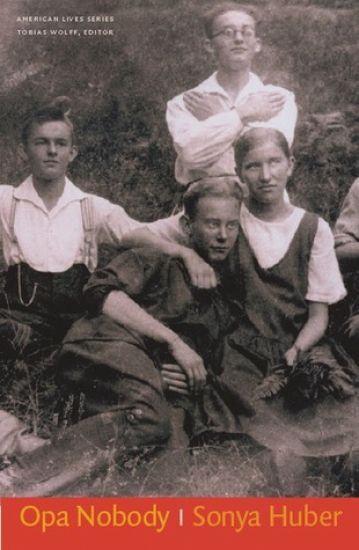
Opa Nobody

Opa Nobody

Sonya Huber

University of Nebraska Press
2008
sidottu
It had come to this: breast-feeding her screaming three-month-old while sitting on the cigarette-scarred floor of a union hall, lying to her husband so she could attend yet another activist meeting, and otherwise actively self-destructing. Then Sonya Huber turned to her long-dead grandfather, the family "nobody," for help.Huber's search for meaning and resonance in the life of her grandfather Heina Buschman was unusual insofar as she knew him only through dismissive family stories. He let his wife die of neglect . . . he used his infant son as a decoy when transporting anti-Nazi literature in a baby carriage . . . and so the stories went. What she actually discovered was that, like his granddaughter, Heina Buschman was a beleaguered but committed activist whose story echoed her own.Through her research, Huber not only conjured her grandfather's voice in answer to many of the questions that troubled her but also found in his story a source of personal sustenance. Based on extensive research and documentation, this story of Heina Buschman offers a rare look into the heart of the "average" socialist trying to survive the Nazis and rebuild a broken world. Alternating with his voice is Huber's own, providing a rich and moving counterpoint that makes this deeply personal exploration of family, politics, and individual responsibility a story for all of us and for all time.

Cover Me

Cover Me

Sonya Huber

University of Nebraska Press
2010
sidottu
Growing up in middle-class middle America, Sonya Huber viewed health care as did most of her peers: as an inconvenience or not at all. There were braces and cavities, medications and stitches, the family doctor and the local dentist. Finding herself without health insurance after college graduation, she didn't worry. It was a temporary problem. Thirteen years and twenty-three jobs later, her view of the matter was quite different. Huber's irreverent and affecting memoir of navigating the nation's health-care system brings an awful and necessary dose of reality to the political debates and propaganda surrounding health-care reform. "I look like any other upwardly mobile hipster," Huber says. "I carry a messenger bag, a few master's degrees, and a toddler raised on organic milk." What's not evident, however, is that she is a veteran of Medicaid and WIC, the federal government's supplemental nutrition program for women, infants, and children. In Cover Me, Huber tells a story that is at once all too familiar and rarely told: of being pushed to the edge by worry; of the adamant belief that better care was out there; of taking one mind-numbing job after another in pursuit of health insurance, only to find herself scrounging through the trash heap of our nation's health-care system for tips and tricks that might mean the difference between life and death.
Opa Nobody

Opa Nobody

Sonya Huber

University of Nebraska Press
2013
pokkari
It had come to this: breast-feeding her screaming three-month-old while sitting on the cigarette-scarred floor of a union hall, lying to her husband so she could attend yet another activist meeting, and otherwise actively self-destructing. Then Sonya Huber turned to her long-dead grandfather, the family "nobody," for help.Huber's search for meaning and resonance in the life of her grandfather Heina Buschman was unusual insofar as she knew him only through dismissive family stories. He let his wife die of neglect . . . he used his infant son as a decoy when transporting anti-Nazi literature in a baby carriage . . . and so the stories went. What she actually discovered was that, like his granddaughter, Heina Buschman was a beleaguered but committed activist whose story echoed her own.Through her research, Huber not only conjured her grandfather's voice in answer to many of the questions that troubled her but also found in his story a source of personal sustenance. Based on extensive research and documentation, this story of Heina Buschman offers a rare look into the heart of the "average" socialist trying to survive the Nazis and rebuild a broken world. Alternating with his voice is Huber's own, providing a rich and moving counterpoint that makes this deeply personal exploration of family, politics, and individual responsibility a story for all of us and for all time.
Pain Woman Takes Your Keys, and Other Essays from a Nervous System
Rate your pain on a scale of one to ten. What about on a scale of spicy to citrus? Is it more like a lava lamp or a mosaic? Pain, though a universal element of human experience, is dimly understood and sometimes barely managed. Pain Woman Takes Your Keys, and Other Essays from a Nervous System is a collection of literary and experimental essays about living with chronic pain. Sonya Huber moves away from a linear narrative to step through the doorway into pain itself, into that strange, unbounded reality. Although the essays are personal in nature, this collection is not a record of the author’s specific condition but an exploration that transcends pain’s airless and constraining world and focuses on its edges from wild and widely ranging angles. Huber addresses the nature and experience of invisible disability, including the challenges of gender bias in our health care system, the search for effective treatment options, and the difficulty of articulating chronic pain. She makes pain a lens of inquiry and lyricism, finds its humor and complexity, describes its irascible character, and explores its temperature, taste, and even its beauty.
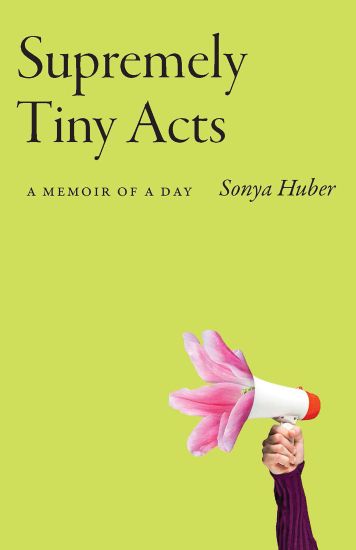
Supremely Tiny Acts

Supremely Tiny Acts

Sonya Huber

OHIO STATE UNIVERSITY PRESS
2021
pokkari
"I think we have to get to the real, to catch the facts we have, to hold on to what we see. . . .in this time where lies are currency," Sonya Huber writes in her book-length essay Supremely Tiny Acts: A Memoir of a Day. On the theory that naming the truths of quotidian experience can counter the dangerous power of lies, she carefully recounts two anxiety-fueled days one fall. On the first, she is arrested as part of a climate protest in Times Square. On the other, she must make it to her court appearance while also finding time to take her son to get his learner's permit. Paying equal attention to minor details, passing thoughts, and larger political concerns around activism and parenting in the Trump-era United States, Huber asks: How can one simultaneously be a good mother, a good worker, and a good citizen? As she reflects on the meaning of protest and on whiteness and other forms of privilege within political activism, Huber offers a wry, self-aware, and stirring testament to the everyday as a seedbed for meaningful change.
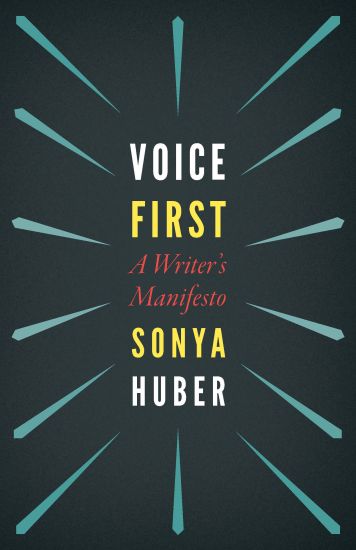
Voice First

Voice First

Sonya Huber

University of Nebraska Press
2022
pokkari
Though it is foundational to the craft of writing, the concept of voice is a mystery to many authors, and teachers of writing do not have a good working definition of it for use in the classroom. Written to address the vague and problematic advice given to writers to “find their voice,” Voice First: A Writer’s Manifesto recasts the term in the plural to give writers options, movement, and a way to understand the development of voice over time. By redefining “voice,” Sonya Huber offers writers an opportunity not only to engage their voices but to understand and experience how developing their range of voices strengthens their writing. Weaving together in-depth discussions of various concepts of voice and stories from the author’s writing life, Voice First offers a personal view of struggles with voice as influenced and shaped by gender, place of origin, privilege, race, ethnicity, and other factors, reframing and updating the conversation for the twenty-first century. Each chapter includes writing prompts and explores a different element of voice, helping writers at all levels stretch their concept of voice and develop a repertoire of voices to summon.
The 'Backwards' Research Guide for Writers

The 'Backwards' Research Guide for Writers

Sonya Huber

Equinox Publishing Ltd
2011
sidottu
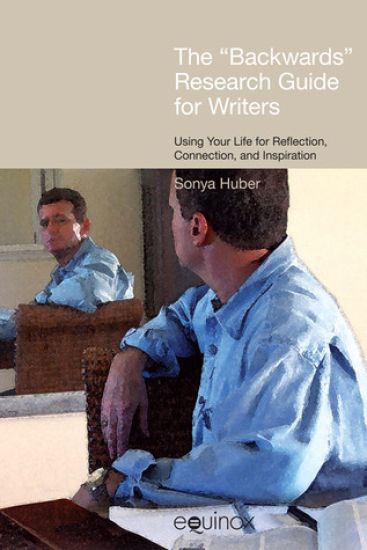
"The 'Backwards' Research Guide for Writers: Using Your Life for Reflection, Connection and Inspiration" demystifies the writing process by inviting writers of all levels to focus on their passions, questions, and obsessions as the key to generating seeds for further exploration of the world around them. Writers then develop these questions into focused projects that explore the teller's central role in the open-ended quest of unfolding a research topic. The boom in narrative journalism, memoir, and creative nonfiction has generated wonderful writing, but no resource for writers exists to bridge the gap between passionate research and the page. This book addresses that gap by turning the task of research on its head and by speaking to students who resist the idea of research as an objective and dry assignment. Students are invited to experiment creatively with collecting observations and information and then to step beyond their subjective realities to interact with the world around them and ultimately become vulnerable authors willing to change their perspectives as they research and write. Developed with input from college student writers, "The 'Backwards' Research Guide for Writers" is relevant as a text for undergraduate and postgraduate courses in composition, creative nonfiction, literary journalism, and feature writing as well as for working journalists and other writers seeking a new way of approaching a writing project. It includes interviews with notable authors that focus not on the completed and intimidating project of a successful author, but on the project as it took shape and mystified a researcher. Another unique feature is a section in every chapter on ethics, as ethical questions are central to the writing process as well as a method for sparking interest in writing and learning. The guide includes extensive examples of research challenges and dilemmas, strategies for planning a research project, exercises for generating ideas, a guide for writing the research-based work, an appendix of on-line databases, a section in each chapter focused on ethics in research and writing called gray matter, a selection of recommended readings, and a bibliography of conventional research guides.
The 'Backwards' Research Guide for Writers

The 'Backwards' Research Guide for Writers

Sonya Huber

Equinox Publishing Ltd
2011
pokkari
"The 'Backwards' Research Guide for Writers: Using Your Life for Reflection, Connection and Inspiration" demystifies the writing process by inviting writers of all levels to focus on their passions, questions, and obsessions as the key to generating seeds for further exploration of the world around them. Writers then develop these questions into focused projects that explore the teller's central role in the open-ended quest of unfolding a research topic. The boom in narrative journalism, memoir, and creative nonfiction has generated wonderful writing, but no resource for writers exists to bridge the gap between passionate research and the page. This book addresses that gap by turning the task of research on its head and by speaking to students who resist the idea of research as an objective and dry assignment. Students are invited to experiment creatively with collecting observations and information and then to step beyond their subjective realities to interact with the world around them and ultimately become vulnerable authors willing to change their perspectives as they research and write. Developed with input from college student writers, "The 'Backwards' Research Guide for Writers" is relevant as a text for undergraduate and postgraduate courses in composition, creative nonfiction, literary journalism, and feature writing as well as for working journalists and other writers seeking a new way of approaching a writing project. It includes interviews with notable authors that focus not on the completed and intimidating project of a successful author, but on the project as it took shape and mystified a researcher. Another unique feature is a section in every chapter on ethics, as ethical questions are central to the writing process as well as a method for sparking interest in writing and learning. The guide includes extensive examples of research challenges and dilemmas, strategies for planning a research project, exercises for generating ideas, a guide for writing the research-based work, an appendix of on-line databases, a section in each chapter focused on ethics in research and writing called gray matter, a selection of recommended readings, and a bibliography of conventional research guides.
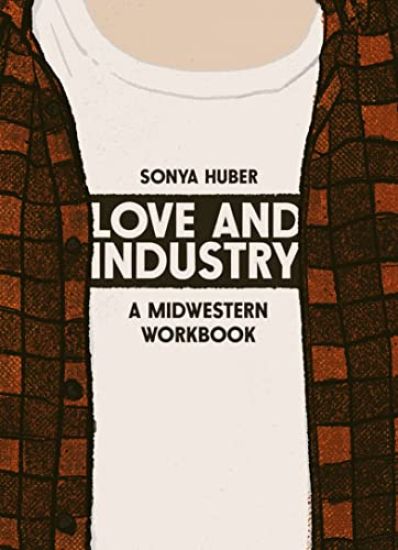
Love and Industry: A Midwestern Workbook

Love and Industry: A Midwestern Workbook

Sonya Huber

Belt Publishing
2023
nidottu
PEN/Diamonstein-Spielvogel Award for the Art of the Essay-FinalistSonya Huber, author of the award-winning Pain Woman Takes Your Keys, and Other Essays from a Nervous System, offers a candid, lyrical look inside the unsung world of exurban Illinois.New Lenox, Illinois, is a small town deep in the corn grid of the Midwest, where it runs up against the grid of south Chicagoland, a placeless location marked by geographical flatness and dwindling industry. It's also where Sonya Huber grew up, and in the twenty essays collected here, she lovingly explores the ways New Lenox--and the Midwest more generally--has come to define her life. Here, you'll find portraits of Huber's parents as they tirelessly run a small business, homages to the Gen-X joys of wearing flannel, secret insights about being a Pizza Hut waitress, and odes to the ecstasy of blasting classic rock as your car hurls along I-80. Whether she's writing about All in the Family, detailing the region's influence on David Foster Wallace, or exploring the poetry embedded in a can of Miller High Life, her vision is astute and her prose convincing. Sometimes experimental and always inventive, Love and Industry: A Midwestern Workbook takes seriously Chicagoland's farthest reaches--gritty, sweeping, a region full of its own distinct feelings of almostness--and transforms them into a map of the heart, a ramshackle territory marked by memory, family, regret, determination, and wonderment