Kirjojen hintavertailu. Mukana 11 717 486 kirjaa ja 12 kauppaa.

Kirjahaku

Etsi kirjoja tekijän nimen, kirjan nimen tai ISBN:n perusteella.

275 kirjaa tekijältä Sophocles

The Complete Plays of Sophocles

The Complete Plays of Sophocles

Sophocles

HarperPerennial
2011
nidottu
Sophocles was the dominant Athenian playwright of the fifth century BCE. His best-known work, the three-play "Oedipus cycle" ("Oedipus the King", "Oedipus at Kolonos", and "Antigone"), traces three generations of a family ravaged by the inscrutably vindictive god Apollo, who manipulates his victims into committing unforgivable acts of incest, patricide, and kin murder. In "Elektra and the Women of Trakhis" Sophocles portrays two women who act righteously to save themselves and support those they love, yet do so in ways that betray and diminish their own humanity. In his less familiar but riveting war-zone dramas, "Philoktetes" and "Aias", Sophocles works through the political and moral crises of war-weary, traumatized soldiers-a fact of life not only for the Trojan War-era protagonists of these plays but for war veterans and their families in Sophocles' Athens. All are caught up in situations we recognize - including the feeling of being played by powers beyond our control. The effectiveness and timeliness of Sophocles' dramas depend on translations such as these to resonate, intellectually and emotionally, with a contemporary audience. For a new generation entering the turbulent arena of ancient Greek drama, translators Robert Bagg and James Scully have produced a vivid, dynamic, and eminently readable translation in "The Complete Plays of Sophocles".
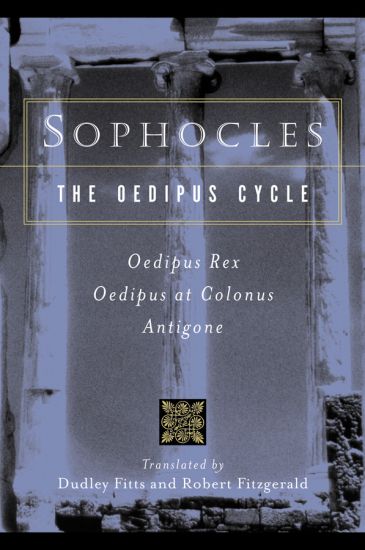
Sophocles, the Oedipus Cycle: Oedipus Rex, Oedipus at Colonus, Antigone
The critically acclaimed Fitts and Fitzgerald translation of Sophocles' Oedipus Cycle that chronicles the tragic downfall of the royal family of Thebes. The ancient myth of Oedipus, which still reverberates to this day, provided Sophocles with material for three great tragedies -- Oedipus Rex, Oedipus at Colonus, and Antigone -- that together recount the downfall of Oedipus, king of Thebes, his death in exile, and the heroic, defiant stand made by his daughter Antigone. Written for a modern audience, these English translations of Sophocles' trilogy aim to capture the directness, simplicity, and concentrated richness of Sophocles' plays in clear, credible English verse that is both readable and actable.
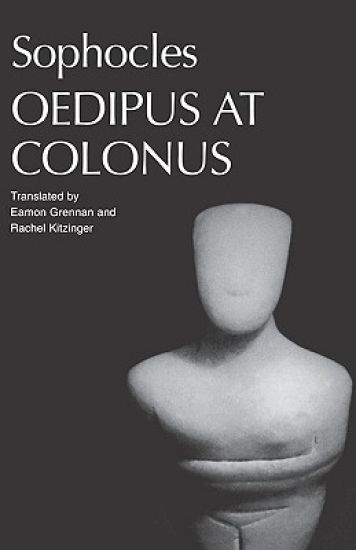
Sophocles' Oedipus at Colonus

Sophocles' Oedipus at Colonus

Sophocles

Oxford University Press Inc
2005
nidottu
The latest title to join the acclaimed Greek Tragedy in New Translations series, Sophocles' Oedipus at Colonus tells the story of the last day in the life of Oedipus. It was written at the end of the fifth century BCE in Athens, in the final years of the "Golden Age" of Athenian culture, and in the last year of Sophocles' own life. At the center of the play is the mysterious transformation of Oedipus from an old and blind beggar, totally dependent on his daughters, to the man who rises from his seat and, without help, leads everyone to the place where he is destined to die. In the background of this transformation stands the grove of the Furies, the sacred place of the implacable goddesses who pursue the violators of blood relationships. Although Oedipus, who killed his father and married his mother, is an obvious target of the Furies' vengeance, he enters their grove at the beginning of the play, sure that it is the resting place Apollo has predicted for him. The reversals and paradoxes in the play speak to the struggle that Oedipus' life and the action of the play bring vividly before us: how do we as humans, subject to constant change, find stable ground on which to stand and define our moral lives? Sophocles offers his play as a witness to the remarkable human capacity to persevere in this struggle.
Sophocles II

Sophocles II

Sophocles

University of Chicago Press
2013
sidottu
Sixty years ago, the University of Chicago Press undertook a momentous project: a new translation of the Greek tragedies that would be the ultimate resource for teachers, students, and readers. They succeeded. Under the expert management of eminent classicists David Grene and Richmond Lattimore, those translations combined accuracy, poetic immediacy, and clarity of presentation to render the surviving masterpieces of Aeschylus, Sophocles, and Euripides in an English so lively and compelling that they remain the standard translations. Today, Chicago is taking pains to ensure that our Greek tragedies remain the leading English-language versions throughout the twenty-first century. In this highly anticipated third edition, Mark Griffith and Glenn W. Most have carefully updated the translations to bring them even closer to the ancient Greek while retaining the vibrancy for which our English versions are famous. This edition also includes brand-new translations of Euripides' "Medea", "The Children of Heracles", "Andromache", and "Iphigenia among the Taurians", fragments of lost plays by Aeschylus, and the surviving portion of Sophocles' satyr-drama "The Trackers". New introductions for each play offer essential information about its first production, plot, and reception in antiquity and beyond. In addition, each volume includes an introduction to the life and work of its tragedian, as well as notes addressing textual uncertainties and a glossary of names and places mentioned in the plays. In addition to the new content, the volumes have been reorganized both within and between volumes to reflect the most up-to-date scholarship on the order in which the plays were originally written. The result is a set of handsome paperbacks destined to introduce new generations of readers to these foundational works of Western drama, art, and life.
Sophocles II

Sophocles II

Sophocles

University of Chicago Press
2013
nidottu
Sixty years ago, the University of Chicago Press undertook a momentous project: a new translation of the Greek tragedies that would be the ultimate resource for teachers, students, and readers. They succeeded. Under the expert management of eminent classicists David Grene and Richmond Lattimore, those translations combined accuracy, poetic immediacy, and clarity of presentation to render the surviving masterpieces of Aeschylus, Sophocles, and Euripides in an English so lively and compelling that they remain the standard translations. Today, Chicago is taking pains to ensure that our Greek tragedies remain the leading English-language versions throughout the twenty-first century. In this highly anticipated third edition, Mark Griffith and Glenn W. Most have carefully updated the translations to bring them even closer to the ancient Greek while retaining the vibrancy for which our English versions are famous. This edition also includes brand-new translations of Euripides' "Medea", "The Children of Heracles", "Andromache", and "Iphigenia among the Taurians", fragments of lost plays by Aeschylus, and the surviving portion of Sophocles' satyr-drama "The Trackers". New introductions for each play offer essential information about its first production, plot, and reception in antiquity and beyond. In addition, each volume includes an introduction to the life and work of its tragedian, as well as notes addressing textual uncertainties and a glossary of names and places mentioned in the plays. In addition to the new content, the volumes have been reorganized both within and between volumes to reflect the most up-to-date scholarship on the order in which the plays were originally written. The result is a set of handsome paperbacks destined to introduce new generations of readers to these foundational works of Western drama, art, and life.
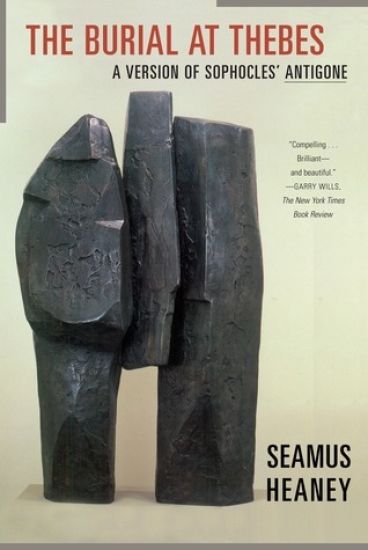
The Burial at Thebes: A Version of Sophocles' Antigone
In this outstanding new translation, commissioned by Ireland's renowned Abbey Theatre to commemorate its centenary, Seamus Heaney exposes the darkness and the humanity in Sophocles' masterpiece, and inks it with his own modern and masterly touch. Sophocles' play, first staged in the fifth century B.C., stands as a timely exploration of the conflict between those who affirm the individual's human rights and those who must protect the state's security. During the War of the Seven Against Thebes, Antigone, the daughter of Oedipus, learns that her brothers have killed each other, having been forced onto opposing sides of the battle. When Creon, king of Thebes, grants burial of one but not the "treacherous" other, Antigone defies his order, believing it her duty to bury all of her close kin. Enraged, Creon condemns her to death, and his soldiers wall her up in a tomb. While Creon eventually agrees to Antigone's release, it is too late: She takes her own life, initiating a tragic repetition of events in her family's history.
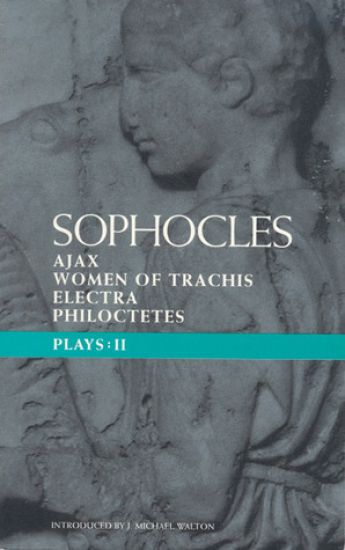
Sophocles Plays 2

Sophocles Plays 2

Sophocles

Methuen Drama
1990
nidottu
Sophocles' greatest plays reissued in the new Classical Greek Dramatists series. Introduced by series editor J Michael Walton Includes the surviving complete plays: Ajax which plots the downfall of Odysseus's greatest Trojan enemy - who slaughters a whole herd of cattle before killing himself; Women of Trachis in which the seemingly docile Deianira prepares a lethal homecoming for her womanising husband Heracles; in Electra the son and daughter of the ill-starred Agamemnon plan their revenge on their usurping stepfather and mother and finally Philoctetes in which Sophocles brilliantly explores the themes of pain, love and the betrayal of trust.
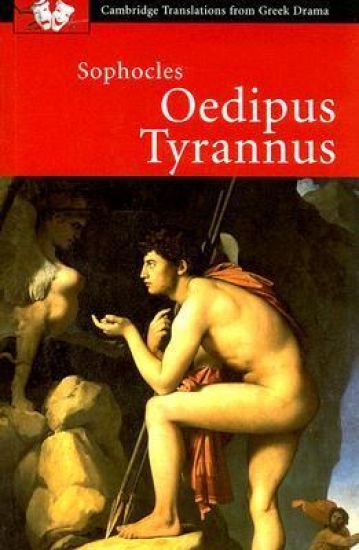
Sophocles: Oedipus Tyrannus

Sophocles: Oedipus Tyrannus

Sophocles

Cambridge University Press
2003
pokkari
Treating ancient plays as living drama. Classical Greek drama is brought vividly to life in this series of new translations. Students are encouraged to engage with the text through detailed commentaries, including suggestions for discussion and analysis. In addition, numerous practical questions stimulate ideas on staging and encourage students to explore the play's dramatic qualities. Oedipus Tyrannus is suitable for students of both Classical Civilisation and Drama. Useful features include full synopsis of the play, commentary alongside translation for easy reference and a comprehensive introduction to the Greek Theatre. Oedipus Tyrannus is aimed primarily at A-level and undergraduate students in the UK, and college students in North America.
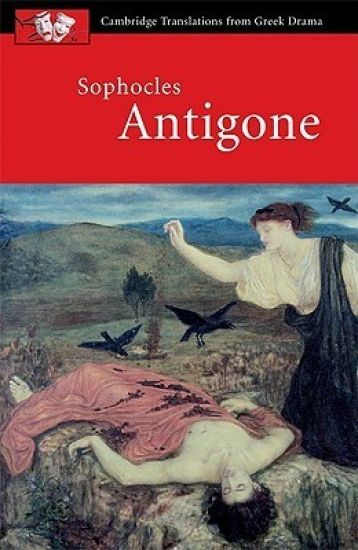
Sophocles: Antigone

Sophocles: Antigone

Sophocles

Cambridge University Press
2003
pokkari
Cambridge Translations from Greek Drama aims to eliminate the boundary between Classics students and drama students. Sophocles: Antigone is the fifth title in the series, and is aimed at A-level students in the UK and college students in North America. Features of the book include a full commentary running alongside the translation with questions to encourage discussion, notes on pronunciation and a plot synopsis. Background information to the story is also provided.
Sophocles: Electra

Sophocles: Electra

Sophocles

Cambridge University Press
1973
pokkari
In this edition of Sophocles’ Electra, one of the greatest tragedies in Greek or any literature, Mr Keels presents the play as a study in revenge, but a subtle whose meaning depends upon the continuous use of dramatic irony. He relates the confrontations of principle and character depicted to the social and political controversies of the period in which Sophocles was writing. The introduction describes the background to the play, explains some of the main features of Sophocles’ style, and outlines an interpretation which is fully worked out in the detailed commentary. There are appendices on metre and the text. The edition is intended for use by senior school and undergraduate students, and all those concerned to read and appreciate the play in the original.
Sophocles: Trachiniae

Sophocles: Trachiniae

Sophocles

Cambridge University Press
1982
pokkari
Sophocles’ Trachiniae is, in the editor's words, ‘a subtle and sophisticated play about primitive emotions’. It is also a play which presents problems to a modern audience. Making full use of recent Sphoclean scholarship, Mrs Easterling attempts in her Introduction a detailed literary analysis of Trachiniae, helping the reader to understand better its intricate structure, the treatment of Deianira and Heracles, and the meaning of the final scenes. The notes in the Commentary of grammar, syntax and style include material which will be helpful to comparative beginners in the language, but the commentary as a whole is intended for anyone with a close interest in Greek tragedy. This is an edition for classical scholars, undergraduates, and students in the upper forms of schools. The Introduction is designed to be of use to readers who do not know Greek, as well as to specialists.
Sophocles: Electra

Sophocles: Electra

Sophocles

Cambridge University Press
2011
pokkari
One of Sophocles' more accomplished dramas, the Electra has always generated a good deal of scholarly debate. This 2007 edition, the first full-scale commentary on any play of Sophocles since the nineteenth century, explores afresh long-standing controversies such as the moral status of the killing of Clytemnestra, while also investigating many subjects which have traditionally attracted less attention, such as the place of rhetoric within the drama, the use of typical scenes, and allusions to epinician poetry. It provides original metrical analyses of the lyrical sections of the play and a revised Greek text. Research on the papyri, mediaeval manuscripts and printed editions has led to a more accurate apparatus criticus than ever before, with many conjectures attributed to their rightful owners.
Sophocles: Oedipus Rex

Sophocles: Oedipus Rex

Sophocles

Cambridge University Press
2006
pokkari
'Sophocles … created a masterpiece that in the eyes of posterity has overshadowed every other achievement in the field of ancient drama …' With these words Dr Dawe sets out the importance of Oedipus Rex. He investigates why it has for so long fascinated the human mind, devoting his introduction to an examination of the story and to the technique employed by Sophocles to unfold the plot. In this revised edition he also argues for the spurious nature of the play's ending. As with the first edition, the commentary deals authoritatively with problems of language and expression, but is enhanced by reflections on the text developed in the twenty years since the publication of that first edition. Written for classical scholars and students, this is a welcome revised edition of a bestselling text.
Sophocles: Ajax

Sophocles: Ajax

Sophocles

Cambridge University Press
2001
pokkari
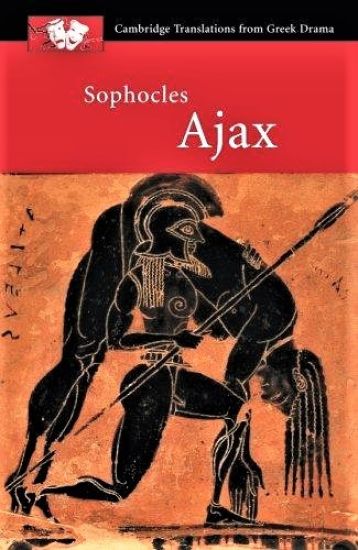
Cambridge Translations from Greek Drama aims to eliminate the boundary between classics students and drama students. Sophocles: Ajax is aimed at A level students in the UK and college students in North America. Features of the book include full commentary running alongside the translation, notes on pronunciation and a plot synopsis. Background information is also provided, along with suggestions to encourage discussion.
Sophocles: Philoctetes

Sophocles: Philoctetes

Sophocles

Cambridge University Press
2013
nidottu
Sophocles' Philoctetes is one of the most widely read Greek tragedies today but is a complex and challenging play to interpret. Its representation of Philoctetes as a sufferer of physical and emotional pain gives it remarkable power and intensity. It juxtaposes Homeric and fifth-century institutions and values, explores honor, power and expediency as principles of personal and political life, and represents contrasts and conflicts between innocence and experience, ends and means, and the needs and demands of the individual and those of society. This edition with commentary makes the play accessible to students, teachers, and other readers of Greek literature at all levels. The introduction discusses the main problems of interpretation and gives an account of its reception from antiquity to the present day.
Sophocles: Philoctetes

Sophocles: Philoctetes

Sophocles

Cambridge University Press
2013
sidottu
Sophocles' Philoctetes is one of the most widely read Greek tragedies today but is a complex and challenging play to interpret. Its representation of Philoctetes as a sufferer of physical and emotional pain gives it remarkable power and intensity. It juxtaposes Homeric and fifth-century institutions and values, explores honor, power and expediency as principles of personal and political life, and represents contrasts and conflicts between innocence and experience, ends and means, and the needs and demands of the individual and those of society. This edition with commentary makes the play accessible to students, teachers, and other readers of Greek literature at all levels. The introduction discusses the main problems of interpretation and gives an account of its reception from antiquity to the present day.
Sophocles: Electra

Sophocles: Electra

Sophocles

Cambridge University Press
2007
sidottu
One of Sophocles' more accomplished dramas, the Electra has always generated a good deal of scholarly debate. This 2007 edition, the first full-scale commentary on any play of Sophocles since the nineteenth century, explores afresh long-standing controversies such as the moral status of the killing of Clytemnestra, while also investigating many subjects which have traditionally attracted less attention, such as the place of rhetoric within the drama, the use of typical scenes, and allusions to epinician poetry. It provides original metrical analyses of the lyrical sections of the play and a revised Greek text. Research on the papyri, mediaeval manuscripts and printed editions has led to a more accurate apparatus criticus than ever before, with many conjectures attributed to their rightful owners.