
Kirjojen hintavertailu. Mukana 12 390 323 kirjaa ja 12 kauppaa.

Kirjahaku

Etsi kirjoja tekijän nimen, kirjan nimen tai ISBN:n perusteella.

3 kirjaa tekijältä Stéphane Lacroix

Twilight of the Saints

Twilight of the Saints

Stéphane Lacroix

Columbia University Press
2025
sidottu
In scarcely a century, Salafism has transformed Sunni Islam. Claiming to be a revival of the purest form of Islam, this movement promotes ultraconservative social and religious norms and rejects all non-Sunni religious groups. In Egypt, its influence has grown to the point of reshaping mainstream conceptions of the faith. How did such a deep religious transformation sweep through Egypt so rapidly? What is the significance of Salafism for the country’s political scene, both before and after Hosni Mubarak fell from power in 2011?Twilight of the Saints examines the history of Salafism in Egypt from its 1920s emergence in Cairo’s scholarly circles through the present day, shedding new light on the movement’s shifting relationship to politics. Drawing on extensive fieldwork and interviews, Stéphane Lacroix illustrates how Salafism redefined what it means to be Muslim for Egyptians. He emphasizes the factors that distinguish the Salafis from the Muslim Brotherhood, despite their parallel trajectories. The Salafis, who initially shunned oppositional politics, were looked upon more favorably by the authorities, who perceived a greater threat from their Islamist counterparts. Lacroix explores how Salafism influenced the dynamics of the 2011 revolution and the democratic transition that ended with the army’s takeover of the country, as well as how it has fared since. Twilight of the Saints offers an in-depth, authoritative understanding of the relationship of Salafism, politics, and authoritarianism in Egypt, with significant implications for the wider Muslim world.

Twilight of the Saints

Twilight of the Saints

Stéphane Lacroix

Columbia University Press
2025
pokkari
In scarcely a century, Salafism has transformed Sunni Islam. Claiming to be a revival of the purest form of Islam, this movement promotes ultraconservative social and religious norms and rejects all non-Sunni religious groups. In Egypt, its influence has grown to the point of reshaping mainstream conceptions of the faith. How did such a deep religious transformation sweep through Egypt so rapidly? What is the significance of Salafism for the country’s political scene, both before and after Hosni Mubarak fell from power in 2011?Twilight of the Saints examines the history of Salafism in Egypt from its 1920s emergence in Cairo’s scholarly circles through the present day, shedding new light on the movement’s shifting relationship to politics. Drawing on extensive fieldwork and interviews, Stéphane Lacroix illustrates how Salafism redefined what it means to be Muslim for Egyptians. He emphasizes the factors that distinguish the Salafis from the Muslim Brotherhood, despite their parallel trajectories. The Salafis, who initially shunned oppositional politics, were looked upon more favorably by the authorities, who perceived a greater threat from their Islamist counterparts. Lacroix explores how Salafism influenced the dynamics of the 2011 revolution and the democratic transition that ended with the army’s takeover of the country, as well as how it has fared since. Twilight of the Saints offers an in-depth, authoritative understanding of the relationship of Salafism, politics, and authoritarianism in Egypt, with significant implications for the wider Muslim world.
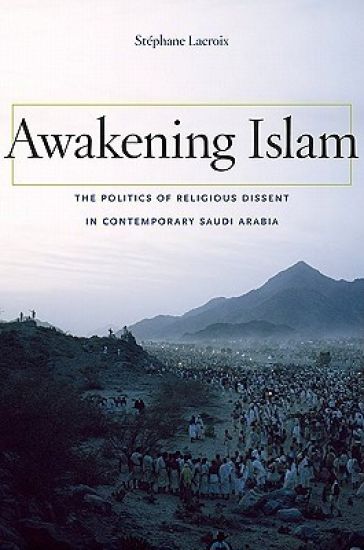
Awakening Islam

Awakening Islam

Stéphane Lacroix

Harvard University Press
2011
sidottu
Amidst the roil of war and instability across the Middle East, the West is still searching for ways to understand the Islamic world. Stéphane Lacroix has now given us a penetrating look at the political dynamics of Saudi Arabia, one of the most opaque of Muslim countries and the place that gave birth to Osama bin Laden.The result is a history that has never been told before. Lacroix shows how thousands of Islamist militants from Egypt, Syria, and other Middle Eastern countries, starting in the 1950s, escaped persecution and found refuge in Saudi Arabia, where they were integrated into the core of key state institutions and society. The transformative result was the Sahwa, or “Islamic Awakening,” an indigenous social movement that blended political activism with local religious ideas. Awakening Islam offers a pioneering analysis of how the movement became an essential element of Saudi society, and why, in the late 1980s, it turned against the very state that had nurtured it. Though the “Sahwa Insurrection” failed, it has bequeathed the world two very different, and very determined, heirs: the Islamo-liberals, who seek an Islamic constitutional monarchy through peaceful activism, and the neo-jihadis, supporters of bin Laden's violent campaign.Awakening Islam is built upon seldom-seen documents in Arabic, numerous travels through the country, and interviews with an unprecedented number of Saudi Islamists across the ranks of today’s movement. The result affords unique insight into a closed culture and its potent brand of Islam, which has been exported across the world and which remains dangerously misunderstood.