Kirjojen hintavertailu. Mukana 11 244 527 kirjaa ja 12 kauppaa.

Kirjahaku

Etsi kirjoja tekijän nimen, kirjan nimen tai ISBN:n perusteella.

6 kirjaa tekijältä Stacey Abbott

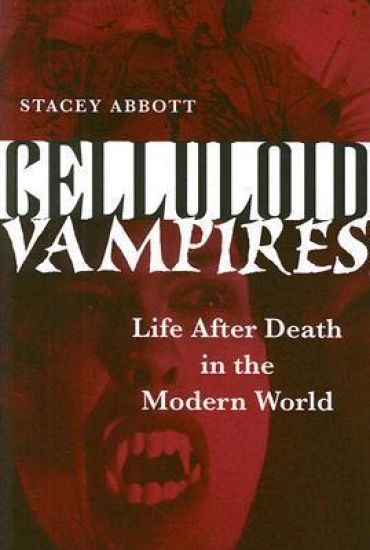
Celluloid Vampires

Celluloid Vampires

Stacey Abbott

University of Texas Press
2007
pokkari
In 1896, French magician and filmmaker George Méliès brought forth the first celluloid vampire in his film Le manoir du diable. The vampire continues to be one of film's most popular gothic monsters and in fact, today more people become acquainted with the vampire through film than through literature, such as Bram Stoker's classic Dracula. How has this long legacy of celluloid vampires affected our understanding of vampire mythology? And how has the vampire morphed from its folkloric and literary origins? In this entertaining and absorbing work, Stacey Abbott challenges the conventional interpretation of vampire mythology and argues that the medium of film has completely reinvented the vampire archetype. Rather than representing the primitive and folkloric, the vampire has come to embody the very experience of modernity. No longer in a cape and coffin, today's vampire resides in major cities, listens to punk music, embraces technology, and adapts to any situation. Sometimes she's even female. With case studies of vampire classics such as Nosferatu, Martin, Blade, and Habit, the author traces the evolution of the American vampire film, arguing that vampires are more than just blood-drinking monsters; they reflect the cultural and social climate of the societies that produce them, especially during times of intense change and modernization. Abbott also explores how independent filmmaking techniques, special effects makeup, and the stunning and ultramodern computer-generated effects of recent films have affected the representation of the vampire in film.
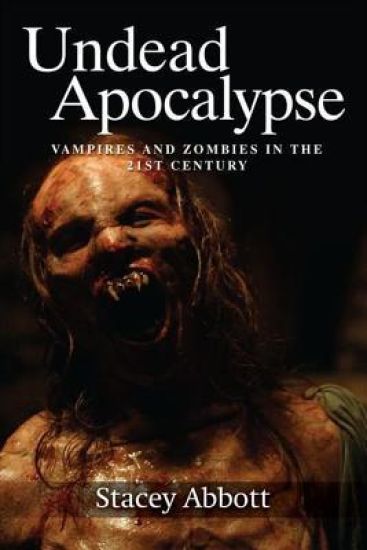
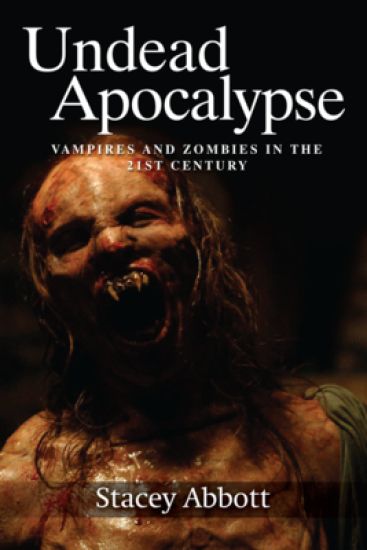
Undead Apocalypse

Undead Apocalypse

Stacey Abbott

Edinburgh University Press
2016
sidottu
Twenty-first century film and television is overwhelmed with images of the undead. Vampires and zombies have often been seen as oppositional: one alluring, the other repellant; one seductive, the other infectious. With case studies of films like I Am Legend and 28 Days Later, as well as TV programmes like Angel and The Walking Dead, this book challenges these popular assumptions and reveals the increasing interconnection of undead genres. Exploring how the figure of the vampire has been infused with the language of science, disease and apocalypse, while the zombie text has increasingly been influenced by the trope of the 'reluctant' vampire, Stacey Abbott shows how both archetypes are actually two sides of the same undead coin. When considered together they present a dystopian, sometimes apocalyptic, vision of twenty-first century existence.
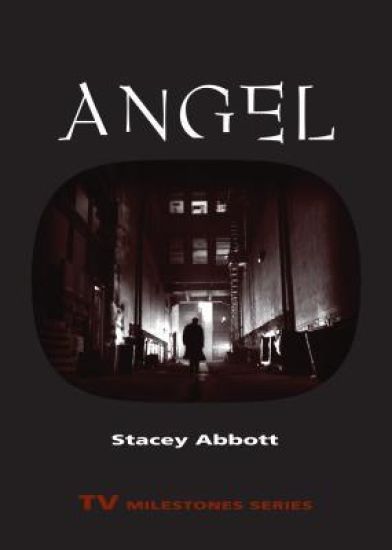
Angel

Angel

Stacey Abbott

Wayne State University Press
2009
nidottu
Following the phenomenal success of the first three seasons of Buffy the Vampire Slayer on the WB Network, writers and producers Joss Whedon and David Greenwalt moved their character Angel to his own spin-off series in 1999. While Angel, which followed its namesake vampire with a soul who had become Buffy's tragic love interest, never quite matched the popularity of Buffy, the spin-off was notable for being specifically aimed at adult audiences and acquiring an intensely loyal following. In this in-depth study of Angel, Stacey Abbott demonstrates that producers of the show used the commercial convention of the spin-off not simply to repeat Buffy's successful formula but to create a complex televisual experience with its own distinct identity and creativity.Through close textual analysis of a range of individual episodes, this volume focuses on the series' unique visual style and the ways it experiments with the conventions and form of television programming. Abbott clearly situates Angel within traditions of the horror genre on television and in so doing addresses how the horror genre has evolved to suit the changing landscape of contemporary television. She also challenges the tendency to attribute the success of contemporary cult television to a sole auteur by examining the contribution of Angel's writing team and addressing how contemporary television is characterized by a collective creativity. Finally, while there has been a vast amount of scholarly interest in Angel's parent show in terms of feminist issues, this volume positions Angel as a key text within gender and feminist studies that offers a clever deconstruction of contemporary masculinity.In all, Abbott argues that Angel uses narrative, genre, visual style, and theme to create an ambiguous moral landscape in which characters struggle to negotiate the correct path when the consequences of their actions are unknown. Fans of Angel and students and scholars of film and television studies will enjoy this thought-provoking analysis of the series.
Undead Apocalypse

Undead Apocalypse

Stacey Abbott

Edinburgh University Press
2018
nidottu
Twenty-first century film and television is overwhelmed with images of the undead. Vampires and zombies have often been seen as oppositional: one alluring, the other repellant; one seductive, the other infectious. With case studies of films like I Am Legend and 28 Days Later, as well as TV programmes like Angel and The Walking Dead, this book challenges these popular assumptions and reveals the increasing interconnection of undead genres. Exploring how the figure of the vampire has been infused with the language of science, disease and apocalypse, while the zombie text has increasingly been influenced by the trope of the 'reluctant' vampire, Stacey Abbott shows how both archetypes are actually two sides of the same undead coin. When considered together they present a dystopian, sometimes apocalyptic, vision of twenty-first century existence.
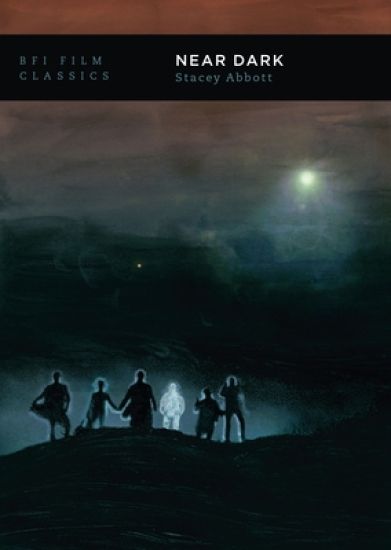
Near Dark

Near Dark

Stacey Abbott

BFI Publishing
2020
nidottu
First released in 1987, Near Dark is a vampire film set in the contemporary American Midwest that tells the story of Caleb, a half-vampire trying to decide whether to embrace his vampire nature or return to his human family. The film, an early work of the now-established director Kathryn Bigelow, skilfully mixes genre conventions, combining gothic tropes with those of the Western, road movie and film noir, while also introducing elements of the outlaw romance genre.Stacey Abbott’s study of the film addresses it as a genre hybrid that also challenges conventions of the vampire film. The vampires are morally ambiguous and undermine the class structures that have historically defined stories of the undead. These are not aristocrats but instead they capture the allure and horror of the disenfranchised and the underclass. As Abbott describes, Near Dark was crucial in consolidating Bigelow’s standing as a director of significance at an early point in her career, not simply because of her visual art background, but because of the way in which she would from Near Dark onward re-envision other traditionally mainstream genres of filmmaking.
Reading Angel

Reading Angel

Stacey Abbott

I.B. Tauris
2005
nidottu
In 1999 Angel's creator Joss Whedon moved the vampire with a soul from the successful series "Buffy the Vampire Slayer" to his very own spin-off series "Angel". With a cast of characters as tormented by their pasts as is Angel himself, the spin-off has developed its own preoccupations, exploring a darker vision of alienation, atonement and the fight for redemption, with humour and a fine, noir style. The series will complete its run in 2005 and this first discussion and celebration of Angel as a distinct entity explores the full five seasons, with a complete episode guide. The cinematic aesthetics of Angel, its music, shifting portrayals of masculinity, the noir Los Angeles setting, impact of comedy, the superhero, horror, and the influence of corporate and global evil in the form of Wolfram & Hart are just a few of the subjects addressed in this tribute to Angel for its many fans who will be going into mourning in 2005.