Kirjojen hintavertailu. Mukana 12 016 292 kirjaa ja 12 kauppaa.

Kirjahaku

Etsi kirjoja tekijän nimen, kirjan nimen tai ISBN:n perusteella.

7 kirjaa tekijältä Stacy Alaimo

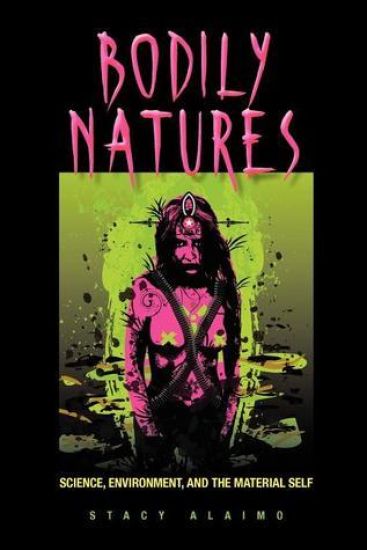
Bodily Natures

Bodily Natures

Stacy Alaimo

Indiana University Press
2010
pokkari
How do we understand the agency and significance of material forces and their interface with human bodies? What does it mean to be human in these times, with bodies that are inextricably interconnected with our physical world? Bodily Natures considers these questions by grappling with powerful and pervasive material forces and their increasingly harmful effects on the human body. Drawing on feminist theory, environmental studies, and the sciences, Stacy Alaimo focuses on trans-corporeality, or movement across bodies and nature, which has profoundly altered our sense of self. By looking at a broad range of creative and philosophical writings, Alaimo illuminates how science, politics, and culture collide, while considering the closeness of the human body to the environment.
Undomesticated Ground

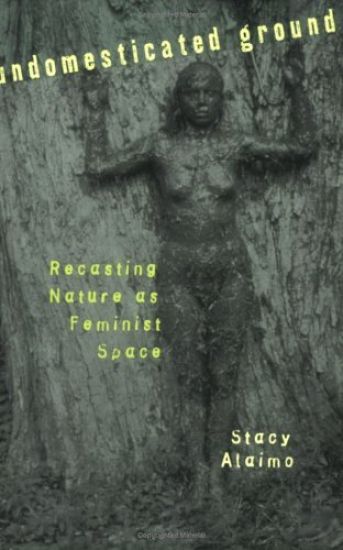
Undomesticated Ground

Stacy Alaimo

Cornell University Press
2000
pokkari
From "Mother Earth" to "Mother Nature," women have for centuries been associated with nature. Feminists, troubled by the way in which such representations show women controlled by powerful natural forces and confined to domestic space, have sought to distance themselves from nature. In Undomesticated Ground, Stacy Alaimo issues a bold call to reclaim nature as feminist space. Her analysis of a remarkable range of feminist writings—as well as of popular journalism, visual arts, television, and film—powerfully demonstrates that nature has been and continues to be an essential concept for feminist theory and practice.Alaimo urges feminist theorists to rethink the concept of nature by probing the vastly different meanings that it carries. She discusses its significance for Americans engaged in social and political struggles from, for example, the "Indian Wars" of the early nineteenth century, to the birth control movement in the 1920s, to contemporary battles against racism and heterosexism. Reading works by Catherine Sedgwick, Mary Austin, Emma Goldman, Nella Larson, Donna Haraway, Toni Morrison, and others, Alaimo finds that some of these writers strategically invoke nature for feminist purposes while others cast nature as a postmodern agent of resistance in the service of both environmentalism and the women's movement.By examining the importance of nature within literary and political texts, this book greatly expands the parameters of the nature writing genre and establishes nature as a crucial site for the cultural work of feminism.
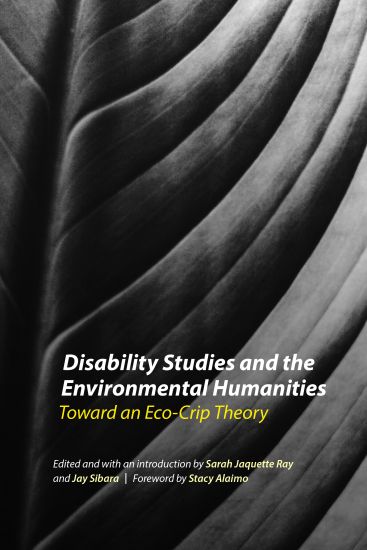
Disability Studies and the Environmental Humanities

Disability Studies and the Environmental Humanities

Stacy Alaimo

University of Nebraska Press
2017
sidottu
Although scholars in the environmental humanities have been exploring the dichotomy between “wild” and “built” environments for several years, few have focused on the field of disability studies, a discipline that enlists the contingency between environments and bodies as a foundation of its scholarship. On the other hand, scholars in disability studies have demonstrated the ways in which the built environment privileges some bodies and minds over others, yet they have rarely examined the ways in which toxic environments engender chronic illness and disability or how environmental illnesses disrupt dominant paradigms for scrutinizing “disability.” Designed as a reader for undergraduate and graduate courses, Disability Studies and the Environmental Humanities employs interdisciplinary perspectives to examine such issues as slow violence, imperialism, race, toxicity, eco-sickness, the body in environmental justice, ableism, and other topics. With a historical scope spanning the seventeenth century to the present, this collection not only presents the foundational documents informing this intersection of fields but also showcases the most current work, making it an indispensable reference.
Exposed

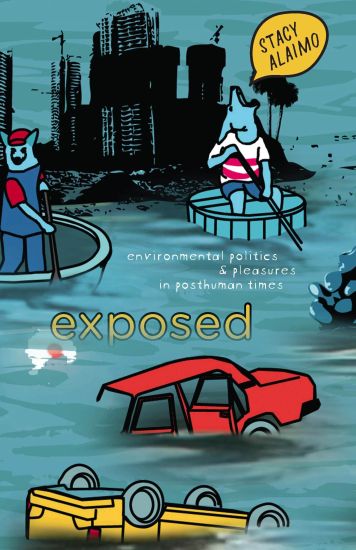
Exposed

Stacy Alaimo

University of Minnesota Press
2016
nidottu
Opening with the statement The anthropocene is no time to set things straight,Stacy Alaimo puts forth potent arguments for a material feminist posthumanism in the chapters that follow. From trans-species art and queer animals to naked protesting and scientific accounts of fishy humans, Exposed argues for feminist posthumanism immersed in strange agencies and scale-shifting ethics. Including such divergent topics as landscape art, ocean ecologies, and plastic activism, Alaimo explores our environmental predicaments to better understand feminist occupations of transcorporeal subjectivity. She puts scientists, activists, artists, writers, and theorists in conversation, revealing that the state of the planet in the twenty-first century has radically transformed ethics, politics, and what it means to be human. Ultimately, Exposed calls for an environmental stance in which, rather than operating from an externalized perspective, we think, feel, and act as the very stuff of the world.
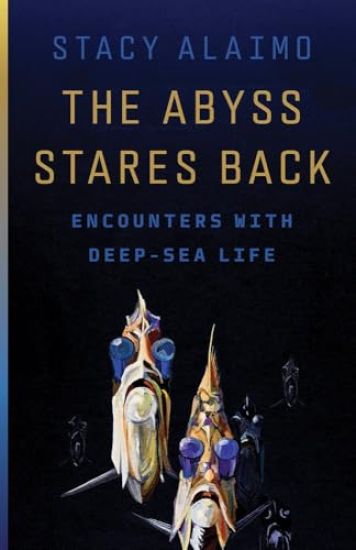
The Abyss Stares Back

The Abyss Stares Back

Stacy Alaimo

UNIVERSITY OF MINNESOTA PRESS
2025
sidottu
In an era of accelerating extinctions, what does it mean to discover thousands of new species in the deep sea? As we see the catastrophic effects of the Anthropocene proliferate, advanced technologies also grant us greater access to the furthest reaches of the world’s oceans, facilitating the discovery of countless new species. Sorting through the implications of this strange paradox, Stacy Alaimo explores the influence this newfound intimacy with the deep sea might have on our broader relationship to the nonhuman world. While many images of these abyssal creatures circulate as shallow clickbait, aesthetic representations can be enticing lures for speculating about their lives, profoundly expanding our environmental concern. The Abyss Stares Back analyzes a diverse range of scientific, literary, and artistic accounts of deep-sea exploration, including work from the naturalist William Beebe and the artist Else Bostelmann as well as results of the Census of Marine Life that began at the turn of the twenty-first century. As she focuses on oft-overlooked creatures of the deep, such as tubeworms, hatchetfish, siphonophores, and cephalopods, which are typically cast as “alien,” Alaimo shows how depictions of the deep seas have been enmeshed in long colonial histories and racist constructions of a threatening abyss. Drawing on feminist environmentalism, posthumanism, science and technology studies, and Indigenous and non-Western perspectives, Alaimo details how our understanding of science is fundamentally altered by aesthetic encounters with these otherworldly life forms. She argues that, although the deep sea is often thought of as a lifeless void with little connection to human existence, our increasing devastation of this realm underscores our ethical obligation to protect the biodiverse life in the depths. When the abyss stares back, it demands recognition. Retail e-book files for this title are screen-reader friendly with images accompanied by short alt text and/or extended descriptions.
Disability Studies and the Environmental Humanities

Disability Studies and the Environmental Humanities

Stacy Alaimo

University of Nebraska Press
2018
pokkari
Although scholars in the environmental humanities have been exploring the dichotomy between “wild” and “built” environments for several years, few have focused on the field of disability studies, a discipline that enlists the contingency between environments and bodies as a foundation of its scholarship. On the other hand, scholars in disability studies have demonstrated the ways in which the built environment privileges some bodies and minds over others, yet they have rarely examined the ways in which toxic environments engender chronic illness and disability or how environmental illnesses disrupt dominant paradigms for scrutinizing “disability.” Designed as a reader for undergraduate and graduate courses, Disability Studies and the Environmental Humanities employs interdisciplinary perspectives to examine such issues as slow violence, imperialism, race, toxicity, eco-sickness, the body in environmental justice, ableism, and other topics. With a historical scope spanning the seventeenth century to the present, this collection not only presents the foundational documents informing this intersection of fields but also showcases the most current work, making it an indispensable reference.
The Abyss Stares Back

The Abyss Stares Back

Stacy Alaimo

UNIVERSITY OF MINNESOTA PRESS
2025
nidottu
In an era of accelerating extinctions, what does it mean to discover thousands of new species in the deep sea? As we see the catastrophic effects of the Anthropocene proliferate, advanced technologies also grant us greater access to the furthest reaches of the world’s oceans, facilitating the discovery of countless new species. Sorting through the implications of this strange paradox, Stacy Alaimo explores the influence this newfound intimacy with the deep sea might have on our broader relationship to the nonhuman world. While many images of these abyssal creatures circulate as shallow clickbait, aesthetic representations can be enticing lures for speculating about their lives, profoundly expanding our environmental concern. The Abyss Stares Back analyzes a diverse range of scientific, literary, and artistic accounts of deep-sea exploration, including work from the naturalist William Beebe and the artist Else Bostelmann as well as results of the Census of Marine Life that began at the turn of the twenty-first century. As she focuses on oft-overlooked creatures of the deep, such as tubeworms, hatchetfish, siphonophores, and cephalopods, which are typically cast as “alien,” Alaimo shows how depictions of the deep seas have been enmeshed in long colonial histories and racist constructions of a threatening abyss. Drawing on feminist environmentalism, posthumanism, science and technology studies, and Indigenous and non-Western perspectives, Alaimo details how our understanding of science is fundamentally altered by aesthetic encounters with these otherworldly life forms. She argues that, although the deep sea is often thought of as a lifeless void with little connection to human existence, our increasing devastation of this realm underscores our ethical obligation to protect the biodiverse life in the depths. When the abyss stares back, it demands recognition. Retail e-book files for this title are screen-reader friendly with images accompanied by short alt text and/or extended descriptions.