Kirjojen hintavertailu. Mukana 11 699 587 kirjaa ja 12 kauppaa.

Kirjahaku

Etsi kirjoja tekijän nimen, kirjan nimen tai ISBN:n perusteella.

3 kirjaa tekijältä Stacy I. Morgan

Rethinking Social Realism

Rethinking Social Realism

Stacy I. Morgan

University of Georgia Press
2004
pokkari
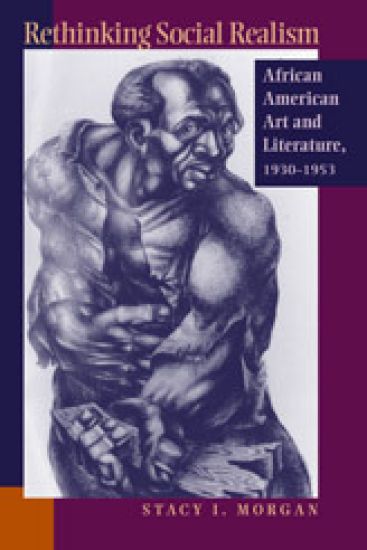
The social realist movement, with its focus on proletarian themes and its strong ties to New Deal programs and leftist politics, has long been considered a depression-era phenomenon that ended with the start of World War II. This study explores how and why African American writers and visual artists sustained an engagement with the themes and aesthetics of social realism into the early cold war-era—far longer than a majority of their white counterparts.Stacy I. Morgan recalls the social realist atmosphere in which certain African American artists and writers were immersed and shows how black social realism served alternately to question the existing order, instill race pride, and build interracial, working-class coalitions. Morgan discusses, among others, such figures as Charles White, John Wilson, Frank Marshall Davis, Willard Motley, Langston Hughes, Sterling Brown, Elizabeth Catlett, and Hale Woodruff.
Frankie and Johnny

Frankie and Johnny

Stacy I. Morgan

University of Texas Press
2017
sidottu
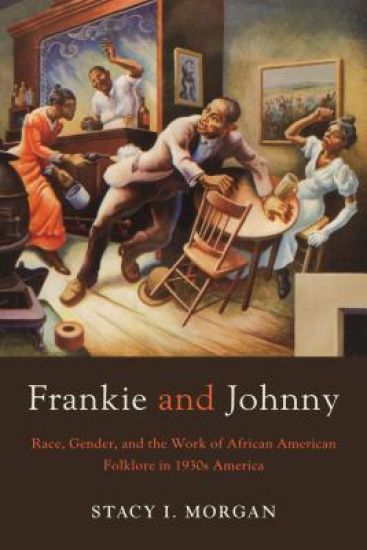
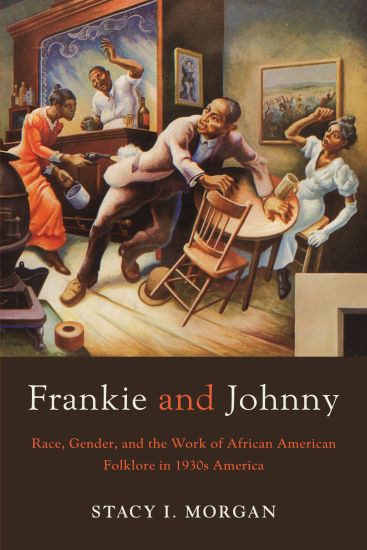
Winner, Wayland D. Hand Prize, American Folklore Society, 2018Originating in a homicide in St. Louis in 1899, the ballad of “Frankie and Johnny” became one of America’s most familiar songs during the first half of the twentieth century. It crossed lines of race, class, and artistic genres, taking form in such varied expressions as a folk song performed by Huddie Ledbetter (Lead Belly); a ballet choreographed by Ruth Page and Bentley Stone under New Deal sponsorship; a mural in the Missouri State Capitol by Thomas Hart Benton; a play by John Huston; a motion picture, She Done Him Wrong, that made Mae West a national celebrity; and an anti-lynching poem by Sterling Brown.In this innovative book, Stacy I. Morgan explores why African American folklore-and “Frankie and Johnny” in particular-became prized source material for artists of diverse political and aesthetic sensibilities. He looks at a confluence of factors, including the Harlem Renaissance, the Great Depression, and resurgent nationalism, that led those creators to engage with this ubiquitous song. Morgan’s research uncovers the wide range of work that artists called upon African American folklore to perform in the 1930s, as it alternately reinforced and challenged norms of race, gender, and appropriate subjects for artistic expression. He demonstrates that the folklorists and creative artists of that generation forged a new national culture in which African American folk songs featured centrally not only in folk and popular culture but in the fine arts as well.
Frankie and Johnny

Frankie and Johnny

Stacy I. Morgan

University of Texas Press
2017
nidottu
Winner, Wayland D. Hand Prize, American Folklore Society, 2018Originating in a homicide in St. Louis in 1899, the ballad of “Frankie and Johnny” became one of America’s most familiar songs during the first half of the twentieth century. It crossed lines of race, class, and artistic genres, taking form in such varied expressions as a folk song performed by Huddie Ledbetter (Lead Belly); a ballet choreographed by Ruth Page and Bentley Stone under New Deal sponsorship; a mural in the Missouri State Capitol by Thomas Hart Benton; a play by John Huston; a motion picture, She Done Him Wrong, that made Mae West a national celebrity; and an anti-lynching poem by Sterling Brown.In this innovative book, Stacy I. Morgan explores why African American folklore-and “Frankie and Johnny” in particular-became prized source material for artists of diverse political and aesthetic sensibilities. He looks at a confluence of factors, including the Harlem Renaissance, the Great Depression, and resurgent nationalism, that led those creators to engage with this ubiquitous song. Morgan’s research uncovers the wide range of work that artists called upon African American folklore to perform in the 1930s, as it alternately reinforced and challenged norms of race, gender, and appropriate subjects for artistic expression. He demonstrates that the folklorists and creative artists of that generation forged a new national culture in which African American folk songs featured centrally not only in folk and popular culture but in the fine arts as well.