Kirjojen hintavertailu. Mukana 11 717 486 kirjaa ja 12 kauppaa.

Kirjahaku

Etsi kirjoja tekijän nimen, kirjan nimen tai ISBN:n perusteella.

18 kirjaa tekijältä Stan Beckensall

Prehistoric Rock Art in Britain

Prehistoric Rock Art in Britain

Stan Beckensall

NPI Media Group
1999
sidottu
This text offers the reader an insight into rock-art, allowing people to discover a whole new way of looking at landscape and the countryside. Such discoveries can bring joy and companionship in the search, something that has always been a vital part of archaeology.
Northumberland

Northumberland

Stan Beckensall

NPI Media Group
2001
nidottu
Stan Beckensall has lived and worked in Northumberland for 35 years and this is first and foremost an insider's book. The outstanding natural beauty and distinctive geology of the county, and its county's rich archaeology and history, are seen through a series of case studies.
Prehistoric Rock Art in Northumberland

Prehistoric Rock Art in Northumberland

Stan Beckensall

The History Press Ltd
2001
nidottu
Northumberland is the most prolific, varied and important area of rock-art in Britain. This book, which includes every known site, relates the art to its landscape and monumental setting. This work follows naturally from the author's general work on rock art, British Prehistoric Rock Art and his recent widely acclaimed book Northumberland: Power of Place.
British Prehistoric Rock Art

British Prehistoric Rock Art

Stan Beckensall

The History Press Ltd
2002
nidottu
Stan Beckensall's enthusiasm for rock art makes him the ideal author for this guide to the abstract motifs and symbols spread across the landscape. Here he focuses on detailed regional surveys carried out in Northumberland, Yorkshire, southwest England and Wales, Galloway, Argyll, Tayside, the Highlands, and Grampians, and on rock art associated with standing stones, stone circles, burial monuments and rock shelters. The history of recording and studying the art is discussed, and a good collation of examples and descriptions are given.
Prehistoric Rock Art in Cumbria

Prehistoric Rock Art in Cumbria

Stan Beckensall

The History Press Ltd
2002
nidottu
Many exciting discoveries of prehistoric rock art have been made recently in Cumbria. They are included in this complete account of the earliest human communication, some 4–5000 years ago on outcrop rock, earthfast boulders, burials and other ritual structures. They are in some of Britain’s most beautiful places.
Prehistoric Northumberland

Prehistoric Northumberland

Stan Beckensall

The History Press Ltd
2003
nidottu
This glorious evocation of Northumberland in prehistory reflects Stan Beckensall's tireless exploration of the county and his deep understanding of its past. Woven together using evidence derived through fieldwalking, aerial photography, excavation and archival research, the very fabric of this book is vibrant with life. It is an account of the way in which the landscape has been used since hunter-gatherers first roamed the wilderness, how great changes were brought about by farming, and what we can interpret from the lasting remains of monuments, burials, settlements and defences. All of this evidence is used to paint a vivid picture of how the people of the county lived their lives.
Place Names and Field Names of Northumberland

Place Names and Field Names of Northumberland

Stan Beckensall

The History Press Ltd
2006
nidottu
Stan Beckensall, the doyen of writers about Northumberland, opens readers’ eyes to the world about them by showing how the names of local places and fields speak of the county’s landscape, its history and the life of its people.The text is replete with striking examples of the origins, meanings and changes of many local names, and is coupled with a wide range of illustrations –- photographs (especially air photos) , documents and maps (many published for the first time and reproduced by permission of the Duke of Northumberland).All the research for the field name section of the book was carried out by the author himself.
Circles in Stone

Circles in Stone

Stan Beckensall

The History Press Ltd
2006
nidottu
Takes a view of what rock art entails, covering the history of rock art research and the discovery of many sites. This work illustrates the different symbols and motifs that are found throughout the British Isles, and shows where they occur in landscapes and monuments. It examines the various theories about the origin, use and meaning of rock art.
Hexham

Hexham

Stan Beckensall

The History Press Ltd
2007
nidottu
Situated in the picturesque Tyne Valley in a landscape marked by Hadrian's Wall, Hexham is a town steeped in ancient history. This illustrated guide contains 130 archive images accompanied by captions that explore the heritage of the medieval market town of Hexham.
Northumberland From The Air

Northumberland From The Air

Stan Beckensall

The History Press Ltd
2008
nidottu
Northumberland from the Air presents a series of aerial photographs from all over Northumberland, taken by an author who is intimately connected with all the sites on the ground. Stan Beckensall has written about these sites, excavated some of them and photographed them all. To begin with, the photographs cover a specific archaeological excavation over a period of four years, then set this into its wider context in order to show the value of aerial photography. Others cover selected places on the coast, hills and scarplands, towns, villages, monuments, fortifications, church sites, industries, land use, water, estates and deserted villages. Many of these are famous on the tourist maps, but others are less well-known. All are accompanied by perceptive observations on what can be seen in the images and provide a fascinating new perspective on this area.
Rituals of Death

Rituals of Death

Stan Beckensall

PEN SWORD BOOKS LTD
2023
sidottu
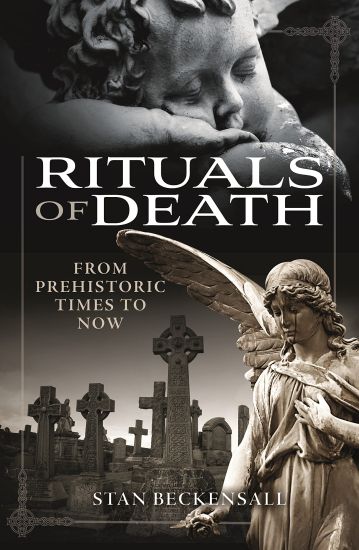
We all must die, and how society deals with the disposal is fascinating in the way it reflects the beliefs of the people of the time and ways in which they honour or do not honour the dead. Having excavated prehistoric burials, the author weighs carefully the evidence of what people might have thought of the dead through the way they buried them and what was put into the graves. These excavations were done mainly with the help of young people, and the way that this has been organised in order to get the maximum information has been an essential part of the task. The author provides much detail of this that makes it more interesting and personal. Burial customs change, so the book includes a section on events such as the Black Death and cholera to show how such catastrophes change people's minds and customs. The present problem of burial has been highlighted as it was then by the horror of an invisible disease, the effects of which we have to cope with. In the past the causes of the disease, when discovered, led to Public health inquiries into the causes, and to improvements in some burial grounds. The traditional burial in God's little Acre' around a church provides with much information about people through their headstones and other monuments - something accessible to all who visit our churches today, and examples from Northumberland give a typical range of what we find there.
Northumberland Churches

Northumberland Churches

Stan Beckensall

Amberley Publishing
2013
nidottu
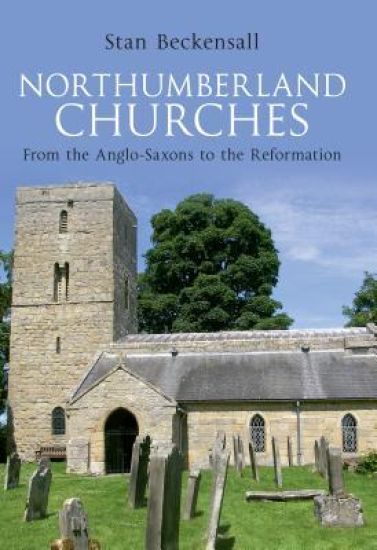
Northumberland was one of the greatest influences on the development of Christianity in Europe. Stan Beckensall guides the reader in words and full-colour pictures through the history of Northumberland's old churches, from the Anglo-Saxon period to the Reformation. The architecture of these beautiful buildings provides a unique insight into the history of the county. The Anglo-Saxon period saw the production of the Lindisfarne Gospels on Holy Island and those of the Venerable Bede in nearby Jarrow. This 'golden age' also produced exceptionally fine church buildings and their contents, many of which were later to be laid waste by Vikings. This book traces the achievements of that age through remaining structures such as the incredible crypt at Hexham, the tall, slender towers that are still part of many churches, and other features. The Norman period is also well represented, followed by the Transitional period when the pointed arch began to replace the rounded one, until it replaced it fully. Northumberland's development was then largely determined by its position as border country, which seriously affected church construction, the emphasis being more on defence in castles and fortified towers. Such period trends were confined to slight changes in existing churches, and there were few later developments except in Alnwick, protected by the defences of that town. In addition, Beckensall looks at the origins of the names of towns and villages that had churches, and comments on their location, with the help of stunning aerial photography.
Northumberland

Northumberland

Stan Beckensall

Fonthill Media
2015
nidottu
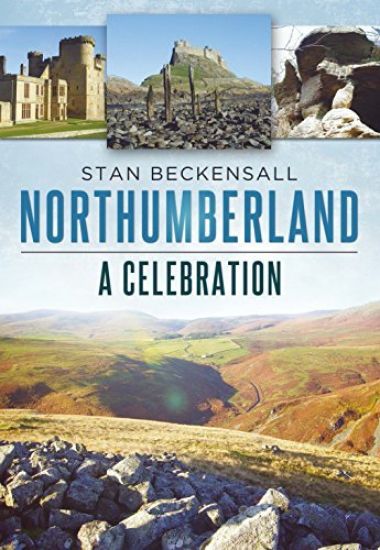
The outstanding natural beauty and distinctive geology of the county, and its rich archaeology and history, are seen through a series of case studies. When layers of time are peeled from these special places, the result is a microcosm of the county, captured in prose and poetry, photographs from the air and ground, and paintings and drawings by his friends. There are famous sites that delight visitors: Berwick, Holy Island, Hadrian's Wall and the Cheviots. There are also lesser known places such as Old Berwick and Edlingham where Stan Beckensall has made significant discoveries and others like Ford and Etal, which have a particular significance on the author. Another dimension is his work on the significance of place names and field names. Northumberland: A Celebration is written from the heart as wellbeing firmly rooted in original research for the author's extensive experience as a teacher, lecturer and dramatist has given him a unique insight into people's lives in both town and country areas.
Place Names and Field Names of Northumberland
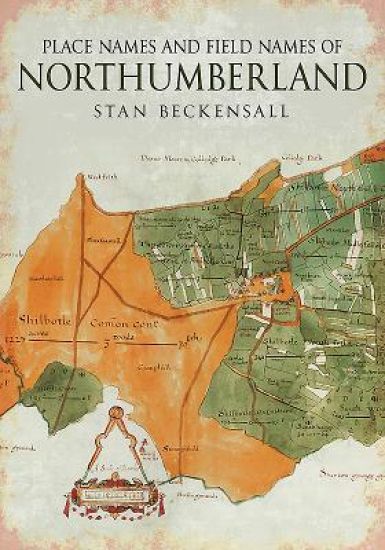
In his latest book on the county, Stan Beckensall explores what place names and field names mean, and how they can reveal an intimate part of our local history by linking us to the land they sign and socialise.Northumberland has a rich legacy of such names which can best be appreciated by close familiarity with the landscape. If you find these examples intriguing, you will enjoy the book: Grimping Haugh, Jill's Arse, Little Sloshes, Boggle Hole, Shovelbread and Blowbutts. The text explores a series of sites which demonstrate how place names are derived, and change over time. This study is well supported by a wide range of illustrations ranging from photographs and documents to maps. The detailed research undertaken by the author helps to ensure this is a comprehensive guide to the origins of places within Northumberland
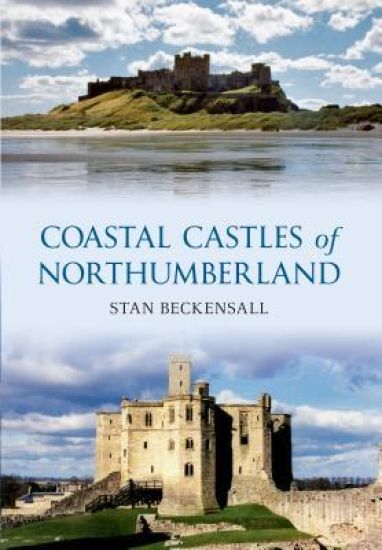
Coastal Castles of Northumberland

Coastal Castles of Northumberland

Stan Beckensall

Amberley Publishing
2010
nidottu
A constant factor in human history is the need to protect oneself. Another factor is the urge to attack someone else. Until the Normans imposed their sophisticatedly-designed castles on Britain, the country had seen many structures that met either of these needs. Before the Romans brought their efficient war machine across the Channel and based its troops in a variety of walled buildings, their prehistoric antecedents had met these needs in a different way. For example, pre-Roman hillforts were used not only for defence but also as a gathering place for farmers scattered widely over the land, a place where they established a regional identity and a claim to the land through their ancestors. Along Hadrian's Wall, stone forts were built to house infantry and cavalry. Later some of these places served as regional bases for warriors who arrived from northern Europe. Then came the Norman Conquest. This book of Northumberland's coastal castles explores those that were an outward and visible sign from Norman times onward of domination by the powerful, as well as being a focal point of communities in which they were built. A profusion of colour picures shows where they were sited, how they developed, and what is left of them. Castles were abandoned when they became redundant: gunpowder put paid to many of them, but once there was peace the owners wanted the good life away from the cold and draught - another part of the story.
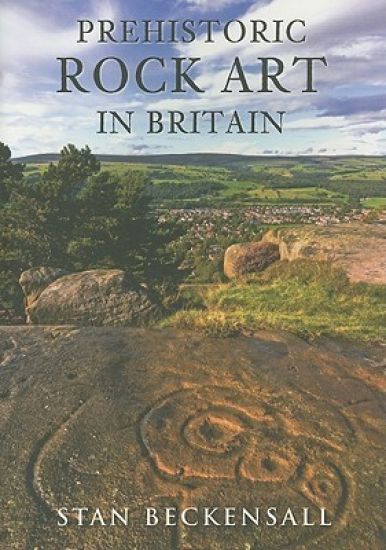
Prehistoric Rock Art in Britain

Prehistoric Rock Art in Britain

Stan Beckensall

Amberley Publishing
2009
nidottu
In this latest book the prolific Stan Beckensall returns to his principal specialism, Britains prehistoric rock art. Beckensall has played a key role in recording and researching rock art, and in this book he brings this experience to bear in a detailed survey of the types of rock art, motifs and patterns to be found in Britain and the places, often highly prominent in the landscape where it is to be found. He also offers his thoughts on its interpretation, focusing firmly on the landscape context, and treating with scepticism attempts to link rock art to one overarching theory of shamanic practice. The book also contains an outline history of the study of rock art in Britain, a glimpse at some modern artistic responses to Britains rock art, and an examination of current techniques of recording and preservation, all delivered in a characteristic no-nonsense style.