Kirjojen hintavertailu. Mukana 11 717 486 kirjaa ja 12 kauppaa.

Kirjahaku

Etsi kirjoja tekijän nimen, kirjan nimen tai ISBN:n perusteella.

9 kirjaa tekijältä Stan Hoig

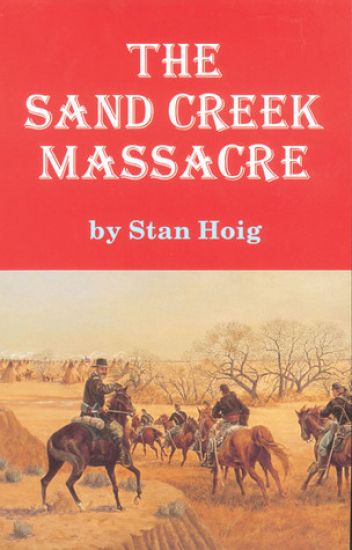
The Sand Creek Massacre

The Sand Creek Massacre

Stan Hoig

University of Oklahoma Press
1974
nidottu
Sometimes called ""The Chivington Massacre"" by those who would emphasize his responsibility for the attack and ""The Battle of Sand Creek"" by those who would imply that it was not a massacre, this event has become one of our nation's most controversial Indian conflicts. The subject of army and Congressional investigations and inquiries, a matter of vigorous newspaper debates, the object of much oratory and writing biased in both directions, the Sand Creek Massacre very likely will never be completely and satisfactorily resolved.This account of the massacre investigates the historical events leading to the battle, tracing the growth of the Indian-white conflict in Colorado Territory. The author has shown the way in which the discontent stemming from the treaty of Fort Wise, the depredations committed by the Cheyennes and Arapahoes prior to the massacre, and the desire of some of the commanding officers for a bloody victory against the Indians laid the groundwork for the battle at Sand Creek.
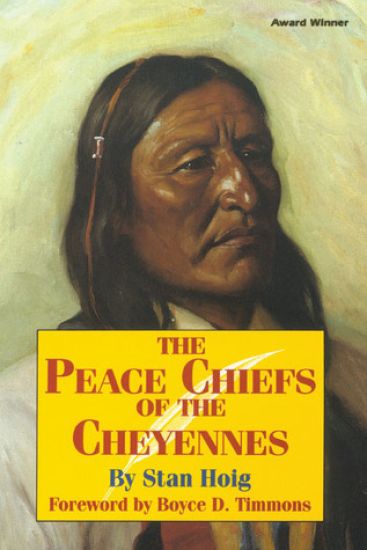
The Peace Chiefs of the Cheyennes

The Peace Chiefs of the Cheyennes

Stan Hoig

University of Oklahoma Press
1990
nidottu
A Plains tribe that subsisted on the buffalo, the Cheyennes depended for survival on the valor and skill of their braves in the hunt and in battle. The fiery spirit of the young warriors was balanced by the calm wisdom of the tribal headmen, the peace chiefs, who met yearly as the Council of the Forty-four. ""A Cheyenne chief was required to be a man of peace, to be brave, and to be of generous heart,"" writes Stan Hoig. ""Of these qualities the first was unconditionally the most important, for upon it rested the moral restraint required for the warlike Cheyenne Nation.""As the Cheyennes began to feel the westward crush of white civilization in the nineteenth century, a great burden fell to the peace chiefs. Reconciliation with the whites was the tribe's only hope for survival, and the chiefs were the buffers between their own warriors and the United States military, who were out to ""win the West."" The chiefs found themselves struggling to maintain the integrity of their people-struggling against overwhelming military forces, against disease, against the debauchery brought by ""firewater,"" and against the irreversible decline of their source of livelihood, the buffalo. They were trapped by history in a nearly impossible position. Their story is a heroic epic and, oftentimes, a tragedy.No single book has dealt as intensively as this one with the institution of the peace chiefs. The author has gleaned significant material from all available published sources and from contemporary newspapers. A generous selection of photographs and extensive quotations from ninteteenth-century observers add to the authenticity of the text. Following a brief analysis of the Sweet Medicine legend and its relation to the Council of the Forty-four, the more prominent nineteenth-century chiefs are treated individually in a lucid, felicitous style that will appeal to both students and lay readers of Indian history.As adopted Cheyenne chief Boyce D. Timmons says in his preface to this volume, ""Great wisdom, intellect, and love are expressed by the remarkable Cheyenne chiefs, and if you enter their tipi with an open heart and mind, you might have some understanding of the great 'Circle of Life.'""
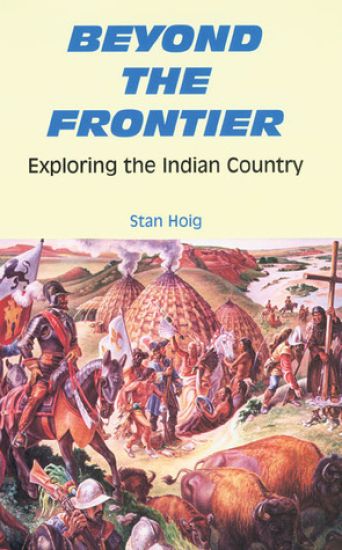
Beyond the Frontier

Beyond the Frontier

Stan Hoig

University of Oklahoma Press
1998
nidottu
In Beyond the Frontier, Stan Hoig chronicles early explorations of Oklahoma. Focusing on expeditions during the first part of the nineteenth century, Hoig provides a useful history of the region during the period of its first discovery by the outside world.After describing what we know of Native life before the arrival of Europeans, Hoig recounts in vivid detail each successive intrusion, drawing on a wide variety of sources - diaries, memoirs, letters, and official documents - to bring these experiences to life. Writing of individuals famous and forgotten who braved an unknown world and provided lasting records of the land and its peoples, Hoig includes details of Indian and frontier life often overlooked in scholarly studies. Further enhancing the narrative is an ample selection of illustrations, including photographs drawings, and detailed maps showing exploration routes.A supplement to broader histories, Beyond the Frontier is written in a straightforward, engaging style accessible to all interested readers. The first book to synthesize accounts of explorations within the region, Hoig's narrative offers valuable insight into Oklahoma's - and western America's - colorful past.
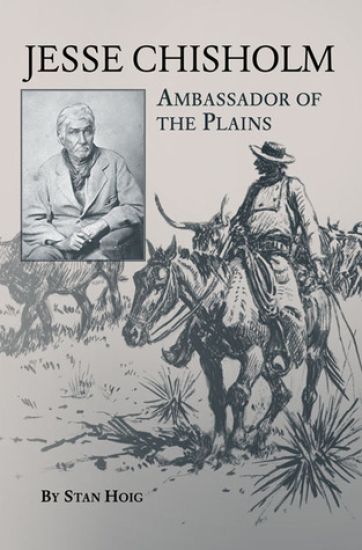
Jesse Chisholm

Jesse Chisholm

Stan Hoig

University of Oklahoma Press
2005
nidottu
The Chisholm Trail, traveled by Texas longhorn cattle moving northward across present-day Oklahoma to Kansas, was named for mixed-blood Cherokee Jesse Chisholm (1805-1868). Though Chisholm's prominence in western lore rests largely on this connection, he was active on the frontier long before the naming of the trail. Because he left no diaries, letters, or personal documents, however, his life has been shrouded in mystery.Drawing from many sources, including early state and federal documents, newspaper accounts, and trade and military records, Stan Hoig offers the clearest picture to date of the many important roles Chisholm played: trailblazer, friend of Indian chiefs, linguist of Indian languages, scout, and - perhaps most important - liaison between Indian tribes, the U.S. government, and the Republic of Texas. With his formidable intellect and talent for diplomacy, Chisholm blazed a trail in the history of the American Southwest more fascinating even than the one that bears his name.
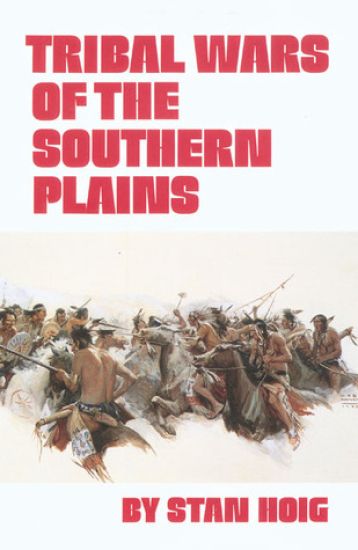
Tribal Wars of the Southern Plains

Tribal Wars of the Southern Plains

Stan Hoig

University of Oklahoma Press
2011
nidottu
Tribal Wars of the Southern Plains is a comprehensive account of Indian conflicts in the area between the Platte River and the Rio Grande, from the first written reports of the Spaniards in the sixteenth century through the United States-Cheyenne Battle of the Sand Hills in 1875. The reader follows the exploits and defeats of such chiefs as Lone Wolf, Satanta, Black Kettle, and Dull Knife as they signed treaties, led attacks, battled for land, and defended their villages in the huge region that was home to the Wichitas, Comanches, Cheyennes, Arapahos, Kiowas, Osages, Pawnees, and other Indian nations.
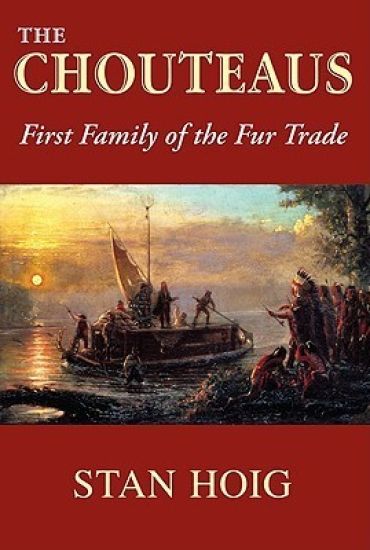
The Chouteaus

The Chouteaus

Stan Hoig

University of New Mexico Press
2008
sidottu
In the late eighteenth century, the vast, pristine land that lay west of the Mississippi River remained largely unknown to the outside world. The area beckoned to daring frontiersmen who produced the first major industry of the American West - the colorful but challenging, often dangerous fur trade. At the lead was an enterprising French Creole family that founded the city of St. Louis in 1763 and pushed forth to garner furs for world markets.Stan Hoig provides an intimate look into the lives of four generations of the Chouteau family as they voyaged up the Western rivers to conduct trade, at times taking wives among the native tribes. They provided valuable aid to the Lewis and Clark expedition and assisted government officials in developing Indian treaties. National leaders, tribal heads, and men of frontier fame sought their counsel. In establishing their network of trading posts and opening trade routes throughout the Central Plains and Rocky Mountains, the Chouteaus contributed enormously to the nation's westward movement.
The Chouteaus

The Chouteaus

Stan Hoig

UNIVERSITY OF NEW MEXICO PRESS
2022
pokkari
In the late eighteenth century, the vast, pristine land that lay west of the Mississippi River remained largely unknown to the outside world. The area beckoned to daring frontiersmen who produced the first major industry of the American West--the colorful but challenging, often dangerous fur trade. At the lead was an enterprising French Creole family that founded the city of St. Louis in 1763 and pushed forth to garner furs for world markets.Stan Hoig provides an intimate look into the lives of four generations of the Chouteau family as they voyaged up the Western rivers to conduct trade, at times taking wives among the native tribes. They provided valuable aid to the Lewis and Clark expedition and assisted government officials in developing Indian treaties. National leaders, tribal heads, and men of frontier fame sought their counsel. In establishing their network of trading posts and opening trade routes throughout the Central Plains and Rocky Mountains, the Chouteaus contributed enormously to the nation's westward movement.
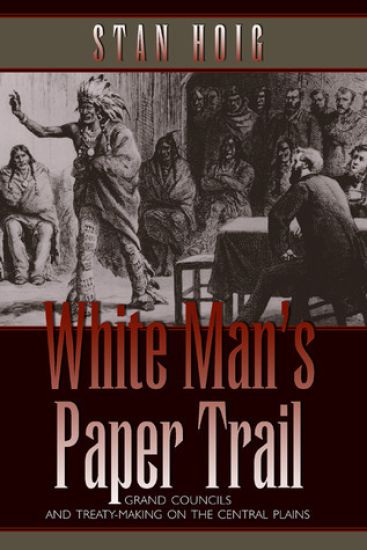
White Man's Paper Trail

White Man's Paper Trail

Stan Hoig

University Press of Colorado
2008
nidottu
White Man's Paper Trail presents a poignant history of the U.S. government's attempts to peacefully negotiate treaties with tribes in Arkansas, the Dakotas, Kansas, Oklahoma, Texas, Colorado, and Wyoming. Stan Hoig shows how treaty-making - once considered a viable method of peaceably resolving conflicts - degenerated into a deeply flawed system sullied by political deceptions and broken promises. White Man's Paper Trail illuminates the pivotal role of treaty negotiations in the buildup to the Plains Indian wars, in American Indians' loss of land and self-determination, and in Euro-American westward expansion.
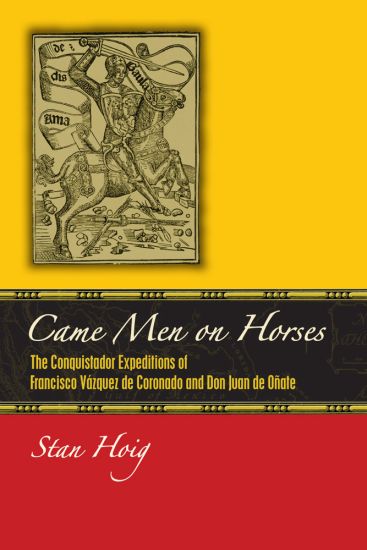
Came Men on Horses

Came Men on Horses

Stan Hoig

University Press of Colorado
2023
nidottu
Guided by myths of golden cities and worldly rewards, policy makers, conquistador leaders, and expeditionary aspirants alike came to the new world in the sixteenth century and left it a changed land. Came Men on Horses follows two conquistadors--Francisco Vázquez de Coronado and Don Juan de Oñate--on their journey across the southwest. Driven by their search for gold and silver, both Coronado and Oñate committed atrocious acts of violence against the Native Americans, and fell out of favor with the Spanish monarchy. Examining the legacy of these two conquistadors Hoig attempts to balance their brutal acts and selfish motivations with the historical significance and personal sacrifice of their expeditions. Rich human details and superb story-telling make Came Men on Horses a captivating narrative scholars and general readers alike will appreciate.