Kirjojen hintavertailu. Mukana 11 699 587 kirjaa ja 12 kauppaa.

Kirjahaku

Etsi kirjoja tekijän nimen, kirjan nimen tai ISBN:n perusteella.

14 kirjaa tekijältä Stanley G. Payne

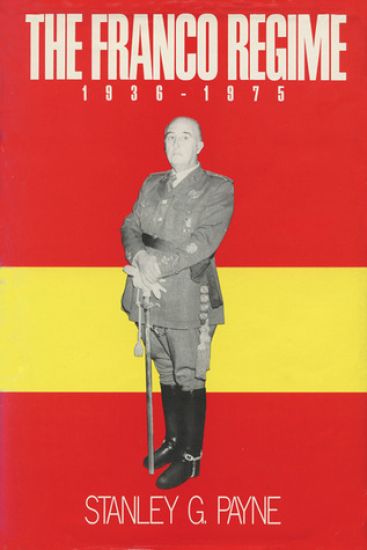
The Franco Regime, 1936-1975

The Franco Regime, 1936-1975

Stanley G. Payne

University of Wisconsin Press
2011
nidottu
The history of modern Spain is dominated by the figure of Francisco Franco, who presided over one of the longest authoritarian regimes of the twentieth century. Between 1936 and the end of the regime in 1975, Franco’s Spain passed through several distinct phases of political, institutional, and economic development, moving from the original semi-fascist regime of 1936–45 to become the Catholic corporatist “organic democracy” under the monarchy from 1945 to 1957. Distinguished historian Stanley G. Payne offers deep insight into the career of this complex and formidable figure and the enormous changes that shaped Spanish history during his regime.
Spain's First Democracy

Spain's First Democracy

Stanley G. Payne

University of Wisconsin Press
1993
nidottu
The significance of Spain's Second Republic has been largely overshadowed by the cataclysmic Civil War that immediately followed it. Stanley Payne brings his knowledge of Spanish history to bear on the five-year span of the Second Republic as an historic entity in its own right. In ""Spain's First Democracy"", he argues that the Republic was one of the major national attempts at political democratisation and reform in Europe between the World Wars and represented the most important effort to swim against the tide during Europe's era of fascism. Payne's study places the Republic within the historical framework of Spanish liberalism and the rapid modernisation of inter-war Europe, which was unlike any other period in Spain's history. Payne discusses the Republicans' efforts to establish Spain's first democratic political systems and to institute major reforms within the Republic. In highlighting reforms in politics and government, education and culture, public works, military affairs, and society as a whole, he assesses the successes and failures of these reforms as well as the reasons for their limitations. He also examines the economic and foreign policy issues of the period. Focusing particularly on political conflict and social cleavage, Payne explores the sources and character of the political polarisation that developed as a result of the assaults on the Republic from the Left and the Right. He identifies the main political actors in this schism and their role in the eventual breakdown of the Republic. Tracing the progressive collapse of the Republican polity in the first half of 1936, Payne stresses the importance of political violence in the democracy's downfall. In restoring perspectives that have been ignored or bypassed, Payne aims to present a consistent and detailed interpretation of Spain's Second Republic, demonstrating its striking parallels to the Weimar Republic in Germany.
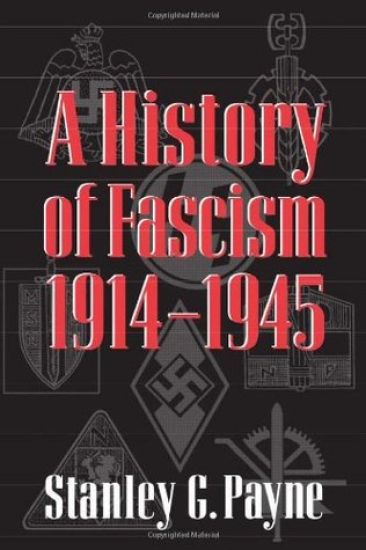
A History of Fascism, 1914?1945

A History of Fascism, 1914?1945

Stanley G. Payne

University of Wisconsin Press
1996
nidottu
“A History of Fascism is an invaluable sourcebook, offering a rare combination of detailed information and thoughtful analysis. It is a masterpiece of comparative history, for the comparisons enhance our understanding of each part of the whole. The term ‘fascist,’ used so freely these days as a pejorative epithet that has nearly lost its meaning, is precisely defined, carefully applied and skillfully explained. The analysis effectively restores the dimension of evil.”—Susan Zuccotti, The Nation“A magisterial, wholly accessible, engaging study. . . . Payne defines fascism as a form of ultranationalism espousing a myth of national rebirth and marked by extreme elitism, mobilization of the masses, exaltation of hierarchy and subordination, oppression of women and an embrace of violence and war as virtues.”—Publishers Weekly
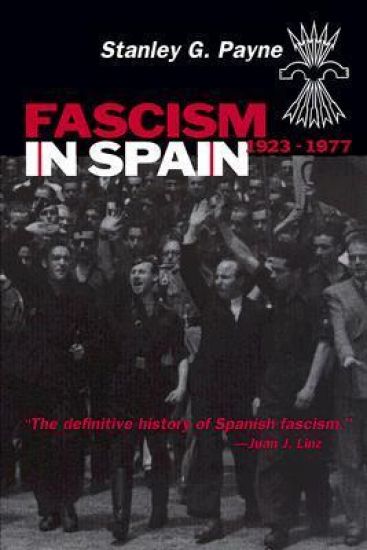
Fascism in Spain, 1923-77

Fascism in Spain, 1923-77

Stanley G. Payne

University of Wisconsin Press
2000
nidottu
This study offers treatment of all the major doctrines, personalities and defining features of the Spanish fascist movement, from its beginnings until the death of General Francisco Franco in 1977. The author describes and analyzes the development of the Falangist party both prior to and during the Spanish Civil War, presenting a detailed analysis of its transformation into the state party of the Franco regime - Falange Espanola Tradicionalista - as well as its ultimate conversion into the psuedofascist Movimiento Nacional. Particular attention is devoted to the crucial years 1939-1942, when the Falangists endeavoured to expand their influence and convert the Franco regime into a fully Fascist system.
The Collapse of the Spanish Republic, 1933-1936

The Collapse of the Spanish Republic, 1933-1936

Stanley G. Payne

Yale University Press
2006
sidottu
This book focuses on the short but crucial period that led to the collapse of the Spanish Republic and set the stage for the ensuing civil war. Stanley G. Payne, an internationally known scholar of modern Spanish history, details the political shifts that occurred from 1933 to 1936 and examines the actions and inactions of key actors during these years. Using their own memoirs, speeches, and declarations, he challenges previous perceptions of various major players, including President Alcalá Zamora. The breakdown of political coalitions and the internal rifts between Spain’s bourgeois and labor classes sparked many instances of violent dissent in the mid-1930s. The book addresses the election of 1933 and the destabilizing insurrection that followed, Alcalá Zamora's failed attempts to control the major parties, and the backlash that resulted. The alliances of the socialist left with communism and the right with fascism are also explored, as is the role of forces outside Spain in spurring the violence that eventually exploded into war.
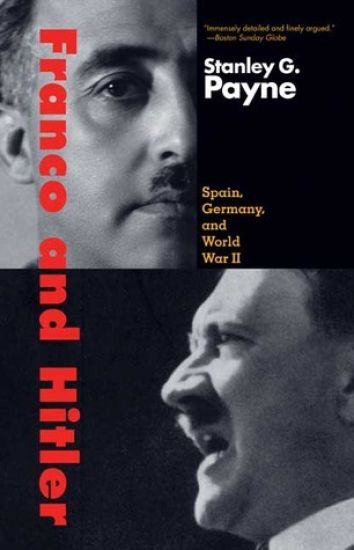
Franco and Hitler

Franco and Hitler

Stanley G. Payne

Yale University Press
2009
pokkari
Was Franco sympathetic to Nazi Germany? Why didn't Spain enter World War II? In what ways did Spain collaborate with the Third Reich? How much did Spain assist Jewish refugees?This is the first book in any language to answer these intriguing questions. Stanley Payne, a leading historian of modern Spain, explores the full range of Franco’s relationship with Hitler, from 1936 to the fall of the Reich in 1945. But as Payne brilliantly shows, relations between these two dictators were not only a matter of realpolitik. These two titanic egos engaged in an extraordinary tragicomic drama often verging on the dark absurdity of a Beckett or Ionesco play.Whereas Payne investigates the evolving relationship of the two regimes up to the conclusion of World War II, his principal concern is the enigma of Spain’s unique position during the war, as a semi-fascist country struggling to maintain a tortured neutrality. Why Spain did not enter the war as a German ally, joining with Hitler to seize Gibraltar and close the Mediterranean to the British navy, is at the center of Payne’s narrative. Franco’s only personal meeting with Hitler, in 1940 to discuss precisely this, is recounted here in groundbreaking detail that also sheds significant new light on the Spanish government’s vacillating policy toward Jewish refugees, on the Holocaust, and on Spain’s German connection throughout the duration of the war.
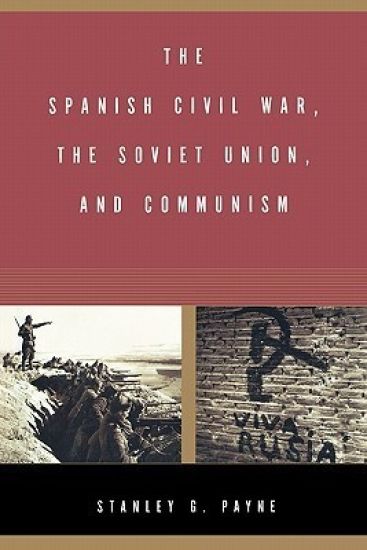
The Spanish Civil War, the Soviet Union, and Communism

The Spanish Civil War, the Soviet Union, and Communism

Stanley G. Payne

Yale University Press
2011
pokkari
In this compelling book Stanley G. Payne offers the first comprehensive narrative of Soviet and Communist intervention in the revolution and civil war in Spain. He documents in unprecedented detail Soviet strategies, Comintern activities, and the role of the Communist party in Spain from the early 1930s to the end of the civil war in 1939. Drawing on a very broad range of Soviet and Spanish primary sources, including many only recently available, Payne changes our understanding of Soviet and Communist intentions in Spain, of Stalin’s decision to intervene in the Spanish war, of the widely accepted characterization of the conflict as the struggle of fascism against democracy, and of the claim that Spain’s war constituted the opening round of World War II. The author arrives at a new view of the Spanish Civil War and concludes not only that the Democratic Republic had many undemocratic components but also that the position of the Communist party was by no means counterrevolutionary.
The Spanish Civil War

The Spanish Civil War

Stanley G. Payne

Cambridge University Press
2012
pokkari
This book presents a new history of the most important conflict in European affairs during the 1930s, the Spanish Civil War. It describes the complex origins of the conflict, the collapse of the Spanish Republic and the outbreak of the only mass worker revolution in the history of Western Europe. Stanley Payne explains the character of the Spanish revolution and the complex web of republican politics, while also examining the development of Franco's counter-revolutionary dictatorship. Payne gives attention to the multiple meanings and interpretations of war and examines why the conflict provoked such strong reactions at the time, and long after. The book also explains the military history of the war and its place in the history of military development, the non-intervention policy of the democracies and the role of German, Italian and Soviet intervention, concluding with an analysis of the place of the war in European affairs, in the context of twentieth-century revolutionary civil wars.
The Spanish Civil War

The Spanish Civil War

Stanley G. Payne

Cambridge University Press
2012
sidottu
This book presents a new history of the most important conflict in European affairs during the 1930s, the Spanish Civil War. It describes the complex origins of the conflict, the collapse of the Spanish Republic and the outbreak of the only mass worker revolution in the history of Western Europe. Stanley Payne explains the character of the Spanish revolution and the complex web of republican politics, while also examining the development of Franco's counter-revolutionary dictatorship. Payne gives attention to the multiple meanings and interpretations of war and examines why the conflict provoked such strong reactions at the time, and long after. The book also explains the military history of the war and its place in the history of military development, the non-intervention policy of the democracies and the role of German, Italian and Soviet intervention, concluding with an analysis of the place of the war in European affairs, in the context of twentieth-century revolutionary civil wars.
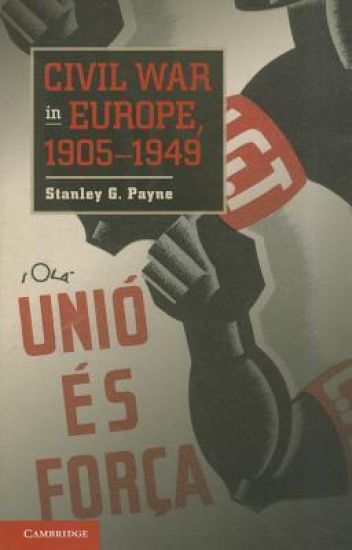
Civil War in Europe, 1905–1949

Civil War in Europe, 1905–1949

Stanley G. Payne

Cambridge University Press
2011
sidottu
This is the first account in any language of the civil wars in Europe during the era of the world wars, from 1905 to 1949. It treats the initial confrontations in the decade before World War I, the confusing concept of 'European civil war,' the impact of the world wars, the relation between revolution and civil war and all the individual cases of civil war, with special attention to Russia and Spain. The civil wars of this era are compared and contrasted with earlier internal conflicts, with particular attention to the factors that made this era a time of unusually violent domestic contests, as well as those that brought it to an end. The major political, ideological and social influences are all treated, with a special focus on violence against civilians.
Civil War in Europe, 1905–1949

Civil War in Europe, 1905–1949

Stanley G. Payne

Cambridge University Press
2011
pokkari
This is the first account in any language of the civil wars in Europe during the era of the world wars, from 1905 to 1949. It treats the initial confrontations in the decade before World War I, the confusing concept of 'European civil war,' the impact of the world wars, the relation between revolution and civil war and all the individual cases of civil war, with special attention to Russia and Spain. The civil wars of this era are compared and contrasted with earlier internal conflicts, with particular attention to the factors that made this era a time of unusually violent domestic contests, as well as those that brought it to an end. The major political, ideological and social influences are all treated, with a special focus on violence against civilians.
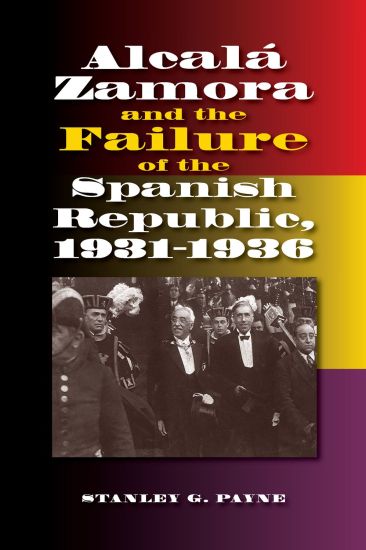
Alcala Zamora and the Failure of the Spanish Republic, 1931-1936

Alcala Zamora and the Failure of the Spanish Republic, 1931-1936

Stanley G. Payne

LIVERPOOL UNIVERSITY PRESS
2017
nidottu
The Second Spanish Republic (1931-36) was the only new liberal democratic regime to emerge in Europe during the 1930s. Historians, however, have focused primarily on the Civil War of 1936-39 that followed, devoting much less attention to the parliamentary regime that preceded it. This book deals with the history and failure of the democratic polity in Spain through a detailed examination of the initiatives of its president, Niceto Alcala Zamora. As civil servant, lawyer, politician and writer, by 1931 he had become one of the most successful men of Spain. He played the leading role in the downfall of the monarchy and the inauguration of the Republic, which he served for eight months as initial prime minister and then as the first president. Stanley Payne's study argues that the failure of the Republic was not inevitable but depended on the policy choices of its president and the key party leaders. Alcala Zamora's professed goal was to center the Republic, stabilizing the new regime while avoiding extremes, but he failed altogether in this project. The Constitution of 1931 stipulated the double responsibility of parliamentary government both to the president and to a voting majority. Though Alcala Zamora resisted strong efforts from the left to cancel the results of the first fully democratic elections in 1933, he subsequently used his powers recklessly, making and unmaking governments at will, refusing to permit normal functioning of parliament. This first critical scholarly account of the presidency of Alcala Zamora casts new light on the failure of democracy in interwar Europe and on the origins of the Spanish Civil War.
A History of Fascism, 1914-1945

A History of Fascism, 1914-1945

Stanley G. Payne

Routledge
1996
nidottu
Stanely G. payne here presents a full history of fascism in interwar Europe, as well as a survey of fascist theory and postwar fascism.The author examines all major fascist movements as well as other forms of authoritarian nationalism and provides a comprehensive work on generic fascism to date. The book traces the phenomenon of fascism through the history of ideas, previous political movements, and the events of the First World War. Although the focus is principally fascist Italy and Nazi Germany, the book also gives detailed attention to the Romanian Iron Guard, Franco's Spain, Japan and proto-fascist movements around the globe.The author explores the reasons for both the limits of fascism's appeal and the historical transcendence of the "fascist era".The inclusion of other forms of authoritarian nationalism lays a foundation for comparative analysis and leads to a more workable definition of authoritarianism.It should be useful reading for students studying the rise of totalitarianism in twentieth-century Europe and for those concerned about the rise of ultranationalism today.
En defensa de España: desmontando mitos y leyendas negras
Ningún otro país como España posee una historia tan rica en sus imágenes ni tan abundante en conceptos, mitos y leyendas. Es la historia más exótica de Occidente y también la más extensa y extrema en su envergadura, tanto cronológica como geográfica, y con mayores diferencias en las distintas épocas. A lo largo de los siglos, la Historia de España se ha descrito y definido a partir de conceptos inusitadamente controvertidos: reino bárbaro decadente, conquista oriental, paraíso multicultural, guerra divina, Reconquista, Inquisición, primer imperio mundial, monarquía paneuropea, decadencia profunda, leyenda negra, país insurreccional que reclama su independencia, cultura romántica por excelencia, sociedad convulsa y/o revolucionaria, democracia militante antifascista, país fascista retrógrado, pionera democracia de consenso... Algunas de estas descripciones son tópicos esencialmente falsos, pero la mayor parte se refiere a procesos o logros históricos muy complejos que requieren mucha matización. Este libro es una interpretación en el debate sin fin de la Historia de España, realizada siguiendo un desarrollo cronológico que explica la evolución del país y, con ella, los mitos, estereotipos y leyendas que se han construido a través del tiempo.