Kirjojen hintavertailu. Mukana 11 486 581 kirjaa ja 12 kauppaa.

Kirjahaku

Etsi kirjoja tekijän nimen, kirjan nimen tai ISBN:n perusteella.

15 kirjaa tekijältä Stefan Bauer

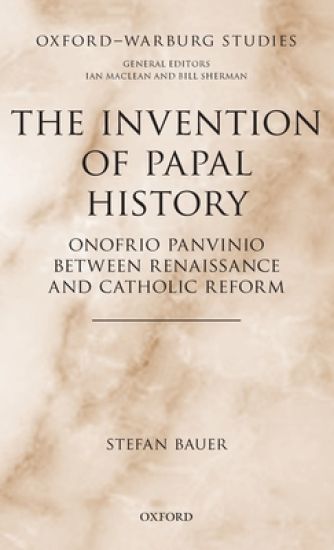
The Invention of Papal History

The Invention of Papal History

Stefan Bauer

Oxford University Press
2019
sidottu
How was the history of post-classical Rome and of the Church written in the Catholic Reformation? Historical texts composed in Rome at this time have been considered secondary to the city's significance for the history of art. The Invention of Papal History corrects this distorting emphasis and shows how historical writing became part of a comprehensive formation of the image and self-perception of the papacy. By presenting and fully contextualising the path-breaking works of the Augustinian historian Onofrio Panvinio (1530-1568), Stefan Bauer shows what type of historical research was possible in the late Renaissance and the Catholic Reformation. Crucial questions were, for example: How were the pontiffs elected? How many popes had been puppets of emperors? Could any of the past machinations, schisms, and disorder in the history of the Church be admitted to the reading public? Historiography in this period by no means consisted entirely of commissioned works written for patrons; rather, a creative interplay existed between, on the one hand, the endeavours of authors to explore the past and, on the other hand, the constraints of ideology and censorship placed on them. The Invention of Papal History sheds new light on the changing priorities, mentalities, and cultural standards that flourished in the transition from the Renaissance to the Catholic Reformation.
The Invention of Papal History

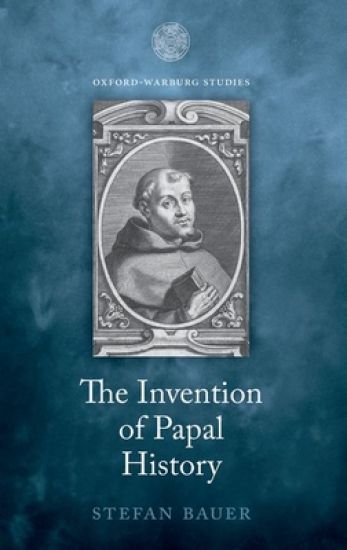
The Invention of Papal History

Stefan Bauer

Oxford University Press
2023
nidottu
How was the history of post-classical Rome and of the Church written in the Catholic Reformation? Historical texts composed in Rome at this time have been considered secondary to the city's significance for the history of art. The Invention of Papal History corrects this distorting emphasis and shows how historical writing became part of a comprehensive formation of the image and self-perception of the papacy. By presenting and fully contextualising the path-breaking works of the Augustinian historian Onofrio Panvinio (1530-1568), Stefan Bauer shows what type of historical research was possible in the late Renaissance and the Catholic Reformation. Crucial questions were, for example: How were the pontiffs elected? How many popes had been puppets of emperors? Could any of the past machinations, schisms, and disorder in the history of the Church be admitted to the reading public? Historiography in this period by no means consisted entirely of commissioned works written for patrons; rather, a creative interplay existed between, on the one hand, the endeavours of authors to explore the past and, on the other hand, the constraints of ideology and censorship placed on them. The Invention of Papal History sheds new light on the changing priorities, mentalities, and cultural standards that flourished in the transition from the Renaissance to the Catholic Reformation.

Amazon Echo: Amazon Echo & Alexa Handbuch Mit Befehlen, Tipps, Einstellungen

Amazon Echo: Amazon Echo & Alexa Handbuch Mit Befehlen, Tipps, Einstellungen

Stefan Bauer

Createspace Independent Publishing Platform
2018
nidottu
Du interessierst dich f r die Amazon Echo Produkte? Du m chtest dir selbst einen Echo zulegen oder hast dies bereits getan und m chtest nun lernen, ihn optimal zu nutzen? Dann ist dieses Buch richtig f r dich.Wer sich mit der neusten technischen Entwicklung befasst, kommt derzeit nicht an den Amazon Echo Produkten vorbei. Vor allem Alexa, der intelligente Kern der Ger te, versetzt Technik-Fans weltweit ins Staunen.In diesem Buch erf hrst du welche Echo Produkte es derzeit gibt mehr ber Alexa wie du deinen Echo einrichtest wie du mit Alexa kommunizierst welche Skills gerade angesagt sind welche smarten Ger te mit Alexa kompatibel sind mehr zum Thema Datenschutz PLUS: Easter Eggs zum Ausprobieren und Schmunzeln Du willst mehr erfahren? Sichere Dir Jetzt dein Exemplar. Scroll hoch und klicke auf "JETZT KAUFEN MIT 1-CLICK"
The Censorship and Fortuna of Platina's Lives of the Popes in the Sixteenth Century
When Bartolomeo Sacchi ('Platina', 1421-1481) wrote his Vitae pontificum (Lives of the Popes) and presented it to Pope Sixtus IV in 1475, he surely could not have imagined how influential it would become over the centuries. His was the first papal history composed as a humanist Latin narrative and, as such, marked a distinct breakthrough in relation to the Liber pontificalis, the standard medieval chronicle of the papacy. Whatever Platina's intentions for the book, it soon came to be regarded as the official history of the Roman pontiffs. After the editio princeps of Venice 1479, updated and extended editions continued to be produced until late in the eighteenth century. The largely untold story of Platina's Lives of the Popes and its fortuna is the focus of this book. The Lives were particularly popular because of Platina's frank criticisms of papal behaviour which did not live up to his humanist moral values. He reminded the popes that they were mere human beings and urged them not to indulge in luxury and nepotism. Catholics, whether or not they agreed with such indictments, read the Lives eagerly, while Protestants naturally appreciated Platina's fault-finding approach towards the papacy. The role which censorship played in the reception of the Lives was previously unknown. This book examines the censorship process (1587-1592) in detail, including a critical edition of the assessments and corrections by English and Italian censors newly uncovered in the Vatican and in Milan.