Kirjojen hintavertailu. Mukana 11 357 333 kirjaa ja 12 kauppaa.

Kirjahaku

Etsi kirjoja tekijän nimen, kirjan nimen tai ISBN:n perusteella.

13 kirjaa tekijältä Stefan Collini

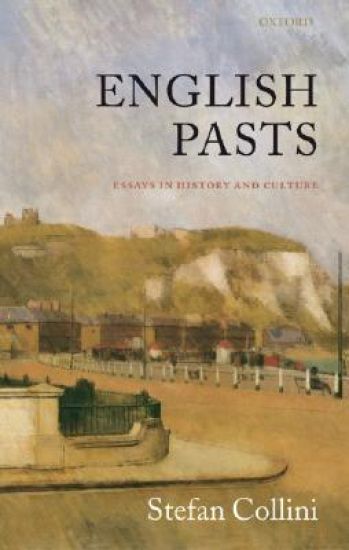
English Pasts

English Pasts

Stefan Collini

Oxford University Press
1999
nidottu
In this collection of engaging and readable essays, Stefan Collini shows how much can be gained from bringing a rigorous historical perspective to some of the most contentious issues in contemporary culture. Whether he is asking what it means to inhabit and possess a `national past', or reflecting on the role of the historian as social critic, whether he is scrutinizing the claims of Cultural Studies or challenging the assumptions about academic research whether he is pondering the future of literary biography or reassessing some of the leading minds in modern British culture, Collini writes with a rare blend of sympathy, sharpness, and wit. Explicitly addressed to the `non-specialist', these essays attempt to make some of the fruits of detailed scholarly research in various fields available to a wider audience. The book will interest (and delight) readers interested in history, literature, and contemporary cultural debate.
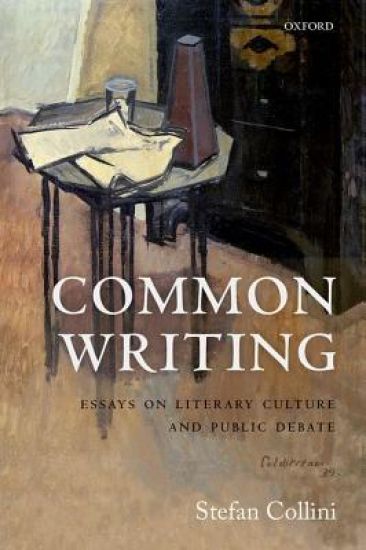
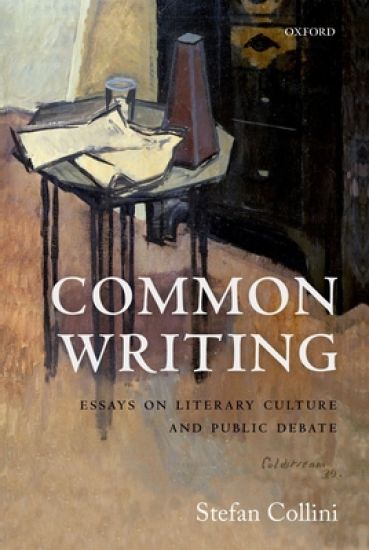
Common Writing

Common Writing

Stefan Collini

Oxford University Press
2016
sidottu
In a series of penetrating and attractively readable essays, Stefan Collini explores aspects of the literary and intellectual culture of Britain from the early twentieth century to the present. Common Writing focuses chiefly on writers, critics, historians, and journalists who occupied wider public roles as cultural commentators or intellectuals, as well as on the periodicals and other genres through which they attempted to reach such audiences. Among the figures discussed are T.S. Eliot, Graham Greene, J.B. Priestley, C.S. Lewis, Kingsley Amis, Nikolaus Pevsner, Hugh Trevor-Roper, Christopher Hitchens, and Michael Ignatieff. The essays explore the variety of such figures' writings - something that can get overlooked or forgotten when they are treated exclusively in terms of their contribution to one established or professional category such as 'novelist' or 'historian' - while capturing their distinctive writing voices and those indirect or implicit ways in which they position or reveal themselves in relation to specific readerships, disputes, and traditions. These essays engage with recent biographies, collections of letters, and new editions of classic works, thereby making some of the fruits of recent scholarly research available to a wider audience. Collini has been acclaimed as one of the most brilliant essayists of our time, and this collection shows him at his subtle, perceptive, and trenchant best. Common Writing will appeal to (and delight) readers interested in literature, history, and contemporary cultural debate.
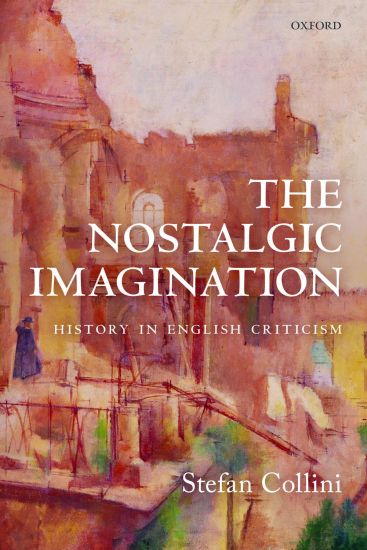
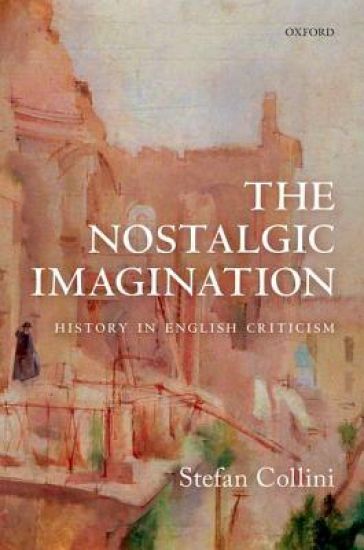
The Nostalgic Imagination

The Nostalgic Imagination

Stefan Collini

Oxford University Press
2019
sidottu
This unusual book explores the historical assumptions at work in the style of literary criticism that came to dominate English studies in the twentieth century. Stefan Collini shows how the work of critics renowned for their close attention to 'the words on the page' was in practice bound up with claims about the nature and direction of historical change, the interpretation of the national past, and the scholarship of earlier historians. Among the major figures examined in detail are T.S. Eliot, F.R. Leavis, William Empson, and Raymond Williams, while there are also original discussions of such figures as Basil Willey, L.C. Knights, Q.D. Leavis, and Richard Hoggart. The Nostalgic Imagination argues that in the period between Eliot's The Sacred Wood and Williams's The Long Revolution, the writings of such critics came to occupy the cultural space left by academic history's retreat into specialized, archive-bound monographs. Their work challenged the assumptions of the Whig interpretation of English history, and entailed a revision of the traditional relations between 'literary history' and 'general history'. Combining close textual analysis with wide-ranging intellectual history, this volume both revises the standard story of the history of literary criticism and illuminates a central feature of the cultural history of twentieth-century Britain.
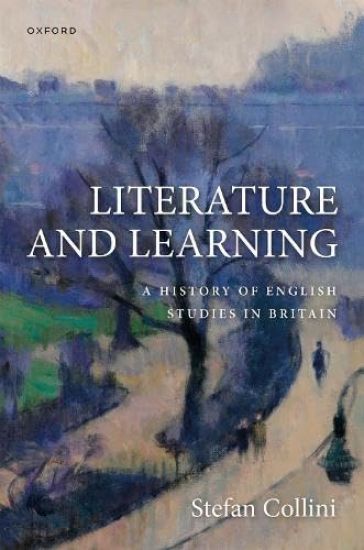
Literature and Learning

Literature and Learning

Stefan Collini

Oxford University Press
2025
sidottu
The study and teaching of English literature is generally regarded as one of the central disciplines in the modern university, yet for much of its history it struggled to gain academic legitimacy and was frequently derided as 'a soft option'. Its early professors responded by emphasizing its scholarly character, foregrounding philology and literary history in ways that marked the syllabus far into the twentieth century. Stefan Collini provides here the first full account of the discipline's development from its late-eighteenth-century beginnings up to the early 1960s. Paying special attention to institutional settings, he challenges numerous assumptions about the character of universities in the nineteenth and early twentieth centuries. From the detailed exploration of syllabuses, exam papers, and other institutional records, the impact of literary criticism is revealed to be later and more partial than is commonly assumed. Rather than seeing the early teaching of English literature as 'a substitute for religion' or 'a means to soften class conflict', Collini emphasizes the role of ideals of learnedness and scholarship, as well as of external factors such as opportunities for employment in the civil service and secondary school-teaching. There are full discussions of the parts played by such figures as John Churton Collins, A.C. Bradley, George Saintsbury, and Walter Raleigh, together with sceptical analyses of the decisive significance usually attributed to Matthew Arnold, T.S. Eliot, I.A. Richards, and F.R. Leavis. Separate chapters are devoted to neglected aspects of the story such as the role of Classics, the importance of the subject for women's higher education, and the connections with English teaching in schools. Drawing on extensive use of institutional archives and records as well as the writings of contemporary participants, the book offers a vivid and wide-ranging history of English-as-discipline and its centrality across academic, literary, cultural, and educational life over the past two year hundred years, as well as a resounding testament to its continued importance and relevance today.
Common Writing

Common Writing

Stefan Collini

Oxford University Press
2018
nidottu
In a series of penetrating and attractively readable essays, Stefan Collini explores aspects of the literary and intellectual culture of Britain from the early twentieth century to the present. Common Writing focuses chiefly on writers, critics, historians, and journalists who occupied wider public roles as cultural commentators or intellectuals, as well as on the periodicals and other genres through which they attempted to reach such audiences. Among the figures discussed are T.S. Eliot, Graham Greene, J.B. Priestley, C.S. Lewis, Kingsley Amis, Nikolaus Pevsner, Hugh Trevor-Roper, Christopher Hitchens, and Michael Ignatieff. The essays explore the variety of such figures' writings - something that can get overlooked or forgotten when they are treated exclusively in terms of their contribution to one established or professional category such as 'novelist' or 'historian' - while capturing their distinctive writing voices and those indirect or implicit ways in which they position or reveal themselves in relation to specific readerships, disputes, and traditions. These essays engage with recent biographies, collections of letters, and new editions of classic works, thereby making some of the fruits of recent scholarly research available to a wider audience. Collini has been acclaimed as one of the most brilliant essayists of our time, and this collection shows him at his subtle, perceptive, and trenchant best. Common Writing will appeal to (and delight) readers interested in literature, history, and contemporary cultural debate.
The Nostalgic Imagination

The Nostalgic Imagination

Stefan Collini

Oxford University Press
2020
nidottu
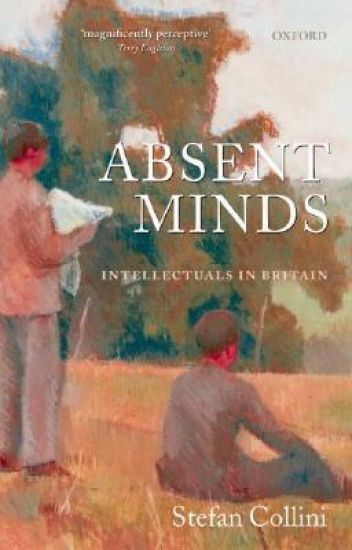
This unusual book explores the historical assumptions at work in the style of literary criticism that came to dominate English studies in the twentieth century. Stefan Collini shows how the work of critics renowned for their close attention to 'the words on the page' was in practice bound up with claims about the nature and direction of historical change, the interpretation of the national past, and the scholarship of earlier historians. Among the major figures examined in detail are T.S. Eliot, F.R. Leavis, William Empson, and Raymond Williams, while there are also original discussions of such figures as Basil Willey, L.C. Knights, Q.D. Leavis, and Richard Hoggart. The Nostalgic Imagination argues that in the period between Eliot's The Sacred Wood and Williams's The Long Revolution, the writings of such critics came to occupy the cultural space left by academic history's retreat into specialized, archive-bound monographs. Their work challenged the assumptions of the Whig interpretation of English history, and entailed a revision of the traditional relations between 'literary history' and 'general history'. Combining close textual analysis with wide-ranging intellectual history, this volume both revises the standard story of the history of literary criticism and illuminates a central feature of the cultural history of twentieth-century Britain.
Absent Minds

Absent Minds

Stefan Collini

Oxford University Press
2007
nidottu
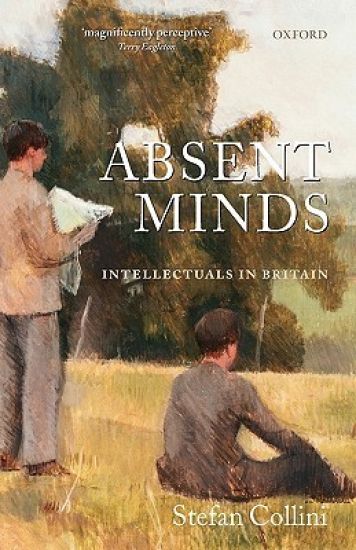
A richly textured work of history and a powerful contribution to contemporary cultural debate, Absent Minds provides the first full-length account of 'the question of intellectuals' in twentieth-century Britain - have such figures ever existed, have they always been more prominent or influential elsewhere, and are they on the point of becoming extinct today? Recovering neglected or misunderstood traditions of reflection and debate from the late nineteenth century through to the present, Stefan Collini challenges the familiar cliche that there are no 'real' intellectuals in Britain. The book offers a persuasive analysis of the concept of 'the intellectual' and an extensive comparative account of how this question has been seen in the USA, France, and elsewhere in Europe. There are detailed discussions of influential or revealing figures such as Julien Benda, T. S. Eliot, George Orwell, and Edward Said, as well as trenchant critiques of current assumptions about the impact of specialization and celebrity. Throughout, attention is paid to the multiple senses of the term 'intellectuals' and to the great diversity of relevant genres and media through which they have communicated their ideas, from pamphlets and periodical essays to public lectures and radio talks. Elegantly written and rigorously argued, Absent Minds is a major, long-awaited work by a leading intellectual historian and cultural commentator, ranging across the conventional divides between academic disciplines and combining insightful portraits of individuals with sharp-edged cultural analysis.
Absent Minds

Absent Minds

Stefan Collini

Oxford University Press
2006
sidottu
A richly textured work of history and a powerful contribution to contemporary cultural debate, Absent Minds provides the first full-length account of 'the question of intellectuals' in twentieth-century Britain - have such figures ever existed, have they always been more prominent or influential elsewhere, and are they on the point of becoming extinct today? Recovering neglected or misunderstood traditions of reflection and debate from the late nineteenth century through to the present, Stefan Collini challenges the familiar cliche that there are no 'real' intellectuals in Britain. The book offers a persuasive analysis of the concept of 'the intellectual' and an extensive comparative account of how this question has been seen in the USA, France, and elsewhere in Europe. There are detailed discussions of influential or revealing figures such as Julien Benda, T. S. Eliot, George Orwell, and Edward Said, as well as trenchant critiques of current assumptions about the impact of specialization and celebrity. Throughout, attention is paid to the multiple senses of the term 'intellectuals' and to the great diversity of relevant genres and media through which they have communicated their ideas, from pamphlets and periodical essays to public lectures and radio talks. Elegantly written and rigorously argued, Absent Minds is a major, long-awaited work by a leading intellectual historian and cultural commentator, ranging across the conventional divides between academic disciplines and combining insightful portraits of individuals with sharp-edged cultural analysis.
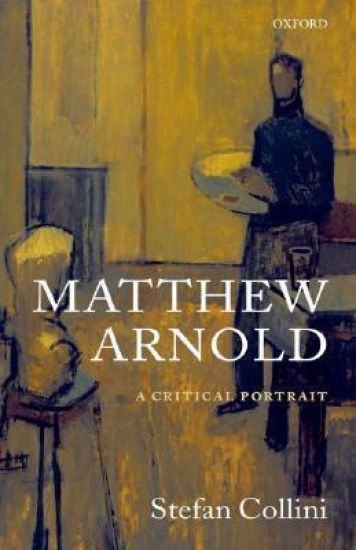
Matthew Arnold

Matthew Arnold

Stefan Collini

Oxford University Press
2008
nidottu
Matthew Arnold (1822-88), the leading man-of-letters of the Victorian age, has been the decisive influence on modern thinking about literature and criticism and his work has become an inescapable cultural reference point today. In this stylish and entertaining book Stefan Collini examines the whole range of Arnold's literary, social, and religious criticism as well as his poetry, placing them in the context of the major intellectual controversies of the nineteenth century. By attending to the distinctive power of Arnold's writing to charm, tease, persuade, and irritate, the book provides a brilliant characterization of the tone and temper of his mind. This edition includes a substantial Afterword which reflects on Arnold's continuing polemical significance and his role in contemporary cultural debate.
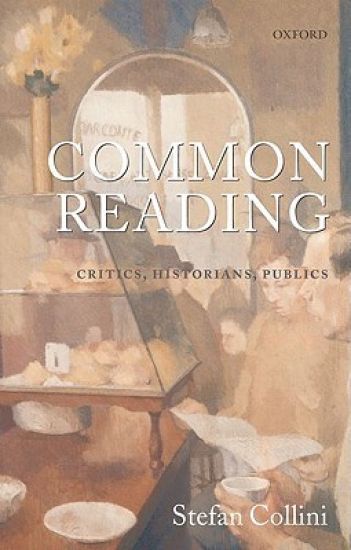
Common Reading

Common Reading

Stefan Collini

Oxford University Press
2009
nidottu
In this series of penetrating and attractively readable essays, Stefan Collini explores aspects of the literary and intellectual culture of Britain from the early twentieth century to the present. Collini focuses on critics and historians who wrote for a non-specialist readership, and on the periodicals and other genres through which they attempted to reach that readership. Among the critics discussed are Cyril Connolly, V.S. Pritchett, Aldous Huxley, Rebecca West, Edmund Wilson, and George Orwell, while the historians include A.L. Rowse, Arthur Bryant, E.H. Carr, and E.P. Thompson. There are also essays on wider themes such as the fate of 'general' periodicals, the history of reading, the role of criticism, changing conceptions of 'culture', the limitations of biography, and the functions of universities. Explicitly addressed to 'the non-specialist reader', these essays make some of the fruits of detailed scholarly research in various fields available to a wider audience in a succinct and elegant manner. Stefan Collini has been acclaimed as one of the most brilliant essayists of our time, and this collection shows him at his subtle, perceptive, and trenchant best. The book will appeal to (and delight) readers interested in literature, history, and contemporary cultural debate.
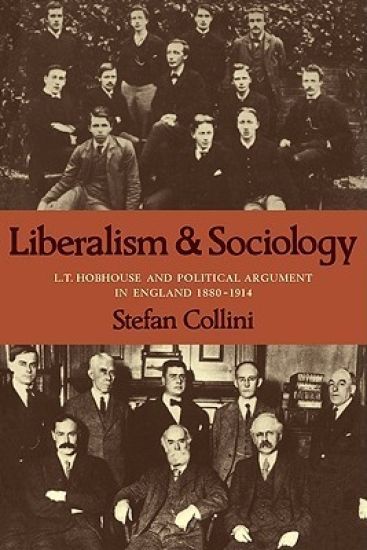
Liberalism and Sociology

Liberalism and Sociology

Stefan Collini

Cambridge University Press
1983
pokkari
In this wide-ranging book, Stefan Collini deals with the relationship between Liberalism and sociology in late nineteenth- and early twentieth-century Britain. He discusses in particular the crucial contributions of L. T. Hobhouse, the leading Liberal political theorist of the period who is also generally regarded as the 'Founding Father' of British sociology. Based upon extensive original research, the book draws together themes from three fields which are normally pursued in historiographical isolation. It examines the moral and intellectual inspiration of the New Liberalism which came to dominate Edwardian politics; explores the nature of the systematic political philosophy in this period; and shows how the contemporary understanding of sociology was bound up with attempts to provide a theoretical and historical grounding for the belief in Progress, especially in opposition to Social Darwinist and other biological social theories. Throughout, the intellectual context necessary to a properly historical understanding of these ideas is reconstructed in detail and particular attention if paid to the structure of the moral and political discourse of the time.
Speaking of Universities

Speaking of Universities

Stefan Collini

Verso Books
2018
nidottu
In recent decades there has been an immense global surge in the numbers both of universities and of students. In the UK alone there are now over 140 institutions teaching more subjects than ever to nearly 2.5 million students. New technology offers new ways of learning and teaching. Globalisation forces institutions to consider a new economic horizon. At the same time governments have systematically imposed new procedures regulating funding, governance, and assessment. Universities are being forced to behave more like business enterprises in a commercial marketplace than centres of learning.In Speaking of Universities, historian and critic Stefan Collini analyses these changes and challenges the assumptions of policy-makers and commentators. Does "marketisation" threaten to destroy what we most value about education; does this new era of "accountability" distort what it purports to measure; and who does the modern university "belong to"? Responding to recent policies and their underlying ideology, the book is a call to "focus on what is actually happening and the cliches behind which it hides; an incitement to think again, think more clearly, and then to press for something better".
What are Universities For?

What are Universities For?

Stefan Collini

Penguin Books Ltd
2012
pokkari
Across the world, universities are more numerous than they have ever been, yet at the same time there is unprecedented confusion about their purpose and scepticism about their value. What Are Universities For? offers a spirited and compelling argument for completely rethinking the way we see our universities, and why we need them. Stefan Collini challenges the common claim that universities need to show that they help to make money in order to justify getting more money. Instead, he argues that we must reflect on the different types of institution and the distinctive roles they play. In particular we must recognize that attempting to extend human understanding, which is at the heart of disciplined intellectual enquiry, can never be wholly harnessed to immediate social purposes - particularly in the case of the humanities, which both attract and puzzle many people and are therefore the most difficult subjects to justify.At a time when the future of higher education lies in the balance, What Are Universities For? offers all of us a better, deeper and more enlightened understanding of why universities matter, to everyone.