Kirjojen hintavertailu. Mukana 11 699 587 kirjaa ja 12 kauppaa.

Kirjahaku

Etsi kirjoja tekijän nimen, kirjan nimen tai ISBN:n perusteella.

3 kirjaa tekijältä Stephan Frühling

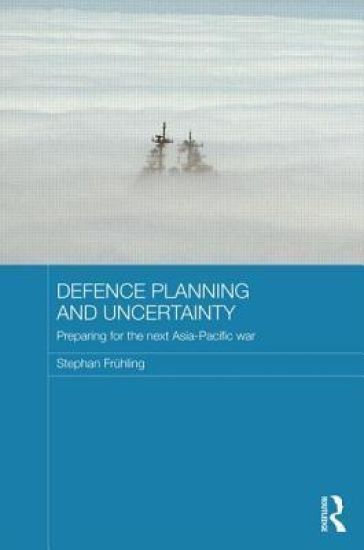
Defence Planning and Uncertainty

Defence Planning and Uncertainty

Stephan Frühling

Routledge
2014
sidottu
How can countries decide what kind of military forces they need, if threats are uncertain and history is full of strategic surprises? This is a question that is more pertinent than ever, as countries across the Asia-Pacific are faced with the military and economic rise of China. Uncertainty is inherent in defence planning, but different types of uncertainty mean that countries need to approach decisions about military force structure in different ways. This book examines four different basic frameworks for defence planning, and demonstrates how states can make decisions coherently about the structure and posture of their defence forces despite strategic uncertainty. It draws on case studies from the United States, Australian and New Zealand, each of which developed key concepts for their particular circumstances and risk perception in Asia. Success as well as failure in developing coherent defence planning frameworks holds lessons for the United States and other countries as they consider how best to structure their military forces for the uncertain challenges of the future.
Defence Planning and Uncertainty

Defence Planning and Uncertainty

Stephan Frühling

Routledge
2016
nidottu
How can countries decide what kind of military forces they need, if threats are uncertain and history is full of strategic surprises? This is a question that is more pertinent than ever, as countries across the Asia-Pacific are faced with the military and economic rise of China. Uncertainty is inherent in defence planning, but different types of uncertainty mean that countries need to approach decisions about military force structure in different ways. This book examines four different basic frameworks for defence planning, and demonstrates how states can make decisions coherently about the structure and posture of their defence forces despite strategic uncertainty. It draws on case studies from the United States, Australian and New Zealand, each of which developed key concepts for their particular circumstances and risk perception in Asia. Success as well as failure in developing coherent defence planning frameworks holds lessons for the United States and other countries as they consider how best to structure their military forces for the uncertain challenges of the future.
Australia's Uranium Trade

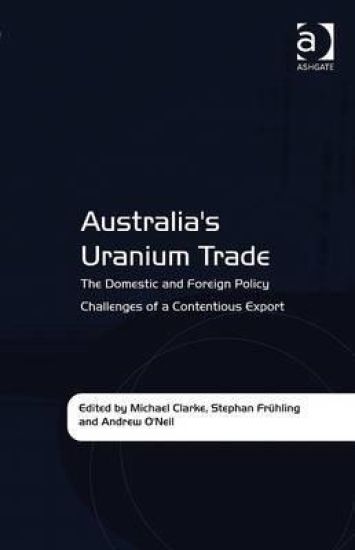
Australia's Uranium Trade

Stephan Frühling

Ashgate Publishing Limited
2011
sidottu
Australia's Uranium Trade explores why the export of uranium remains a highly controversial issue in Australia and how this affects Australia's engagement with the strategic, regime and market realms of international nuclear affairs. The book focuses on the key challenges facing Australian policy makers in a twenty-first century context where civilian nuclear energy consumption is expanding significantly while at the same time the international nuclear nonproliferation regime is subject to increasing, and unprecedented, pressures. By focusing on Australia as a prominent case study, the book is concerned with how a traditionally strong supporter of the international nuclear nonproliferation regime is attempting to recalibrate its interest in maximizing the economic and diplomatic benefits of increased uranium exports during a period of flux in the strategic, regime and market realms of nuclear affairs. Australia's Uranium Trade provides broader lessons for how - indeed whether - nuclear suppliers worldwide are adapting to the changing nuclear environment internationally.