Kirjojen hintavertailu. Mukana 11 627 940 kirjaa ja 12 kauppaa.

Kirjahaku

Etsi kirjoja tekijän nimen, kirjan nimen tai ISBN:n perusteella.

6 kirjaa tekijältä Stephan Kieninger

Securing Peace in Europe

Securing Peace in Europe

Stephan Kieninger

Columbia University Press
2025
pokkari
After the Cold War, the United States and its NATO allies faced crucial questions. Could Russia, their old adversary, be integrated into the liberal international order? What roles should former Soviet republics and satellite states in Eastern and Central Europe play in the Euro-Atlantic security system? These questions have taken on renewed significance since Russia’s full-scale invasion of Ukraine, as Vladimir Putin has portrayed Russia as the victim of Western expansionism.This deeply researched book offers new perspective on the NATO-Russia relationship through the eyes of Strobe Talbott, a deputy secretary of state for seven years under President Bill Clinton and the key US diplomatic broker for the former USSR. Stephan Kieninger traces the Clinton administration’s efforts to engage Russia and enlarge NATO at the same time, as elements of a new European security architecture. Drawing on Talbott’s diaries, as well as US and European archives and extensive interviews with former government officials, he sheds light on NATO’s opening, its missions in Bosnia and Kosovo, and other vexed issues. Kieninger argues that a careful look at Talbott’s statecraft rebuts Putin’s claims that the West exploited Russia’s weakness after the Cold War, demonstrating that the Clinton administration and its NATO allies sought to include Russia at every step. An illuminating and comprehensive account of US diplomacy during the Clinton years, Securing Peace in Europe provides vital insight into the complex relations between Russia and the West.

Securing Peace in Europe

Securing Peace in Europe

Stephan Kieninger

Columbia University Press
2025
sidottu
After the Cold War, the United States and its NATO allies faced crucial questions. Could Russia, their old adversary, be integrated into the liberal international order? What roles should former Soviet republics and satellite states in Eastern and Central Europe play in the Euro-Atlantic security system? These questions have taken on renewed significance since Russia’s full-scale invasion of Ukraine, as Vladimir Putin has portrayed Russia as the victim of Western expansionism.This deeply researched book offers new perspective on the NATO-Russia relationship through the eyes of Strobe Talbott, a deputy secretary of state for seven years under President Bill Clinton and the key US diplomatic broker for the former USSR. Stephan Kieninger traces the Clinton administration’s efforts to engage Russia and enlarge NATO at the same time, as elements of a new European security architecture. Drawing on Talbott’s diaries, as well as US and European archives and extensive interviews with former government officials, he sheds light on NATO’s opening, its missions in Bosnia and Kosovo, and other vexed issues. Kieninger argues that a careful look at Talbott’s statecraft rebuts Putin’s claims that the West exploited Russia’s weakness after the Cold War, demonstrating that the Clinton administration and its NATO allies sought to include Russia at every step. An illuminating and comprehensive account of US diplomacy during the Clinton years, Securing Peace in Europe provides vital insight into the complex relations between Russia and the West.
The Diplomacy of Détente

The Diplomacy of Détente

Stephan Kieninger

Routledge
2020
nidottu
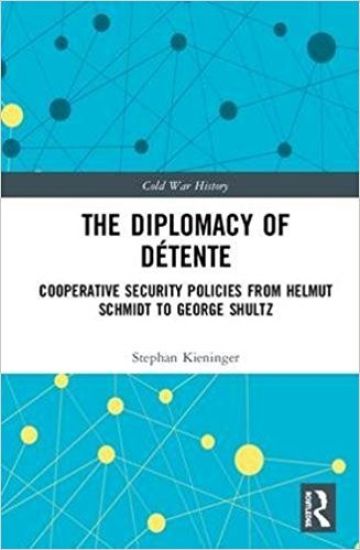
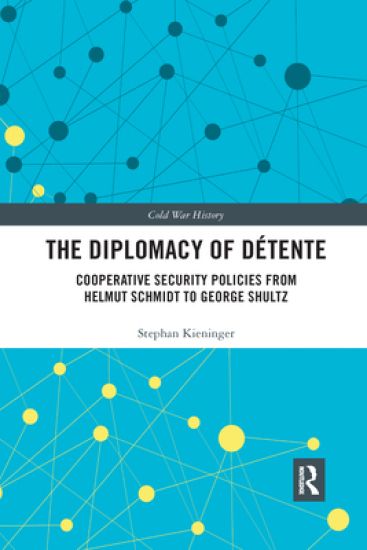
This book investigates the underlying reasons for the longevity of détente and its impact on East–West relations.The volume examines the relevance of trade across the Iron Curtain as a means to facilitate mutual trust, as well as the emergence of new habits of transparency regardless of recurring military crises. A major theme of the book concerns Helmut Schmidt’s foreign policy and his contribution to the resilience of cooperative security policies in East–West relations. It examines Schmidt’s crucial role in the Euromissile crisis, his Ostpolitik diplomacy and his pan-European trade initiatives to engage the Soviet Union in a joint perspective of trade, industry and technology. Another key theme concerns the crisis in US–Soviet relations and the challenges of meaningful leadership communication between Washington and Moscow in the absence of backchannel diplomacy during the Carter years. The book depicts the freeze in US–Soviet relations after the Soviet invasion in Afghanistan, the declaration of martial law in Poland, and Helmut Schmidt’s efforts to serve as a mediator and interpreter working for a relaunch of US–Soviet dialogue. Eventually, the book highlights George Shultz’s pivotal role in the Reagan Administration’s efforts to improve US-Soviet relations, well before Mikhail Gorbachev’s arrival.This book will be of interest to students of Cold War studies, diplomatic history, foreign policy and international relations.
The Diplomacy of Détente

The Diplomacy of Détente

Stephan Kieninger

Routledge
2018
sidottu
This book investigates the underlying reasons for the longevity of détente and its impact on East–West relations.The volume examines the relevance of trade across the Iron Curtain as a means to facilitate mutual trust, as well as the emergence of new habits of transparency regardless of recurring military crises. A major theme of the book concerns Helmut Schmidt’s foreign policy and his contribution to the resilience of cooperative security policies in East–West relations. It examines Schmidt’s crucial role in the Euromissile crisis, his Ostpolitik diplomacy and his pan-European trade initiatives to engage the Soviet Union in a joint perspective of trade, industry and technology. Another key theme concerns the crisis in US–Soviet relations and the challenges of meaningful leadership communication between Washington and Moscow in the absence of backchannel diplomacy during the Carter years. The book depicts the freeze in US–Soviet relations after the Soviet invasion in Afghanistan, the declaration of martial law in Poland, and Helmut Schmidt’s efforts to serve as a mediator and interpreter working for a relaunch of US–Soviet dialogue. Eventually, the book highlights George Shultz’s pivotal role in the Reagan Administration’s efforts to improve US-Soviet relations, well before Mikhail Gorbachev’s arrival.This book will be of interest to students of Cold War studies, diplomatic history, foreign policy and international relations.
Dynamic Détente

Dynamic Détente

Stephan Kieninger

Lexington Books
2016
sidottu
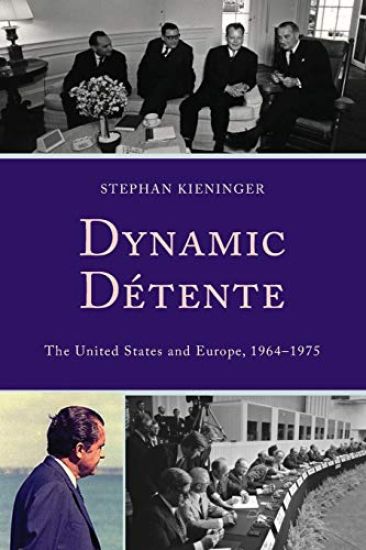
This book examines the dynamic evolution of Western détente policies which sought to transform Europe and overcome its Cold War division through more communication and engagement. Kieninger challenges the traditional Cold War narrative that détente prolonged the division of Europe and precipitated America’s decline in the aftermath of the Vietnam War. Rather, he argues that policymakers in the U.S. Department of State and in Western Europe envisaged the stability enabled by détente as a precondition for change, as Communist regimes saw a sense of security as a prerequisite for opening up their societies to Western influence over time. Kieninger identifies the Helsinki Accords, Lyndon Johnson’s bridge building, and Willy Brandt’s Ostpolitik as efforts aimed at constructive changes in Eastern Europe through a multiplication of contacts, communication, and cooperation on all societal levels. This study also illuminates the longevity of America’s policy of peaceful change against the background of the nuclear stalemate and the military status quo.
Dynamic Détente

Dynamic Détente

Stephan Kieninger

Lexington Books
2018
nidottu
This book examines the dynamic evolution of Western détente policies which sought to transform Europe and overcome its Cold War division through more communication and engagement. Kieninger challenges the traditional Cold War narrative that détente prolonged the division of Europe and precipitated America’s decline in the aftermath of the Vietnam War. Rather, he argues that policymakers in the U.S. Department of State and in Western Europe envisaged the stability enabled by détente as a precondition for change, as Communist regimes saw a sense of security as a prerequisite for opening up their societies to Western influence over time. Kieninger identifies the Helsinki Accords, Lyndon Johnson’s bridge building, and Willy Brandt’s Ostpolitik as efforts aimed at constructive changes in Eastern Europe through a multiplication of contacts, communication, and cooperation on all societal levels. This study also illuminates the longevity of America’s policy of peaceful change against the background of the nuclear stalemate and the military status quo.