Kirjojen hintavertailu. Mukana 12 111 153 kirjaa ja 12 kauppaa.

Kirjahaku

Etsi kirjoja tekijän nimen, kirjan nimen tai ISBN:n perusteella.

3 kirjaa tekijältä Stephan V. Beyer

The Cult of Tara

The Cult of Tara

Stephan V. Beyer

University of California Press
1978
pokkari
"The real history of man is the history of religion." The truth of the famous dictum of Max Muller, the father of the History of Religions, is nowhere so obvious as in Tibet. Western students have observed that religion and magic pervade not only the forms of Tibetan art, politics, and society, but also every detail of ordinary human existence. And what is the all-pervading religion of Tibet? The Buddhism of that country has been described to us, of course, but that does not mean the question has been answered. The unique importance of Stephan Beyeris work is that it presents the vital material ignored or slighted by others: the living ritual of Tibetan Buddhists. The reader is made a witness to cultic proceedings through which the author guides him carefully. He does not force one to accept easy explanations nor does he direct one's attention only to aspects that can be counted on to please. He leads one step by step, without omitting anything, through entire rituals, and interprets whenever necessary without being unduly obtrusive. Oftentimes, as in the case of the many hymns to the goddess Tara, the superb translations speak directly to the reader, and it is indeed as if the reader himself were present at the ritual.

The Classical Tibetan Language

The Classical Tibetan Language

Stephan V. Beyer

State University of New York Press
1992
pokkari
Among Asian languages, Tibetan is second only to Chinese in the depth of its historical record, with texts dating back as far as the eighth and ninth centuries, written in an alphabetic script that preserves the contemporaneous phonological features of the language.The Classical Tibetan Language is the first comprehensive description of the Tibetan language and is distinctive in that it treats the classical Tibetan language on its own terms rather than by means of descriptive categories appropriate to other languages, as has traditionally been the case. Beyer presents the language as a medium of literary expression with great range, power, subtlety, and humor, not as an abstract object. He also deals comprehensively with a wide variety of linguistic phenomena as they are actually encountered in the classical texts, with numerous examples of idioms, common locutions, translation devices, neologisms, and dialectal variations.
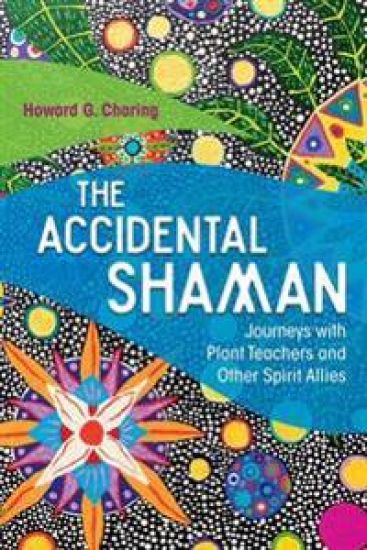
The Accidental Shaman

The Accidental Shaman

Howard G. Charing; Stephan V. Beyer

Destiny Books,U.S.
2017
pokkari
After surviving a serious elevator crash in London, Howard G. Charing found he had developed healing touch as well as the ability to hear voices and experience visions--just as a healer in Italy had predicted only a week before the accident. He began using his abilities to heal but felt he needed more guidance and training. He first connected with a national spiritual healing organization, only to be told he was doing everything wrong. Then, through a friend, he discovered shamanism. Sharing profound teachings and extraordinary experiences from his more than 30 years of shamanic healing work, Charing explains how he accidentally became a shaman and completely changed the course of his life. He describes his work with plant spirits, entheogens such as ayahuasca, and indigenous shamans during his 20 years of fieldwork in the Peruvian Amazon, including his studies with the late visionary artist Pablo Amaringo. Investigating altered states of perception, he provides visionary techniques for exploring non-ordinary reality, exercises for expanding sensory perception, and practices to open your creative artistic visionary potential. Detailing the practice of soul retrieval, the author discusses why it is one of the most effective and profound spiritual healing practices and shares emotionally charged stories of successful shamanic healings he has attended. He also includes shamanic wisdom on working with stones and sound and compares current research in physics with the vast body of experiential knowledge from indigenous spiritual traditions.