Kirjojen hintavertailu. Mukana 11 699 587 kirjaa ja 12 kauppaa.

Kirjahaku

Etsi kirjoja tekijän nimen, kirjan nimen tai ISBN:n perusteella.

13 kirjaa tekijältä Stephanie Brown

Speed

Speed

Stephanie Brown

Berkley Publishing Corporation,U.S.
2015
nidottu
MORE, BETTER...SLOWER. Feeling rushed, out of control, and overwhelmed? Feeling like you can't keep up...and can't stop? It's not just you. From the need to be constantly connected and the changing definition of "work hours," to unrealistic expectations of instant gratification, our bodies and brains are being harmed by habits that, as with any kind of addiction, promise short-term satisfaction while doing long-term damage. As a psychologist and addiction expert who practices in Silicon Valley, Stephanie Brown sees firsthand the impact of ever-faster technology and the culture it has spawned. She knows it's affecting us mentally, physically, and spiritually. In this groundbreaking book, she explores how our beliefs and behaviors are being shaped by the seemingly limitless new world we've entered in recent years--and why faster doesn't always equal better. Dr. Brown offers a step-by-step plan for breaking out of the speed trap. With practical guidelines, she shows us how to ease up on the gas pedal and reconnect with ourselves, learning to accept--and value--our limitations as human beings, reduce our stress levels, and free ourselves from our counterproductive obsession with speed.
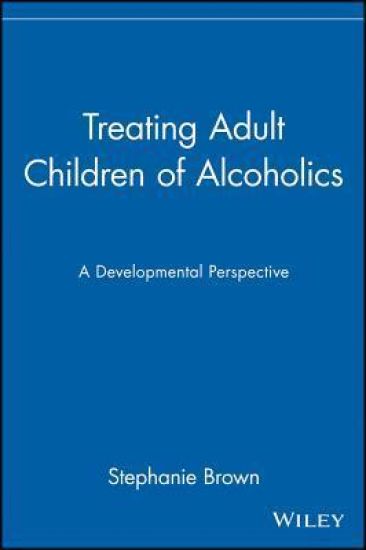
Treating Adult Children of Alcoholics

Treating Adult Children of Alcoholics

Stephanie Brown

John Wiley Sons Inc
1997
nidottu
A comprehensive theoretical and practical presentation on the assessment and treatment of adult children of alcoholics. In Treating Adult Children of Alcoholics, renowned psychologist, researcher, and author Stephanie Brown develops an in-depth, integrated theory linking childhood experiences with an alcoholic parent to developmental difficulties. She emphasizes the importance of the traumatic family environment and provides rich clinical descriptions, linking systems theory and literature of the handicapped to the experience of children of alcoholics. Dr. Brown connects environmental issues with individual development. She details the defensive maneuvers required to cope with an alcoholic parent and explores their impact on the development of the self. Finally, she outlines the process of recovery, continuing to emphasize the link between environment and individual development. She traces the recovery process from its first step—admitting parental alcoholism—through the reconstruction of personal identity based on incorporating the realities of parental alcoholism into a new vision of the self. For mental health professionals, alcoholism counselors, graduate students, recovering alcoholics and their families, and adult children of alcoholics, Treating Adult Children of Alcoholics provides a clear understanding of the impact of parental alcoholism on the developing child. It also opens the door to a solid, realistic course of treatment that offers hope to thousands of adult children of alcoholics.
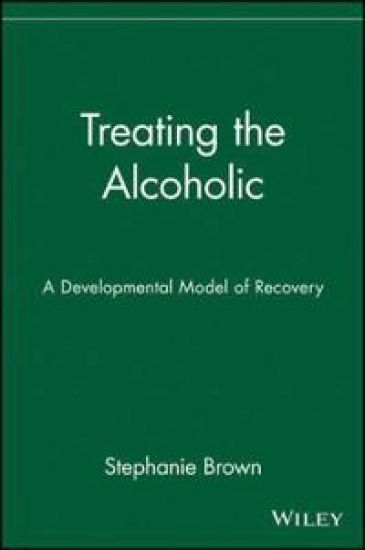
Treating the Alcoholic

Treating the Alcoholic

Stephanie Brown

John Wiley Sons Inc
1997
nidottu
The book that revolutionized the psychotherapist's approach totreating alcoholism When it was first published in 1985, Treating the Alcoholicchallenged traditional psychotherapeutic approaches to alcoholismtreatment. Since then, thousands of mental health professionals,using Dr. Stephanie Brown's treatment model, have found renewedfaith in their ability to help alcoholic patients achieve lastingrecovery. The book begins by studying the experiences of people who havestopped drinking and provides firsthand descriptions of theinevitable emotional, physical, and psychological problems thatfollow. Dr. Brown then offers a model for treatment that replacesthe notion of abstinence as a static state with a dynamic,process-oriented "continuum of recovery" principle. She translatesthe twelve steps of Alcoholics Anonymous into psychological terms,taking particular care to explain the crucial notion of "loss ofcontrol." Perhaps the most surprising element of Dr. Brown's modelis her emphasis on the triadic therapeutic relationship in whichtherapist, patient, and AA counselor work in partnership to ensureongoing recovery. Once considered a radical departure from the conventional wisdom,Treating the Alcoholic offers a now-proven approach that enablespsychiatrists, psychologists, social workers, alcoholismcounselors, and other mental health professionals to understand thedynamics of alcoholism and make profound contributions to therecovery process.
The Modern Totemist

The Modern Totemist

Stephanie Brown

Paited Caves Publishing
2019
pokkari
Uncover your soul's deepest desires and motivations, and understand yourself on a level you never thought possible. Find your totem animal spirits and let them guide you to deeper relationships, invaluable personal insights, and a creative, spiritual life you'll love. The Modern Totemist combines traditional totem wisdom with first-hand spiritual experience to give you the tools you need to work with YOUR animal spirits- whether you are completely new to animal totems, or more advanced on your totem path.
Domestic Interior

Domestic Interior

Stephanie Brown

University of Pittsburgh Press
2008
nidottu
In painting, a “domestic interior” depicts the inside of a house and its inhabitants going about their daily lives. The poems in Domestic Interior describe the private and sometimes secret spaces in our places of residence and the interior lives of those who live there. Marriage and parenthood, grief, spiritual renewal, community and country are subjects addressed with a satirical eye and emotional insight.
A Place Called Self

A Place Called Self

Stephanie Brown

Hazelden Information Educational Services
2004
nidottu
For many women, newfound sobriety--with its hard-won joys and accomplishments--is often a lonely and unsatisfying experience. Here, pioneering therapist Stephanie Brown, Ph.D., helps readers understand that leaving behind the numbing comfort of alcohol or other drugs means you must face yourself, perhaps for the first time. With personal stories and gentle guidance, Brown helps readers unravel painful truths and confusing feelings in the process of creating a new, true sense of self.
The Postwar African American Novel

The Postwar African American Novel

Stephanie Brown

University Press of Mississippi
2011
sidottu
Americans in the World War II era bought the novels of African American writers in unprecedented numbers. But the names on the books lining shelves and filling barracks trunks were not the now-familiar Richard Wright and Ralph Ellison, but Frank Yerby, Chester Himes, William Gardner Smith, and J. Saunders Redding.In this book, Stephanie Brown recovers the work of these innovative novelists, overturning conventional wisdom about the writers of the period and the trajectory of African American literary history. She also questions the assumptions about the relations between race and genre that have obscured the importance of these once-influential creators.Wright's Native Son (1940) is typically considered to have inaugurated an era of social realism in African-American literature. And Ellison's Invisible Man (1952) has been cast as both a high mark of American modernism and the only worthy stopover on the way to the Black Arts Movement of the 1960s. But readers in the late 1940s purchased enough copies of Yerby's historical romances to make him the best-selling African American author of all time. Critics, meanwhile, were taking note of the generic experiments of Redding, Himes, and Smith, while the authors themselves questioned the obligation of black authors to write protest, instead penning campus novels, war novels, and, in Yerby's case, ""costume dramas."" Their status as ""lesser lights"" is the product of retrospective bias, Brown demonstrates, and their novels established the period immediately following World War II as a pivotal moment in the history of the African American novel.
The Postwar African American Novel

The Postwar African American Novel

Stephanie Brown

University Press of Mississippi
2013
nidottu
Americans in the World War II era bought the novels of African American writers in unprecedented numbers. But the names on the books lining shelves and filling barracks trunks were not the now-familiar Richard Wright and Ralph Ellison, but Frank Yerby, Chester Himes, William Gardner Smith, and J. Saunders Redding.In this book, Stephanie Brown recovers the work of these innovative novelists, overturning conventional wisdom about the writers of the period and the trajectory of African American literary history. She also questions the assumptions about the relations between race and genre that have obscured the importance of these once-influential creators.Wright's Native Son (1940) is typically considered to have inaugurated an era of social realism in African American literature. And Ellison's Invisible Man (1952) has been cast as both a high mark of American modernism and the only worthy stopover on the way to the Black Arts Movement of the 1960s. But readers in the late 1940s purchased enough copies of Yerby's historical romances to make him the best-selling African American author of all time. Critics, meanwhile, were taking note of the generic experiments of Redding, Himes, and Smith, while the authors themselves questioned the obligation of black authors to write protest, instead penning campus novels, war novels, and, in Yerby's case, ""costume dramas."" Their status as ""lesser lights"" is the product of retrospective bias, Brown demonstrates, and their novels established the period immediately following World War II as a pivotal moment in the history of the African American novel.