Kirjojen hintavertailu. Mukana 11 244 527 kirjaa ja 12 kauppaa.

Kirjahaku

Etsi kirjoja tekijän nimen, kirjan nimen tai ISBN:n perusteella.

6 kirjaa tekijältä Stephanie Coontz

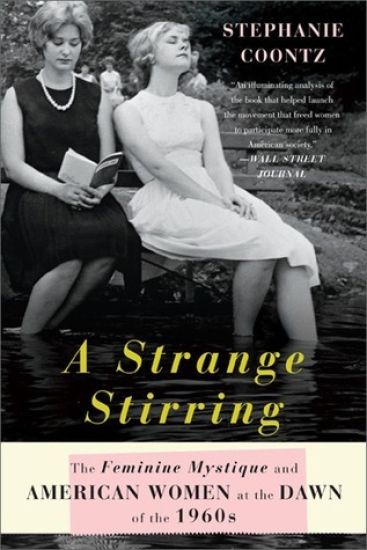
A Strange Stirring

A Strange Stirring

Stephanie Coontz

Basic Books
2012
pokkari
In 1963, Betty Friedan unleashed a storm of controversy with her bestselling book, The Feminine Mystique . Women wrote to her by the hundreds to say that the book had transformed, even saved, their lives. Nearly half a century later, many women still recall where they were and what they were doing when they first read the book. In A Strange Stirring , prominent historian of women and marriage Stephanie Coontz strips away the myths, examining what The Feminine Mystique actually said, and which groups of women were affected. Coontz takes us back to the early 1960s - the age of Mad Men - when the sexual revolution was barely nascent, middle class wives stayed at home, and husbands retained legal control over almost every aspect of family life. Based on extensive research in the magazines and popular culture of the 1940s, 1950s, and early 1960s, as well as interviews with women and men who read The Feminine Mystique shortly after its publication, A Strange Stirring brilliantly illuminates how Friedan's book emboldened a generation of women to realize that their boredom and dissatisfaction stemmed from political injustice rather than personal weakness.
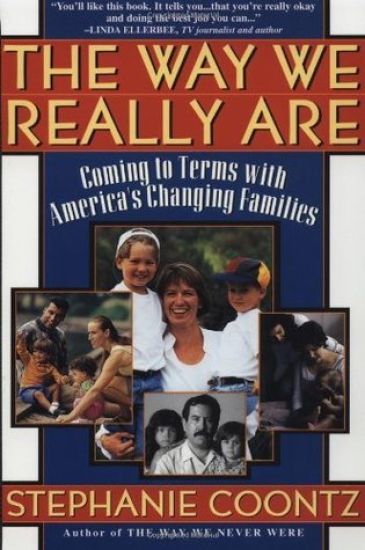
The Way We Really Are

The Way We Really Are

Stephanie Coontz

Basic Books
1998
pokkari
Stephanie Coontz, the author of The Way We Never Were, now turns her attention to the mythology that surrounds today's family,the demonizing of untraditional" family forms and marriage and parenting issues. She argues that while it's not crazy to miss the more hopeful economic trends of the 1950s and 1960s, few would want to go back to the gender roles and race relations of those years. Mothers are going to remain in the workforce, family diversity is here to stay, and the nuclear family can no longer handle all the responsibilities of elder care and childrearing.Coontz gives a balanced account of how these changes affect families, both positively and negatively, but she rejects the notion that the new diversity is a sentence of doom. Every family has distinctive resources and special vulnerabilities, and there are ways to help each one build on its strengths and minimize its weaknesses.The book provides a meticulously researched, balanced account showing why a historically informed perspective on family life can be as much help to people in sorting through family issues as going into therapy,and much more help than listening to today's political debates.
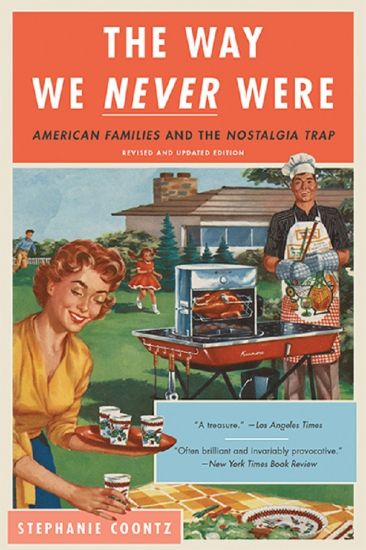
The Way We Never Were

The Way We Never Were

Stephanie Coontz

Basic Books
2016
pokkari
Leave It to Beaver was not a documentary, a man's home has never been his castle, the'male breadwinner marriage' is the least traditional family in history, and rape and sexual assault were far higher in the 1970s than they are today. In The Way We Never Were , acclaimed historian Stephanie Coontz provides a myth-shattering examination of two centuries of the American family, sweeping away misconceptions about the past that cloud current debates about domestic life. The 1950s do not present a workable model of how to conduct our personal lives today, Coontz argues, and neither does any other era from our cultural past. This revised edition includes a new introduction and epilogue, looking at what has and has not changed since the original publication in 1992, and exploring how the clash between growing gender equality and growing economic inequality is reshaping family life, marriage, and male-female relationships in our modern era. Now more relevant than ever, The Way We Never Were continues to be a potent corrective to dangerous nostalgia for an American tradition that never really existed.
For Better and Worse: The Problematic Past and Uncertain Future of Marriage
Twenty years ago, Stephanie Coontz asked of traditional marriage, "What tradition?" Now she returns to examine its contemporary state--what threatens its prevalence and what freedoms it can create for all people. Ninety percent of the world's people live in countries where marriage rates have plummeted since the 1980s, with the Western world experiencing especially steep drops. Almost everywhere, marriage has declined most among men and women with the lowest levels of education or earnings. And highly-educated and high-earning women are actually more likely to marry and less likely to divorce than in the past. But such women often express more ambivalence about getting married than other women--and typically postpone doing so until later in life. Still, rather than devaluing marriage, people all around the world overwhelmingly describe it as the highest expression of commitment they can imagine. And most people say they eventually want to marry even while they increasingly express uncertainty about whether they will end up doing so. In her new book, For Better and Worse, Stephanie Coontz unravels the origins of these paradoxical trends. Using the past to illuminate the present, she shows how shifting marital ideologies, gender relations, sexual mores, and emotional mind-sets over time have bequeathed us a welter of contradictory expectations and habits that often sabotage our attempts to build mutually satisfactory relationships. "Traditional" roles and values that once promoted successful marriages are now a recipe for relationship failure. Only by undoing the legacy of marriage's "problematic past," Coontz argues, can we help individuals and society at large navigate the "challenging future" of marriage.
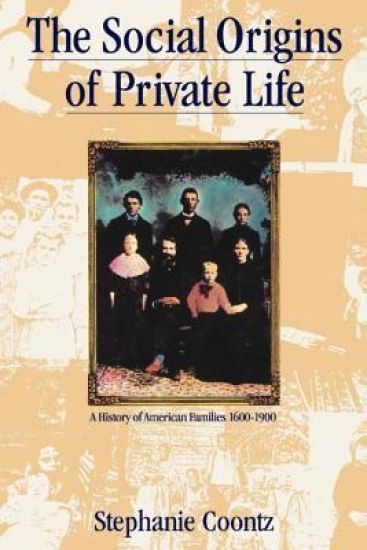
The Social Origins of Private Life

The Social Origins of Private Life

Stephanie Coontz

Verso Books
1988
nidottu
Current debates about the future of the family are often based on serious misconceptions about its past. Arguing that there is no biologically mandated or universally functional family form, Stephanie Coontz traces the complexity and variety of family arrangements in American history, from Native American kin groups to the emergence of the dominant middle-class family ideal in the 1890s.Surveying and synthesizing a vast range of previous scholarship, as well as engaging more particular studies of family life from the seventeenth to the nineteenth centuries, Coontz offers a highly original account of the shifting structure and function of American families. Her account challenges standard interpretations of the early hegemony of middle-class privacy and "affective individualism," pointing to the rich tradition of alternative family behaviors among various ethnic and socioeconomic groups in America, and arguing that even middle-class families went through several transformations in the course of the nineteenth century.The present dominant family form, grounded in close interpersonal relations and premised on domestic consumption of mass-produced household goods has arisen, Coontz argues, from a long and complex series of changing political and economic conjunctures, as well as from the destruction or incorporation of several alternative family systems. A clear conception of American capitalism's combined and uneven development is therefore essential if we are to understand the history of the family as a key social and economic unit. Lucid and detailed, The Social Origins of Private Life is likely to become the standard history of its subject.
The Social Origins of Private Life

The Social Origins of Private Life

Stephanie Coontz

Verso Books
2025
nidottu
Current debates about the future of the family are often based on serious misconceptions about its past. Arguing that there is no biologically mandated or universally functional family form, Stephanie Coontz traces the complexity and variety of family arrangements in American history, from Native American kin groups to the emergence of the dominant middle-class family ideal in the 1890s. Coontz's account challenges standard interpretations of the early hegemony of middle-class privacy and "affective individualism," arguing that even middle-class families went through several transformations in the course of the nineteenth century.The present dominant family form, grounded in close interpersonal relations and premised on domestic consumption of mass-produced household goods has arisen, Coontz argues, from a long and complex series of changing political and economic conjunctures, as well as from the destruction or incorporation of several alternative family systems. A clear conception of American capitalism's combined and uneven development is therefore essential if we are to understand the history of the family as a key social and economic unit. Lucid and detailed, The Social Origins of Private Life is likely to become the standard history of its subject.