Kirjojen hintavertailu. Mukana 11 244 527 kirjaa ja 12 kauppaa.

Kirjahaku

Etsi kirjoja tekijän nimen, kirjan nimen tai ISBN:n perusteella.

9 kirjaa tekijältä Stephanie Li

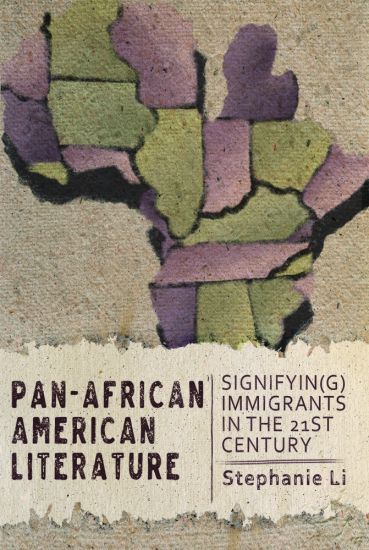
Pan–African American Literature

Pan–African American Literature

Stephanie Li

Rutgers University Press
2018
nidottu
2019 Choice Outstanding Academic Title The twenty-first century is witnessing a dynamic broadening of how blackness signifies both in the U.S. and abroad. Literary writers of the new African diaspora are at the forefront of exploring these exciting approaches to what black subjectivity means. Pan-African American Literature is dedicated to charting the contours of literature by African born or identified authors centered around life in the United States. The texts examined here deliberately signify on the African American literary canon to encompass new experiences of immigration, assimilation and identification that challenge how blackness has been previously conceived. Though race often alienates and frustrates immigrants who are accustomed to living in all-black environments, Stephanie Li holds that it can also be a powerful form of community and political mobilization.
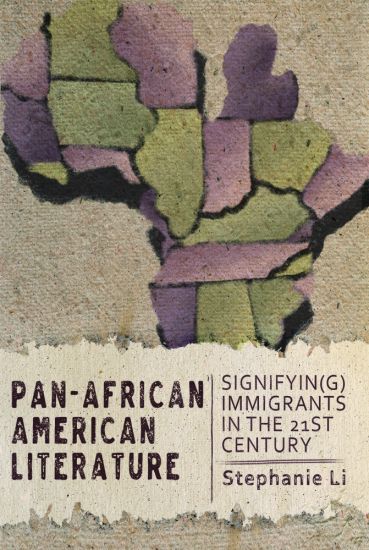
Pan–African American Literature

Pan–African American Literature

Stephanie Li

Rutgers University Press
2018
sidottu
2019 Choice Outstanding Academic Title The twenty-first century is witnessing a dynamic broadening of how blackness signifies both in the U.S. and abroad. Literary writers of the new African diaspora are at the forefront of exploring these exciting approaches to what black subjectivity means. Pan-African American Literature is dedicated to charting the contours of literature by African born or identified authors centered around life in the United States. The texts examined here deliberately signify on the African American literary canon to encompass new experiences of immigration, assimilation and identification that challenge how blackness has been previously conceived. Though race often alienates and frustrates immigrants who are accustomed to living in all-black environments, Stephanie Li holds that it can also be a powerful form of community and political mobilization.
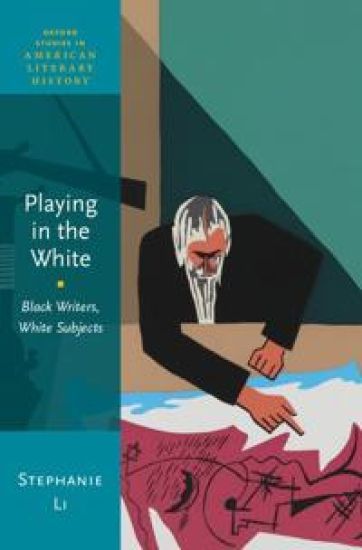
Playing in the White

Playing in the White

Stephanie Li

Oxford University Press Inc
2015
sidottu
The postwar period witnessed an outpouring of white life novels, that is texts by African American writers focused almost exclusively on white characters. Almost every major mid-twentieth century black writer, including Zora Neale Hurston, Richard Wright, Ann Petry and James Baldwin, published one of these anomalous texts. Controversial since their publication in the 1940s and 50s, these novels have since fallen into obscurity given the challenges they pose to traditional conceptions of the African American literary canon. Playing in the White: Black Writers, White Subjects aims to bring these neglected novels back into conversations about the nature of African American literature and the unique expectations imposed upon black texts. In a series of nuanced readings, Li demonstrates how postwar black novelists were at the forefront of what is now commonly understood as whiteness studies. Novels like Hurston's Seraph on the Suwanee and Wright's Savage Holiday, once read as abdications of the political imperative of African American literature, are revisited with an awareness of how whiteness signifies in multivalent ways that critique America's abiding racial hierarchies. These novels explore how this particular racial construction is freighted with social power and narrative meaning. Whiteness repeatedly figures in these texts as a set of expectations that are nearly impossible to fulfill. By describing characters who continually fail at whiteness, white life novels ask readers to reassess what race means for all Americans. Along with its close analysis of key white life novels, Playing in the White also provides important historical context to understand how these texts represented the hopes and anxieties of a newly integrated nation.
Toni Morrison

Toni Morrison

Stephanie Li

Greenwood Press
2009
sidottu
This book is a revealing look at the life and work of Nobel laureate Toni Morrison. Toni Morrison: A Biography looks at the remarkable life of an essential American novelist, whose critically acclaimed, bestselling books offer lively, powerful depictions of black America. Toni Morrison follows the life of the woman born Chloe Ardelia Wofford from her culturally rich childhood in Lorrain, OH, through her spectacular rise as a novelist, educator, and public intellectual. The book also serves as a basic introduction to the literary influences that shaped Morrison's writing, from the early novels to the breakout success of Song of Solomon; from the overwhelming achievement of Beloved to her most recent book, A Mercy. The book also examines Morrison's other writing—criticism, essays, edited volumes, children's books—as well as her academic career, her work as an editor at Random House, and her political activism, most notably in the 2008 presidential campaign.
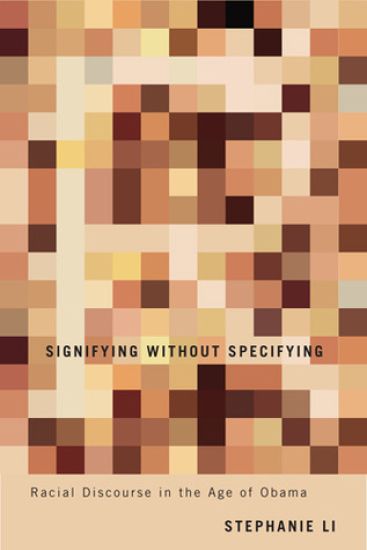
Signifying Without Specifying

Signifying Without Specifying

Stephanie Li

Rutgers University Press
2011
sidottu
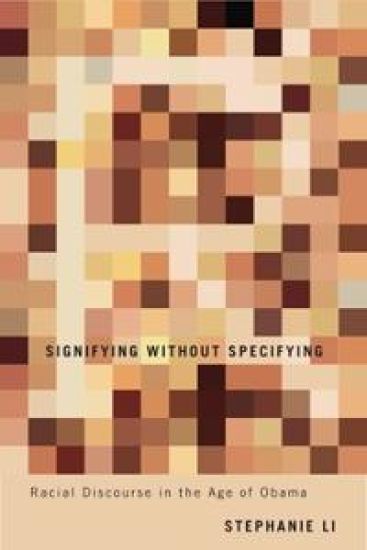
On the campaign trail, Barack Obama faced a difficult task—rallying African American voters while resisting his opponents’ attempts to frame him as “too black” to govern the nation as a whole. Obama’s solution was to employ what Toni Morrison calls “race-specific, race-free language,” avoiding open discussions of racial issues while using terms and references that carried a specific cultural resonance for African American voters.Stephanie Li argues that American politicians and writers are using a new kind of language to speak about race. Challenging the notion that we have moved into a “post-racial” era, she suggests that we are in an uneasy moment where American public discourse demands that race be seen, but not heard. Analyzing contemporary political speech with nuanced readings of works by such authors as Toni Morrison, Jhumpa Lahiri, and Colson Whitehead, Li investigates how Americans of color have negotiated these tensions, inventing new ways to signal racial affiliations without violating taboos against open discussions of race.
Signifying Without Specifying

Signifying Without Specifying

Stephanie Li

Rutgers University Press
2011
nidottu
On the campaign trail, Barack Obama faced a difficult task—rallying African American voters while resisting his opponents’ attempts to frame him as “too black” to govern the nation as a whole. Obama’s solution was to employ what Toni Morrison calls “race-specific, race-free language,” avoiding open discussions of racial issues while using terms and references that carried a specific cultural resonance for African American voters.Stephanie Li argues that American politicians and writers are using a new kind of language to speak about race. Challenging the notion that we have moved into a “post-racial” era, she suggests that we are in an uneasy moment where American public discourse demands that race be seen, but not heard. Analyzing contemporary political speech with nuanced readings of works by such authors as Toni Morrison, Jhumpa Lahiri, and Colson Whitehead, Li investigates how Americans of color have negotiated these tensions, inventing new ways to signal racial affiliations without violating taboos against open discussions of race.
Zora Neale Hurston

Zora Neale Hurston

Stephanie Li

Greenwood Press
2020
sidottu
In this biography, chronological chapters follow Zora Neale Hurston's family, upbringing, education, influences, and major works, placing these experiences within the context of American history.This biography of Zora Neale Hurston, one of the most influential African American writers of the 20th century and a central figure in the Harlem Renaissance, covers all of the major points of development in Hurston's life as well as her major publications. Hurston's impact extends beyond the literary world: she also left her mark as an anthropologist whose ethnographic work portrays the racial struggles during the early 20th century American South. This work includes a preface and narrative chapters that explore Hurston's literary influences and the personal relationships that were most formative to her life; the final chapter, "Why Zora Neale Hurston Matters," explores her cultural and historical significance, providing context to her writings and allowing readers a greater understanding of Hurston's life while critically examining her major writing.
Ugly White People

Ugly White People

Stephanie Li

UNIVERSITY OF MINNESOTA PRESS
2023
sidottu
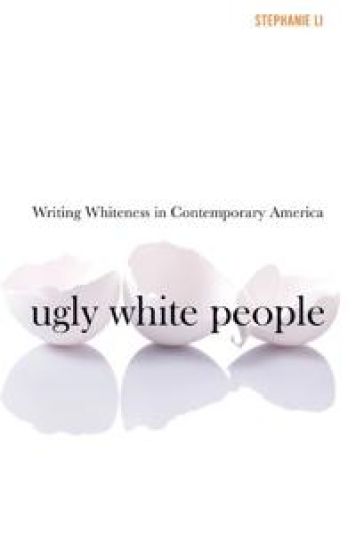
Whiteness revealed: an analysis of the destructive complacency of white self-consciousness? White Americans are confronting their whiteness more than ever before, with political and social shifts ushering in a newfound racial awareness. And with white people increasingly seeing themselves as distinctly racialized (not simply as American or human), white writers are exposing a self-awareness of white racialized behavior-from staunch antiracism to virulent forms of xenophobic nationalism. Ugly White People explores representations of whiteness from twenty-first-century white American authors, revealing white recognition of the ugly forms whiteness can take. Stephanie Li argues that much of the twenty-first century has been defined by this rising consciousness of whiteness because of the imminent shift to a “majority minority” population and the growing diversification of America’s political, social, and cultural institutions. The result is literature that more directly grapples with whiteness as its own construct rather than a wrongly assumed norm. Li contextualizes a series of literary novels as collectively influenced by changes in racial and political attitudes. Turning to works by Dave Eggers, Sarah Smarsh, J. D. Vance, Claire Messud, Ben Lerner, and others, she traces the responses to white consciousness that breed shared manifestations of ugliness. The tension between acknowledging whiteness as an identity built on domination and the failure to remedy inequalities that have proliferated from this founding injustice is often the source of the ugly whiteness portrayed through these narratives. The questions posed in Ugly White People about the nature and future of whiteness are vital to understanding contemporary race relations in America. From the election of Trump and the rise of white nationalism to Karen memes and the war against critical race theory to the pervasive pattern of behavior among largely liberal-leaning whites, Li elucidates truths about whiteness that challenge any hope of national unity and, most devastatingly, the basic humanity of others. Retail e-book files for this title are screen-reader friendly.
Ugly White People

Ugly White People

Stephanie Li

UNIVERSITY OF MINNESOTA PRESS
2023
nidottu
Whiteness revealed: an analysis of the destructive complacency of white self-consciousness? White Americans are confronting their whiteness more than ever before, with political and social shifts ushering in a newfound racial awareness. And with white people increasingly seeing themselves as distinctly racialized (not simply as American or human), white writers are exposing a self-awareness of white racialized behavior-from staunch antiracism to virulent forms of xenophobic nationalism. Ugly White People explores representations of whiteness from twenty-first-century white American authors, revealing white recognition of the ugly forms whiteness can take. Stephanie Li argues that much of the twenty-first century has been defined by this rising consciousness of whiteness because of the imminent shift to a “majority minority” population and the growing diversification of America’s political, social, and cultural institutions. The result is literature that more directly grapples with whiteness as its own construct rather than a wrongly assumed norm. Li contextualizes a series of literary novels as collectively influenced by changes in racial and political attitudes. Turning to works by Dave Eggers, Sarah Smarsh, J. D. Vance, Claire Messud, Ben Lerner, and others, she traces the responses to white consciousness that breed shared manifestations of ugliness. The tension between acknowledging whiteness as an identity built on domination and the failure to remedy inequalities that have proliferated from this founding injustice is often the source of the ugly whiteness portrayed through these narratives. The questions posed in Ugly White People about the nature and future of whiteness are vital to understanding contemporary race relations in America. From the election of Trump and the rise of white nationalism to Karen memes and the war against critical race theory to the pervasive pattern of behavior among largely liberal-leaning whites, Li elucidates truths about whiteness that challenge any hope of national unity and, most devastatingly, the basic humanity of others. Retail e-book files for this title are screen-reader friendly.