Kirjojen hintavertailu. Mukana 11 577 172 kirjaa ja 12 kauppaa.

Kirjahaku

Etsi kirjoja tekijän nimen, kirjan nimen tai ISBN:n perusteella.

9 kirjaa tekijältä Stephanie Newell

West African Literatures

West African Literatures

Stephanie Newell

Oxford University Press
2006
nidottu
The Oxford Studies in Postcolonial Literatures series (general editor: Elleke Boehmer) offers stimulating and accessible introductions to definitive topics and key genres and regions within the rapidly diversifying field of postcolonial literary studies in English. This study of West African literatures interweaves the analysis of fiction, drama, and poetry with an exploration of the broader political, cultural, and intellectual contexts within which West African writers work. Anglophone literatures form the central focus of the book, with comparative comments on vernacular literature, francophone writing and oral literatures, and detailed discussion of selected francophone texts in translation (e.g., Senghor, Tadjo, Beyala, Bâ, Sembene). Moving from a discussion of nationalist and anti-colonial writing in the period before independence, towards the more experimental writings of contemporary authors such as Véronique Tadjo (Ivory Coast), Syl Cheney-Coker (Sierra Leone), and Kojo Laing (Ghana), the book constantly relates texts to the social and political history of West Africa. Canonical, internationally well-known writers such as Chinua Achebe and Wole Soyinka are positioned in relation to the literary cultures and debates which surrounded them when they first produced their seminal texts; the discussions and disagreements which have grown up around their work in subsequent decades are also considered. The work of new and lesser-known writers is also considered, including Niyi Osundare (Nigeria) and Kofi Anyidoho (Ghana). In order to convey a sense of the rich and complex societies that are clustered beneath the umbrella-term 'postcolonial', emphasis is placed on West Africa's diverse oral and popular cultures, and the ways in which local intellectuals and readers have responded to the most prominent authors through the aesthetic frameworks generated by these forms.

Literary Culture in Colonial Ghana

Literary Culture in Colonial Ghana

Stephanie Newell

Indiana University Press
2002
pokkari
". . . a book that will break new ground in African cultural studies. . . . [it] will appeal not only to literary scholars but also to social historians and cultural anthropologists." —Karin Barber Focusing on the broad educational aims of the colonial administration and missionary societies, Stephanie Newell draws on newspaper archives, early unofficial texts, and popular sources to uncover how Africans used literacy to carve out new cultural, social, and economic spaces for themselves. Newly literate Africans not only shaped literary tastes in colonial Africa but also influenced how and where English was spoken; established standards for representations of gender, identity, and morality; and created networks for African literary production, dissemination, and reception throughout British West Africa. Newell reveals literacy and reading as powerful social forces that quickly moved beyond the missionary agenda and colonial regulation. A fascinating literary, social, and cultural history of colonial Ghana, Literary Culture in Colonial Ghana sheds new light on understandings of the African colonial experience and the development of postcolonial cultures in West Africa.
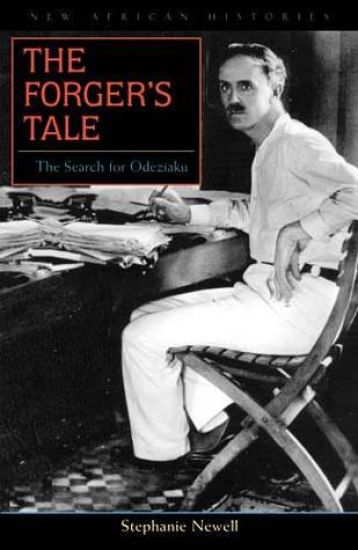
The Forger's Tale

The Forger's Tale

Stephanie Newell

Ohio University Press
2006
pokkari
Between 1905 and 1939 a conspicuously tall white man with a shock of red hair, dressed in a silk shirt and white linen trousers, could be seen on the streets of Onitsha, in Eastern Nigeria. How was it possible for an unconventional, boy-loving Englishman to gain a social status among the local populace enjoyed by few other Europeans in colonial West Africa? In The Forger's Tale: The Search for Odeziaku Stephanie Newell charts the story of the English novelist and poet John Moray Stuart-Young (1881–1939) as he traveled from the slums of Manchester to West Africa in order to escape the homophobic prejudices of late-Victorian society. Leaving behind a criminal record for forgery and embezzlement and his notoriety as a "spirit rapper," Stuart-Young found a new identity as a wealthy palm oil trader and a celebrated author, known to Nigerians as "Odeziaku." In this fascinating biographical account, Newell draws on queer theory, African gender debates, and "new imperial history" to open up a wider study of imperialism, (homo)sexuality, and nonelite culture between the 1880s and the late 1930s. The Forger's Tale pays close attention to different forms of West African cultural production in the colonial period and to public debates about sexuality and ethics, as well as to movements in mainstream English literature.
The Power to Name

The Power to Name

Stephanie Newell

Ohio University Press
2013
pokkari
Between the 1880s and the 1940s, the region known as British West Africa became a dynamic zone of literary creativity and textual experimentation. African-owned newspapers offered local writers numerous opportunities to contribute material for publication, and editors repeatedly defined the press as a vehicle to host public debates rather than simply as an organ to disseminate news or editorial ideology. Literate locals responded with great zeal, and in increasing numbers as the twentieth century progressed, they sent in letters, articles, fiction, and poetry for publication in English- and African-language newspapers. The Power to Name offers a rich cultural history of this phenomenon, examining the wide array of anonymous and pseudonymous writing practices to be found in African-owned newspapers between the 1880s and the 1940s, and the rise of celebrity journalism in the period of anticolonial nationalism. Stephanie Newell has produced an account of colonial West Africa that skillfully shows the ways in which colonized subjects used pseudonyms and anonymity to alter and play with colonial power and constructions of African identity.
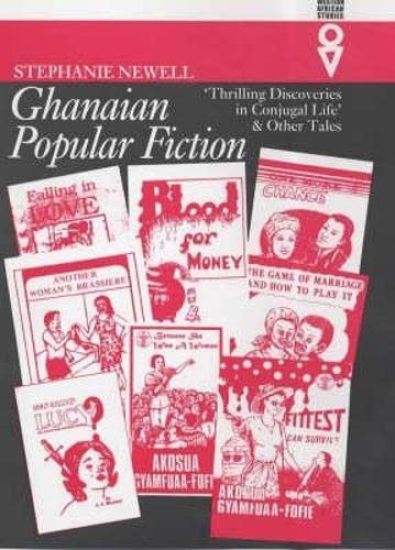
Ghanaian Popular Fiction

Ghanaian Popular Fiction

Stephanie Newell

James Currey
2000
pokkari
This is a study of the unofficial side of African fiction. Stephanie Newell's book reveals the undocumented writing, publishing and reading of pamphlets and paperbacks which exist outside of mainstream mass-production in Ghana. Gender relations are a dominant theme in the stories which explore and symbolically resolve commonly held pre-occupations about marriage, money and manhood. North America: Ohio U Press
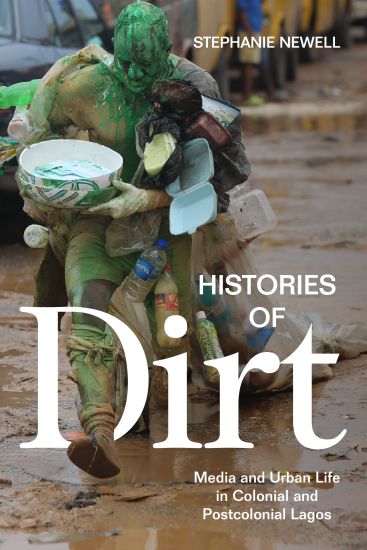
Histories of Dirt

Histories of Dirt

Stephanie Newell

Duke University Press
2019
sidottu
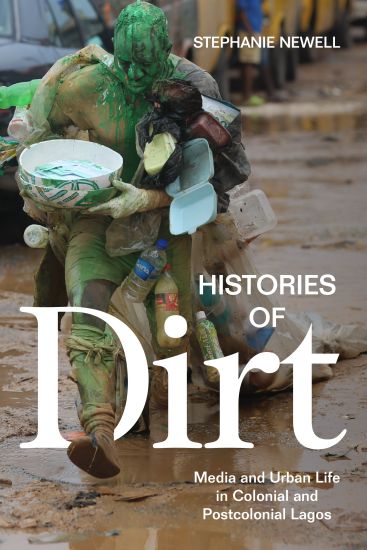
In Histories of Dirt Stephanie Newell traces the ways in which urban spaces and urban dwellers come to be regarded as dirty, as exemplified in colonial and postcolonial Lagos. Newell conceives dirt as an interpretive category that facilitates moral, sanitary, economic, and aesthetic evaluations of other cultures under the rubric of uncleanliness. She examines a number of texts ranging from newspaper articles by elite Lagosians to colonial travel writing, public health films, and urban planning to show how understandings of dirt came to structure colonial governance. Seeing Lagosians as sources of contagion and dirt, British colonizers used racist ideologies and discourses of dirt to justify racial segregation and public health policies. Newell also explores possibilities for non-Eurocentric methods for identifying African urbanites’ own values and opinions by foregrounding the voices of contemporary Lagosians through interviews and focus groups in which their responses to public health issues reflect local aesthetic tastes and values. In excavating the shifting role of dirt in structuring social and political life in Lagos, Newell provides new understandings of colonial and postcolonial urban history in West Africa.
Histories of Dirt

Histories of Dirt

Stephanie Newell

Duke University Press
2019
pokkari
In Histories of Dirt Stephanie Newell traces the ways in which urban spaces and urban dwellers come to be regarded as dirty, as exemplified in colonial and postcolonial Lagos. Newell conceives dirt as an interpretive category that facilitates moral, sanitary, economic, and aesthetic evaluations of other cultures under the rubric of uncleanliness. She examines a number of texts ranging from newspaper articles by elite Lagosians to colonial travel writing, public health films, and urban planning to show how understandings of dirt came to structure colonial governance. Seeing Lagosians as sources of contagion and dirt, British colonizers used racist ideologies and discourses of dirt to justify racial segregation and public health policies. Newell also explores possibilities for non-Eurocentric methods for identifying African urbanites’ own values and opinions by foregrounding the voices of contemporary Lagosians through interviews and focus groups in which their responses to public health issues reflect local aesthetic tastes and values. In excavating the shifting role of dirt in structuring social and political life in Lagos, Newell provides new understandings of colonial and postcolonial urban history in West Africa.
Newsprint Literature and Local Literary Creativity in West Africa, 1900s – 1960s
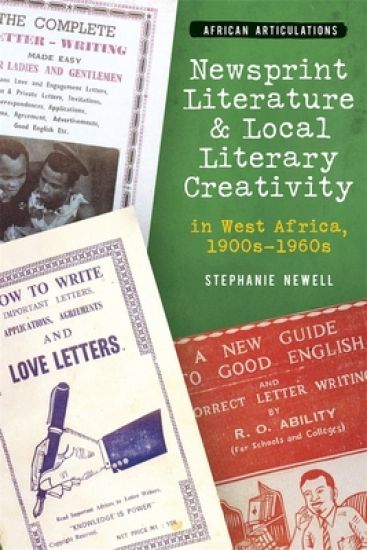
Groundbreaking examination of literary production in West African newspapers and local printing presses in the first half of the 20th century. From their inception in the 1880s, African-owned newspapers in 'British West Africa' carried an abundance of creative writing by local authors, largely in English. Yet to date this rich and vast array of work has largely been ignored in critical discussion of African literature and cultural history. This book, for the first time, explores this under-studied archive of ephemeral writing - from serialised fiction to poetry and short stories, philosophical essays, articles on local history, travelogues and reviews, and letters - and argues for its inclusion in literary genres and anglophone world literatures. Combining in-depth case studies of creative writing in the Ghana and Nigeria press with a major reappraisal of the Nigerian pamphlets known as 'Onitsha market literature', and focusing on non-elite authors, the author examines hitherto neglected genres, styles, languages, and, crucially, readerships. She shows how local print cultures permeated African literary production, charting changes in literary tastes and transformations to genres and styles, as they absorbed elements of globally circulating English texts into formats for local consumption. Offering fresh trajectories for thinking about local and transnational African literary networks while remaining attuned to local textual cultures in contexts of colonial power relations, anticolonial nationalism, the Cold War and global circuits of cultural exchange, this important book reveals new insights into ephemeral literature as significant sites of literary production, and contributes to filling a gap in scholarship on colonial West Africa. Winner: 2024 Gustav Ranis International Book Prize
Newsprint Literature and Local Literary Creativity in West Africa, 1900s – 1960s
Groundbreaking examination of literary production in West African newspapers and local printing presses in the first half of the 20th century. From their inception in the 1880s, African-owned newspapers in 'British West Africa' carried an abundance of creative writing by local authors, largely in English. Yet to date this rich and vast array of work has largely been ignored in critical discussion of African literature and cultural history. This book, for the first time, explores this under-studied archive of ephemeral writing - from serialised fiction to poetry and short stories, philosophical essays, articles on local history, travelogues and reviews, and letters - and argues for its inclusion in literary genres and anglophone world literatures. Combining in-depth case studies of creative writing in the Ghana and Nigeria press with a major reappraisal of the Nigerian pamphlets known as 'Onitsha market literature', and focusing on non-elite authors, the author examines hitherto neglected genres, styles, languages, and, crucially, readerships. She shows how local print cultures permeated African literary production, charting changes in literary tastes and transformations to genres and styles, as they absorbed elements of globally circulating English texts into formats for local consumption. Offering fresh trajectories for thinking about local and transnational African literary networks while remaining attuned to local textual cultures in contexts of colonial power relations, anticolonial nationalism, the Cold War and global circuits of cultural exchange, this important book reveals new insights into ephemeral literature as significant sites of literary production, and contributes to filling a gap in scholarship on colonial West Africa. Winner: 2024 Gustav Ranis International Book Prize