Kirjojen hintavertailu. Mukana 11 342 296 kirjaa ja 12 kauppaa.

Kirjahaku

Etsi kirjoja tekijän nimen, kirjan nimen tai ISBN:n perusteella.

3 kirjaa tekijältä Stephanie Sandler

The Freest Speech in Russia

The Freest Speech in Russia

Stephanie Sandler

PRINCETON UNIVERSITY PRESS
2024
pokkari
The first English-language study of contemporary Russian poetry and its embrace of freedom—formally, thematically, and spirituallySince 1989 and the fall of the Berlin Wall, Russian poetry has exuded a powerful awareness of freedom, both aesthetic and political. No longer confined to the cultural underground, poets reacted with immediacy to events in the world. In The Freest Speech in Russia, Stephanie Sandler offers the first English-language study of contemporary Russian poetry, showing how these poems both express and exemplify freedom.This period was a time of great poetic flourishing for Russian poets, whether they remained in Russia or lived elsewhere. Sandler examines the work of dozens of poets—including Gennady Aygi, Joseph Brodsky, Grigory Dashevsky, Arkady Dragomoshchenko, Mikhail Eremin, Elena Fanailova, Anna Glazova, Elizaveta Mnatsakanova, Olga Sedakova, Elena Shvarts, and Maria Stepanova—analyzing their engagement with politics, performance, music, photography, and religious thought, and with poetic forms small and large. Each chapter investigates one of these topics, with extensive quotation from the poetry, including translations of all texts into English.In an afterword, Sandler considers poets’ responses to Russia’s war on Ukraine and the clampdown on free expression. Many have left Russia, but their work persists, and they remain vocal opponents of domestic political oppression and international violence.
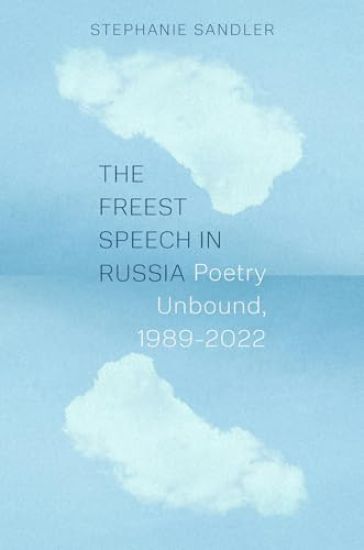
The Freest Speech in Russia

The Freest Speech in Russia

Stephanie Sandler

PRINCETON UNIVERSITY PRESS
2024
sidottu
The first English-language study of contemporary Russian poetry and its embrace of freedom—formally, thematically, and spirituallySince 1989 and the fall of the Berlin Wall, Russian poetry has exuded a powerful awareness of freedom, both aesthetic and political. No longer confined to the cultural underground, poets reacted with immediacy to events in the world. In The Freest Speech in Russia, Stephanie Sandler offers the first English-language study of contemporary Russian poetry, showing how these poems both express and exemplify freedom.This period was a time of great poetic flourishing for Russian poets, whether they remained in Russia or lived elsewhere. Sandler examines the work of dozens of poets—including Gennady Aygi, Joseph Brodsky, Grigory Dashevsky, Arkady Dragomoshchenko, Mikhail Eremin, Elena Fanailova, Anna Glazova, Elizaveta Mnatsakanova, Olga Sedakova, Elena Shvarts, and Maria Stepanova—analyzing their engagement with politics, performance, music, photography, and religious thought, and with poetic forms small and large. Each chapter investigates one of these topics, with extensive quotation from the poetry, including translations of all texts into English.In an afterword, Sandler considers poets’ responses to Russia’s war on Ukraine and the clampdown on free expression. Many have left Russia, but their work persists, and they remain vocal opponents of domestic political oppression and international violence.
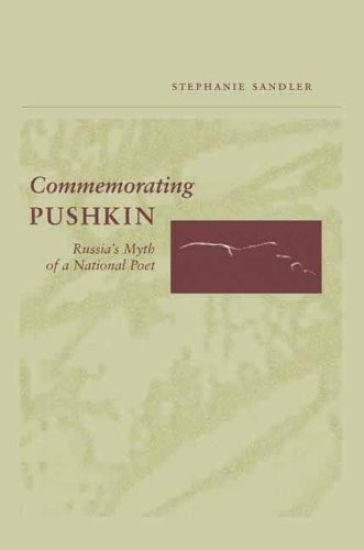
Commemorating Pushkin

Commemorating Pushkin

Stephanie Sandler

Stanford University Press
2003
sidottu
Two hundred years after his birth, Alexander Pushkin still issues a dynamic, liberating challenge to Russia's cultural identity. His story has promised national coherence and meant artistic integrity in its seemingly purest form. Irreverent and polemical responses to Pushkin abound, but Russians retain a deep investment in Pushkin's image. Commemorating Pushkin argues that the emotional complexity of Russia's relationship with Pushkin has informed both large-scale cultural institutions and the writings of talented individuals. It assesses twentieth-century museums, anniversary rituals, and films that keep the poet alive. It shows how Pushkin's self-fashioning was exemplary for Anna Akhmatova, Marina Tsvetaeva, Andrei Bitov, and Andrei Sinyavsky. And it goes beyond well-known figures to give names and histories to poets, novelists, actors, filmmakers, scholars, and museum workers who have sustained Russia's myth of a national poet.