Kirjojen hintavertailu. Mukana 12 400 989 kirjaa ja 12 kauppaa.

Kirjahaku

Etsi kirjoja tekijän nimen, kirjan nimen tai ISBN:n perusteella.

12 kirjaa tekijältä Stephen Badsey, Tim Bean

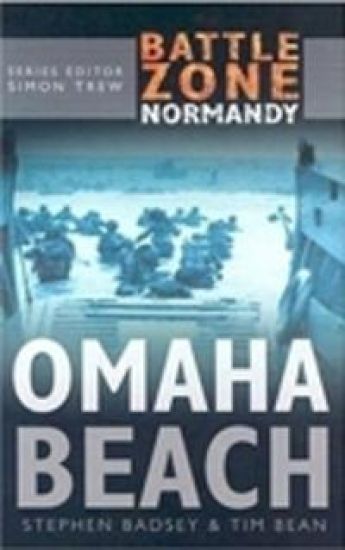
Battle Zone Normandy: Omaha Beach

Battle Zone Normandy: Omaha Beach

Stephen Badsey; Tim Bean

The History Press Ltd
2004
sidottu
At dawn on D-Day the US Army's most experienced, battle-tested infantry formation, 1st Division or 'The Big Red One' launched its attack on Omaha Beach. The assault wave was launched too far out to sea and the men suffered terribly from seasickness. All the amphibious tanks sank except two, depriving the infantry of armoured support against minefields, bunkers and other defences. Moreover, the Allied aircraft tasked with destroying the fortifications had dropped their loads on open country too far inland and the offshore bombardment was hampered by poor visibility. Of the first six landing craft, two sank while the remainder ran aground on a sandbank.The assaulting infantry were compelled to wade in shoulder-high water, many drowning or being shot as they struggled ashore. All cohesion was lost and following waves of infantry simply stumbled into the carnage on the beach, the piles of wreckage restricting movement. In these first harrowing hours of the invasion, Lieutenant-General Omar Bradley considered aborting the Omaha effort altogether. Despite these appalling difficulties, a vulnerable bridgehead some 1.5 km inland had been established by the evening of 6 June 1944.
D-Day: Omaha Beach

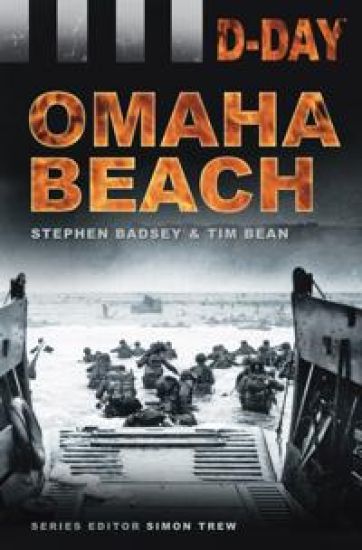
D-Day: Omaha Beach

Stephen Badsey; Tim Bean

The History Press Ltd
2011
nidottu
At 0630 hours on 6 June 1944, the US Army's 1st and 29th Infantry Divisions led the assault on Omaha Beach, the most strongly defended of the all invasion beaches. Supporting Allied bombers had mostly missed their targets, the offshore naval bombardment was hampered by poor visibility, and many elements of the first assault waves were swamped or sank, including amphibious tanks. The first waves of infantry waded ashore into a storm of German fire. In these first harrowing hours of 'Overlord', Lieutenant General Omar Bradley, commanding First US Army, seriously considered aborting the Omaha landing altogether. Yet despite appalling difficulties and heavy casualties, the US troops prevailed and a vulnerable bridgehead inland was established by the evening of 6 June. It was the hardest fight of D-Day.
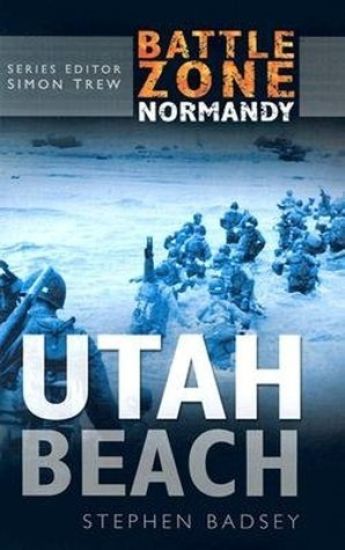
Battle Zone Normandy: Utah Beach

Battle Zone Normandy: Utah Beach

Stephen Badsey

The History Press Ltd
2004
sidottu
The landing beach closest to Normandy's largest port, Cherbourg, and regarded by the Germans as the most important Allied objective, Utah was isolated from the other D-Day beaches, meaning that that troops landing there would have to fight alone until a link-up could be achieved. Accordingly, the US First Army committed a powerful landing force, preceded by a night parachute and glider assault, part of the largest night drop ever mounted. Despite wide scattering, the airborne troops secured the critical communications centre of Ste Mere Eglise on D-Day, the first village in Normandy to be liberated.Supported by a devastating air and naval bombardment, although landing on the wrong beach in bad weather, 4th Infantry Division took only 197 casualties out of 23,000 troops that landed on D-Day, and by the early afternoon had begun to link up with the first of the paratroopers.
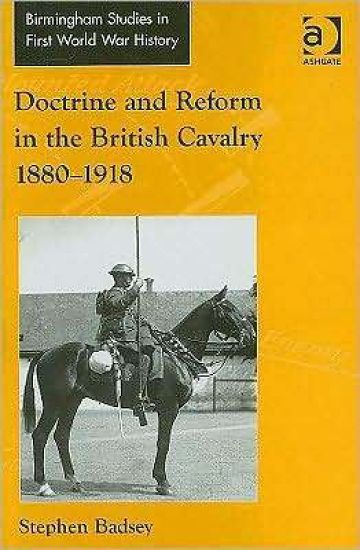
Doctrine and Reform in the British Cavalry 1880–1918

Doctrine and Reform in the British Cavalry 1880–1918

Stephen Badsey

Ashgate Publishing Limited
2008
sidottu
A prevalent view among historians is that both horsed cavalry and the cavalry charge became obviously obsolete in the second half of the nineteenth century in the face of increased infantry and artillery firepower, and that officers of the cavalry clung to both for reasons of prestige and stupidity. It is this view, commonly held but rarely supported by sustained research, that this book challenges. It shows that the achievements of British and Empire cavalry in the First World War, although controversial, are sufficient to contradict the argument that belief in the cavalry was evidence of military incompetence. It offers a case study of how in reality a practical military doctrine for the cavalry was developed and modified over several decades, influenced by wider defence plans and spending, by the experience of combat, by Army politics, and by the rivalries of senior officers. Debate as to how the cavalry was to adjust its tactics in the face of increased infantry and artillery firepower began in the mid nineteenth century, when the increasing size of armies meant a greater need for mobile troops. The cavalry problem was how to deal with a gap in the evolution of warfare between the mass armies of the later nineteenth century and the motorised firepower of the mid twentieth century, an issue that is closely connected with the origins of the deadlock on the Western Front. Tracing this debate, this book shows how, despite serious attempts to ’learn from history’, both European-style wars and colonial wars produced ambiguous or disputed evidence as to the future of cavalry, and doctrine was largely a matter of what appeared practical at the time.
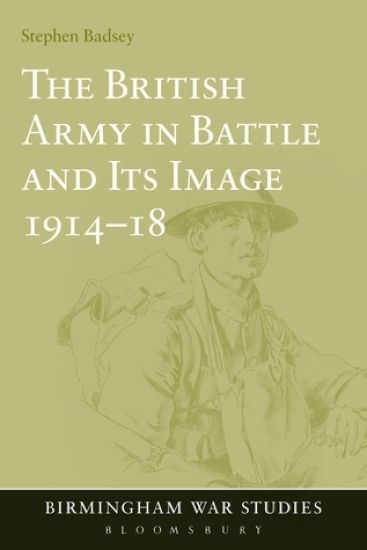
The British Army in Battle and Its Image 1914-18

The British Army in Battle and Its Image 1914-18

Stephen Badsey

Continuum International Publishing Group Ltd.
2009
sidottu
In this collection of essays of incomparable scholarship, Stephen Badsey explores in individual detail how the British Army fought in the First World War, how politics and strategy affected its battles and the decisions of senior commanders such as Douglas Haig, and how these issues were intimately intertwined with the mass media portrayal of the Army to itself and to the British people. Informative, provocative, and often entertaining, based on more than a quarter-century of research, these essays on the British Army in the First World War range through topics from a trench raid to modern television comedy. As a contribution to progressive military history, "The British Army in Battle and Its Image 1914-1918" proves that the way the British Army fought and its portrayal through the media cannot be separated. It is one of a growing number of studies which show that, far from being in opposition to each other, cultural history and the history of battle must be combined for the First World War to be properly understood. For more information visit Stephen Badsey's website www.stephenbadsey.com
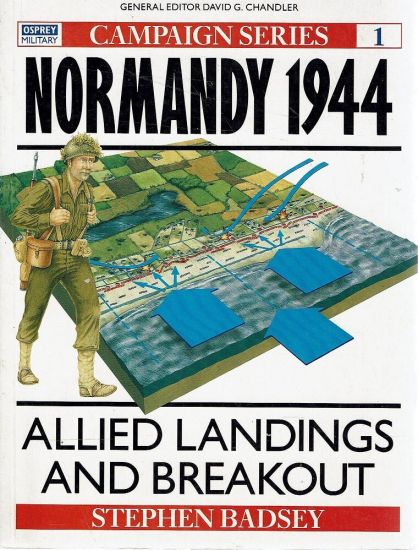
Normandy 1944

Normandy 1944

Stephen Badsey

Osprey Publishing
1990
nidottu
A concise, illustrated account of one of the most famous offensives in European history.D-Day, 6 June 1944, saw the largest amphibious landing operation in history. From ports and harbours on the southern coast of England, an armada of troopships and landing craft launched the Allied return to mainland Europe. Stephen Badsey provides a concise account of the Normandy campaign, from the fiercely contested landings, to the struggle to capture Caen, the 'Cobra' offensive and the dramatic pursuit of the Germans to the River Seine.This was the crucial campaign of the Western theatre: after the Battle of Normandy the only question was how soon the war would end, not who would win it.
Doctrine and Reform in the British Cavalry 1880–1918
A prevalent view among historians is that both horsed cavalry and the cavalry charge became obviously obsolete in the second half of the nineteenth century in the face of increased infantry and artillery firepower, and that officers of the cavalry clung to both for reasons of prestige and stupidity. It is this view, commonly held but rarely supported by sustained research, that this book challenges. It shows that the achievements of British and Empire cavalry in the First World War, although controversial, are sufficient to contradict the argument that belief in the cavalry was evidence of military incompetence. It offers a case study of how in reality a practical military doctrine for the cavalry was developed and modified over several decades, influenced by wider defence plans and spending, by the experience of combat, by Army politics, and by the rivalries of senior officers. Debate as to how the cavalry was to adjust its tactics in the face of increased infantry and artillery firepower began in the mid nineteenth century, when the increasing size of armies meant a greater need for mobile troops. The cavalry problem was how to deal with a gap in the evolution of warfare between the mass armies of the later nineteenth century and the motorised firepower of the mid twentieth century, an issue that is closely connected with the origins of the deadlock on the Western Front. Tracing this debate, this book shows how, despite serious attempts to ’learn from history’, both European-style wars and colonial wars produced ambiguous or disputed evidence as to the future of cavalry, and doctrine was largely a matter of what appeared practical at the time.
The British Army in Battle and Its Image 1914-18

The British Army in Battle and Its Image 1914-18

Stephen Badsey

Bloomsbury Academic USA
2014
nidottu
In this collection of essays of incomparable scholarship, Stephen Badsey explores in individual detail how the British Army fought in the First World War, how politics and strategy affected its battles and the decisions of senior commanders such as Douglas Haig, and how these issues were intimately intertwined with the mass media portrayal of the Army to itself and to the British people. Informative, provocative, and often entertaining, based on more than a quarter-century of research, these essays on the British Army in the First World War range through topics from a trench raid to modern television comedy. As a contribution to progressive military history, The British Army in Battle and Its Image 1914-1918 proves that the way the British Army fought and its portrayal through the media cannot be separated. It is one of a growing number of studies which show that, far from being in opposition to each other, cultural history and the history of battle must be combined for the First World War to be properly understood. For more information visit Stephen Badsey's website www.stephenbadsey.com.
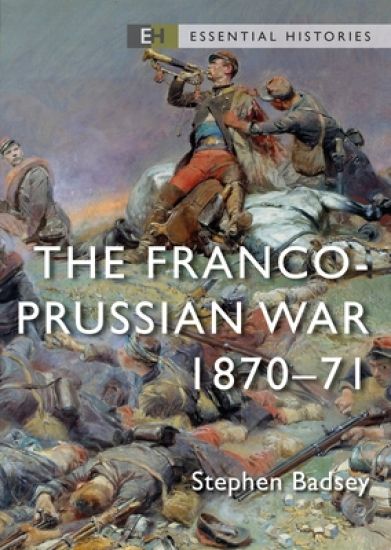
The Franco-Prussian War

The Franco-Prussian War

Stephen Badsey

Osprey Publishing
2022
nidottu
Illustrated with colour maps and images, this is an introduction to the Franco-Prussian War, a war that marked the beginning of the creation of modern Europe. The Franco-Prussian War started in 1870 when Otto von Bismarck engineered a war with the French Second Empire under Napoleon III, as part of his plan to unite Prussia with the southern German states as a new Germany. Stephen Badsey examines the build-up, battles, and impact of the war, which was an overwhelming Prussian victory with massive consequences. The French Second Empire collapsed, Napoleon III became an exile in Britain, and King Wilhelm I was proclaimed Emperor of the new united Germany. In the peace settlement that followed, Germany gained the eastern French provinces of Alsace and Lorraine, areas that were to provide a bone of contention for years to come. Updated for the new edition with revisions from the author and new images throughout, this is an accessible introduction to the largest and most important war fought in Europe between the age of Napoleon and the First World War.
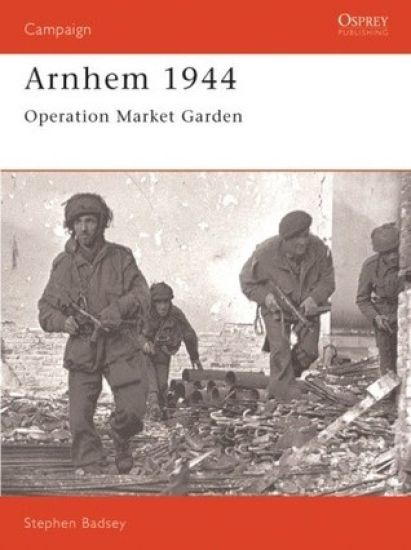
Arnhem 1944

Arnhem 1944

Stephen Badsey

Osprey Publishing
1993
nidottu
A compact, illustrated exploration of one of the most audacious, and ultimately controversial, operations of the Second World War.'Market Garden' was a joint penetration, by an armoured column and a large-scale airborne drop, to punch a decisive hole in the German defences. If it had succeeded, the war could have ended in 1944. Yet the two-pronged attack failed in its objectives.This book details how, instead of being relieved after 48 hours as expected, British paratroopers were cut off for nine days. Facing two unexpected SS Panzer divisions the Allies were eventually evacuated across the Rhine after putting up an incredible fight: of the 10,000 men involved less than 2,000 survived.
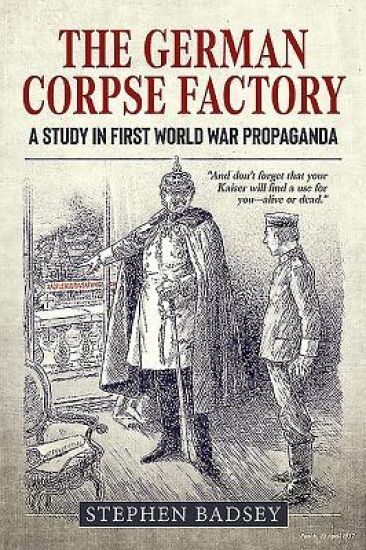
The German Corpse Factory

The German Corpse Factory

Stephen Badsey

Helion Company
2019
nidottu
The German Corpse Factory is one of the most famous and scandalous propaganda stories of the First World War. It has been repeated many times down to the present day as the prime example of the falsehood of British wartime propaganda. But despite all the attention paid to it, the full story has never been properly told. In Spring 1917, parts of the British press claimed that Germany was so short of essential fats and glycerine that the German Army was being forced to boil down the bodies of its own dead soldiers, causing a brief scandal of accusation and counter-accusation, including the claim that the story was the invention of the British official propaganda organisations. Behind the scenes, British propaganda experts opposed exploiting the story as it was obviously false, and contrary to their basic principles of never telling an obvious lie in an official statement. But at the time, the British government refused to deny that the 'German Corpse Factory' might really exist. In 1925 the scandal re-erupted in New York, when the former head of British military intelligence on the Western Front, in the United States on a speaking tour, was quoted in newspapers as having confessed to making the whole German Corpse Factory story up, a claim that he immediately denied. As a gesture of friendship on the occasion of the Locarno treaties, the British government now accepted the German government position that the story was a lie, but in fact neither government knew what had really happened in 1917. This book provides the answers to these questions according to the best historical evidence available. It uses the scandal of the 'German Corpse Factory' as a case-study to explore the true nature of British official propaganda and its organisations in the First World War, including the events of 1917 and who might really have been responsible for the story. It also shows how this brief episode was taken up by the German government after 1918, and by interest groups in Britain and the United States after 1925, to paint a false picture of British propaganda, with far-reaching consequences for the peace of Europe, and for our subsequent understanding of the First World War.
The German Corpse Factory

The German Corpse Factory

Stephen Badsey

Helion Company
2019
sidottu
The German Corpse Factory is one of the most famous and scandalous propaganda stories of the First World War. It has been repeated many times down to the present day as the prime example of the falsehood of British wartime propaganda. But despite all the attention paid to it, the full story has never been properly told. In Spring 1917, parts of the British press claimed that Germany was so short of essential fats and glycerine that the German Army was being forced to boil down the bodies of its own dead soldiers, causing a brief scandal of accusation and counter-accusation, including the claim that the story was the invention of the British official propaganda organisations. Behind the scenes, British propaganda experts opposed exploiting the story as it was obviously false, and contrary to their basic principles of never telling an obvious lie in an official statement. But at the time, the British government refused to deny that the 'German Corpse Factory' might really exist. In 1925 the scandal re-erupted in New York, when the former head of British military intelligence on the Western Front, in the United States on a speaking tour, was quoted in newspapers as having confessed to making the whole German Corpse Factory story up, a claim that he immediately denied. As a gesture of friendship on the occasion of the Locarno treaties, the British government now accepted the German government position that the story was a lie, but in fact neither government knew what had really happened in 1917. This book provides the answers to these questions according to the best historical evidence available. It uses the scandal of the 'German Corpse Factory' as a case-study to explore the true nature of British official propaganda and its organisations in the First World War, including the events of 1917 and who might really have been responsible for the story. It also shows how this brief episode was taken up by the German government after 1918, and by interest groups in Britain and the United States after 1925, to paint a false picture of British propaganda, with far-reaching consequences for the peace of Europe, and for our subsequent understanding of the First World War.