Kirjojen hintavertailu. Mukana 12 016 292 kirjaa ja 12 kauppaa.

Kirjahaku

Etsi kirjoja tekijän nimen, kirjan nimen tai ISBN:n perusteella.

5 kirjaa tekijältä Stephen Basdeo

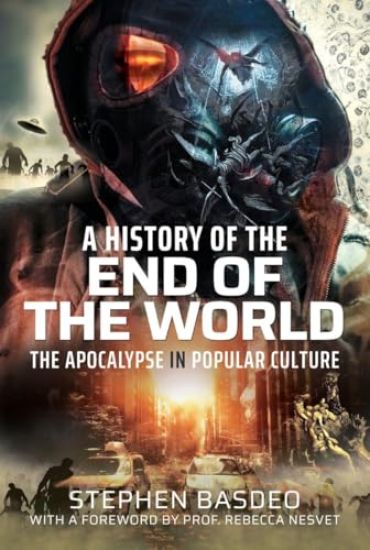
A History of the End of the World

A History of the End of the World

Stephen Basdeo

PEN SWORD BOOKS LTD
2025
sidottu
People have always imagined that human history has an end point. The way this has been imagined has varied according to time, place, and culture. In medieval England people lived in expectation of the Biblical Day of Judgment, when the world would end and people would be judged by God according to their sins. In art and literature from the early modern period onwards, the most frightening scenes from the Bible were depicted to warn people of the dangers of sin. As the power of the church waned and society became more secular, “new” threats emerged such as pandemics and otherworldly beings which threatened to destroy humanity, and whose tales were told time and again in popular culture. This book examines stories of the apocalypse in popular culture from the medieval period to the twenty-first century; it is a history of the end of the world.
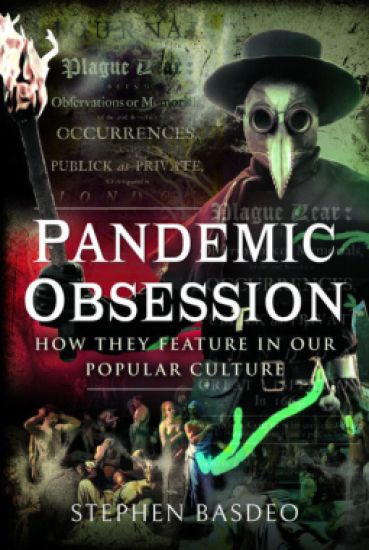
Pandemic Obsession

Pandemic Obsession

Stephen Basdeo

PEN SWORD BOOKS LTD
2023
sidottu
Pestilence entered The ordinary pursuits of society were paralysed; all previously-formed plans of happiness, business, trade, occupation, and domestic arrangement, were checked as cruelly and abruptly as if every principle of the human mind were in a moment subverted The physicians saw that human aid was vain, and that destruction inevitably awaited all who approached the infected. Terrific mortality! Appalling scourge of the human race! George W.M. Reynolds Throughout history humankind has faced a number of deadly pandemics and such diseases have left their mark in history books, fine art, novels, life writing, and newspapers. This book collects together writings from across the centuries which illuminate people's experiences with plagues and pandemics. From Ancient Greece there is Thucydides on the Athenian Plague; Procopius gives his account of Plague of Justinian; also included is many more extracts of writings on plagues from medieval and early modern writers. Readers can enjoy several works of fiction including an abridged version of Mary Shelley's The Last Man (1826), a reproduction in full of Jack London's Scarlet Plague (1912), as well as short pandemic stories from Edgar Allan Poe, George W.M. Reynolds, Daniel Defoe, and William Harrison Ainsworth.
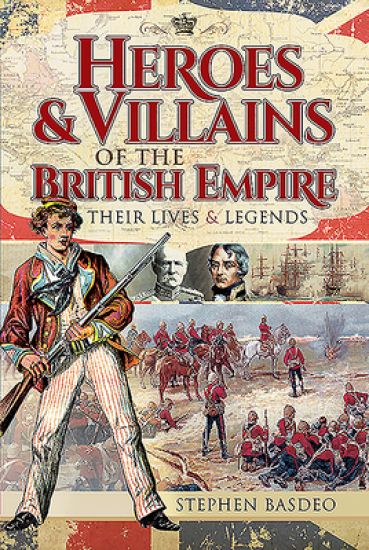
Heroes and Villains of the British Empire

Heroes and Villains of the British Empire

Stephen Basdeo

Pen Sword History
2020
nidottu
From the sixteenth until the twentieth century, British power and influence gradually expanded to cover one quarter of the world's surface. The common saying was that the sun never sets on the British Empire . What began as a largely entrepreneurial enterprise in the early modern period, with privately run joint stock trading companies such as the East India Company driving British commercial expansion, by the nineteenth century had become, especially after 1857, a state-run endeavour, supported by a powerful military and navy. By the Victorian era, Britannia really did rule the waves. _Heroes of the British Empire_ is the story of how British Empire builders such as Robert Clive, General Gordon, and Lord Roberts of Kandahar were represented and idealised in popular culture. The men who built the empire were often portrayed as possessing certain unique abilities which enabled them to serve their country in often inhospitable territories, and spread what imperial ideologues saw as the benefits of the British Empire to supposedly uncivilised peoples in far flung corners of the world. These qualities and abilities were athleticism, a sense of fair play, devotion to God, and a fervent sense of duty and loyalty to the nation and the empire. Through the example of these heroes, people in Britain, and children in particular, were encouraged to sign up and serve the empire or, in the words of Henry Newbolt, Play up! Play up! And Play the Game! Yet this was not the whole story: while some writers were paid up imperial propagandists, other writers in England detested the very idea of the British Empire. And in the twentieth century, those who were once considered as heroic military men were condemned as racist rulers and exploitative empire builders.
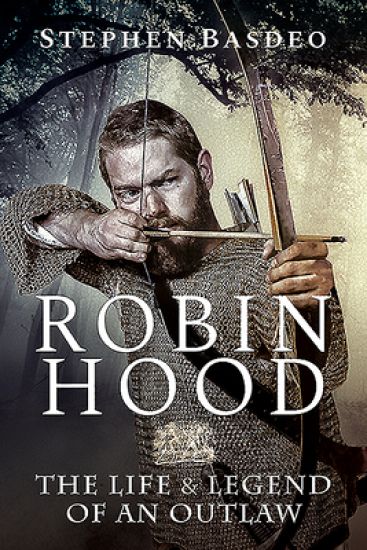
Robin Hood

Robin Hood

Stephen Basdeo

Pen Sword History
2019
nidottu
Robin Hood is a national English icon. He is portrayed as a noble robber, who, along with his band of merry men, is said to have stolen from the rich and given to the poor. His story has been reimagined many times throughout the centuries. Readers will be introduced to some of the candidates who are thought to have been the real Robin Hood, before journeying into the fifteenth century and learning about the various rymes of Robyn Hode' that were in existence. This book then shows how Robin Hood was first cast as an earl in the sixteenth century, before discussing his portrayals as a brutish criminal in the eighteenth century. Then learn how Robin Hood became the epitome of an English gentleman in the Victorian era, before examining how he became an Americanised, populist hero fit for the silver screen during the twentieth century. Thus, this book will take readers on a journey through 800 years of English cultural and literary history by examining how the legend of Robin Hood has developed over time.
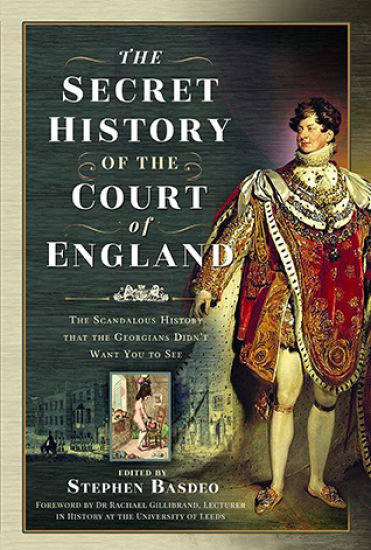
The Secret History of the Court of England

The Secret History of the Court of England

Stephen Basdeo

PEN SWORD BOOKS LTD
2023
sidottu
The Georgian era, we are told, was a polite and commercial era. The supposedly refined aristocracy governed the nation while the bourgeoisie, at the centre of the largest empire the world had ever known, expanded the nation's overseas trading interests while currying royal favours. It was an era which witnessed the flowering of art, literature, and music. But at the heart of the British Empire was something rotten: Vice, corruption, and crime reigned supreme. Someone had had enough and decided to expose this and so, in 1832, a curious book appeared for sale titled The Secret History of the Court of England. Written by Olivia Serres under the pseudonym of Lady Anne Hamilton, this was a sensational chronicle of the crime, vice, and debauchery designed to shock and titillate its reader. It contained a number of accusations against establishment figures: Was George IV guilty of bigamy? What was the Prince's true relationship with one Mrs Robinson? Did the Duke of Cumberland's servant Mr Sellis really commit suicide or was he MURERED IN COLD BLOOD? All these questions, and more, will be answered in Lady Anne Hamilton's Secret History of the Court of England, originally published in 1832 and reprinted at long last!