Kirjojen hintavertailu. Mukana 12 083 983 kirjaa ja 12 kauppaa.

Kirjahaku

Etsi kirjoja tekijän nimen, kirjan nimen tai ISBN:n perusteella.

13 kirjaa tekijältä Stephen Berry

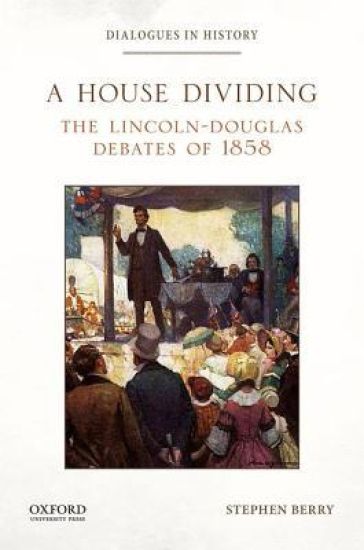
A House Dividing: The Lincoln-Douglas Debates of 1858

A House Dividing: The Lincoln-Douglas Debates of 1858

Stephen Berry

Oxford University Press
2015
nidottu
A House Dividing: The Lincoln-Douglas Debates of 1858 updates the Lincoln-Douglas debates for the sound-bite era. Instead of 100,000 words, this volume in the Dialogues in History series gives students 20,000 words from the debates. Rather than long, uncontested ramblings, it offers rapid-fire accusations and responses. Despite their reputations as intellectual heavyweights, Lincoln and Douglas were not above mudslinging; their arguments prove surprisingly studded with ad hominem attacks, political grandstanding, and gross appeals to the candidates' respective bases. Historians generally agree on Civil War causality: a disagreement over the right of slaveholding in the territories caused secession; a disagreement over the right of secession caused the Civil War. A House Dividing places these political disagreements at the center of the narrative. Watching the cut-and-thrust of past political theater draws students into discussions of the continued importance of the political process as the place where the national agenda is set and executed.
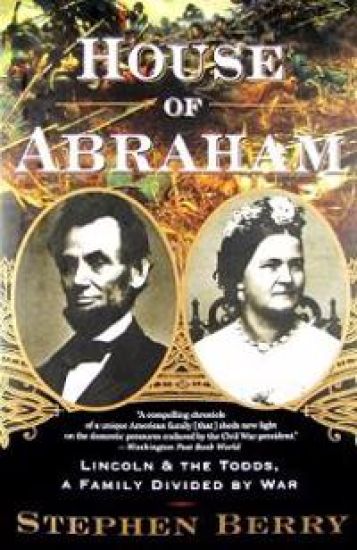
House of Abraham: Lincoln and the Todds, a Family Divided by War
For all the talk of the Civil War's pitting brother against brother, no book has told fully the story of one family ravaged by that conflict. And no family better illustrates the personal toll the war took than Lincoln's own. Mary Todd Lincoln was one of fourteen siblings who were split between the Confederacy and the Union. Three of her brothers fought, and two died, for the South. Several Todds -- including Mary herself -- bedeviled Lincoln's administration with their scandalous behavior. Their struggles haunted the president and moved him to avoid tactics or rhetoric that would dehumanize or scapegoat the Confederates. By drawing on his own familial experience, Lincoln was able to articulate a humanistic, even charitable view of the enemy that seems surpassingly wise in our time, let alone his. In House of Abraham, the award-winning historian Stephen Berry fills a gap in Civil War history, showing how the war changed one family and how that family changed the course of the war.
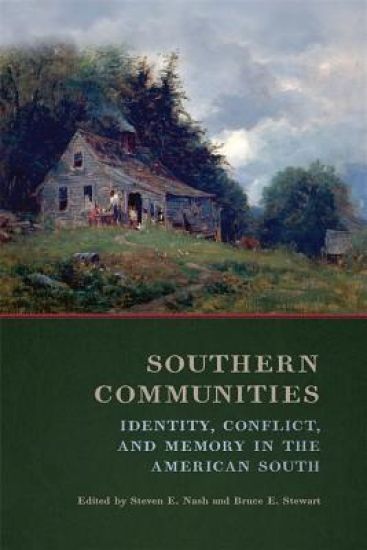
Southern Communities

Southern Communities

Stephen Berry

University of Georgia Press
2019
sidottu
Community is an evolving and complex concept that historians have applied to localities, counties, and the South as a whole in order to ground larger issues in the day-to-day lives of all segments of society. These social networks sometimes unite and sometimes divide people, they can mirror or transcend political boundaries, and they may exist solely within the cultures of like-minded people.This volume explores the nature of southern communities during the long nineteenth century. The contributors build on the work of scholars who have allowed us to see community not simply as a place but instead as an idea in a constant state of definition and redefinition. They reaffirm that there never has been a singular southern community. As editors Steven E. Nash and Bruce E. Stewart reveal, southerners have constructed an array of communities across the region and beyond. Nor do the contributors idealize these communities. Far from being places of cooperation and harmony, southern communities were often rife with competition and discord. Indeed, conflict has constituted a vital part of southern communal development. Taken together, the essays in this volume remind us how community-focused studies can bring us closer to answering those questions posed to Quentin Compson in Absalom, Absalom!: “Tell [us] about the South. What’s it like there. What do they do there. Why do they live there. Why do they live at all.”
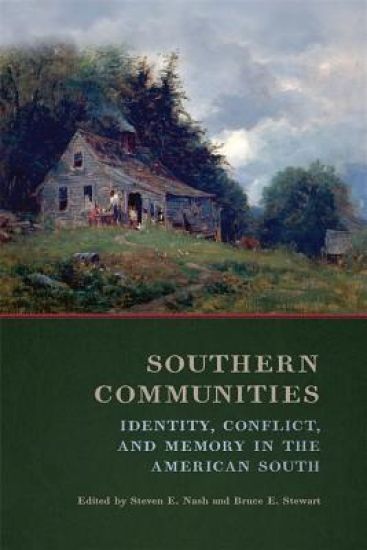
Southern Communities

Southern Communities

Stephen Berry

University of Georgia Press
2019
pokkari
Community is an evolving and complex concept that historians have applied to localities, counties, and the South as a whole in order to ground larger issues in the day-to-day lives of all segments of society. These social networks sometimes unite and sometimes divide people, they can mirror or transcend political boundaries, and they may exist solely within the cultures of like-minded people.This volume explores the nature of southern communities during the long nineteenth century. The contributors build on the work of scholars who have allowed us to see community not simply as a place but instead as an idea in a constant state of definition and redefinition. They reaffirm that there never has been a singular southern community. As editors Steven E. Nash and Bruce E. Stewart reveal, southerners have constructed an array of communities across the region and beyond. Nor do the contributors idealize these communities. Far from being places of cooperation and harmony, southern communities were often rife with competition and discord. Indeed, conflict has constituted a vital part of southern communal development. Taken together, the essays in this volume remind us how community-focused studies can bring us closer to answering those questions posed to Quentin Compson in Absalom, Absalom!: “Tell [us] about the South. What’s it like there. What do they do there. Why do they live there. Why do they live at all.”
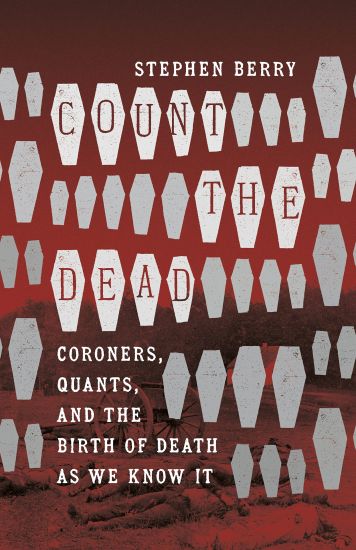
Count the Dead

Count the Dead

Stephen Berry

THE UNIVERSITY OF NORTH CAROLINA PRESS
2022
sidottu
The global doubling of human life expectancy between 1850 and 1950 is arguably one of the most consequential developments in human history, undergirding massive improvements in human life and lifestyles. In 1850, Americans died at an average age of 30. Today, the average is almost 80. This story is typically told as a series of medical breakthroughs Jenner and vaccination, Lister and antisepsis, Snow and germ theory, Fleming and penicillin, but the lion's share of the credit belongs to the men and women who dedicated their lives to collecting good data. Examining the development of death registration systems in the United States—from the first mortality census in 1850 to the development of the death certificate at the turn of the century—Count the Dead argues that mortality data transformed life on Earth, proving critical to the systemization of public health, casualty reporting, and human rights.Stephen Berry shows how a network of coroners, court officials, and state and federal authorities developed methods to track and reveal patterns of dying. These officials harnessed these records to turn the collective dead into informants and in so doing allowed the dead to shape life and death as we know it today.
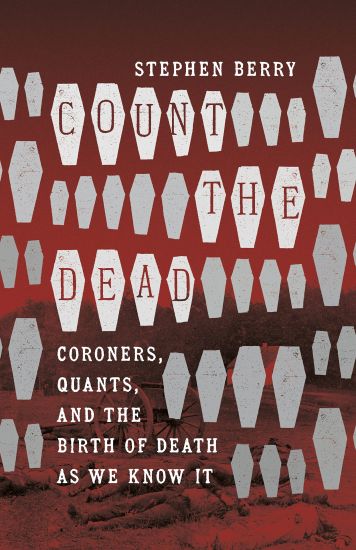
Count the Dead

Count the Dead

Stephen Berry

THE UNIVERSITY OF NORTH CAROLINA PRESS
2022
pokkari
The global doubling of human life expectancy between 1850 and 1950 is arguably one of the most consequential developments in human history, undergirding massive improvements in human life and lifestyles. In 1850, Americans died at an average age of 30. Today, the average is almost 80. This story is typically told as a series of medical breakthroughs Jenner and vaccination, Lister and antisepsis, Snow and germ theory, Fleming and penicillin, but the lion's share of the credit belongs to the men and women who dedicated their lives to collecting good data. Examining the development of death registration systems in the United States—from the first mortality census in 1850 to the development of the death certificate at the turn of the century—Count the Dead argues that mortality data transformed life on Earth, proving critical to the systemization of public health, casualty reporting, and human rights.Stephen Berry shows how a network of coroners, court officials, and state and federal authorities developed methods to track and reveal patterns of dying. These officials harnessed these records to turn the collective dead into informants and in so doing allowed the dead to shape life and death as we know it today.
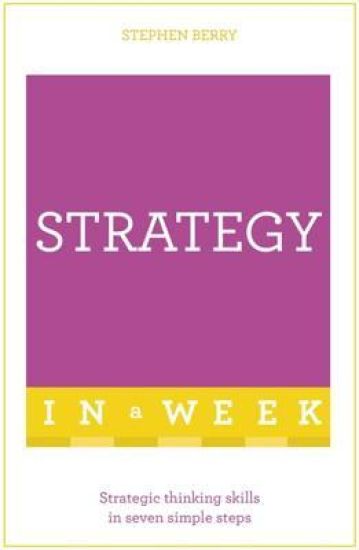
Strategy In A Week

Strategy In A Week

Stephen Berry

Teach Yourself
2016
pokkari
Strategic thinking just got easierFor most aspiring managers, at some point in their careers, their Personal Development Plans will include the demand to have 'greater strategic thinking ability'. We have the perception that executives operating at board-level have this 'strategic thinking ability' but seldom find the route to obtain it for ourselves. The purpose of this book is to provide that route. Strategy, like any other discipline, can be learned and practised. This book takes you on a journey to explore what organizational strategy is, where it fits within the context of each business, and then gives an examination of internal, external, marketing, brand and competitive strategy. To progress to an executive position, a wide range of skills and attributes are required. Aspects such as good leadership skills, strong communication skills, commercial understanding and the ability to understand other people are all needed. Equal with these vital elements is the ability to have a good grasp of strategic thinking. Strategy In A Week provides the platform for you to acquire the vital skills of strategic thinking. Whether you choose to read it in a week or in a single sitting, this is your fastest route to success:- Sunday: Understand what strategy is and what it isn't- Monday: Understand what drives strategy and what strategy drives- Tuesday: Understand internal strategy- Wednesday: Understand marketing strategy- Thursday: Understand brand strategy- Friday: Understand competitive strategy- Saturday: Keep strategy going
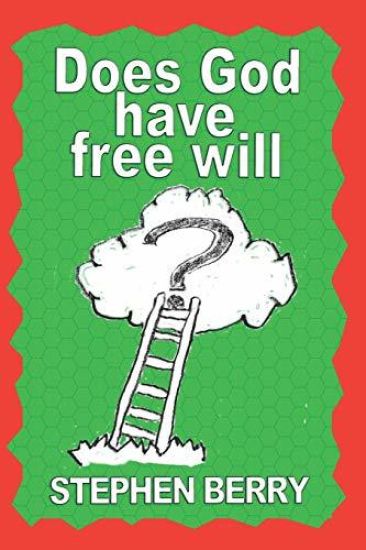
Does God Have Free Will?

Does God Have Free Will?

Stephen Berry

Independently Published
2018
nidottu
WARNING This book contains DANGEROUS TRUTHS. Ask a good question and you'll get a good answer. Is there a GOD? Why do you want to know? Is there an INTERVENTIONIST GOD? A better question. If he doesn't intervene, he is of no use to us. Does this INTERVENTIONIST GOD CARE about us? Best question so far. If he doesn't care, he is still of no use to us. Does this INTERVENTIONIST CARING GOD have FREE WILL? Great question, because If he doesn't, it wouldn't matter if he cared or not. This book is about free will in Man and God. Does man have free will? Does God have free will? What are the consequences? What is the true nature of Man? What is the true nature of God? If you have an open mind and want to learn about the human condition, this is the book for you. If you are deeply religious and wish to stay that way, then don't read this book
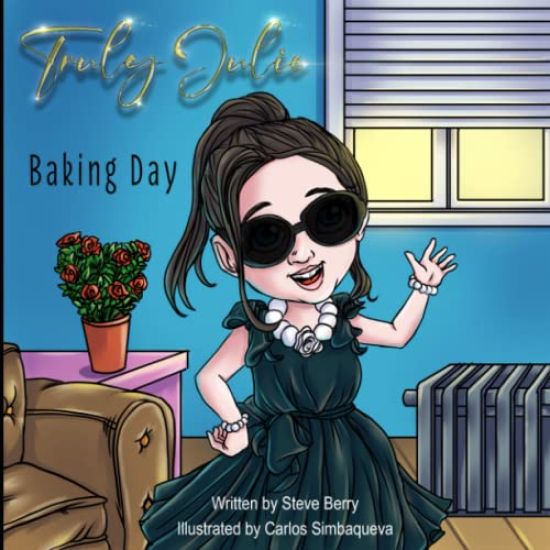
Truly Julie

Truly Julie

Stephen Berry

Paisley Printing
2023
pokkari
When two friends get together for a day of fun, You never know whats going to happen With surprises, mishaps and laughter, You can be sure these girls are going to have a great time. Join Julie and her friend as they set off on an adventure, into the kitchen to attempt making a special treat You can count on Julie be fancy, sweet, and a little unrulyBecause thats what makes her who she is, Truly Julie
7 Lessons in Strategy

7 Lessons in Strategy

Stephen Berry

John Murray Press
2026
pokkari
A SHORT COURSE IN BUSINESS STRATEGY BASICS. 7 Lessons in Strategy is a quick course in acquiring vital strategic thinking skills giving you everything you need to know in just seven short chapters. From unpacking the myths of strategy and exploring the varying meanings people put to the word, to a closer examination of internal strategy, marketing strategy, brand strategy and competitive strategy, you'll explore failures and successes and build a platform for developing your own strategic thinking skills. * Lesson 1: Understand what strategy is and what it isn't * Lesson 2: Understand what drives strategy and what strategy drives * Lesson 3: Understand internal strategy * Lesson 4: Understand marketing strategy * Lesson 5: Understand brand strategy * Lesson 6: Understand competitive strategy * Lesson 7: Keep strategy going Explore the main themes and ideas in strategy, get a basic knowledge and understanding of the key concepts, and test your progress with practical and thought-provoking exercises. 7 Lessons in Strategy is your fastest route to success. ABOUT THE SERIES7 Lessons are for people who want to succeed at work. From negotiating and content marketing to finance and social media, the series covers the business topics that matter and that will help you make a difference today. Written in straightforward English, each book features a course of 7 short lessons so that with just a little work, you can quickly master the subject.