Kirjojen hintavertailu. Mukana 11 627 463 kirjaa ja 12 kauppaa.

Kirjahaku

Etsi kirjoja tekijän nimen, kirjan nimen tai ISBN:n perusteella.

2 tulosta hakusanalla "Close Reading without Readings"

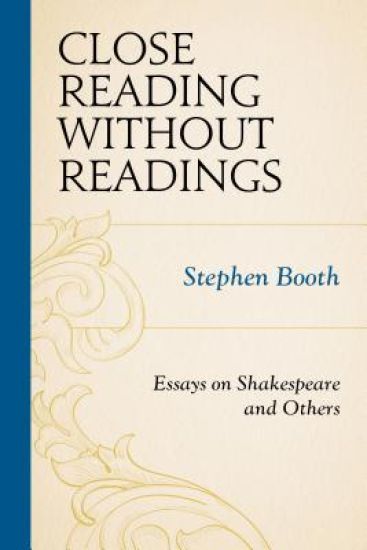
Close Reading without Readings

Close Reading without Readings

Stephen Booth

Fairleigh Dickinson University Press
2015
sidottu
Dealing mainly with the works of William Shakespeare, the essays in Close Readings without Readings reflect Stephen Booth’s lifelong interest in uncovering the ways great literature works upon readers. As the book’s title suggests, the author does not aim to create new or novel interpretations or to uncover the political agendas of literary works, but to notice language patterns—repetitions, analogies, correspondences, echoes, overtones—and other ways in which the choice and the arrangement of words affect readers. For Booth, close reading is a practice of attentiveness. He notices how, why, and in what ways Shakespeare’s works affect his readers. Whether readers agree with the premises of a literary work or not, they subject themselves, knowingly or not, to its effects. For Booth, what we value in literature is the experience. He has devoted his own work to recognizing the nature, process, and functions of reading literature, and to teaching others to do the same. Recent years have seen Booth’s efforts recognized by volumes dedicated both to close reading and to his achievements as editor, scholar, critic, and teacher.
Close Reading without Readings

Close Reading without Readings

Stephen Booth

Fairleigh Dickinson University Press
2017
nidottu
Dealing mainly with the works of William Shakespeare, the essays in Close Readings without Readings reflect Stephen Booth’s lifelong interest in uncovering the ways great literature works upon readers. As the book’s title suggests, the author does not aim to create new or novel interpretations or to uncover the political agendas of literary works, but to notice language patterns—repetitions, analogies, correspondences, echoes, overtones—and other ways in which the choice and the arrangement of words affect readers. For Booth, close reading is a practice of attentiveness. He notices how, why, and in what ways Shakespeare’s works affect his readers. Whether readers agree with the premises of a literary work or not, they subject themselves, knowingly or not, to its effects. For Booth, what we value in literature is the experience. He has devoted his own work to recognizing the nature, process, and functions of reading literature, and to teaching others to do the same. Recent years have seen Booth’s efforts recognized by volumes dedicated both to close reading and to his achievements as editor, scholar, critic, and teacher.