Kirjojen hintavertailu. Mukana 11 244 527 kirjaa ja 12 kauppaa.

Kirjahaku

Etsi kirjoja tekijän nimen, kirjan nimen tai ISBN:n perusteella.

13 kirjaa tekijältä Stephen Brooks

America Through Foreign Eyes

America Through Foreign Eyes

Stephen Brooks

Oxford University Press, Canada
2002
nidottu
The chapters in this volume address the issue of why and how foreign observers view American politics the way they do. By including selections from five of the most widely cited foreign observers of American politics and history, this volume not only provides and engaging historical overview of American democracy, but also directs attention to how and why these interpretations inform debate today. Included in the volume are excerpts from classic texts by Alexis de Tocqueville, James Bryce, Gunnar Myrdal, Harold Laski, and Simone de Beauvoir.
Canadian Democracy

Canadian Democracy

Stephen Brooks

Oxford University Press, Canada
2020
nidottu
What is the state of democracy in Canada? This is the central question of Stephen Brookss best-selling introduction to Canadian politics textbook, Canadian Democracy. In this revised ninth edition, Brooks continues to explore the characteristics and controversies associated with Canadian politics. He begins by addressing the social and economic contexts of the countrys politics before covering the basic elements and structures of government (e.g., the constitution, federalism, and the administrative state), political participation, and the current issues and challenges in Canadian political life. Highlights of this revised edition include: comprehensive updates throughout to bring readers the latest data, research, and analysis of current events; additional coverage of such topics as multiculturalism and interculturalism in Quebec, current trends in political communication, and Canadian foreign policy. This edition features a revised ancillary suite for students and instructors that includes podcasts, a test generator, an instructors manual, PowerPoint slides, and a student study guide. The ninth edition of Canadian Democracy is also available with an e-version of the textbook, flashcards of key terms and definitions, the Constitution Acts, 1867 & 1982 (including the Charter of Rights and Freedoms), and simulation activities that speak to Canadian politics, governance, and institutions.
The Challenge of Cultural Pluralism

The Challenge of Cultural Pluralism

Stephen Brooks

Praeger Publishers Inc
2002
sidottu
Many believe that we are passing through a period during which, due largely to globalization's challenge to the idea and sovereignty of nation-states, there is now the intellectual and political space for the construction of new models of citizenship, involving new relations between individuals and their governments. These new relations may be mediated through individuals' membership in communities that are recognized within states. In various ways, the resurgence of ethnic nationalism, the rise of multiculturalism, the ideas associated with communitarianism, and the apparent erosion of national sovereignty have all contributed to the creation of this interest in new ways of conceptualizing citizenship and carrying out the tasks of governance.Brooks and his colleagues examine various aspects of the challenge of cultural pluralism. Together they cover a wide range of national cases, theoretical issues, and empirical research. The collection is intended for all scholars, students, and researchers who have an interest in cultural pluralism, consociationalism, and inter-community relations in socieites divided by language, ethnicity, and culture.
American Exceptionalism in the Age of Obama
The election of President Obama in 2008 and the apparent decline of American power in the world has rekindled an old and important debate. Is the United States exceptional in its values and institutions, as well as in the role that it is destined to play in world affairs?In this book, Stephen Brooks argues that American exceptionalism has been and continues to be real. In making this argument he focuses on five aspects of American politics and society that are most crucial to an understanding of American exceptionalism today. They include the appropriate relationship between the state and citizens, religion, socio-economic mobility, America’s role in the world, and ideas about the Constitution. American exceptionalism matters in domestic politics chiefly as a political narrative around which support for and opposition to certain policies, values and vision of American society coalesce. But in world affairs it is not the story but the empirical reality of American exceptionalism that matters. Although the long era of America’s global economic dominance has entered what might be called a period of diminished expectations, the United States remains exceptional—the indispensable nation—in world affairs and is likely to remain so for many years to come.
Anti-Americanism and the Limits of Public Diplomacy
Contrary to the view held by many who study American foreign policy, public diplomacy has seldom played a decisive role in the achievement of the country's foreign policy objectives. The reasons for this are not that the policies and interventions are ill-conceived or badly executed, although this is sometimes the case. Rather, the factors that limit the effectiveness of public diplomacy lie almost entirely outside the control of American policy-makers. In particular, the resistance of foreign opinion-leaders to ideas and information about American motives and actions that do not square with their pre-conceived notions of the United States and its activities in the world is an enormous and perhaps insurmountable wall that limits the impact of public diplomacy. This book does not conclude that public diplomacy has no place in the repertoire of American foreign policy. Instead, the expectations held for this soft power tool need to be more realistic. Public diplomacy should not be viewed as a substitute for hard power tools that are more likely to be correlated with actual American influence as opposed to the somewhat nebulous concept of American standing.
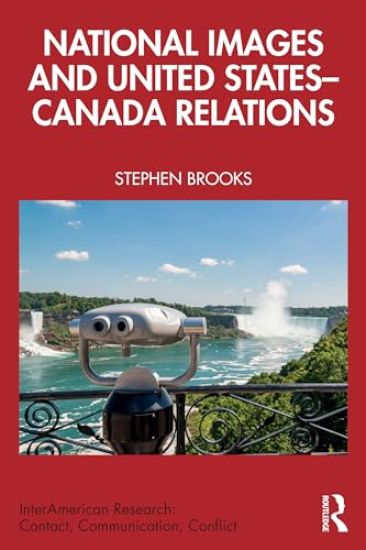
National Images and United States-Canada Relations
This book explores the psychological–cultural dimension of the United States–Canada relationship by analyzing how each country has viewed the other. Drawing on a wide range of data, including primary sources, secondary literature, and survey research, the methodology is historical/analytical, seeking to explicate and understand how Americans and Canadians, and their elites, have viewed one another from the moment they were launched on separate trajectories, why they developed and held such ideas, and what consequences these images had for the bilateral relationship between the countries. American and Canadian images of the other have deep roots and are, in many respects, recognizably the same today as they were many decades ago. Moreover, even when anchored to important realities of the other, such images influence the perception and interpretation of events, and actions taken by the other. How Americans and Canadians have viewed each other, the sources of these ideas, the way they have been influenced by each country’s domestic politics and place within the international system, and the consequences for their bilateral relationship are among the questions examined. Interdisciplinary in approach, the book will appeal to scholars and students of political science, international relations, and history.
National Images and United States-Canada Relations
This book explores the psychological–cultural dimension of the United States–Canada relationship by analyzing how each country has viewed the other. Drawing on a wide range of data, including primary sources, secondary literature, and survey research, the methodology is historical/analytical, seeking to explicate and understand how Americans and Canadians, and their elites, have viewed one another from the moment they were launched on separate trajectories, why they developed and held such ideas, and what consequences these images had for the bilateral relationship between the countries. American and Canadian images of the other have deep roots and are, in many respects, recognizably the same today as they were many decades ago. Moreover, even when anchored to important realities of the other, such images influence the perception and interpretation of events, and actions taken by the other. How Americans and Canadians have viewed each other, the sources of these ideas, the way they have been influenced by each country’s domestic politics and place within the international system, and the consequences for their bilateral relationship are among the questions examined. Interdisciplinary in approach, the book will appeal to scholars and students of political science, international relations, and history.
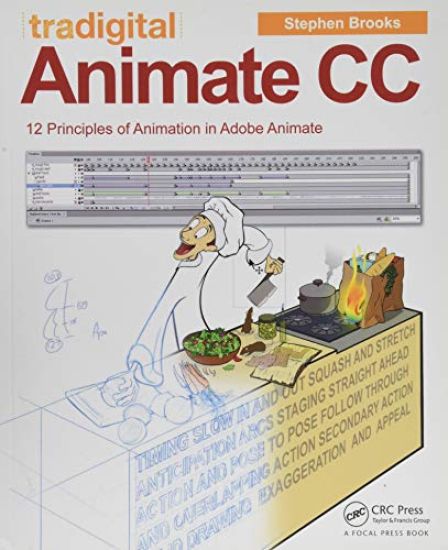
Tradigital Animate CC

Tradigital Animate CC

Stephen Brooks

CRC Press
2016
nidottu
Learn how to bridge the gap between the traditional animation principles and digital software.Tradigital Flash: 12 Principles of Animation in Adobe Flash brings the essentials of traditional animation and Adobe Flash together. The early masters of animationcreated a list of 12 principles which are important for anyone who wants to create interesting and believable animation. Digital animation continues to make incredible technological advancements that give animators the capability to produce visually stunning work. New technology, however, also has a tendency to create an environment where animators are so focused on adapting to the new workflow that they tend to dismiss these fundamental animation principles… which often leads to poor and lifeless character animation. Tradigital Flash helps you focus on these principles while using the program’s wide array of features to create believable animation, consistently. Tradigital Flash joins three other Tradigital books covering Maya, Blender, and 3ds Max. This new volume in the series approaches the topic in a different way, giving readers both a practical look at the software, and providing a theoretical understanding of the genre. Learn a new principle in each chapter, the Flash tools most related to it and how to put it all together. A plethora of examples demonstrate the good methods which animators should use in Flash, how to avoid the bad ones and ways to create a workflow that works for you. An easy-to-follow approach with examples throughout the book that build on each other, showing how the principles act together. A companion website www.rubberonion.com/tradigital-animate features more examples, downloadable FLA resource files, video tutorials.Key FeaturesEvery chapter teaches you a principle, shows you the corresponding tool or tools, and shows you how to all put it together. A wide array of examples demonstrate the good, bad, and sometimes ugly procedures an animator can practice with Flash. A follow-along approach, where examples throughout the book build on each other, showing how the principles act together. A companion website features more examples, downloadable swf resource files, video tutorials.
American Exceptionalism in the Age of Obama
The election of President Obama in 2008 and the apparent decline of American power in the world has rekindled an old and important debate. Is the United States exceptional in its values and institutions, as well as in the role that it is destined to play in world affairs?In this book, Stephen Brooks argues that American exceptionalism has been and continues to be real. In making this argument he focuses on five aspects of American politics and society that are most crucial to an understanding of American exceptionalism today. They include the appropriate relationship between the state and citizens, religion, socio-economic mobility, America’s role in the world, and ideas about the Constitution. American exceptionalism matters in domestic politics chiefly as a political narrative around which support for and opposition to certain policies, values and vision of American society coalesce. But in world affairs it is not the story but the empirical reality of American exceptionalism that matters. Although the long era of America’s global economic dominance has entered what might be called a period of diminished expectations, the United States remains exceptional—the indispensable nation—in world affairs and is likely to remain so for many years to come.
Tradigital Animate CC

Tradigital Animate CC

Stephen Brooks

CRC Press
2017
sidottu
Learn how to bridge the gap between the traditional animation principles and digital software.Tradigital Flash: 12 Principles of Animation in Adobe Flash brings the essentials of traditional animation and Adobe Flash together. The early masters of animation created a list of 12 principles which are important for anyone who wants to create interesting and believable animation. Digital animation continues to make incredible technological advancements that give animators the capability to produce visually stunning work. New technology, however, also has a tendency to create an environment where animators are so focused on adapting to the new workflow that they tend to dismiss these fundamental animation principles- which often leads to poor and lifeless character animation. Tradigital Flash helps you focus on these principles while using the program's wide array of features to create believable animation, consistently.Tradigital Flash joins three other Tradigital books covering Maya, Blender, and 3ds Max. This new volume in the series approaches the topic in a different way, giving readers both a practical look at the software, and providing a theoretical understanding of the genre.Learn a new principle in each chapter, the Flash tools most related to it and how to put it all together.A plethora of examples demonstrate the good methods which animators should use in Flash, how to avoid the bad ones and ways to create a workflow that works for you.An easy-to-follow approach with examples throughout the book that build on each other, showing how the principles act together.A companion website www.rubberonion.com/tradigital-animate features more examples, downloadable FLA resource files, video tutorials.
Anti-Americanism and the Limits of Public Diplomacy
Contrary to the view held by many who study American foreign policy, public diplomacy has seldom played a decisive role in the achievement of the country's foreign policy objectives. The reasons for this are not that the policies and interventions are ill-conceived or badly executed, although this is sometimes the case. Rather, the factors that limit the effectiveness of public diplomacy lie almost entirely outside the control of American policy-makers. In particular, the resistance of foreign opinion-leaders to ideas and information about American motives and actions that do not square with their pre-conceived notions of the United States and its activities in the world is an enormous and perhaps insurmountable wall that limits the impact of public diplomacy. This book does not conclude that public diplomacy has no place in the repertoire of American foreign policy. Instead, the expectations held for this soft power tool need to be more realistic. Public diplomacy should not be viewed as a substitute for hard power tools that are more likely to be correlated with actual American influence as opposed to the somewhat nebulous concept of American standing.
As Others See Us

As Others See Us

Stephen Brooks

Broadview Press Ltd
2006
pokkari
One of the ironies of the post-Cold War world, in which the power of the United States is without rival, is that the costs of isolationism and ignorance are greater than ever. The temptation to imagine that the rest of the world matters less than before is enticing, as America basks in the triumphant glow of a world in which capitalism and democracy, under the aegis of American leadership, are thought to have vanquished all rivals. Although it is unlikely that Americans will come to pay much attention to the rest of the world anytime soon-except when their citizens are threatened or killed abroad, or when they are persuaded that the threat of foreigners doing harm at home seems real-their failure to do so cripples the ability of the United States to understand a world in which American interests, security, and prosperity are embedded to an unprecedented degree. As Others See Us investigates the causes and consequences of the world's perceptions of America. It proceeds from the premise that the images, ideas, and information that foreign populations have of the United States and Americans come from a number of sources, most of which are mediated. Some of these sources are American, Hollywood especially. Others are located outside the country, in the media, educational, religious, and political systems through which foreign populations learn about America. Any attempt to understand the "what" and "why" of foreign perceptions of America needs to look closely at these external determinants of how the image and interpretation of the United States is constructed in different societies.