Kirjojen hintavertailu. Mukana 11 244 527 kirjaa ja 12 kauppaa.

Kirjahaku

Etsi kirjoja tekijän nimen, kirjan nimen tai ISBN:n perusteella.

9 kirjaa tekijältä Stephen Burt

Randall Jarrell and His Age

Randall Jarrell and His Age

Stephen Burt

Columbia University Press
2002
sidottu
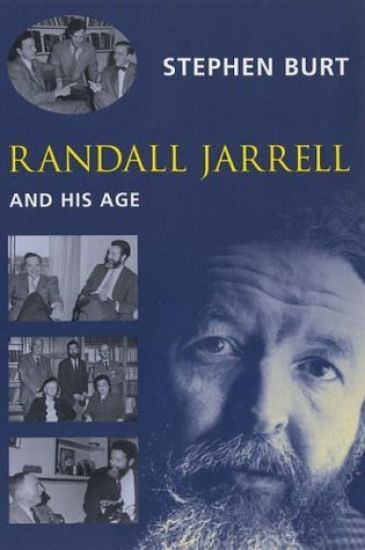
Randall Jarrell (1914-1965) was the most influential poetry critic of his generation. He was also a lyric poet, comic novelist, translator, children's book author, and close friend of Elizabeth Bishop, Robert Lowell, Hannah Arendt, and many other important writers of his time. Jarrell won the 1960 National Book Award for poetry and served as poetry consultant to the Library of Congress. Amid the resurgence of interest in Randall Jarrell, Stephen Burt offers this brilliant analysis of the poet and essayist. Burt's book examines all of Jarrell's work, incorporating new research based on previously undiscovered essays and poems. Other books have examined Jarrell's poetry in biographical or formal terms, but none have considered both his aesthetic choices and their social contexts. Beginning with an overview of Jarrell's life and loves, Burt argues that Jarrell's poetry responded to the political questions of the 1930s, the anxieties and social constraints of wartime America, and the apparent prosperity, domestic ideals, and professional ideology that characterized the 1950s. Jarrell's work is peopled by helpless soldiers, anxious suburban children, trapped housewives, and lonely consumers. Randall Jarrell and His Age situates the poet-critic among his peers-including Bishop, Lowell, and Arendt-in literature and cultural criticism. Burt considers the ways in which Jarrell's efforts and achievements encompassed the concerns of his time, from teen culture to World War II to the Cuban Missile Crisis; the book asks, too, how those efforts might speak to us now.
Randall Jarrell and His Age

Randall Jarrell and His Age

Stephen Burt

Columbia University Press
2005
pokkari
Randall Jarrell (1914-1965) was the most influential poetry critic of his generation. He was also a lyric poet, comic novelist, translator, children's book author, and close friend of Elizabeth Bishop, Robert Lowell, Hannah Arendt, and many other important writers of his time. Jarrell won the 1960 National Book Award for poetry and served as poetry consultant to the Library of Congress. Amid the resurgence of interest in Randall Jarrell, Stephen Burt offers this brilliant analysis of the poet and essayist. Burt's book examines all of Jarrell's work, incorporating new research based on previously undiscovered essays and poems. Other books have examined Jarrell's poetry in biographical or formal terms, but none have considered both his aesthetic choices and their social contexts. Beginning with an overview of Jarrell's life and loves, Burt argues that Jarrell's poetry responded to the political questions of the 1930s, the anxieties and social constraints of wartime America, and the apparent prosperity, domestic ideals, and professional ideology that characterized the 1950s. Jarrell's work is peopled by helpless soldiers, anxious suburban children, trapped housewives, and lonely consumers. Randall Jarrell and His Age situates the poet-critic among his peers-including Bishop, Lowell, and Arendt-in literature and cultural criticism. Burt considers the ways in which Jarrell's efforts and achievements encompassed the concerns of his time, from teen culture to World War II to the Cuban Missile Crisis; the book asks, too, how those efforts might speak to us now.
The Weather Observer's Handbook

The Weather Observer's Handbook

Stephen Burt

Cambridge University Press
2024
sidottu
This handbook provides a comprehensive, practical, and independent guide to all aspects of making weather observations. The second edition has been fully updated throughout with new material, new instruments and technologies, and the latest reference and research materials. Traditional and modern weather instruments are covered, including how best to choose and to site a weather station, how to get the best out of your equipment, how to store and analyse your records and how to share your observations. The book's emphasis is on modern electronic instruments and automatic weather stations. It provides advice on replacing 'traditional' mercury-based thermometers and barometers with modern digital sensors, following implementation of the UN Minamata Convention outlawing mercury in the environment. The Weather Observer's Handbook will again prove to be an invaluable resource for both amateur observers choosing their first weather instruments and professional observers looking for a comprehensive and up-to-date guide.
The Weather Observer's Handbook

The Weather Observer's Handbook

Stephen Burt

Cambridge University Press
2024
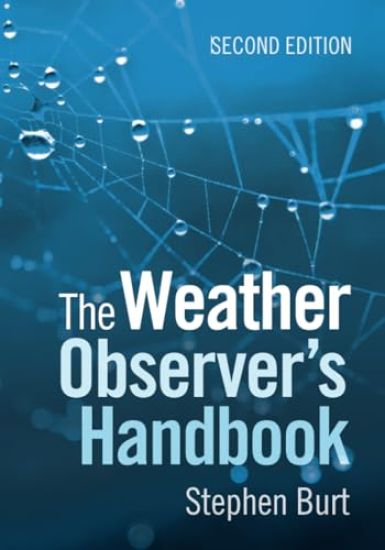
pokkari
This handbook provides a comprehensive, practical, and independent guide to all aspects of making weather observations. The second edition has been fully updated throughout with new material, new instruments and technologies, and the latest reference and research materials. Traditional and modern weather instruments are covered, including how best to choose and to site a weather station, how to get the best out of your equipment, how to store and analyse your records and how to share your observations. The book's emphasis is on modern electronic instruments and automatic weather stations. It provides advice on replacing 'traditional' mercury-based thermometers and barometers with modern digital sensors, following implementation of the UN Minamata Convention outlawing mercury in the environment. The Weather Observer's Handbook will again prove to be an invaluable resource for both amateur observers choosing their first weather instruments and professional observers looking for a comprehensive and up-to-date guide.
The Weather Observer's Handbook

The Weather Observer's Handbook

Stephen Burt

Cambridge University Press
2012
sidottu
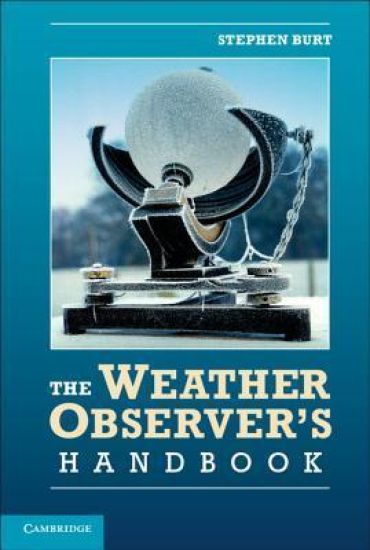
The Weather Observer's Handbook provides a comprehensive, practical and independent guide to all aspects of making weather observations. Automatic weather stations today form the mainstay of both amateur and professional weather observing networks around the world and yet – prior to this book – there existed no independent guide to their selection and use. Traditional and modern weather instruments are covered, including how best to choose and to site a weather station, how to get the best out of your equipment, how to store and analyse your records and how to share your observations with other people and across the Internet. From amateur observers looking for help in choosing their first weather instruments on a tight budget to professional observers looking for a comprehensive and up-to-date guide covering World Meteorological Organization recommendations on observing methods and practices, all will welcome this handbook.
The Weather Observer's Handbook

The Weather Observer's Handbook

Stephen Burt

Cambridge University Press
2012
pokkari
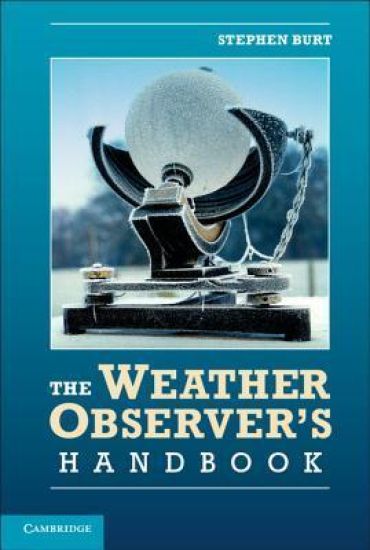
The Weather Observer's Handbook provides a comprehensive, practical and independent guide to all aspects of making weather observations. Automatic weather stations today form the mainstay of both amateur and professional weather observing networks around the world and yet – prior to this book – there existed no independent guide to their selection and use. Traditional and modern weather instruments are covered, including how best to choose and to site a weather station, how to get the best out of your equipment, how to store and analyse your records and how to share your observations with other people and across the Internet. From amateur observers looking for help in choosing their first weather instruments on a tight budget to professional observers looking for a comprehensive and up-to-date guide covering World Meteorological Organization recommendations on observing methods and practices, all will welcome this handbook.
The Art of Listening in Coaching and Mentoring
This book answers a number of fundamental questions about listening in coaching and mentoring. What difference does being heard make to the speaker? How does it have that effect? What are the necessary components of good listening? How do you evaluate your practice as a listener and how do you improve? The process of writing this book led the author to look closely at his own practice, test, experiment, and push his listening to a higher level. He invites the reader to do the same. This book identifies what it takes to listen well – the skills, mind-set, presence, self-awareness and self-management – and why it can be hard. It demonstrates how four modes of listening – attention, inquiry, observation and use of self – all contribute to the listener’s understanding and to the speaker’s awareness. It argues that we all have a ‘learning edge’ as listeners and provides a framework that helps each of us find it. The book is intended as a companion for anyone who commits to becoming a good listener. It shows how to develop expertise in the four modes of listening. It offers examples and principles to guide practice, questions for reflection, and a series of ‘workouts’ to help the listener develop their ability to listen. It encourages by showing how good listening is simple – you turn up, pay attention, and listen with all you have, and it challenges by identifying the work it takes to do that.
The Art of Listening in Coaching and Mentoring
This book answers a number of fundamental questions about listening in coaching and mentoring. What difference does being heard make to the speaker? How does it have that effect? What are the necessary components of good listening? How do you evaluate your practice as a listener and how do you improve? The process of writing this book led the author to look closely at his own practice, test, experiment, and push his listening to a higher level. He invites the reader to do the same. This book identifies what it takes to listen well – the skills, mind-set, presence, self-awareness and self-management – and why it can be hard. It demonstrates how four modes of listening – attention, inquiry, observation and use of self – all contribute to the listener’s understanding and to the speaker’s awareness. It argues that we all have a ‘learning edge’ as listeners and provides a framework that helps each of us find it. The book is intended as a companion for anyone who commits to becoming a good listener. It shows how to develop expertise in the four modes of listening. It offers examples and principles to guide practice, questions for reflection, and a series of ‘workouts’ to help the listener develop their ability to listen. It encourages by showing how good listening is simple – you turn up, pay attention, and listen with all you have, and it challenges by identifying the work it takes to do that.
Close Calls With Nonsense

Close Calls With Nonsense

Stephen Burt

Graywolf Press,U.S.
2009
nidottu
Introduces readers to the elliptical worlds of Rae Armantrout, Paul Muldoon, C. D. Wright and other contemporary poets whose complexities make them challenging, original and - finally - readable. Burt's intelligence and enthusiasm introduce both tentative and longtime poetry readers to the rewards of reading new poetry.