Kirjojen hintavertailu. Mukana 12 016 292 kirjaa ja 12 kauppaa.

Kirjahaku

Etsi kirjoja tekijän nimen, kirjan nimen tai ISBN:n perusteella.

7 kirjaa tekijältä Stephen C. Angle

Growing Moral

Growing Moral

Stephen C. Angle

OXFORD UNIVERSITY PRESS INC
2022
sidottu
Ancient and enduring, rich and wide-ranging, the tradition of Confucianism offers profound insights into how we can lead good lives--lives built on understanding that we are deeply connected to one another. For thousands of years, Confucian thinkers have carefully honed a philosophy for living fully, passing that knowledge along to their students over generations. Kongzi, also known as Confucius (551-479 BCE), is the most famous of the 2500-year-long tradition's philosophers. Though Kongzi lived more than two millennia ago and on the other side of the earth from many picking up this book, his teachings about how to live reverberate everywhere there are parents, children, and families; everywhere people feel stirrings of compassion for others, but sometimes selfishly ignore them; everywhere people wonder how they should interact with their environment. In Growing Moral, philosopher Stephen C. Angle engages readers to reflect on and to practice the teachings of Confucianism in the contemporary world. Angle draws on the whole history of Confucianism, focusing on three thinkers from the classical era (Kongzi, Mengzi, and Xunzi) and two from the Neo-Confucian era (Zhu Xi and Wang Yangming). While laying out the fundamental teachings of Confucianism, the book highlights the enduring lessons that the philosophy offers contemporary readers. Although the book reveals the many helpful ways we can engage Confucian philosophy in our modern lives, it also scrutinizes those elements of Confucianism that may not align with 21st-century standpoints. Angle questions whether Confucianism, historically affiliated with patriarchal societies and monarchical governments, genuinely can be attractive to those committed to gender equality and democratic politics, and points the way towards a progressive, evolving version of Confucianism that is nonetheless consistent with the principles it has upheld over the centuries. At its core, Confucianism describes a way for humans to live and grow together in our world--a way characterized at its best by joy, beauty, and harmony. This book builds a case for modern Confucianism as a way of life well worth the attention of reflective modern readers no matter their age, where they live, or the paths they've taken so far.
Sagehood

Sagehood

Stephen C. Angle

Oxford University Press Inc
2009
sidottu
Neo-Confucianism is the sophisticated revival of Confucian theorizing, responding to challenges from Buddhism and Daoism, which began around 1000 C.E. and came to dominate the Chinese intellectual scene for centuries thereafter. What would happen if we took Neo-Confucianism and its central ideal of sagehood seriously as contemporary philosophy? Sagehood represents supreme human virtue: a flawless, empathetic responsiveness to every situation in which one finds oneself. How could this be possible? How might one work toward such a state? According to Neo-Confucians, we should all strive to become sages, whether or not we ultimately achieve it. Taking neo-Confucianism seriously means to explore the ways that its theories of psychology, ethics, education, and politics engage with the views of contemporary philosophers. Angle's book is therefore both an exposition of Neo-Confucian philosophy and a sustained dialogue with many leading Western thinkers--and especially with those philosophers leading the current renewal of interest in virtue ethics. The book's significance is two-fold: it argues for a new stage in the development of contemporary Confucian philosophy, and it demonstrates the value to Western philosophers of engaging with the Neo-Confucian tradition.
Sagehood

Sagehood

Stephen C. Angle

Oxford University Press Inc
2012
nidottu
Neo-Confucianism is the sophisticated revival of Confucian theorizing, responding to challenges from Buddhism and Daoism, which began around 1000 C.E. and came to dominate the Chinese intellectual scene for centuries thereafter. What would happen if we took Neo-Confucianism and its central ideal of sagehood seriously as contemporary philosophy? Sagehood represents supreme human virtue: a flawless, empathetic responsiveness to every situation in which one finds oneself. How could this be possible? How might one work toward such a state? According to Neo-Confucians, we should all strive to become sages, whether or not we ultimately achieve it. Taking neo-Confucianism seriously means to explore the ways that its theories of psychology, ethics, education, and politics engage with the views of contemporary philosophers. Angle's book is therefore both an exposition of Neo-Confucian philosophy and a sustained dialogue with many leading Western thinkers--and especially with those philosophers leading the current renewal of interest in virtue ethics. The book's significance is two-fold: it argues for a new stage in the development of contemporary Confucian philosophy, and it demonstrates the value to Western philosophers of engaging with the Neo-Confucian tradition. "Rarely is a work in comparative philosophy itself an original philosophical contribution. But that is the case in this instance in which Angle brings Neo-Confucian philosophy into fruitful conversation with contemporary Western, virtue-ethics based analytic philosophers.The result is a presentation of Neo-Confucianism that advances it beyond any previous Neo-Confucian: Angle is the best in the line so far, at least among those writing or written about in English." - Robert Cummings Neville, The Review of Metaphysics "This book does an outstanding job of engaging a wide range of sources not only from different areas of philosophy (such as virtue ethics and Chinese philosophy) but also from the disciplines of religious studies and Asian studies. Indeed, one thing that makes this book worth reading is the way it puts new and interesting sources into conversation with one another in order to shed new light on the topics at hand. While this work is certainly recommended for specialists in comparative ethics and Chinese philosophy, it is also a resource for philosophers interested in learning how non-Western philosophy might potentially contribute to work in ethics today." - Eric Cline, Mind "Throughout the book, Angle makes good use of recent empirical studies. His book is very accessible for readers with a wide variety of backgrounds. Philosophers with no background in Chinese thought will find challenging and interesting discussions of many issues relevant to their own work. Furthermore, I think this book is also quite appropriate to assign to strong undergraduate students. I recommend it highly." - Bryan W. van Norden, Notre Dame Philosophical Reviews
Human Rights in Chinese Thought

Human Rights in Chinese Thought

Stephen C. Angle

Cambridge University Press
2002
pokkari
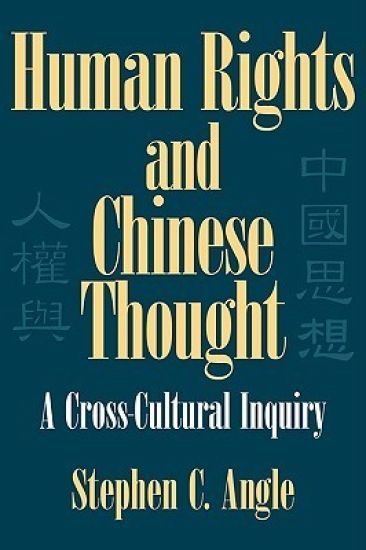
What should we make of claims by members of other groups to have moralities different from our own? Human Rights in Chinese Thought gives an extended answer to this question in the first study of its kind. It integrates a full account of the development of Chinese rights discourse - reaching back to important, though neglected, origins of that discourse in 17th and 18th century Confucianism - with philosophical consideration of how various communities should respond to contemporary Chinese claims about the uniqueness of their human rights concepts. The book elaborates a plausible kind of moral pluralism and demonstrates that Chinese ideas of human rights do indeed have distinctive characteristics, but it nonetheless argues for the importance and promise of cross-cultural moral engagement.
Human Rights in Chinese Thought

Human Rights in Chinese Thought

Stephen C. Angle

Cambridge University Press
2002
sidottu
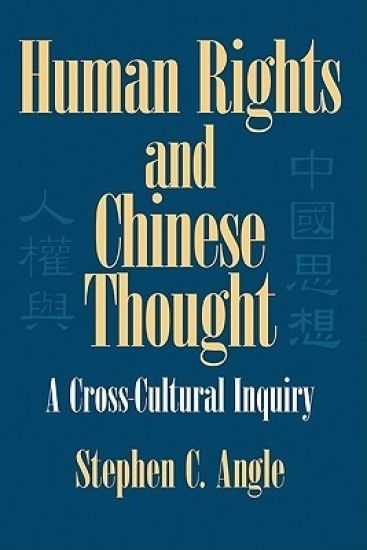
What should we make of claims by members of other groups to have moralities different from our own? Human Rights in Chinese Thought gives an extended answer to this question in the first study of its kind. It integrates a full account of the development of Chinese rights discourse - reaching back to important, though neglected, origins of that discourse in 17th and 18th century Confucianism - with philosophical consideration of how various communities should respond to contemporary Chinese claims about the uniqueness of their human rights concepts. The book elaborates a plausible kind of moral pluralism and demonstrates that Chinese ideas of human rights do indeed have distinctive characteristics, but it nonetheless argues for the importance and promise of cross-cultural moral engagement.
Contemporary Confucian Political Philosophy

Contemporary Confucian Political Philosophy

Stephen C. Angle

Polity Press
2012
sidottu
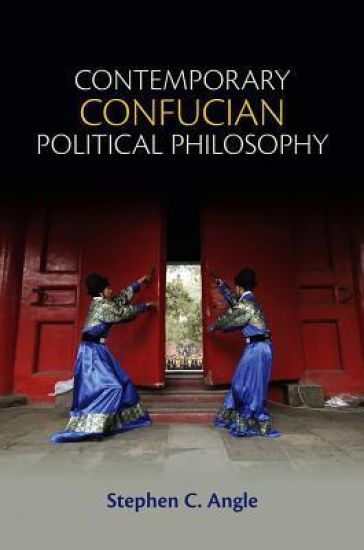
Confucian political philosophy has recently emerged as a vibrant area of thought both in China and around the globe. This book provides an accessible introduction to the main perspectives and topics being debated today, and shows why Progressive Confucianism is a particularly promising approach. Students of political theory or contemporary politics will learn that far from being confined to a museum, contemporary Confucianism is both responding to current challenges and offering insights from which we can all learn.The Progressive Confucianism defended here takes key ideas of the twentieth-century Confucian philosopher Mou Zongsan (1909-1995) as its point of departure for exploring issues like political authority and legitimacy, the rule of law, human rights, civility, and social justice. The result is anti-authoritarian without abandoning the ideas of virtue and harmony; it preserves the key values Confucians find in ritual and hierarchy without giving in to oppression or domination. A central goal of the book is to present Progressive Confucianism in such a way as to make its insights manifest to non-Confucians, be they philosophers or simply citizens interested in the potential contributions of Chinese thinking to our emerging, shared world.
Contemporary Confucian Political Philosophy

Contemporary Confucian Political Philosophy

Stephen C. Angle

Polity Press
2012
nidottu
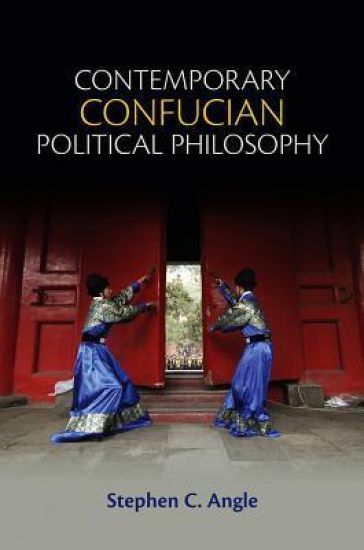
Confucian political philosophy has recently emerged as a vibrant area of thought both in China and around the globe. This book provides an accessible introduction to the main perspectives and topics being debated today, and shows why Progressive Confucianism is a particularly promising approach. Students of political theory or contemporary politics will learn that far from being confined to a museum, contemporary Confucianism is both responding to current challenges and offering insights from which we can all learn.The Progressive Confucianism defended here takes key ideas of the twentieth-century Confucian philosopher Mou Zongsan (1909-1995) as its point of departure for exploring issues like political authority and legitimacy, the rule of law, human rights, civility, and social justice. The result is anti-authoritarian without abandoning the ideas of virtue and harmony; it preserves the key values Confucians find in ritual and hierarchy without giving in to oppression or domination. A central goal of the book is to present Progressive Confucianism in such a way as to make its insights manifest to non-Confucians, be they philosophers or simply citizens interested in the potential contributions of Chinese thinking to our emerging, shared world.