Security has long been a central organizing concept of international relations. Until the 1980s, students of the discipline understood its simple essence in terms of arms races and balances of power. However, the issues have changed considerably in the 1990s, and this text aims to help students understand these changes. Many attempts have been made to redefine the concept, leading to a proliferation of terms such as true security, global security, common security and environmental security, but there has been little precision associated with the use of these terms which have often been used in confusing and contradictory ways. In attempting to help students deal with the confusion, this book seeks to outline the theoretical tools at the disposal of students for their own rethinking of security. These tools offer innovative ways of looking at a central concept of the discipline. It outlines some of these alternatives in the context of the third world, which, it is argued, has been neglected by the traditional conceptualization of security.
The book traces the end of hostilities and the often acrimonious, sometimes naive, but always laboured negotiations towards peace and elections in Mozambique. There is careful examination of the many international factors involved from the covert intervention of South Africa, the reaction of one African state, the role of the United Nations and that of humanitarian and religious groups. The lessons for conflict resolution and peacekeeping for Africa and beyond are discussed.
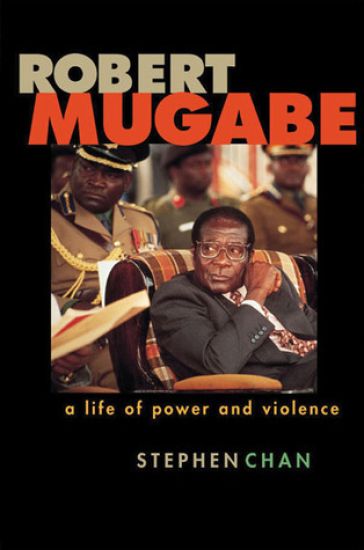
An insightful account of Zimbabwe's lone president recreates his tumultuous rise to power in the midst of a revolution and his current struggle to stay on top as he evolved from patriot to ruthless dictator. (Biography)
The book traces the end of hostilities and the often acrimonious, sometimes naive, but always laboured negotiations towards peace and elections in Mozambique. There is careful examination of the many international factors involved from the covert intervention of South Africa, the reaction of one African state, the role of the United Nations and that of humanitarian and religious groups. The lessons for conflict resolution and peacekeeping for Africa and beyond are discussed.
This book examines the former Zambian President Kenneth Kaunda's political philosophy and practice, and considers the conflicting views of the man and his policies - moralist or collaborator with South Africa, practitioner of realpolitik or promoter of peace. The author compares Kaunda with Mugabe, and assesses their respective contribution to the fight against apartheid in South Africa as well as the general effect of their policies on the region. The author also considers the moves towards multi-party democracy in Zambia which eventually led to Kaunda's removal from office.
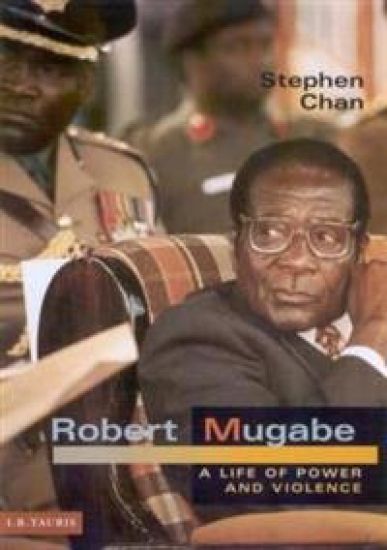
On 21st November 2017, Robert Mugabe resigned as President of Zimbabwe after 37 years in power. A week earlier the military had seized control of the country and forced him to step down as leader of the ruling Zanu-PF party. In this revised and updated edition of his classic biography, Stephen Chan seeks to explain and interpret Mugabe in his role as a key player in the politics of Southern Africa. In this masterly portrait of one of Africa's longest-serving leaders, Mugabe's character unfolds with the ebb and flow of triumph and crisis. Mugabe's story is Zimbabwe's - from the post-independence hopes of idealism and reconciliation to electoral victory, the successful intervention in the international politics of Southern Africa and the resistance to South Africa's policy of apartheid. But a darker picture emerged early with the savage crushing of the Matabeleland rising, the elimination of political opponents, growing corruption and disastrous intervention in the Congo war, all worsened by drought and the HIV/AIDS crisis. Stephen Chan's highly revealing biography, based on close personal knowledge of Zimbabwe, depicts the emergence and eventual downfall of a ruthless and single-minded despot amassing and tightly clinging to political power. We follow the triumphant nationalist leader who reconciled all in the new multiracial Zimbabwe, degenerate into a petty tyrant consumed by hubris and self-righteousness and ultimately face an ignominious endgame at the hands of his own army.
The world is troubled and full of misunderstandings. It seems a new world order of fundamentalist violence and meaningless atrocity is upon us, whilst civilised instruments for cooperation and compromise are becoming increasingly ineffective. In this timely book, Stephen Chan explores the historical and philosophical roots of difference and discord in the international system. He begins with the introduction of the Westphalian system, showing how, throughout the 20th century, new states - from the Middle East, Asia and Africa - entered that system with reservations, preconditions, and great efforts to introduce new forms of concerts and congresses but without seriously challenging the international status-quo. By contrast, the 21st century has brought turmoil and change in the form of militant Islam - be it the Taleban, Al Qaeda, or ISIS - whose varied roots and fluid emergence have so far prevented the West from being able to understand and combat it. Developing Kissinger's suspicion of Saudi Arabia as an Islamic state in Westphalian dress, Chan argues that what is at stake today is not the development of a new Caliphate or an old radicalism - but the effort to supplant and replace the Westphalian system itself. This is the complex and challenging reality to which a truly modern and persuasively relevant plural international relations must now adapt. Whether it can do so remains to be seen.
The world is troubled and full of misunderstandings. It seems a new world order of fundamentalist violence and meaningless atrocity is upon us, whilst civilised instruments for cooperation and compromise are becoming increasingly ineffective. In this timely book, Stephen Chan explores the historical and philosophical roots of difference and discord in the international system. He begins with the introduction of the Westphalian system, showing how, throughout the 20th century, new states - from the Middle East, Asia and Africa - entered that system with reservations, preconditions, and great efforts to introduce new forms of concerts and congresses but without seriously challenging the international status-quo. By contrast, the 21st century has brought turmoil and change in the form of militant Islam - be it the Taleban, Al Qaeda, or ISIS - whose varied roots and fluid emergence have so far prevented the West from being able to understand and combat it. Developing Kissinger's suspicion of Saudi Arabia as an Islamic state in Westphalian dress, Chan argues that what is at stake today is not the development of a new Caliphate or an old radicalism - but the effort to supplant and replace the Westphalian system itself. This is the complex and challenging reality to which a truly modern and persuasively relevant plural international relations must now adapt. Whether it can do so remains to be seen.
With the seeming defeat of ISIS, has jihadism disappeared from world politics? In this startling new book, Stephen Chan uncovers the ideological foundations that allow ISIS and other jihadi groups to survive, as they propagate terror by sophisticated means online and continue thrusting their spear at the West. Far from presenting simple-minded, black-clad fighters, Chan describes an elaborate process of online recruitment, which is, in its own terrible way, meaningful and thoughtful. He examines the foundations of this thought and the step-by-step methods of jihadi indoctrination, exposing the lack of IT knowledge among Western world leaders and urging the 'moderate' Islamic community in the West to challenge jihadi ideology with a courageous, non-violent ideology of its own. Without a counter-ideology, Chan argues, alienated Muslim youth are drawn not only to glamorised dreams of violence, but also to the pull of a totalising system of politics and theology. Spear to the West picks apart the fallacy of 'thoughtless' jihadi carnage, arguing that—dangerous and gruesome as it might be—there is more thought behind this phenomenon of destruction than meets the eye.
African liberation is often seen in terms of heroism, but seldom in terms of thought. Even Sartre, in his preface to Frantz Fanon’s seminal The Wretched of the Earth, wrote of the ‘native’ with his coiled muscles about to explode into rebellion. The African and the black person are denied the condition of philosophy, apparently driven only by frustration and anger. Stephen Chan’s new book charts the long history of African political thought, from the years of North American slavery, through the development of modern African nationalism and the difficulties of governing new states, to Africa’s political philosophy today, taking on the world as an equal. He dwells at length on major figures from Marcus Garvey and Kwame Nkrumah’s postcolonial generation to Biko, Mandela and Ellen Johnson Sirleaf. He shows their leadership to be inseparable from their ideas, and from those of literary giants including Fanon, W.E.B. Du Bois and Ngugi wa Thiong’o. This is no hagiography: Chan critically examines his thinkers, who also include Mugabe and Mobutu, and expresses concern for the future of Pan-Africanism. But his fascinating account reveals a thoughtful continent that has made complex, significant contributions to the world’s intellectual commons–yet continues to seek freedom.
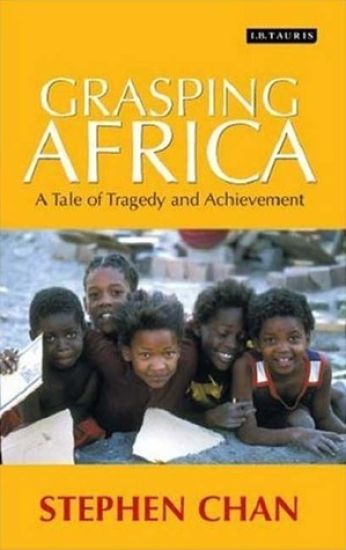
Africa is huge, internationally vital, potentially rich and powerful yet mired in failure - political, economic, social and even cultural. Yet the story of contemporary Africa is not just one of global tragedy but also of enormous hope for the future. This stimulating and unconventional book on Africa today and its relationship with the West explores the many complex reasons behind Africa's failure to fulfil its potential - it is a continent blighted by colonialism, exploitation and the interference of great powers in the international relations of the region - and offers some genuinely original and well-argued suggestions for ways forward. Critical and objective yet involved and sympathetic, "Grasping Africa" demonstrates Stephen Chan's deep understanding of the history and politics of Africa based on his long experience of the continent in often dangerous circumstances.
This book examines the economic and political development of Zambia since its independence in 1964. Based on detailed and original research, it explores the challenges faced during each period of Zambia's modern history. The Zambian copper industry is given particular attention to provide insight into the specific nature of the Zambian economy and to highlight how the country has failed to diversify economically and has accumulated debt. Recent debt negotiations, opportunities for financial investment, the relationship between Zambia and China are discussed. This book offers a rounded and considered understanding of the economic and political challenges that face Zambia and Africa. It will be of interest to students, researchers, and policymakers working within development economics, the political economy, and economic history.
This study asks: is Robert Mugabe the Stalin of modern Africa? Or is he a patriot fighting to reverse the effects of colonialism and white domination? Stephen Chan seeks not to demonize Mugabe, but to explain and interpret him in his role as a key player in Zimbabwe and Southern Africa. This portrait describes Mugabe's character over 22 years of his rule. Chan shows how Mugabe's story is Zimbabwe's - from the post-independence hopes of idealism and reconciliation to electoral victory, the successful intervention in the international politics of Southern Africa and the resistance to South Africa's policy of apartheid. He describes how a darker picture emerged early, with the savage crushing of the Matabeleland rising, the elimination of political opponents, growing corruption and disastrous intervention in the Congo war, all worsened by drought and the HIV / AIDS crisis. As a beleaguered President in the face of growing unrest, Mugabe resorted to desperate measures - seizing white-owned farms, increasing Presidential powers, muzzling the press and intimidating any opposition. Chan's narrative, based on close personal knowledge of Zimbabwe, depicts the emergence of a ruthless and single-minded despot amassing and clinging to political power. He shows how the triumphant nationalist leader who reconciled all in the new multiracial Zimbabwe degenerated into a petty tyrant consumed by hubris and self-righteousness and now facing an endgame of tragic dimensions.
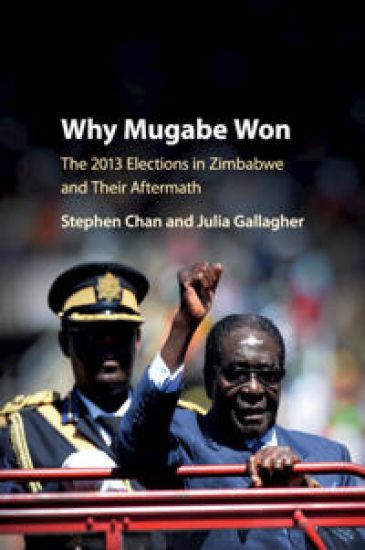
The 2013 general elections in Zimbabwe were widely expected to mark a shift in the nation's political system, and a greater role for the opposition Movement for Democratic Change (MDC), led by Prime Minister Morgan Tsvangirai. However, the results, surprisingly, were overwhelmingly in favour of long-time President Robert Mugabe, who swept the presidential, parliamentary and senatorial polls under relatively credible and peaceful conditions. In this book, a valuable and accessible read for both students and scholars working in African politics, and those with a general interest in the politics of the region, Stephen Chan and Julia Gallagher explore the domestic and international context of these landmark elections. Drawing on extensive research among political elites, grassroots activists and ordinary voters, Chan and Gallagher examine the key personalities, dramatic events, and broader social and political context of Mugabe's success, and what this means as Zimbabwe moves towards a future without Mugabe.
The 2013 general elections in Zimbabwe were widely expected to mark a shift in the nation's political system, and a greater role for the opposition Movement for Democratic Change (MDC), led by Prime Minister Morgan Tsvangirai. However, the results, surprisingly, were overwhelmingly in favour of long-time President Robert Mugabe, who swept the presidential, parliamentary and senatorial polls under relatively credible and peaceful conditions. In this book, a valuable and accessible read for both students and scholars working in African politics, and those with a general interest in the politics of the region, Stephen Chan and Julia Gallagher explore the domestic and international context of these landmark elections. Drawing on extensive research among political elites, grassroots activists and ordinary voters, Chan and Gallagher examine the key personalities, dramatic events, and broader social and political context of Mugabe's success, and what this means as Zimbabwe moves towards a future without Mugabe.