Kirjojen hintavertailu. Mukana 11 417 157 kirjaa ja 12 kauppaa.

Kirjahaku

Etsi kirjoja tekijän nimen, kirjan nimen tai ISBN:n perusteella.

5 kirjaa tekijältä Stephen Cohen

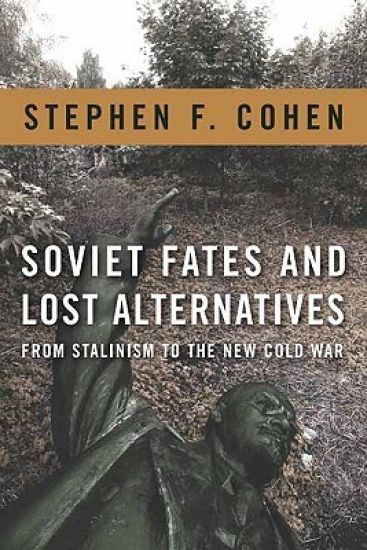
Soviet Fates and Lost Alternatives

Soviet Fates and Lost Alternatives

Stephen Cohen

Columbia University Press
2009
sidottu
In this wide-ranging and acclaimed book, Stephen F. Cohen challenges conventional wisdom about the course of Soviet and post-Soviet history. Reexamining leaders from Nikolai Bukharin, Stalin's preeminent opponent, and Nikita Khrushchev to Mikhail Gorbachev and his rival Yegor Ligachev, Cohen shows that their defeated policies were viable alternatives and that their tragic personal fates shaped the Soviet Union and Russia today. Cohen's ramifying arguments include that Stalinism was not the predetermined outcome of the Communist Revolution; that the Soviet Union was reformable and its breakup avoidable; and that the opportunity for a real post-Cold War relationship with Russia was squandered in Washington, not in Moscow. This is revisionist history at its best, compelling readers to rethink fateful events of the twentieth and early twenty-first centuries and the possibilities ahead. In his new epilogue, Cohen expands his analysis of U.S. policy toward post-Soviet Russia, tracing its development in the Clinton and Obama administrations and pointing to its initiation of a "new Cold War" that, he implies, has led to a fateful confrontation over Ukraine.
Soviet Fates and Lost Alternatives

Soviet Fates and Lost Alternatives

Stephen Cohen

Columbia University Press
2011
pokkari
In this wide-ranging and acclaimed book, Stephen F. Cohen challenges conventional wisdom about the course of Soviet and post-Soviet history. Reexamining leaders from Nikolai Bukharin, Stalin's preeminent opponent, and Nikita Khrushchev to Mikhail Gorbachev and his rival Yegor Ligachev, Cohen shows that their defeated policies were viable alternatives and that their tragic personal fates shaped the Soviet Union and Russia today. Cohen's ramifying arguments include that Stalinism was not the predetermined outcome of the Communist Revolution; that the Soviet Union was reformable and its breakup avoidable; and that the opportunity for a real post-Cold War relationship with Russia was squandered in Washington, not in Moscow. This is revisionist history at its best, compelling readers to rethink fateful events of the twentieth and early twenty-first centuries and the possibilities ahead. In his new epilogue, Cohen expands his analysis of U.S. policy toward post-Soviet Russia, tracing its development in the Clinton and Obama administrations and pointing to its initiation of a "new Cold War" that, he implies, has led to a fateful confrontation over Ukraine.
Mark of Aaron

Mark of Aaron

Stephen Cohen

iUniverse
2018
pokkari
A secular Jew spends his life as a prosecutor in Los Angeles. He goes to the California desert town of Borrego Springs and comes to believe he is a direct descendant of Aaron, Mosess older brother. He leaves his job, his family, and departs on a mystical and magical journey that brings him to a revelation. He decides he is compelled to build the Temple of Solomon in the desert town. But to get this done, he encounters drug dealers, neo-Nazis, Arab sheiks, and a few billionaires. He picks up some desert characters that will take bullets for him, and they do. The journey mixes real events, true archeology, and historical figures with the creations of the novel. The challenge for the reader is to identify fact from fiction. It is one wild, raucous ride that has most unexpected turns and stops along the way. There is nothing like thispart history, part religion, and part mysticism. And you will wonder: is this fantasy, prophesy, or reality?