Kirjojen hintavertailu. Mukana 11 717 486 kirjaa ja 12 kauppaa.

Kirjahaku

Etsi kirjoja tekijän nimen, kirjan nimen tai ISBN:n perusteella.

62 kirjaa tekijältä Stephen Davies

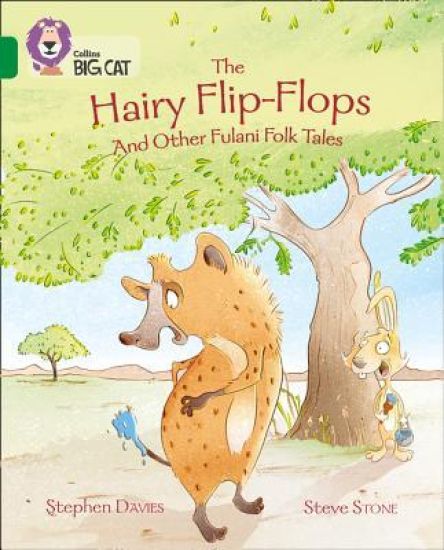
The Hairy Flip-Flops and other Fulani Folk Tales
Build your child’s reading confidence at home with books at the right level Follow the trickery and antics of Hyena and Rabbit as they try to out-wit each other in this collection of hilarious traditional tales from West Africa. Emerald/Band 15 books provide a widening range of genres including science fiction and biography, prompting more ways to respond to texts.This book has been quizzed for Accelerated Reader.
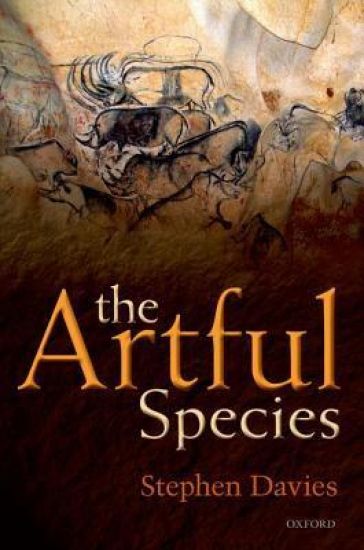
The Artful Species

The Artful Species

Stephen Davies

Oxford University Press
2014
nidottu
The Artful Species explores the idea that our aesthetic responses and art behaviors are connected to our evolved human nature. Our humanoid forerunners displayed aesthetic sensibilities hundreds of thousands of years ago and the art standing of prehistoric cave paintings is virtually uncontested. In Part One, Stephen Davies analyses the key concepts of the aesthetic, art, and evolution, and explores how they might be related. He considers a range of issues, including whether animals have aesthetic tastes and whether art is not only universal but cross-culturally comprehensible. Part Two examines the many aesthetic interests humans take in animals and how these reflect our biological interests, and the idea that our environmental and landscape preferences are rooted in the experiences of our distant ancestors. In considering the controversial subject of human beauty, evolutionary psychologists have traditionally focused on female physical attractiveness in the context of mate selection, but Davies presents a broader view which decouples human beauty from mate choice and explains why it goes more with social performance and self-presentation. Part Three asks if the arts, together or singly, are biological adaptations, incidental byproducts of nonart adaptations, or so removed from biology that they rate as purely cultural technologies. Davies does not conclusively support any one of the many positions considered here, but argues that there are grounds, nevertheless, for seeing art as part of human nature. Art serves as a powerful and complex signal of human fitness, and so cannot be incidental to biology. Indeed, aesthetic responses and art behaviors are the touchstones of our humanity.
Philosophical Perspectives on Art

Philosophical Perspectives on Art

Stephen Davies

Clarendon Press
2007
sidottu
Philosophical Perspectives on Art presents a series of essays devoted to two of the most fundamental topics in the philosophy of art: the distinctive character of artworks and what is involved in understanding them as art. In Part I, Stephen Davies considers a wide range of questions about the nature and definition of art. Can art be defined, and if so, which definitions are the most plausible? Do we make and consume art because there are evolutionary advantages to doing so? Has art completed the mission that guided its earlier historical development, and if so, what is to become of it now? Should architecture be classified as an art form? Part II turns to the interpretation and appreciation of art. What is the target and purpose of the critic's interpretation? Is interpretation primarily directed at uncovering artists' intended meanings? Can apparently contradictory interpretations of a given piece both be true? Are interpretative evaluations entailed by descriptions of a work's aesthetic and artistic characteristics? In addition to providing fresh answers to these and other central questions in aesthetics, Davies considers the nature and content of metaphor, and the relation between the expressive qualities of a work of art and the emotions of its creator.
Philosophical Perspectives on Art

Philosophical Perspectives on Art

Stephen Davies

Oxford University Press
2010
nidottu
Philosophical Perspectives on Art presents a series of essays devoted to two of the most fundamental topics in the philosophy of art: the distinctive character of artworks and what is involved in understanding them as art. In Part I, Stephen Davies considers a wide range of questions about the nature and definition of art. Can art be defined, and if so, which definitions are the most plausible? Do we make and consume art because there are evolutionary advantages to doing so? Has art completed the mission that guided its earlier historical development, and if so, what is to become of it now? Should architecture be classified as an art form? Part II turns to the interpretation and appreciation of art. What is the target and purpose of the critic's interpretation? Is interpretation primarily directed at uncovering artists' intended meanings? Can apparently contradictory interpretations of a given piece both be true? Are interpretative evaluations entailed by descriptions of a work's aesthetic and artistic characteristics? In addition to providing fresh answers to these and other central questions in aesthetics, Davies considers the nature and content of metaphor, and the relation between the expressive qualities of a work of art and the emotions of its creator.
Musical Works and Performances

Musical Works and Performances

Stephen Davies

Clarendon Press
2004
nidottu
What are musical works? Are they discovered or created? Of what elements are they comprised? How are they specified by notations? What makes a performance of one piece and not another? Is it possible to perform old music authentically? Can ethnic music influenced by foreign sources and presented to tourists genuinely reflect the culture's musical and wider values? Can recordings substitute faithfully for live performances? These are the questions considered in Musical Works and Performances. Part One outlines the nature of musical works, their relation to performances, and their notational specification. Works for performance differ from ones that are merely for playback, and pieces for live rendition are unlike those for studio performance. Pieces vary in the number and kind of their constitutive properties. The identity of musical works goes beyond their sonic profile and depends on their music-historical context. To be of a given work, a performance must match its contents by following instructions traceable to its creation. Some pieces are indicated via exemplars, but many are specified notationally. Scores must be interpreted in light of notational conventions and performance practices they assume. Part Two considers authenticity in performance, musical traditions, and recordings. A performance should follow the composer's instructions. Departures from the ideal are tolerable, but faithfulness is central to the enterprise of work performance, not merely an interpretative option. When musical cultures interact, assimilation from within differs from destruction from without. Even music subject to foreign influences can genuinely reflect the musical traditions and social values of a culture, however. Finally, while most works are for live performance, most performances are experienced via recordings, which have their own, distinctive characteristics. This comprehensive and original analysis of musical ontology discusses many kinds of music, and applies its conclusions to issues as diverse as the authentic performance movement, the cultural integrity of ethnic music, and the implications of the dominance of recorded over live music.
The Artful Species

The Artful Species

Stephen Davies

Oxford University Press
2012
sidottu
The Artful Species explores the idea that our aesthetic responses and art behaviors are connected to our evolved human nature. Our humanoid forerunners displayed aesthetic sensibilities hundreds of thousands of years ago and the art standing of prehistoric cave paintings is virtually uncontested. In Part One, Stephen Davies analyses the key concepts of the aesthetic, art, and evolution, and explores how they might be related. He considers a range of issues, including whether animals have aesthetic tastes and whether art is not only universal but cross-culturally comprehensible. Part Two examines the many aesthetic interests humans take in animals and how these reflect our biological interests, and the idea that our environmental and landscape preferences are rooted in the experiences of our distant ancestors. In considering the controversial subject of human beauty, evolutionary psychologists have traditionally focused on female physical attractiveness in the context of mate selection, but Davies presents a broader view which decouples human beauty from mate choice and explains why it goes more with social performance and self-presentation. Part Three asks if the arts, together or singly, are biological adaptations, incidental byproducts of nonart adaptations, or so removed from biology that they rate as purely cultural technologies. Davies does not conclusively support any one of the many positions considered here, but argues that there are grounds, nevertheless, for seeing art as part of human nature. Art serves as a powerful and complex signal of human fitness, and so cannot be incidental to biology. Indeed, aesthetic responses and art behaviors are the touchstones of our humanity.
Apocalypse Next

Apocalypse Next

Stephen Davies

INSTITUTE OF ECONOMIC AFFAIRS
2024
sidottu
The Covid-19 pandemic was, and remains, a global disaster - claiming countless lives and wreaking economic havoc that still reverberates today. But it could have been worse. Much worse. Author Stephen Davies contends the planet 'dodged a bullet' this time around. But he warns this was no black swan event: The conflicts in the Ukraine and the Middle East already threaten global stability. And the next existential threat to mankind could happen much sooner than we think - with the chances of it happening increasing exponentially. Here he analyses the potential catastrophes - from nuclear war and climate change to further pandemics, the misuse of Artificial Intelligence and more - that could jeopardise our planet and its people. In this fascinating and at times frightening work, he examines how we assess these risks - and what we can do about them. But Davies is no Jeremiah. He firmly believes the ingenuity, imagination and innovation of millions of people around the world will ultimately secure mankind's continued existence.
Empiricism and History

Empiricism and History

Stephen Davies

Red Globe Press
2003
nidottu
In this introduction, Stephen Davies explains what historians mean by empiricism, examines the origins, growth and persistence of empirical methods, and shows how students can apply these methods to their own work.
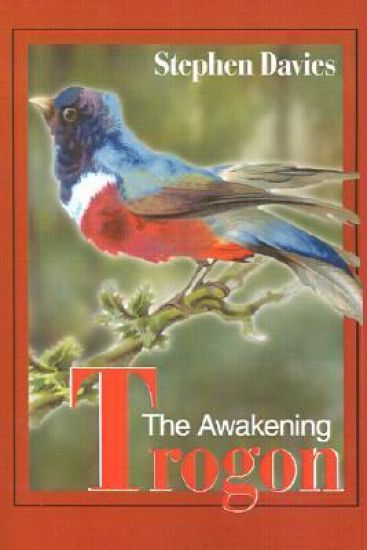
Trogon

Trogon

Stephen Davies

iUniverse
2001
pokkari
An action-packed fantasy novel about a young Trogon warrior, Sacha, and his fight to free his island home from Tryphenian oppression.A story of war, courage, love and betrayal mystically woven with a dash of fantasy action.
Andy Murray (A Life Story)

Andy Murray (A Life Story)

Stephen Davies

Scholastic
2022
nidottu
Andy Murray: tennis player, sports icon, Olympian. Get the inside track on one of history’s most spectacular athletes! A Life Story: this thrilling series throws readers directly into the lives of modern society’s most influential figures. With stunning black-and-white illustrations Including a timeline of Andy's life and career Featuring fact boxes throughout Also in the series: Katherine Johnson: A Life Story Alan Turing: A Life Story Stephen Hawking: A Life Story Rosalind Franklin: A Life Story David Attenborough: A Life Story Kamala Harris: A Life Story Captain Tom Moore: A Life Story
Young Discoverers

Young Discoverers

Stephen Davies

Quarto Publishing Plc
2026
sidottu
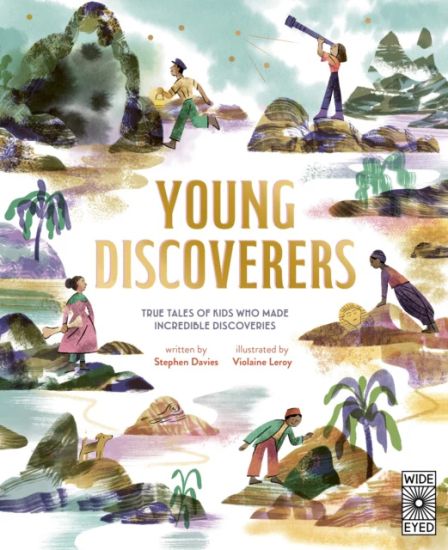
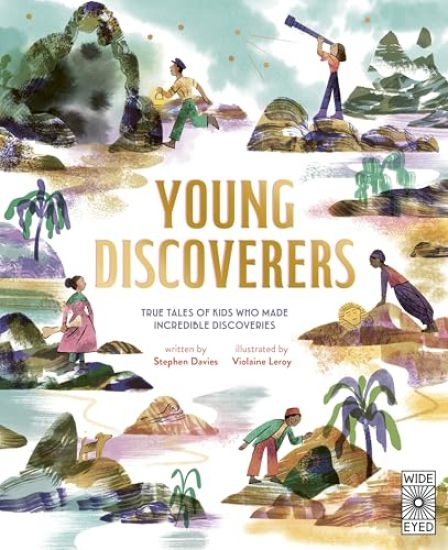
Step into a world of curiosity and wonder in this collection of true stories following the adventures of history’s youngest discoverers. From fossilized creatures and ancient treasures to mysterious scrolls and glimmering gems, find out about some of the most impressive discoveries ever made and the young people responsible for uncovering them. The fascinating finds include:a woolly mammoth a Viking swordtreasures from a pharaoh’s tombprehistoric sea monsters and flying reptilesa not-quite-human skeletonancient manuscriptsa supernovaand the world’s biggest sapphire! In each tale, we meet the young person at the heart of the discovery – following them through the twists and the turns of their adventure. From a sleepy village in France and the stormy beaches of the south coast of England, to the icy plains of the Arctic circle and the deserts of the Valley of the Kings in Egypt, these stories will take us to every corner of the globe. The children and teenagers who we meet may have come from different places around the world and lived at different times in history, but they all have something in common – a curiosity for the world around them! Some of our young discoverers saw something that seemed out of the ordinary and went to take a closer look, while others felt something strange with their fingers or toes or heard an unexpected sound. One of our heroes even followed his nose all the way to an incredible find. With fun, engaging and accessible text and stunning full-colour artwork, this book will show you that anyone – no matter their age or experience – can make great discoveries of their own!
Young Discoverers: True Tales of Kids Who Made Incredible Discoveries
Step into a world of curiosity and wonder in this collection of true stories following the adventures of history's youngest discoverers. From fossilized creatures and ancient treasures to mysterious scrolls and glimmering gems, find out about some of the most impressive discoveries ever made and the young people responsible for uncovering them. The fascinating finds include: a woolly mammoth a Viking swordtreasures from a pharaoh's tombprehistoric sea monsters and flying reptilesa not-quite-human skeletonancient manuscriptsa supernovaand the world's biggest sapphire In each tale, we meet the young person at the heart of the discovery--following them through the twists and the turns of their adventure. From a sleepy village in France and the stormy beaches of the south coast of England, to the icy plains of the Arctic circle and the deserts of the Valley of the Kings in Egypt, these stories will take us to every corner of the globe. The children and teenagers who we meet may have come from different places around the world and lived at different times in history, but they all have something in common--a curiosity for the world around them Some of our young discoverers saw something that seemed out of the ordinary and went to take a closer look, while others felt something strange with their fingers or toes, or heard an unexpected sound. One of our heroes even followed his nose all the way to an incredible find. With fun, engaging and accessible text and stunning full-color artwork, this book will show you that anyone--no matter their age or experience--can make great discoveries of their own
Samuel Lipschutz

Samuel Lipschutz

Stephen Davies

McFarland Co Inc
2015
sidottu
Samuel Lipschutz was born in Hungary in 1863 and emigrated to New York in 1880. He joined the Manhattan and New York chess clubs, and soon became champion of the latter, representing it at the British Chess Association Congress in London in 1886. Naturalized in 1888, he was the highest-placed American in the Sixth American Chess Congress the following year. In 1892 he defeated Jackson Showalter to become American champion. Suffering from tuberculosis in 1895, he lost a championship match to Showalter. Searching for a cure, he went to Germany in 1904 and died there late the following year. This book gives an account of Lipschutz's chess career, life and milieu and addresses questions surrounding his first name, his periods away from New York and misconceptions concerning the American championship. There are 249 games included.
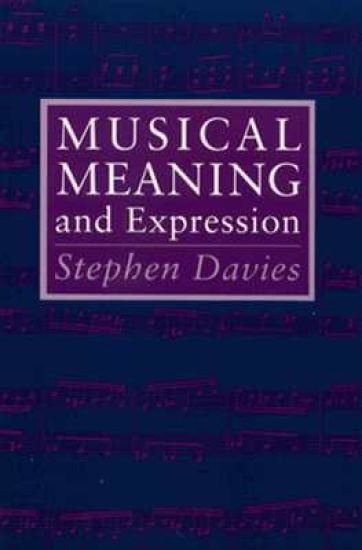
Musical Meaning and Expression

Musical Meaning and Expression

Stephen Davies

Cornell University Press
1994
pokkari
We talk not only of enjoying music, but of understanding it. Music is often taken to have expressive import—and in that sense to have meaning. But what does music mean, and how does it mean? Stephen Davies addresses these questions in this sophisticated and knowledgeable overview of current theories in the philosophy of music. Reviewing and criticizing the aesthetic positions of recent years, he offers a spirited explanation of his own position. Davies considers and rejects in turn the positions that music describes (like language), or depicts (like pictures), or symbolizes (in a distinctive fashion) emotions. Similarly, he resists the idea that music's expressiveness is to be explained solely as the composer's self-expression, or in terms of its power to evoke a response from the audience. Music's ability to describe emotions, he believes, is located within the music itself; it presents the aural appearance of what he calls emotion characteristics. The expressive power of music awakens emotions in the listener, and music is valued for this power although the responses are sometimes ones of sadness. Davies shows that appreciation and understanding may require more than recognition of and reaction to music's expressive character, but need not depend on formal musicological training.
Definitions of Art

Definitions of Art

Stephen Davies

Cornell University Press
1991
pokkari
In the last thirty years, work in analytic philosophy of art has flourished, and it has given rise to considerably controversy. Stephen Davies describes and analyzes the definition of art as it has been discussed in Anglo-American philosophy during this period and, in the process, introduces his own perspective on ways in which we should reorient our thinking.Davies conceives of the debate as revealing two basic, conflicting approaches—the functional and the procedural—to the questions of whether art can be defined, and if so, how. As the author sees it, the functionalist believes that an object is a work of art only if it performs a particular function (usually, that of providing a rewarding aesthetic experience). By contrast the proceduralist believes that something is an artwork only if it has been created according to certain rules and procedures. Davies attempts to demonstrate the fruitfulness of viewing the debate in terms of this framework, and he develops new arguments against both points of view—although he is more critical of functional than of procedural definitions.Because it has generated so much of the recent literature, Davies starts his analysis with a discussion of Morris Weitz's germinal paper, "The Role of Theory in Aesthetics." He goes on to examine other important works by Arthur Danto, George Dickie, and Ben Tilghman and develops in his critiques original arguments on such matters of the artificiality of artworks and the relevance of artists' intentions.