Kirjojen hintavertailu. Mukana 11 717 486 kirjaa ja 12 kauppaa.

Kirjahaku

Etsi kirjoja tekijän nimen, kirjan nimen tai ISBN:n perusteella.

3 kirjaa tekijältä Stephen G. Brooks

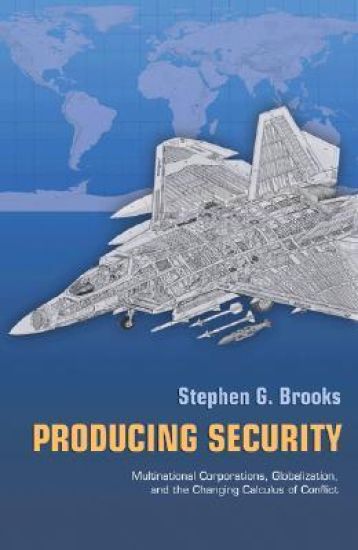
Producing Security

Producing Security

Stephen G. Brooks

Princeton University Press
2007
pokkari
Scholars and statesmen have debated the influence of international commerce on war and peace for thousands of years. Over the centuries, analysts have generally treated the questions "Does international commerce influence security?" and "Do trade flows influence security?" as synonymous. In Producing Security, Stephen Brooks maintains that such an overarching focus on the security implications of trade once made sense but no longer does. Trade is no longer the primary means of organizing international economic transactions; rather, where and how multinational corporations (MNCs) organize their international production activities is now the key integrating force of global commerce. MNC strategies have changed in a variety of fundamental ways over the past three decades, Brooks argues, resulting in an increased geographic dispersion of production across borders. The author shows that the globalization of production has led to a series of shifts in the global security environment. It has a differential effect on security relations, in part because it does not encompass all countries and industries to the same extent. The book's findings indicate that the geographic dispersion of MNC production acts as a significant force for peace among the great powers. The author concludes that there is no basis for optimism that the globalization of production will promote peace elsewhere in the world. Indeed, he finds that it has a net negative influence on security relations among developing countries.
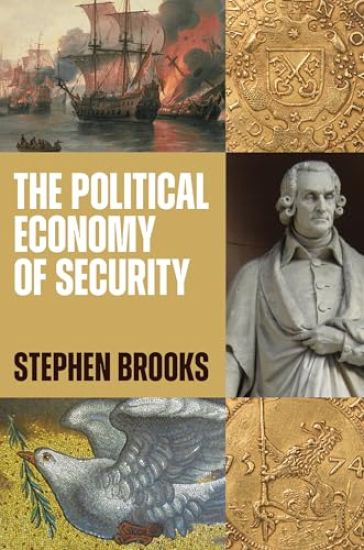
The Political Economy of Security

The Political Economy of Security

Stephen G. Brooks

PRINCETON UNIVERSITY PRESS
2025
sidottu
A systematic empirical and theoretical examination of how economic factors influence security affairsIn this book, Stephen Brooks offers a systematic empirical and theoretical account of the ways in which economic factors influence security affairs. Empirically, he explores how economic variables of all kinds affect the full range of security-dependent variables—interstate war, terrorism, and civil war—and analyzes sixteen pathways of economic influence on security matters. His analysis overturns the conventional view that certain economic factors—international trade, economic development, cross-border financial flows, and the globalization of production, to name a few—have clear and specific effects on security affairs. Brooks shows that the relationship between economic factors and conflict is complex and multifaceted; discrete economic factors such as globalized manufacturing are sometimes helpful for advancing peace and stability, but at other times are detrimental.Brooks then argues that a stronger theoretical foundation is needed to guide future research on the economics-security interaction. Drawing on the work of Adam Smith, he answers three key conceptual questions: how economic goals relate to security goals; what kinds of economic factors should be studied when analyzing world politics; and how, and how much, economic actors influence security policies. Combining an innovative and powerful theoretical understanding with empirical rigor, Brooks’s account will reshape our understanding of the political economy of security.
The Political Economy of Security

The Political Economy of Security

Stephen G. Brooks

PRINCETON UNIVERSITY PRESS
2025
pokkari
A systematic empirical and theoretical examination of how economic factors influence security affairsIn this book, Stephen Brooks offers a systematic empirical and theoretical account of the ways in which economic factors influence security affairs. Empirically, he explores how economic variables of all kinds affect the full range of security-dependent variables—interstate war, terrorism, and civil war—and analyzes sixteen pathways of economic influence on security matters. His analysis overturns the conventional view that certain economic factors—international trade, economic development, cross-border financial flows, and the globalization of production, to name a few—have clear and specific effects on security affairs. Brooks shows that the relationship between economic factors and conflict is complex and multifaceted; discrete economic factors such as globalized manufacturing are sometimes helpful for advancing peace and stability, but at other times are detrimental.Brooks then argues that a stronger theoretical foundation is needed to guide future research on the economics-security interaction. Drawing on the work of Adam Smith, he answers three key conceptual questions: how economic goals relate to security goals; what kinds of economic factors should be studied when analyzing world politics; and how, and how much, economic actors influence security policies. Combining an innovative and powerful theoretical understanding with empirical rigor, Brooks’s account will reshape our understanding of the political economy of security.