Kirjojen hintavertailu. Mukana 11 342 296 kirjaa ja 12 kauppaa.

Kirjahaku

Etsi kirjoja tekijän nimen, kirjan nimen tai ISBN:n perusteella.

4 kirjaa tekijältä Stephen G. Engelmann

Imagining Interest in Political Thought

Imagining Interest in Political Thought

Stephen G. Engelmann

Duke University Press
2003
pokkari
Imagining Interest in Political Thought argues that monistic interest-or the shaping and coordination of different pursuits through imagined economies of self and public interest-constitutes the end and means of contemporary liberal government. The paradigmatic theorist of monistic interest is the English political philosopher Jeremy Bentham (1748–1832), whose concept of utilitarianism calls for maximization of pleasure by both individuals and the state. Stephen G. Engelmann contends that commentators have too quickly dismissed Bentham’s philosophy as a crude materialism with antiliberal tendencies. He places Benthamite utilitarianism at the center of his account and, in so doing, reclaims Bentham for liberal political theory.Tracing the development of monistic interest from its origins in Reformation political theory and theology through late-twentieth-century neoliberalism, Engelmann reconceptualizes the history of liberalism as consisting of phases in the history of monistic interest or economic government. He describes how monistic interest, as formulated by Bentham, is made up of the individual’s imagined expectations, which are constructed by the very regime that maximizes them. He asserts that this construction of interests is not the work of a self-serving manipulative state. Rather, the state, which is itself subject to strict economic regulation, is only one cluster of myriad "public" and "private" agencies that produce and coordinate expectations. In place of a liberal vision in which government appears only as a protector of the free pursuit of interest, Engelmann posits that the free pursuit of interest is itself a mode of government, one that deploys individual imagination and choice as its agents.
Imagining Interest in Political Thought

Imagining Interest in Political Thought

Stephen G. Engelmann

Duke University Press
2003
sidottu
Imagining Interest in Political Thought argues that monistic interest-or the shaping and coordination of different pursuits through imagined economies of self and public interest-constitutes the end and means of contemporary liberal government. The paradigmatic theorist of monistic interest is the English political philosopher Jeremy Bentham (1748–1832), whose concept of utilitarianism calls for maximization of pleasure by both individuals and the state. Stephen G. Engelmann contends that commentators have too quickly dismissed Bentham’s philosophy as a crude materialism with antiliberal tendencies. He places Benthamite utilitarianism at the center of his account and, in so doing, reclaims Bentham for liberal political theory.Tracing the development of monistic interest from its origins in Reformation political theory and theology through late-twentieth-century neoliberalism, Engelmann reconceptualizes the history of liberalism as consisting of phases in the history of monistic interest or economic government. He describes how monistic interest, as formulated by Bentham, is made up of the individual’s imagined expectations, which are constructed by the very regime that maximizes them. He asserts that this construction of interests is not the work of a self-serving manipulative state. Rather, the state, which is itself subject to strict economic regulation, is only one cluster of myriad "public" and "private" agencies that produce and coordinate expectations. In place of a liberal vision in which government appears only as a protector of the free pursuit of interest, Engelmann posits that the free pursuit of interest is itself a mode of government, one that deploys individual imagination and choice as its agents.
Economic Rationality

Economic Rationality

Stephen G. Engelmann

JOHN WILEY AND SONS LTD
2022
sidottu
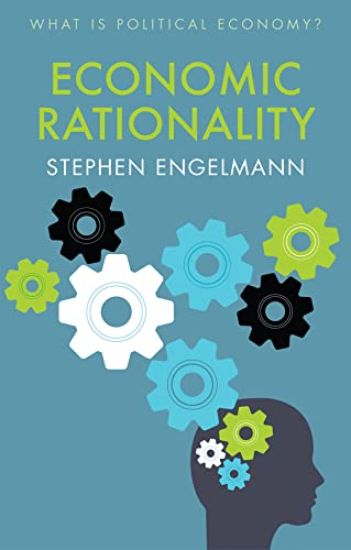
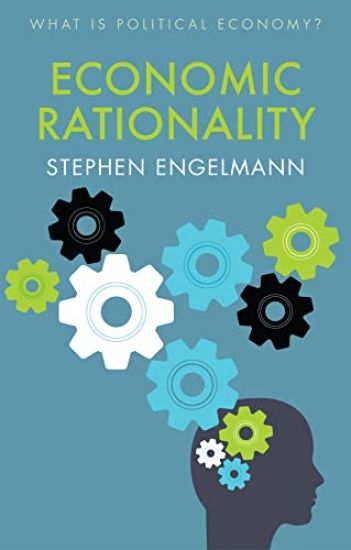
Economics used to be called political economy, and the loss of the “political” tracks the ascendance of the idea of rational choice within the discipline. Where does this idea of economic rationality – choosing to maximize benefits and minimize costs – come from? What are the consequences of its rise? In this new book, Stephen Engelmann assesses these questions through a consideration of the often-hidden links between choice and government, ranging from the Benthamic utilitarianism that inspired modern economics to the contemporary economic psychologists trying to nudge everyone to choose more rationally. Multiple global crises are exposing how deficient economic rationality is as a political theory, since a focus on choice turns actors away from relations in the common. Political economy once targeted aristocratic rule – heralding a politics and ethics of egalitarian self-command and spurring democratic reform – but economics allows domination and forecloses alternatives to it. This accessible volume will be of interest to students and scholars of politics and economics, and to general readers concerned about the various ways that psychology and management have infiltrated our politics.
Economic Rationality

Economic Rationality

Stephen G. Engelmann

JOHN WILEY AND SONS LTD
2022
nidottu
Economics used to be called political economy, and the loss of the “political” tracks the ascendance of the idea of rational choice within the discipline. Where does this idea of economic rationality – choosing to maximize benefits and minimize costs – come from? What are the consequences of its rise? In this new book, Stephen Engelmann assesses these questions through a consideration of the often-hidden links between choice and government, ranging from the Benthamic utilitarianism that inspired modern economics to the contemporary economic psychologists trying to nudge everyone to choose more rationally. Multiple global crises are exposing how deficient economic rationality is as a political theory, since a focus on choice turns actors away from relations in the common. Political economy once targeted aristocratic rule – heralding a politics and ethics of egalitarian self-command and spurring democratic reform – but economics allows domination and forecloses alternatives to it. This accessible volume will be of interest to students and scholars of politics and economics, and to general readers concerned about the various ways that psychology and management have infiltrated our politics.