Kirjojen hintavertailu. Mukana 11 244 527 kirjaa ja 12 kauppaa.

Kirjahaku

Etsi kirjoja tekijän nimen, kirjan nimen tai ISBN:n perusteella.

6 kirjaa tekijältä Stephen G. Rabe

The Road to OPEC

The Road to OPEC

Stephen G. Rabe

University of Texas Press
1982
nidottu
On September 10, 1960, Venezuela spearheaded the formation of the Organization of Petroleum Exporting Countries (other original members included Saudi Arabia, Iran, Iraq, and Kuwait). However, in a world abundantly supplied with oil, the United States could and did ignore Venezuelan suggestions that OPEC and the consuming nations work together to control production and to increase prices. Then, in late 1973, OPEC sent shudders throughout the world economy, and an energy crisis struck with full force. Emboldened by the power of their oil cartel, Venezuelan leaders denounced the old economic relationship with the United States, nationalized U.S. oil and steel holdings, and fashioned a foreign economic policy that differed sharply from Washington's.The Road to OPEC is the story of the fiery debates among U.S. oil companies, the Department of State, and the Venezuelan government over oil policies—clashes that led Venezuela to establish OPEC and to nationalize U.S.-owned properties. In addition, this is the first study of twentieth-century Venezuelan-U.S. relations. Its focus on oil diplomacy is placed within the context of key U.S. policies toward Latin America and such programs as the Open Door, the Good Neighbor, and the Alliance for Progress. The author also provides insight into both the politics of the contemporary energy crisis and the growing split between raw-material producers and their industrial customers.The Road to OPEC is based on extensive archival research, as well as the author's successful use of the Freedom of Information Act to declassify files of such agencies as the National Security Council and the CIA.
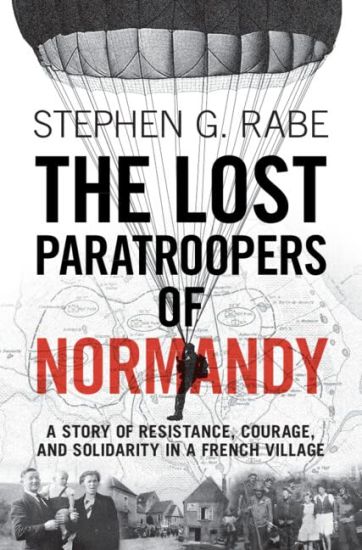
The Lost Paratroopers of Normandy

The Lost Paratroopers of Normandy

Stephen G. Rabe

Cambridge University Press
2022
sidottu
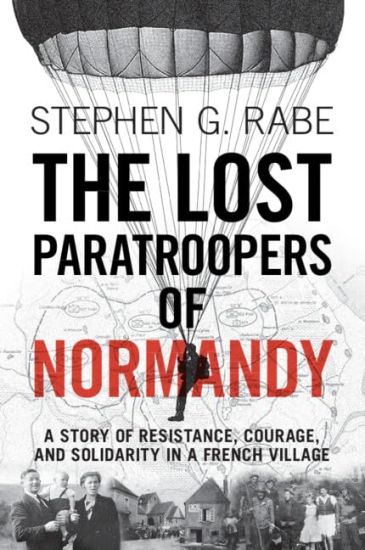
The fateful days and weeks surrounding 6 June 1944 have been extensively documented in histories of the Second World War, but less attention has been paid to the tremendous impact of these events on the populations nearby. The Lost Paratroopers of Normandy tells the inspiring yet heartbreaking story of ordinary people who did extraordinary things in defense of liberty and freedom. On D-Day, when transport planes dropped paratroopers from the 82nd and 101st Airborne Divisions hopelessly off-target into marshy waters in northwestern France, the 900 villagers of Graignes welcomed them with open arms. These villagers – predominantly women – provided food, gathered intelligence, and navigated the floods to retrieve the paratroopers' equipment at great risk to themselves. When the attack by German forces on 11 June forced the overwhelmed paratroopers to withdraw, many made it to safety thanks to the help and resistance of the villagers. In this moving book, historian Stephen G. Rabe, son of one of the paratroopers, meticulously documents the forgotten lives of those who participated in this integral part of D-Day history.
The Lost Paratroopers of Normandy

The Lost Paratroopers of Normandy

Stephen G. Rabe

Cambridge University Press
2024
pokkari
The fateful days and weeks surrounding 6 June 1944 have been extensively documented in histories of the Second World War, but less attention has been paid to the tremendous impact of these events on the populations nearby. The Lost Paratroopers of Normandy tells the inspiring yet heartbreaking story of ordinary people who did extraordinary things in defense of liberty and freedom. On D-Day, when transport planes dropped paratroopers from the 82nd and 101st Airborne Divisions hopelessly off-target into marshy waters in northwestern France, the 900 villagers of Graignes welcomed them with open arms. These villagers – predominantly women – provided food, gathered intelligence, and navigated the floods to retrieve the paratroopers' equipment at great risk to themselves. When the attack by German forces on 11 June forced the overwhelmed paratroopers to withdraw, many made it to safety thanks to the help and resistance of the villagers. In this moving book, historian Stephen G. Rabe, son of one of the paratroopers, meticulously documents the forgotten lives of those who participated in this integral part of D-Day history.
Kissinger and Latin America

Kissinger and Latin America

Stephen G. Rabe

Cornell University Press
2020
sidottu
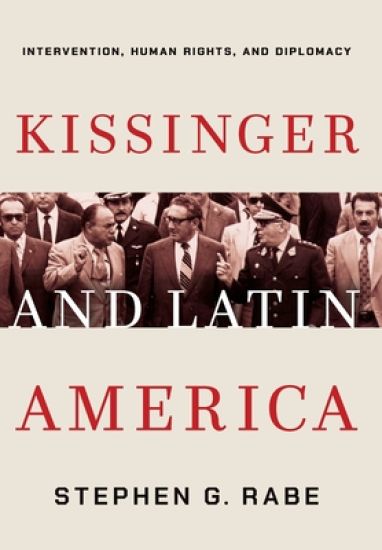
In Kissinger and Latin America, Stephen G. Rabe analyzes U.S. policies toward Latin America during a critical period of the Cold War. Except for the issue of Chile under Salvador Allende, historians have largely ignored inter-American relations during the presidencies of Richard M. Nixon and Gerald R. Ford. Rabe also offers a way of adding to and challenging the prevailing historiography on one of the most preeminent policymakers in the history of U.S. foreign relations. Scholarly studies on Henry Kissinger and his policies between 1969 and 1977 have tended to survey Kissinger's approach to the world, with an emphasis on initiatives toward the Soviet Union and the People's Republic of China and the struggle to extricate the United States from the Vietnam conflict. Kissinger and Latin America offers something new—analyzing U.S. policies toward a distinct region of the world during Kissinger's career as national security adviser and secretary of state. Rabe further challenges the notion that Henry Kissinger dismissed relations with the southern neighbors. The energetic Kissinger devoted more time and effort to Latin America than any of his predecessors—or successors—who served as the national security adviser or secretary of state during the Cold War era. He waged war against Salvador Allende and successfully destabilized a government in Bolivia. He resolved nettlesome issues with Mexico, Peru, Ecuador, and Venezuela. He launched critical initiatives with Panama and Cuba. Kissinger also bolstered and coddled murderous military dictators who trampled on basic human rights. South American military dictators whom Kissinger favored committed international terrorism in Europe and the Western Hemisphere.
John F. Kennedy

John F. Kennedy

Stephen G. Rabe

Potomac Books Inc
2010
sidottu
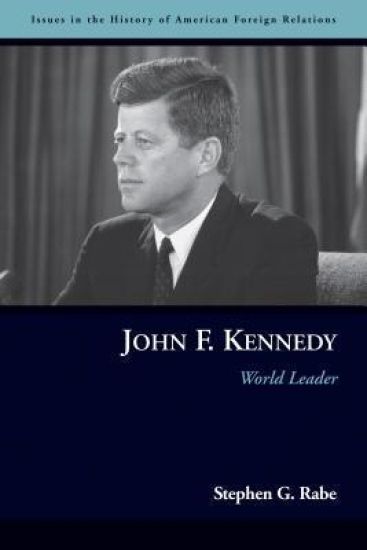
President John F. Kennedy remains a subject of fascination for both historians and citizens. Consistently ranked among the most popular U.S. presidents, Kennedy led the country during a time of rapid social change at home punctuated by critical foreign policy crises, among them the Bay of Pigs fiasco in Cuba, the showdown with the Soviet Union over the erection of the Berlin Wall, the Cuban missile crisis, and the escalation of American involvement in Vietnam.As Stephen G. Rabe explains in this introduction to American foreign policy at the height of the Cold War, Kennedy perceived himself as a foreign policy president. Time and again, the president used the threat of force, good diplomacy, and sound judgment to keep the world from falling into the abyss of nuclear war. But Kennedy did more than manage foreign policy crises. He launched major economic development programs for Latin America, India, and Egypt and dispatched Peace Corps volunteers around the world. He attempted to mediate the Arab-Israeli dispute and to stop the spread of nuclear weapons to China and Israel. Under Kennedy, the United States began for the first time to develop a policy for Africa.Taking a fresh look at Kennedy's wide-ranging efforts to change the world, Rabe devotes chapters to U.S. relations with the Soviet Union, Cuba, Latin America, and Vietnam. The author also evaluates Kennedy's approach to India, China, Egypt, and Israel and such African nations as Algeria, Angola, and South Africa. Rabe concludes by exploring whether Kennedy was contemplating a new approach toward the Soviet Union, one that, had Kennedy lived to see reelection, might have soon ushered in the era of détente.
John F. Kennedy

John F. Kennedy

Stephen G. Rabe

Potomac Books Inc
2010
nidottu
President John F. Kennedy remains a subject of fascination for both historians and citizens. Consistently ranked among the most popular U.S. presidents, Kennedy led the country during a time of rapid social change at home punctuated by critical foreign policy crises, among them the Bay of Pigs fiasco in Cuba, the showdown with the Soviet Union over the erection of the Berlin Wall, the Cuban missile crisis, and the escalation of American involvement in Vietnam.As Stephen G. Rabe explains in this introduction to American foreign policy at the height of the Cold War, Kennedy perceived himself as a foreign policy president. Time and again, the president used the threat of force, good diplomacy, and sound judgment to keep the world from falling into the abyss of nuclear war. But Kennedy did more than manage foreign policy crises. He launched major economic development programs for Latin America, India, and Egypt and dispatched Peace Corps volunteers around the world. He attempted to mediate the Arab-Israeli dispute and to stop the spread of nuclear weapons to China and Israel. Under Kennedy, the United States began for the first time to develop a policy for Africa.Taking a fresh look at Kennedy’s wide-ranging efforts to change the world, Rabe devotes chapters to U.S. relations with the Soviet Union, Cuba, Latin America, and Vietnam. The author also evaluates Kennedy’s approach to India, China, Egypt, and Israel and such African nations as Algeria, Angola, and South Africa. Rabe concludes by exploring whether Kennedy was contemplating a new approach toward the Soviet Union, one that, had Kennedy lived to see reelection, might have soon ushered in the era of détente.