Kirjojen hintavertailu. Mukana 11 628 027 kirjaa ja 12 kauppaa.

Kirjahaku

Etsi kirjoja tekijän nimen, kirjan nimen tai ISBN:n perusteella.

19 kirjaa tekijältä Stephen Harrison

The Contest

The Contest

Stephen Harrison

Cengage Learning Australia
2001
nidottu
Carl was the high-jump champion until Michael jumped higher! Encouraged by a friend, Carl joins an athletic club and becomes the best high jumper in his age group. What will happen when he next competes against Michael?
Managing the National Health Service

Managing the National Health Service

Stephen Harrison

Chapman and Hall
1988
nidottu
Provides an understanding, in the light of both political and economic developments, of what has been happening to NHS managers and professionals in the last decade. The book also explains the basis for various recommendations and related developments.
The Neo-Latin Verse of Urban VIII, Alexander VII and Leo XIII

The Neo-Latin Verse of Urban VIII, Alexander VII and Leo XIII

Stephen Harrison

BLOOMSBURY PUBLISHING PLC
2025
nidottu
A fascinating insight into the most talented Latin poets to occupy the Papal throne after Pius II Piccolomini in the 15th century, this book offers translations of and commentaries on the major poems of the three popes (all Italians): Urban VIII Barberini, Alexander VII Chigi and Leo XIII Pecci. Their highly accomplished Neo-Latin poems owe much to the major Latin poets and are significant instances of classical reception, but also cast an interesting light on their lives, times and papacies.Urban (elected pope in 1623) published a mixture of secular and religious verse, drawing on the hexameter epistles of Horace and the lyrics of Catullus and writing Horatian material in praise of Alessandro Farnese, governor of the Netherlands for Philip II of Spain, and the Spanish martyr St Laurence. Alexander (elected pope in 1655) like Urban combines secular and religious themes and often uses Horatian frameworks, writing hexameter accounts of some of the journeys he made as a papal diplomat in Germany and an Horatian ode on the fall of the Protestant stronghold of La Rochelle (1628). Leo’s poetry was mostly religious and published during his papacy (1878-1903); his Horatian ode on the new millennium of 1900 was widely read, and other works include an elegy which links a shrine of the Virgin with the Battle of Lepanto; an Horatian satire on moderate diet; and hymns to saints which combine early Christian and Horatian forms.
The Neo-Latin Verse of Urban VIII, Alexander VII and Leo XIII

The Neo-Latin Verse of Urban VIII, Alexander VII and Leo XIII

Stephen Harrison

BLOOMSBURY PUBLISHING PLC
2024
sidottu
A fascinating insight into the most talented Latin poets to occupy the Papal throne after Pius II Piccolomini in the 15th century, this book offers translations of and commentaries on the major poems of the three popes (all Italians): Urban VIII Barberini, Alexander VII Chigi and Leo XIII Pecci. Their highly accomplished Neo-Latin poems owe much to the major Latin poets and are significant instances of classical reception, but also cast an interesting light on their lives, times and papacies.Urban (elected pope in 1623) published a mixture of secular and religious verse, drawing on the hexameter epistles of Horace and the lyrics of Catullus and writing Horatian material in praise of Alessandro Farnese, governor of the Netherlands for Philip II of Spain, and the Spanish martyr St Laurence. Alexander (elected pope in 1655) like Urban combines secular and religious themes and often uses Horatian frameworks, writing hexameter accounts of some of the journeys he made as a papal diplomat in Germany and an Horatian ode on the fall of the Protestant stronghold of La Rochelle (1628). Leo’s poetry was mostly religious and published during his papacy (1878-1903); his Horatian ode on the new millennium of 1900 was widely read, and other works include an elegy which links a shrine of the Virgin with the Battle of Lepanto; an Horatian satire on moderate diet; and hymns to saints which combine early Christian and Horatian forms.
Victorian Horace

Victorian Horace

Stephen Harrison

Bloomsbury Academic
2018
nidottu
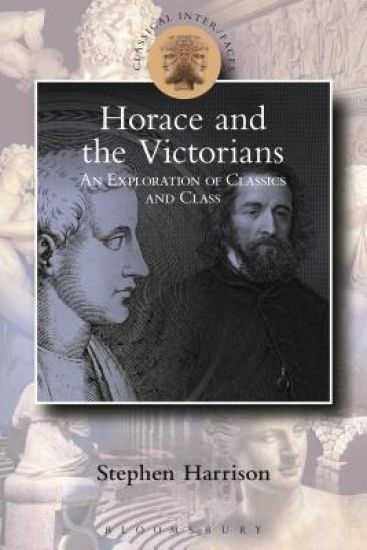
The poetry of Horace was central to Victorian male elite education and the ancient poet himself, suitably refashioned, became a model for the English gentleman. Horace and the Victorians examines the English reception of Horace in Victorian culture, a period which saw the foundations of the discipline of modern classical scholarship in England and of many associated and lasting social values. It shows that the scholarly study, translation and literary imitation of Horace in this period were crucial elements in reinforcing the social prestige of Classics as a discipline and its function as an indicator of ‘gentlemanly’ status through its domination of the elite educational system and its prominence in literary production. The book ends with an epilogue suggesting that the framework of study and reception of a classical author such as Horace, so firmly established in the Victorian era, has been modernised and ‘democratised’ in recent years, matching the movement of Classics from a discipline which reinforces traditional and conservative social values to one which can be seen as both marginal and liberal.
Victorian Horace

Victorian Horace

Stephen Harrison

Bloomsbury Academic
2017
sidottu
The poetry of Horace was central to Victorian male elite education and the ancient poet himself, suitably refashioned, became a model for the English gentleman. Horace and the Victorians examines the English reception of Horace in Victorian culture, a period which saw the foundations of the discipline of modern classical scholarship in England and of many associated and lasting social values. It shows that the scholarly study, translation and literary imitation of Horace in this period were crucial elements in reinforcing the social prestige of Classics as a discipline and its function as an indicator of ‘gentlemanly’ status through its domination of the elite educational system and its prominence in literary production. The book ends with an epilogue suggesting that the framework of study and reception of a classical author such as Horace, so firmly established in the Victorian era, has been modernised and ‘democratised’ in recent years, matching the movement of Classics from a discipline which reinforces traditional and conservative social values to one which can be seen as both marginal and liberal.
Kingship and Empire under the Achaemenids, Alexander the Great and the Early Seleucids
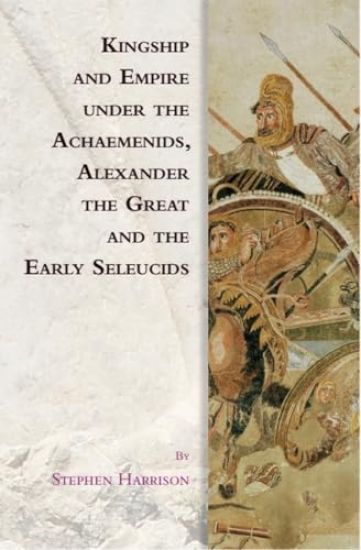
This book offers the first systematic, comparative analysis of the ideology of kingship and empire under the Achaemenids, Alexander the Great and the early Seleucids. It explores key issues thematically such as legitimation, representations of empire and royal space. Through this method, Stephen Harrison breaks traditional periodisation offering new insights into long-term trends. The book challenges existing narratives about the relationship between the Achaemenids and their successors.Rather than focusing on the mere facts of continuity and change, the study advocates for a more complex understanding of the Achaemenids' impact on monarchical ideology under Alexander and the Seleucids. Harrison's comparative approach brings the three empires into dialogue with one another and thus treats them all equally through this lens. The methodology highlights the uniqueness of particular strategies deployed by different rulers and isolate ideas which were distinctively 'Achaemenid', 'Alexandrine' or 'Seleucid' as opposed merely to identifying monarchical commonalities.
Alexander the Great

Alexander the Great

Stephen Harrison

REAKTION BOOKS
2025
sidottu
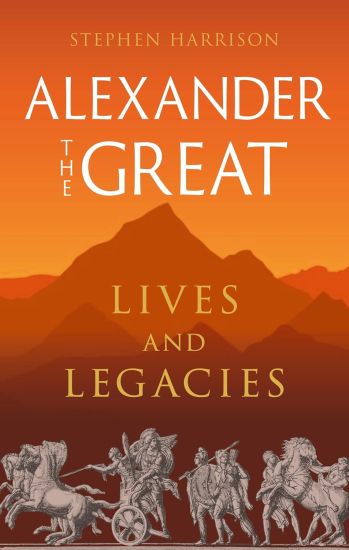
This book offers a fresh perspective on the reign of Alexander the Great. It re-examines Alexander’s military victories and personality, while also exploring the impact of his campaigns on the people he conquered. Alexander’s story, Stephen Harrison argues, is one that includes the vital roles that other figures played in historical events. By considering the social and intellectual currents of the last two decades, Harrison highlights how changing contemporary experiences shape historical interpretations. Moving beyond polarized debates about Alexander, he provides a nuanced discussion of Alexander’s achievements and impact. The book presents an Alexander for the twenty-first century, offering new insights into how and why historical interpretations of him have changed.
The Falcon

The Falcon

Stephen Harrison

Nelson Price Milburn
2000
nidottu
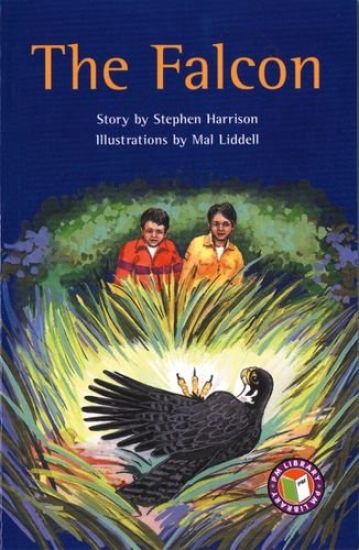
Carlos and Ricky arrive at a campsite with their father, where they discover a large injured bird. Dad identifies it as a falcon and he calls a nearby rescue center. Max and Lisa, from Raptor Center, put the falcon in a cageand take it back back with them. The falcon does well and Max suggests the boys come to watch the release of the falcon in a few weeks. Later, the boys and their parents go to the place where the bird will be released. Their fater tells them they should feel proud about helping to save the falcon, which flies off into the distance.
The Editors

The Editors

Stephen Harrison

Inkshares
2024
nidottu
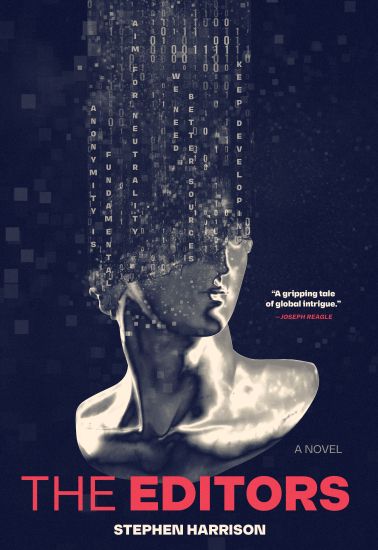
"Strikingly relevant" Taylor Lorenz], The Editors is unnervingly familiar to anyone who has googled, scrolled, or browsed online in the past decade. Aim for Neutrality. We Need Better Sources. Anonymity is Fundamental. Keep Developing. The editors know these principles. The editors follow them every day - usually. The editors may not be recognized on the street, but they craft the information that is seen on nearly every internet search. Through Infopendium, a global, crowd-sourced internet encyclopedia, the editors influence the world. Freelance journalist Morgan Wentworth, recently laid off from PopFeed News, attends the Global Infopendium Conference in New York expecting a straightforward story to help pay the rent. But the so-called "pendium people" are full of surprises. PhDs rub shoulders with high school students, all quoting the project's rules and regulations like a second language. Sure, millions of people see the facts curated by these editors, but who really cares about the free encyclopedia? When a hacker attacks the conference and posts a cryptic message, it becomes clear that somebody does. And Morgan decides to find out who. But the path through an online information war is far from clear. Foreign governments, billionaires, and a global virus threaten to sway the truth on Infopendium. And far from Morgan's sight, in places as different as Beijing and Kansas, some of the editors have plans of their own . . .
Horatian Readings: Poetic and Literary Texture
This volume collects eighteen pieces on Horace written over the last two decades. They share a common interest in the close reading of Horace’s poems, especially of the Odes, and are intended to stand alongside the more formal analyses in my commentary on Odes 2 (2017) and the readings of Horatian poems in my monograph on generic enrichment (2007). These pieces share a number of particular concerns linked to issues prominent in classical scholarship over the period: literary career criticism, intratextuality, intertextual interaction with other poets and genres, while a further topic is the perennial question of Horace’s negotiation of the major political issues of his time and the nature of his engagement with the Augustan regime. Like all the Augustan poets, Horace was writing for a Roman readership which had been sharply divided by the internecine wars of the 40s and 30s BCE, and his work can express the perspective of the defeated as well as that of the victors, just as Vergil’s does in the Aeneid. The volume emphasises the original cultural context (and readers) of the poems, and seeks to present Horace’s poetry with the apparatus needed for its modern literary study by scholars and advanced students.
Roman Readings: Latin Poetry from Lucretius to Ovid
This volume collects seventeen pieces on the classical Latin poetry of the late Republican and Augustan period written and published since 2000. They share a common interest in the close reading of poems, with a particular focus on the issues of genre, intertextuality, poetic unity, political allusion, imagery and literary history. Topics treated include the proem to Lucretius I and its relation to Ennian models, issues of unity and interpretation in five poems of Catullus. On Vergil there are two studies of the similes of the Aeneid, one of Aeneas’ narrative in Aeneid 2, one of Aeneid 6 as a journey into the epic past, one of Sibylline elements in the Aeneid and one of the language used by the Aeneid’s gods, plus a new contribution to the old issue of the identity of the child in Eclogue 4. On Propertius, there are accounts of 4.9 and its contemporary political significance, and of how some other elegies in Book 4 function as expanded epigrams. The chapter on Ovid looks at the chronology and shape of his literary career. Taken together, these pieces seek to present these central texts of Roman poetry for modern literary study by scholars and advanced students.