Kirjojen hintavertailu. Mukana 11 699 587 kirjaa ja 12 kauppaa.

Kirjahaku

Etsi kirjoja tekijän nimen, kirjan nimen tai ISBN:n perusteella.

7 kirjaa tekijältä Stephen J.A. Ward

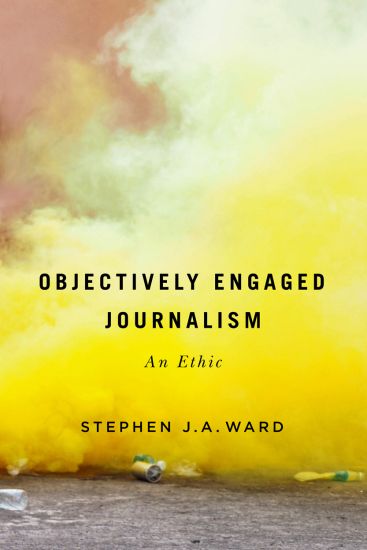
Objectively Engaged Journalism

Objectively Engaged Journalism

Stephen J.A. Ward

McGill-Queen's University Press
2020
sidottu
A timely call for a new ethic of journalism engagement for today's troubled media sphere, Objectively Engaged Journalism argues that media should be neither neutral nor partisan but engaged in protecting egalitarian democracy. It shows how journalists, professional or citizen, can be both objective in method and dedicated to improving a global public sphere toxic with disinformation, fake news, and extremism.Drawing from history, ethics, and current media issues, Stephen Ward rejects the ideals of neutrality and "just the facts" objectivity, showing how they are based on invalid dualistic thinking with deep roots in Western culture. He presents a theory of pragmatic objectivity and applies it to journalism. Journalism's role in interpreting culture, he argues, needs a form of objectivity that embraces human strengths and limitations.Defining responsible journalism as situated, imperfect inquiry, Objectively Engaged Journalism is one of the first systematic studies of the ethical foundations of engaged journalism for a media that is increasingly perspectival and embedded in society.
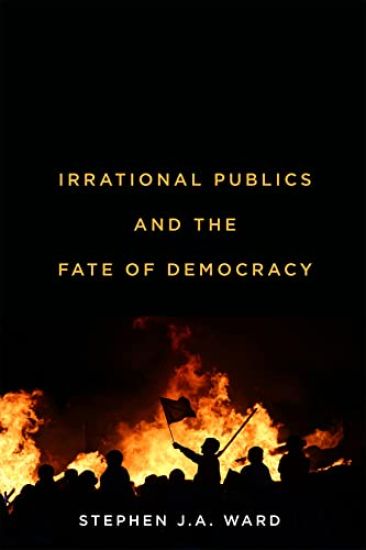
Irrational Publics and the Fate of Democracy

Irrational Publics and the Fate of Democracy

Stephen J.A. Ward

MCGILL-QUEEN'S UNIVERSITY PRESS
2024
sidottu
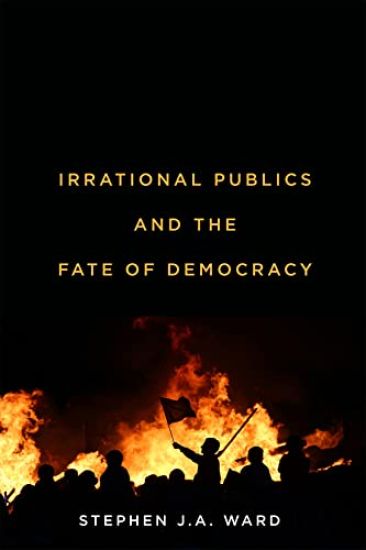
Across cultures, democracies struggle with intolerant groups, misinformation, social media conspiracies, and extreme populists. Egalitarian cultures cannot always withstand this swing towards the irrational.In Irrational Publics and the Fate of Democracy Stephen Ward combines history and evolutionary psychology for a comprehensive view of the problem, arguing that social irrationality is likely to occur when social tensions trigger a person’s enemy stance: ancient extreme traits in human nature such as aggressiveness, desire for domination, paranoia of the other, and us-versus-them tribalism. Analyzing eruptions of public irrationality – from apocalyptic medieval crusades and Nazi doctors in extermination camps to suicidal cults – Ward presents his evolutionary theory of public irrationalism, demonstrating that human nature has both extreme Darwinian traits promoting competition and sociable traits of cooperation and empathy. The issue is which set of traits will be activated by the social ecology. Extreme traits, once adaptive when humans were hunter-gatherers, have become maladaptive and dangerous. Catalyzed by intolerant media and demagogues, the swing towards the irrational weakens democracy and may lead to human extinction through nuclear holocaust.Irrational Publics and the Fate of Democracy concludes with practical recommendations on what society should do to resist the engines of unreason within and without us.
Irrational Publics and the Fate of Democracy

Irrational Publics and the Fate of Democracy

Stephen J.A. Ward

MCGILL-QUEEN'S UNIVERSITY PRESS
2024
nidottu
Across cultures, democracies struggle with intolerant groups, misinformation, social media conspiracies, and extreme populists. Egalitarian cultures cannot always withstand this swing towards the irrational.In Irrational Publics and the Fate of Democracy Stephen Ward combines history and evolutionary psychology for a comprehensive view of the problem, arguing that social irrationality is likely to occur when social tensions trigger a person’s enemy stance: ancient extreme traits in human nature such as aggressiveness, desire for domination, paranoia of the other, and us-versus-them tribalism. Analyzing eruptions of public irrationality – from apocalyptic medieval crusades and Nazi doctors in extermination camps to suicidal cults – Ward presents his evolutionary theory of public irrationalism, demonstrating that human nature has both extreme Darwinian traits promoting competition and sociable traits of cooperation and empathy. The issue is which set of traits will be activated by the social ecology. Extreme traits, once adaptive when humans were hunter-gatherers, have become maladaptive and dangerous. Catalyzed by intolerant media and demagogues, the swing towards the irrational weakens democracy and may lead to human extinction through nuclear holocaust.Irrational Publics and the Fate of Democracy concludes with practical recommendations on what society should do to resist the engines of unreason within and without us.
Global Journalism Ethics

Global Journalism Ethics

Stephen J.A. Ward

McGill-Queen's University Press
2010
sidottu
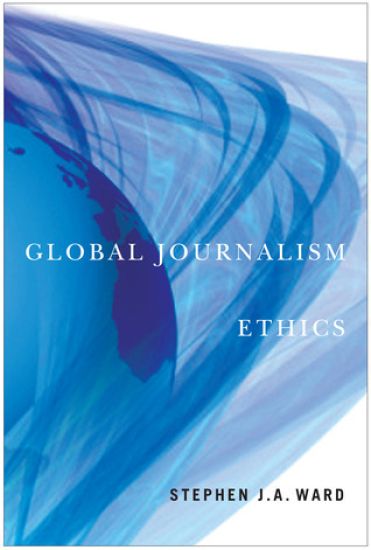
Stephen Ward argues that present media practices are narrowly based within the borders of single country and thus unable to successfully inform the public about a globalized world. Presenting an ethical framework for work in multimedia, the author extends John Rawl's theories of justice and the human good to redefine the aims for which journalism should strive and then applies this new foundation to issues such as the roles of patriotism and objectivity in journalism. An innovative argument that presents a necessary corrective to contemporary media practices, Global Journalism Ethics is a theoretically rich study for journalists on the air, in print, and on the internet.
Global Journalism Ethics

Global Journalism Ethics

Stephen J.A. Ward

McGill-Queen's University Press
2010
nidottu
Stephen Ward argues that present media practices are narrowly based within the borders of single country and thus unable to successfully inform the public about a globalized world. Presenting an ethical framework for work in multimedia, the author extends John Rawl's theories of justice and the human good to redefine the aims for which journalism should strive and then applies this new foundation to issues such as the roles of patriotism and objectivity in journalism. An innovative argument that presents a necessary corrective to contemporary media practices, Global Journalism Ethics is a theoretically rich study for journalists on the air, in print, and on the internet.
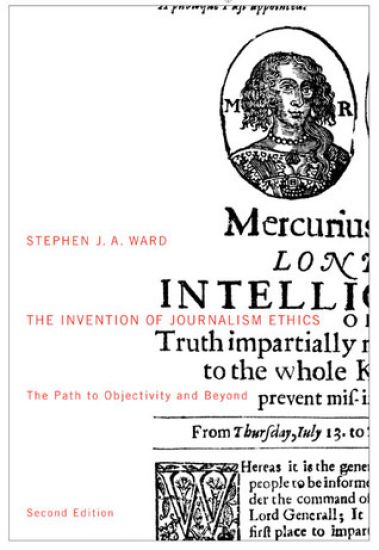
The Invention of Journalism Ethics, Second Edition

The Invention of Journalism Ethics, Second Edition

Stephen J.A. Ward

McGill-Queen's University Press
2015
sidottu
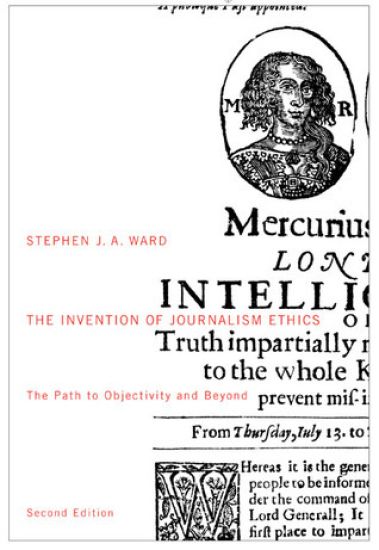
Does objectivity exist in the news media? In The Invention of Journalism Ethics, Stephen Ward argues that given the current emphasis on interpretation, analysis, and perspective, journalists and the public need a new theory of objectivity. He explores the varied ethical assertions of journalists over the past few centuries, focusing on the changing relationship between journalist and audience. This historical analysis leads to an innovative theory of pragmatic objectivity that enables journalists and the public to recognize and avoid biased and unbalanced reporting. Ward convincingly demonstrates that journalistic objectivity is not a set of absolute standards but the same fallible but reasonable objectivity used for making decisions in other professions and public institutions. Considered a classic in the field since its first publication in 2004, this second edition includes new chapters that bring the book up to speed with journalism ethics in the twenty-first century by focusing on the growing dominance of online journalism and calling for a radical approach to journalism ethics reform. Ward also addresses important developments that have occurred in the last decade, including the emergence of digital journalism ethics and global journalism ethics.
The Invention of Journalism Ethics, Second Edition

The Invention of Journalism Ethics, Second Edition

Stephen J.A. Ward

McGill-Queen's University Press
2015
nidottu
Does objectivity exist in the news media? In The Invention of Journalism Ethics, Stephen Ward argues that given the current emphasis on interpretation, analysis, and perspective, journalists and the public need a new theory of objectivity. He explores the varied ethical assertions of journalists over the past few centuries, focusing on the changing relationship between journalist and audience. This historical analysis leads to an innovative theory of pragmatic objectivity that enables journalists and the public to recognize and avoid biased and unbalanced reporting. Ward convincingly demonstrates that journalistic objectivity is not a set of absolute standards but the same fallible but reasonable objectivity used for making decisions in other professions and public institutions. Considered a classic in the field since its first publication in 2004, this second edition includes new chapters that bring the book up to speed with journalism ethics in the twenty-first century by focusing on the growing dominance of online journalism and calling for a radical approach to journalism ethics reform. Ward also addresses important developments that have occurred in the last decade, including the emergence of digital journalism ethics and global journalism ethics.