Kirjojen hintavertailu. Mukana 11 342 296 kirjaa ja 12 kauppaa.

Kirjahaku

Etsi kirjoja tekijän nimen, kirjan nimen tai ISBN:n perusteella.

7 kirjaa tekijältä Stephen Kite

Building Ruskin's Italy

Building Ruskin's Italy

Stephen Kite

Routledge
2016
nidottu
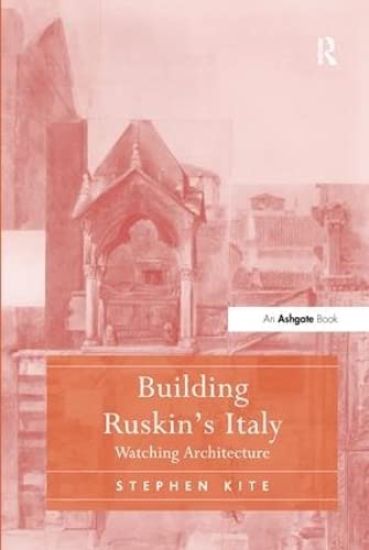
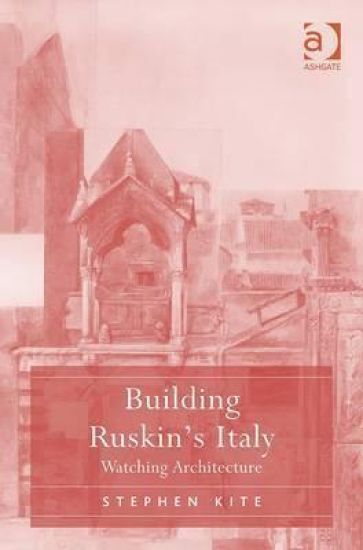
Based on extensive fieldwork, and research into John Ruskin's still little-interpreted archival material, notebooks and drawings (in the Ruskin Library, Lancaster University, UK and elsewhere), Stephen Kite offers an unprecedented account of the evolution of Ruskin's architectural thinking and observation in the context of Italy where his watching of building achieved its greatest intensity. Venice naturally figures large in a work that also examines other key sites including Verona, Lucca, Pisa, Florence, Milan and Monza; here, the fabrics are vividly read in their contexts against the rich evidence of Ruskin's diaries, his pocket-book sketches, architectural worksheets, drawings, and daguerrotypes (the early form of photography), and the drafts and published editions of the texts. Kite presents the complex story of Ruskin's visual thinking in architecture as a narrative of deepening interpretation and representation, focusing on the humbler monuments of Italy. He shows how Ruskin's early picturesque naturalism was transformed by the realisation that to understand the built realities confronting him in Italy demanded a closer engagement with the substance of the stones themselves; reflecting Ruskin's sense of his task as a near-archaeological gleaning and gathering of remains 'hidden in many a grass grown court, and silent pathway, and lightless canal'.
Shaping the Surface

Shaping the Surface

Stephen Kite

BLOOMSBURY PUBLISHING PLC
2022
nidottu
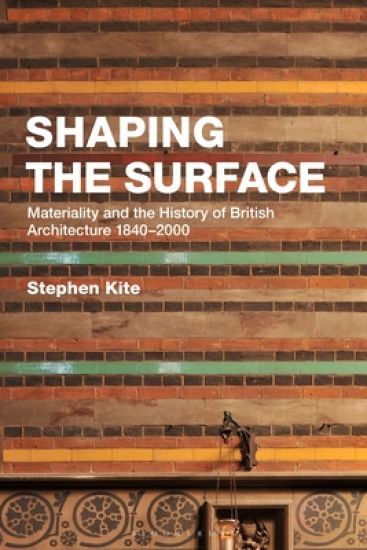
Shaping the Surface explores the history of modern British architecture through the lens of surface, materiality and decoration.Picking up on a trait that art historian Nikolaus Pevsner first identified as a ‘national mania for beautiful surface quality’, this book makes a new contribution to architectural history and visual culture in its detailed examination of the surfaces of British architecture from the middle of the 19th century up to the turn of the 21st century. Tracing this continuing sensibility to surface all the way through to the modern era, it explores how and why surface and materiality have featured so heavily in recent architectural tradition, examining the history of British architecture through a selection of key cultural moments and movements from Romanticism and the Arts and Crafts, to Brutalism, High-Tech, Post-Modernism, Neo-Vernacular, and the New Materiality. Embedded within the narrative is the question of whether such national characters can exist in architecture at all – and indeed the extent to which it is possible to identify a British architectural consciousness in an architectural tradition characterised by its continuous importation of theories, ideas, materials and people from around the globe.Shaping the Surface provides a deep critique and meditation on the importance of surface and materiality for architects, designers, and historians everywhere - in Britain and beyond - while it also serves as a thematic introduction to modern British architectural history, with in-depth readings of the works of many key British architects, artists, and critics from Ruskin and William Morris to Alison and Peter Smithson, Eduardo Paolozzi, Richard Rogers and Caruso St John.
Shaping the Surface

Shaping the Surface

Stephen Kite

BLOOMSBURY PUBLISHING PLC
2022
sidottu
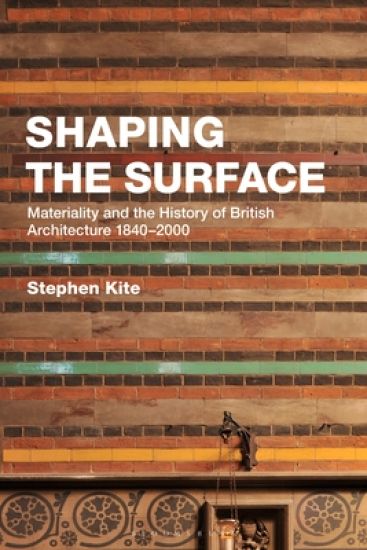
Shaping the Surface explores the history of modern British architecture through the lens of surface, materiality and decoration.Picking up on a trait that art historian Nikolaus Pevsner first identified as a ‘national mania for beautiful surface quality’, this book makes a new contribution to architectural history and visual culture in its detailed examination of the surfaces of British architecture from the middle of the 19th century up to the turn of the 21st century. Tracing this continuing sensibility to surface all the way through to the modern era, it explores how and why surface and materiality have featured so heavily in recent architectural tradition, examining the history of British architecture through a selection of key cultural moments and movements from Romanticism and the Arts and Crafts, to Brutalism, High-Tech, Post-Modernism, Neo-Vernacular, and the New Materiality. Embedded within the narrative is the question of whether such national characters can exist in architecture at all – and indeed the extent to which it is possible to identify a British architectural consciousness in an architectural tradition characterised by its continuous importation of theories, ideas, materials and people from around the globe.Shaping the Surface provides a deep critique and meditation on the importance of surface and materiality for architects, designers, and historians everywhere - in Britain and beyond - while it also serves as a thematic introduction to modern British architectural history, with in-depth readings of the works of many key British architects, artists, and critics from Ruskin and William Morris to Alison and Peter Smithson, Eduardo Paolozzi, Richard Rogers and Caruso St John.
Building Ruskin's Italy

Building Ruskin's Italy

Stephen Kite

Ashgate Publishing Limited
2012
sidottu
Based on extensive fieldwork, and research into John Ruskin's still little-interpreted archival material, notebooks and drawings (in the Ruskin Library, Lancaster University, UK and elsewhere), Stephen Kite offers an unprecedented account of the evolution of Ruskin's architectural thinking and observation in the context of Italy where his watching of building achieved its greatest intensity. Venice naturally figures large in a work that also examines other key sites including Verona, Lucca, Pisa, Florence, Milan and Monza; here, the fabrics are vividly read in their contexts against the rich evidence of Ruskin's diaries, his pocket-book sketches, architectural worksheets, drawings, and daguerrotypes (the early form of photography), and the drafts and published editions of the texts. Kite presents the complex story of Ruskin's visual thinking in architecture as a narrative of deepening interpretation and representation, focusing on the humbler monuments of Italy. He shows how Ruskin's early picturesque naturalism was transformed by the realisation that to understand the built realities confronting him in Italy demanded a closer engagement with the substance of the stones themselves; reflecting Ruskin's sense of his task as a near-archaeological gleaning and gathering of remains 'hidden in many a grass grown court, and silent pathway, and lightless canal'.
Shadow-Makers

Shadow-Makers

Stephen Kite

Bloomsbury Academic
2017
nidottu
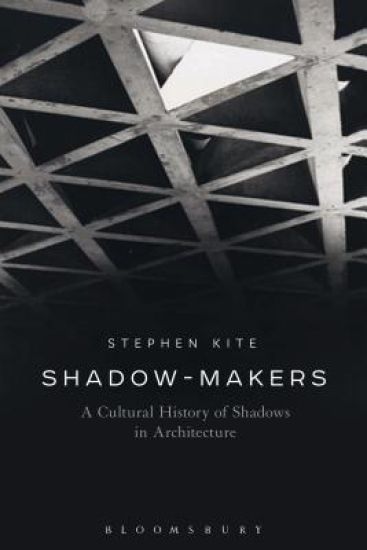
The making of shadows is an act as old as architecture itself. From the gloom of the medieval hearth through to the masterworks of modernism, shadows have been an essential yet neglected presence in architectural history.Shadow-Makers tells for the first time the history of shadows in architecture. It weaves together a rich narrative – combining close readings of significant buildings both ancient and modern with architectural theory and art history – to reveal the key places and moments where shadows shaped architecture in distinctive and dynamic ways. It shows how shadows are used as an architectural instrument of form, composition, and visual effect, while also exploring the deeper cultural context – tracing differing conceptions of their meaning and symbolism, whether as places of refuge, devotion, terror, occult practice, sublime experience or as metaphors of the unconscious.Within a chronological framework encompassing medieval, baroque, enlightenment, sublime, picturesque, and modernist movements, a wide range of topics are explored, from Hawksmoor’s London churches, Japanese temple complexes and the shade-patterns of Islamic cities, to Ruskin in Venice and Aldo Rossi and Louis Kahn in the 20th century. This beautifully-illustrated study seeks to understand the work of these shadow-makers through their drawings, their writings, and through the masterpieces they built.