Kirjojen hintavertailu. Mukana 11 342 296 kirjaa ja 12 kauppaa.

Kirjahaku

Etsi kirjoja tekijän nimen, kirjan nimen tai ISBN:n perusteella.

10 kirjaa tekijältä Stephen L. Carter

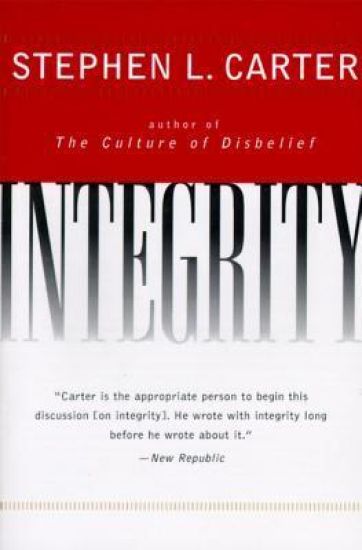
Integrity

Integrity

Stephen L. Carter

HARPER PERENNIAL
1996
nidottu
Why do we care more about winning than about playing by the rules? Integrity - all of us are in favor of it, but nobody seems to know how to make sure that we get it. From presidential candidates to crusading journalists to the lords of collegiate sports, everybody promises to deliver integrity, yet all too often, the promises go unfulfilled. Stephen Carter examines why the virtue of integrity holds such sway over the American political imagination. By weaving together insights from philosophy, theology, history and law, along with examples drawn from current events and a dose of personal experience, Carter offers a vision of integrity that has implications for everything from marriage and politics to professional football. He discusses the difficulties involved in trying to legislate integrity as well as the possibilities for teaching it. As the Cleveland Plain Dealer said, "In a measured and sensible voice, Carter attempts to document some of the paradoxes and pathologies that result from pervasive ethical realism... If the modern drift into relativism has left us in a cultural and political morass, Carter suggests that the assumption of personal integrity is the way out."
Civility

Civility

Stephen L. Carter

HARPER PERENNIAL
1999
nidottu
A leading intellectual and scholar considers the causes and nature of the moral crisis in America today and offers ways in which families, individuals, and politicians can improve the country by adhering to basic principles of civility. Reprint. 35,000 first printing.
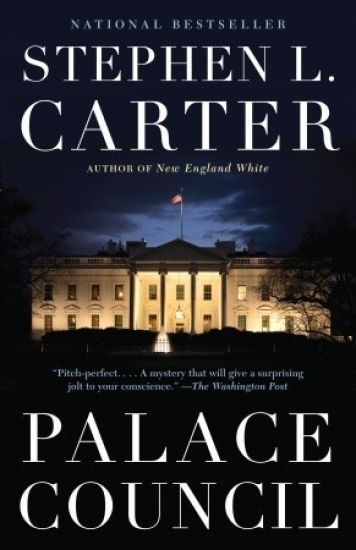
Palace Council

Palace Council

Stephen L. Carter

VINTAGE
2009
nidottu
NATIONAL BESTSELLER - FROM THE AUTHOR OF THE EMPEROR OF OCEAN PARK, INSPIRATION FOR THE UPCOMING MGM+ ORIGINAL SERIES - A gripping political thriller set against the backdrop of Watergate, Vietnam, and the Nixon White House. Philmont Castle is a man who has it all: wealth, respect, and connections. He's the last person you'd expect to fall prey to a murderer, but then his body is found on the grounds of a Harlem mansion by the young writer Eddie Wesley, who along with the woman he loves, Aurelia Treene, is pulled into a twenty-year search for the truth. The disappearance of Eddie's sister June makes their investigation even more troubling. As Eddie and Aurelia uncover layer upon layer of intrigue, their odyssey takes them from the wealthy drawing rooms of New York through the shady corners of radical politics all the way to the Oval Office and President Nixon himself.
New England White

New England White

Stephen L. Carter

VINTAGE
2008
nidottu
NATIONAL BESTSELLER - FROM THE AUTHOR OF THE EMPEROR OF OCEAN PARK, INSPIRATION FOR THE UPCOMING MGM+ ORIGINAL SERIES Lemaster Carlyle, the president of the country's most prestigious university, and his wife, Julie, the divinity school's deputy dean, are America's most prominent and powerful African American couple. Driving home through a swirling blizzard late one night, the couple skids off the road. Near the sight of their accident they discover a dead body. To her horror, Julia recognizes the body as a prominent academic and one of her former lovers. In the wake of the death, the icy veneer of their town Elm Harbor, a place Julie calls "the heart of whiteness," begins to crack, having devastating consequences for a prominent local family and sending shock waves all the way to the White House.
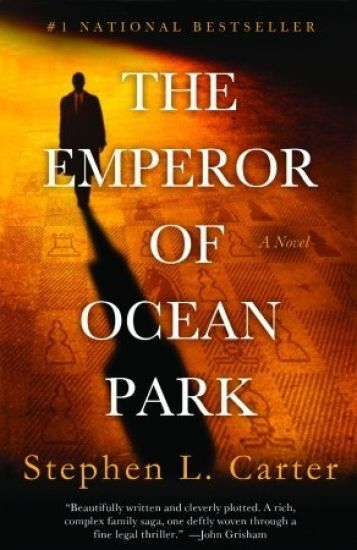
The Emperor of Ocean Park

The Emperor of Ocean Park

Stephen L. Carter

VINTAGE
2003
nidottu
The most talked about fiction debut in years: a large, suspense-laden thriller that is also a novel of brilliantly astute social observation focusing on two fascinating worlds: that of the New York-Washington black upper middle class, and the complex world of an Ivy League law school. Judge Oliver Garland has just died in suspicious circumstances. Conservative and famously controversial, Garland has made many enemies. Many years ago, he'd earned a judge's highest prize: a Supreme Court nomination. But in a scene of bitter humiliation in front of a televised audience and before the eyes of his family, he had to withdraw his nomination. It was a national scandal, and a private agony, one from which he never recovered. Now, years later, the judge's death raises even more questions than his life did and seems to be leading to a second, even more terrible scandal. Could he have been murdered? He has left a strange message for his son Talcott, a professor at an elite Ivy League law school - entrusting him with 'the arrangements' - a mysterious puzzle that only Tal can unlock, and only by unearthing the ambiguities of his father's turbulent past. When another man is found dead, and then another, Talcott must risk life, marriage and reputation, following the clues his father left him. Intricate, superbly written, often scathingly funny, The Emperor of Ocean Park is a triumphant work of fiction, a brilliantly crafted tapestry of ambition, family secrets, murder, and justice gone terribly wrong.
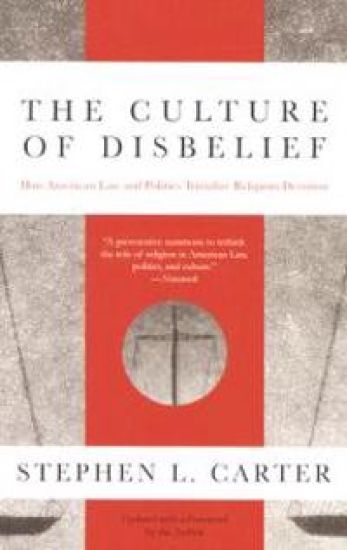
The Culture of Disbelief

The Culture of Disbelief

Stephen L. Carter

Bantam Doubleday Dell Publishing Group
1994
pokkari
The Culture Of Disbelief has been the subject of an enormous amount of media attention from the first moment it was published. Hugely successful in hardcover, the Anchor paperback is sure to find a large audience as the ever-increasing, enduring debate about the relationship of church and state in America continues. In The Culture Of Disbelief, Stephen Carter explains how we can preserve the vital separation of church and state while embracing rather than trivializing the faith of millions of citizens or treating religious believers with disdain. What makes Carter's work so intriguing is that he uses liberal means to arrive at what are often considered conservative ends. Explaining how preserving a special role for religious communities can strengthen our democracy, The Culture Of Disbelief recovers the long tradition of liberal religious witness (for example, the antislavery, antisegregation, and Vietnam-era antiwar movements). Carter argues that the problem with the 1992 Republican convention was not the fact of open religious advocacy, but the political positions being advocated. "Rational argument rarely seems as warm, as human, as it does in this book...Carter leads the reader to contemplate the embattled constitutional wall between the state and religion, and he does so without furor, without dogma, with only the qualities he envisions in the ideal public square: moderation, restraint, respect." -- The New Yorker.
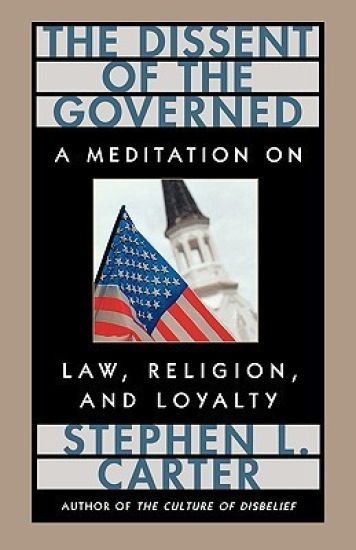
The Dissent of the Governed

The Dissent of the Governed

Stephen L. Carter

Harvard University Press
1999
nidottu
Between loyalty and disobedience; between recognition of the law’s authority and realization that the law is not always right: In America, this conflict is historic, with results as glorious as the mass protests of the civil rights movement and as inglorious as the armed violence of the militia movement. In an impassioned defense of dissent, Stephen L. Carter argues for the dialogue that negotiates this conflict and keeps democracy alive. His book portrays an America dying from a refusal to engage in such a dialogue, a polity where everybody speaks, but nobody listens.The Dissent of the Governed is an eloquent diagnosis of what ails the American body politic—the unwillingness of people in power to hear disagreement unless forced to—and a prescription for a new process of response. Carter examines the divided American political character on dissent, with special reference to religion, identifying it in unexpected places, with an eye toward amending it before it destroys our democracy.At the heart of this work is a rereading of the Declaration of Independence that puts dissent, not consent, at the center of the question of the legitimacy of democratic government. Carter warns that our liberal constitutional ethos—the tendency to assume that the nation must everywhere be morally the same—pressures citizens to be other than themselves when being themselves would lead to disobedience. This tendency, he argues, is particularly hard on religious citizens, whose notion of community may be quite different from that of the sovereign majority of citizens. His book makes a powerful case for the autonomy of communities—especially but not exclusively religious—into which democratic citizens organize themselves as a condition for dissent, dialogue, and independence. With reference to a number of cases, Carter shows how disobedience is sometimes necessary to the heartbeat of our democracy—and how the distinction between challenging accepted norms and challenging the sovereign itself, a distinction crucial to the Declaration of Independence, must be kept alive if Americans are to progress and prosper as a nation.
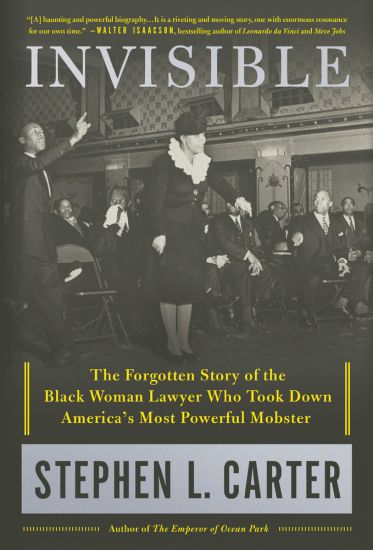
Invisible: The Forgotten Story of the Black Woman Lawyer Who Took Down America's Most Powerful Mobster
The bestselling author delves into his past and discovers the inspiring story of his grandmother's extraordinary life She was black and a woman and a prosecutor, a graduate of Smith College and the granddaughter of slaves, as dazzlingly unlikely a combination as one could imagine in New York of the 1930s--and without the strategy she devised, Lucky Luciano, the most powerful Mafia boss in history, would never have been convicted. When special prosecutor Thomas E. Dewey selected twenty lawyers to help him clean up the city's underworld, she was the only member of his team who was not a white male. Eunice Hunton Carter, Stephen Carter's grandmother, was raised in a world of stultifying expectations about race and gender, yet by the 1940s, her professional and political successes had made her one of the most famous black women in America. But her triumphs were shadowed by prejudice and tragedy. Greatly complicating her rise was her difficult relationship with her younger brother, Alphaeus, an avowed Communist who--together with his friend Dashiell Hammett--would go to prison during the McCarthy era. Yet she remained unbowed. Moving, haunting, and as fast-paced as a novel, Invisible tells the true story of a woman who often found her path blocked by the social and political expectations of her time. But Eunice Carter never accepted defeat, and thanks to her grandson's remarkable book, her long forgotten story is once again visible.
Invisible: The Forgotten Story of the Black Woman Lawyer Who Took Down America's Most Powerful Mobster
The bestselling author delves into his past and discovers the inspiring story of his grandmother's extraordinary life She was black and a woman and a prosecutor, a graduate of Smith College and the granddaughter of slaves, as dazzlingly unlikely a combination as one could imagine in New York of the 1930s--and without the strategy she devised, Lucky Luciano, the most powerful Mafia boss in history, would never have been convicted. When special prosecutor Thomas E. Dewey selected twenty lawyers to help him clean up the city's underworld, she was the only member of his team who was not a white male. Eunice Hunton Carter, Stephen Carter's grandmother, was raised in a world of stultifying expectations about race and gender, yet by the 1940s, her professional and political successes had made her one of the most famous black women in America. But her triumphs were shadowed by prejudice and tragedy. Greatly complicating her rise was her difficult relationship with her younger brother, Alphaeus, an avowed Communist who--together with his friend Dashiell Hammett--would go to prison during the McCarthy era. Yet she remained unbowed. Moving, haunting, and as fast-paced as a novel, Invisible tells the true story of a woman who often found her path blocked by the social and political expectations of her time. But Eunice Carter never accepted defeat, and thanks to her grandson's remarkable book, her long forgotten story is once again visible.