Kirjojen hintavertailu. Mukana 11 342 296 kirjaa ja 12 kauppaa.

Kirjahaku

Etsi kirjoja tekijän nimen, kirjan nimen tai ISBN:n perusteella.

6 kirjaa tekijältä Stephen Morton

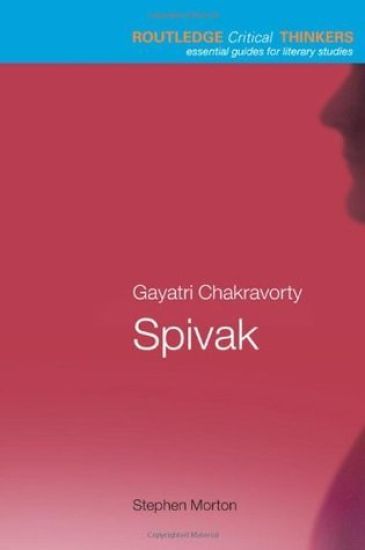
Gayatri Chakravorty Spivak

Gayatri Chakravorty Spivak

Stephen Morton

Routledge
2002
sidottu
Gayatri Chakravorty Spivak offers an overtly political challenge to the way we think about literature and culture. As she highlights the many legacies of colonialism, she re-defines the ethical horizons of contemporary critical thought. This volume focuses on her key theoretical concepts, intellectual context and critical reception, providing an accessible introduction to one of the most important thinkers of our time. Stephen Morton introduces Spivak's crucial work through an analysis of such issues as: * methodology and Spivak's 'difficult' style * deconstructive strategies * third world women, the concept of the 'subaltern' and the critique of western feminism * re-reading Marx for the global capitalist era * Spivak's contribution to colonial discourse studies and postcolonial theory. Having examined the ways in which Spivak has transformed contemporary cultural theory, and in particular feminist and postcolonial thought, Morton concludes with a guide to reading Spivak's work and that of her critics. Essential for students of literature or cultural studies, this volume is the ideal companion for a first encounter with Spivak's remarkable texts.
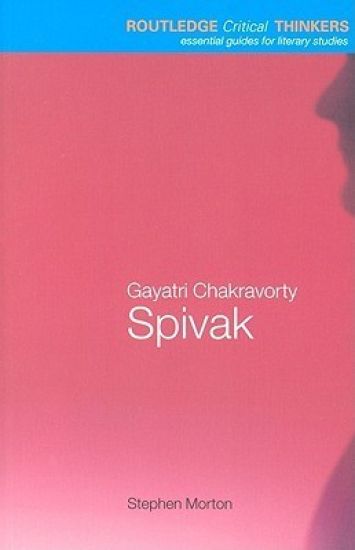
Gayatri Chakravorty Spivak

Gayatri Chakravorty Spivak

Stephen Morton

Routledge
2002
nidottu
Gayatri Chakravorty Spivak offers an overtly political challenge to the way we think about literature and culture. As she highlights the many legacies of colonialism, she re-defines the ethical horizons of contemporary critical thought. This volume focuses on her key theoretical concepts, intellectual context and critical reception, providing an accessible introduction to one of the most important thinkers of our time. Stephen Morton introduces Spivak's crucial work through an analysis of such issues as: * methodology and Spivak's 'difficult' style * deconstructive strategies * third world women, the concept of the 'subaltern' and the critique of western feminism * re-reading Marx for the global capitalist era * Spivak's contribution to colonial discourse studies and postcolonial theory. Having examined the ways in which Spivak has transformed contemporary cultural theory, and in particular feminist and postcolonial thought, Morton concludes with a guide to reading Spivak's work and that of her critics. Essential for students of literature or cultural studies, this volume is the ideal companion for a first encounter with Spivak's remarkable texts.
Gayatri Spivak

Gayatri Spivak

Stephen Morton

Polity Press
2006
nidottu
Gayatri Chakravorty Spivaks seminal contribution to contemporary thought defies disciplinary boundaries. From her early translations of Derrida to her subsequent engagement with Marxism, feminism and postcolonial studies and her recent work on human rights, the war on terror and globalization, she has proved to be one of the most vital of present-day thinkers. In this book Stephen Morton offers a wide-ranging introduction to and critique of Spivaks work. He examines her engagements with philosophers and other thinkers from Kant to Paul de Man, feminists from Cixous to Helie-Lucas and literary texts by Charlotte Bronte, J. M. Coetzee, Mahasweta Devi and Jean Rhys. Spivaks thought is also situated in relation to subaltern studies. Throughout the book, Morton interrogates the materialist basis of Spivaks thought and demonstrates the ethical and political commitment which lies at the heart of her work. Stephen Morton provides an ideal introduction to the work of this complex and increasingly important thinker.
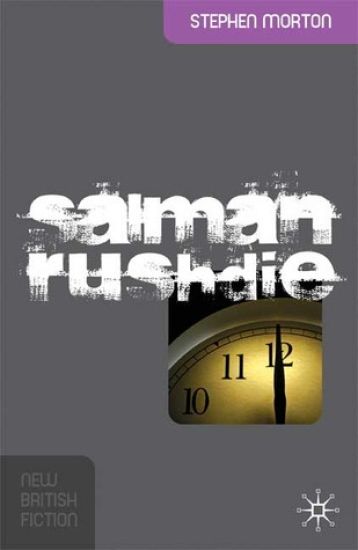
Salman Rushdie

Salman Rushdie

Stephen Morton

Red Globe Press
2007
nidottu
This introduction places the fiction of Salman Rushdie in a clear historical and theoretical context. Morton explores Rushdie's biography, the histories that inform his major works and his relevance to contemporary culture. Including a timeline of key dates, this study offers an overview of the varied critical reception Rushdie's work has provoked
States of Emergency

States of Emergency

Stephen Morton

Liverpool University Press
2014
nidottu
How can literature and culture from the postcolonial world help us to understand the relationship between law and violence associated with a state of emergency? And what light can legal narratives of emergency shed on postcolonial writing? States of Emergency: Colonialism, Literature and Law examines how violent anti-colonial struggles and the legal, military and political techniques employed by colonial governments to contain them have been imagined in literature and law. Through a series of case studies, the book considers how colonial states of exception have been defined and represented in the contexts of Ireland, India, South Africa, Algeria, Kenya, and Israel-Palestine, and concludes with an assessment of the continuities between these colonial states of emergency and the ‘wars on terror’ in Iraq, Afghanistan and Northern Pakistan. By doing so, the book considers how techniques of sovereignty, law and violence are reconfigured in the colonial present.
States of Emergency

States of Emergency

Stephen Morton

Liverpool University Press
2013
sidottu
How can literature and culture from the postcolonial world help us to understand the relationship between law and violence associated with a state of emergency? And what light can legal narratives of emergency shed on postcolonial writing? States of Emergency: Colonialism, Literature and Law examines how violent anti-colonial struggles and the legal, military and political techniques employed by colonial governments to contain them have been imagined in literature and law. Through a series of case studies, the book considers how colonial states of exception have been defined and represented in the contexts of Ireland, India, South Africa, Algeria, Kenya, and Israel-Palestine, and concludes with an assessment of the continuities between these colonial states of emergency and the ‘wars on terror’ in Iraq, Afghanistan and Northern Pakistan. By doing so, the book considers how techniques of sovereignty, law and violence are reconfigured in the colonial present.