Kirjojen hintavertailu. Mukana 11 342 296 kirjaa ja 12 kauppaa.

Kirjahaku

Etsi kirjoja tekijän nimen, kirjan nimen tai ISBN:n perusteella.

23 kirjaa tekijältä Stephen Mulhall

In Other Words

In Other Words

Stephen Mulhall

Oxford University Press
2022
sidottu
J. M. Coetzee's 'Jesus' Trilogy extends and intensifies his long-term interest in engaging with a wide range of texts, themes and assumptions that help constitute the history of Western European philosophy. In this commentary, Stephen Mulhall extends his own earlier work on Coetzee's previous stagings of the ancient quarrel between philosophy and literature by identifying and following out various ways in which the 'Jesus' Trilogy activates and interrogates themes drawn from Wittgenstein's later philosophy. These themes include rival conceptions of counting and reading, the relation between concepts and wider forms of life, and the intertwined fate of philosophy, literature and religion in a resolutely secular world. In these ways, Wittgenstein's, and so Coetzee's, visions of the world disclose their uncanny intimacy with issues and values central to the critique of modernity elaborated in the work of Nietzsche, Heidegger, and Sartre.
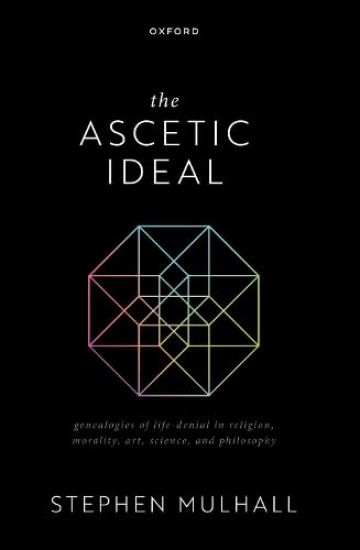
The Ascetic Ideal

The Ascetic Ideal

Stephen Mulhall

Oxford University Press
2021
sidottu
In The Ascetic Ideal, Stephen Mulhall shows how areas of cultural life that seem to be either essentially unconnected to evaluative commitments (science and philosophy) or to involve non-moral values (aesthetics) are in fact deeply informed by ethico-religious commitments, for better and for worse. The book develops a reading of Nietzsche's concept of 'the ascetic ideal', which he used to track the evolution, mutation, and expansion of the system of slave moral values, associated primarily with Judaeo-Christian religious belief through diverse fields of Western European culture--not just religion and morality, but aesthetics, science, and philosophy. Mulhall also offers an interpretation of Nietzsche's genealogical method that aims to rebut standard criticisms of its nature, and to emphasize its potential for enhancing philosophical understanding more generally. The focus throughout is on developments in those fields which occurred after the end of Nietzsche's intellectual career, and in particular on influential modes of thought and practice that have a contemporary significance. The goal is not simply to argue that Nietzsche's diagnosis and critique retains considerable merit, but also to show that Nietzsche is himself significantly indebted to the ideals he criticizes, and that this opens up a possibility of synthesizing elements of his approach with those drawn from its target. Hence, the book also tracks various ways in which the object of Nietzsche's criticism has undergone further mutations (just as his genealogical method would suggest), and in doing so has generated ways of pursuing the values central to asceticism that avoid Nietzsche's criticisms, and might even further his own goals.
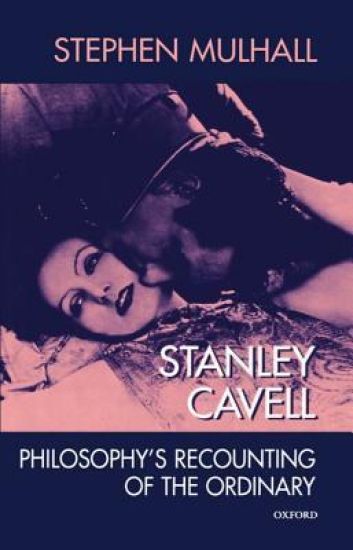
Stanley Cavell

Stanley Cavell

Stephen Mulhall

Clarendon Press
1999
nidottu
Stephen Mulhall presents the first full-length philosophical study of the work of Stanley Cavell, best known for his highly influential contributions to the fields of film studies, Shakespearian literary criticism, and the confluence of psychoanalysis and literary theory. It is not properly appreciated that Cavell's project originated in his interpretation of Austin's and Wittgenstein's philosophical interest in the criteria governing ordinary language, and is given unity by an abiding concern with the nature and the varying cultural manifestations of the sceptical impulse in modernity. This book elucidates the essentially philosophical roots and trajectory of Cavell's work, traces its links with Romanticism and its recent turn towards a species of moral pefectionism associated with Thoreau and Emerson, and concludes with an assessment of its relations to liberal-democratic political theory, Christian religious thought, and feminist literary studies. It will be of interest to anyone concerned with the relationships between Anglo-American and Continental philosophy, and between philosophy and other disciplines in the humanities. 'an excellent presentation and discussion of [Cavell's] thought . . . very timely' Political Studies 'Learning to read Mulhall is both a suitable and a worthy first step to learning to read Cavell' British Journal of Aesthetics 'there can be no doubt as to the depth of Mulhall's knowledge of Cavell's writings or to his ability as an advocate. [The book] is also very well written. Mulhall's prose is capable of registering the fine grain in a subtle and elusive thinker and, while more conventional than Cavell's, is no less supple or eloquent.' Times Literary Supplement '[Mulhall's] explication is careful enough to explain the importance of Cavell's work, clarify the subtleties of Cavell's ideas, provide a complete overview of Cavell's thought, and show the coherence in Cavell's diverse writings . . .invaluable' Harvard Review
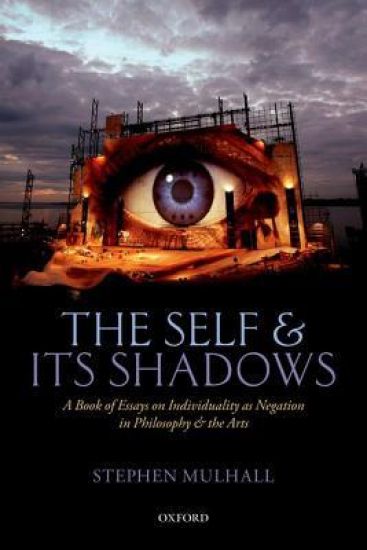
The Self and its Shadows

The Self and its Shadows

Stephen Mulhall

Oxford University Press
2016
nidottu
Stephen Mulhall presents a series of multiply interrelated essays which together make up an original study of selfhood (subjectivity or personal identity). He explores a variety of articulations (in philosophy, psychoanalysis, and the arts) of the idea that selfhood is best conceived as a matter of non-self-identity--for example, as becoming or self-overcoming, or as being what one is not and not being what one is, or as being doubled or divided. Philosophically, a sustained reading of the work of Nietzsche and Sartre is central to this project, although Wittgenstein is also fundamental to its concerns; Mulhall therefore draws extensively on texts usually associated with 'Continental' philosophical traditions, primarily in order to test the feasibility of a non-elitist form of moral perfectionism. Within the arts, several essays examine various films whose themes intersect with those of the philosophers under study (including Hollywood melodramas, recent spy movies such as the Bourne trilogy and the latest incarnation of James Bond, and David Fincher's 'Benjamin Button'); Wagner's Ring cycle is a recurrent concern; and the novels of Kingsley Amis, J. M. Coetzee and David Foster Wallace are also prominent.
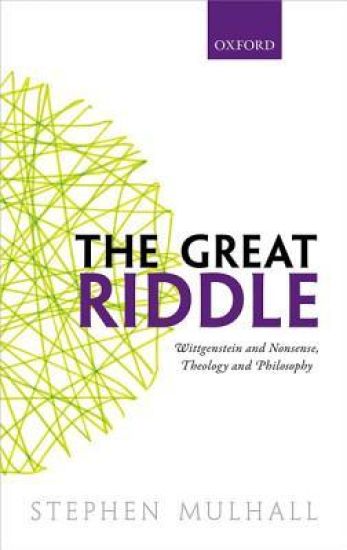
The Great Riddle

The Great Riddle

Stephen Mulhall

Oxford University Press
2015
sidottu
Can we talk meaningfully about God? The theological movement known as Grammatical Thomism affirms that religious language is nonsensical, because the reality of God is beyond our capacity for expression. Stephen Mulhall critically evaluates the claims of this movement (as exemplified in the work of Herbert McCabe and David Burrell) to be a legitimate inheritor of Wittgenstein's philosophical methods as well as Aquinas's theological project. The major obstacle to this claim is that Grammatical Thomism makes the nonsensicality of religious language when applied to God a touchstone of Thomist insight, whereas 'nonsense' is standardly taken to be solely a term of criticism in Wittgenstein's work. Mulhall argues that, if Wittgenstein is read in the terms provided by the work of Cora Diamond and Stanley Cavell, then a place can be found in both his early work and his later writings for a more positive role to be assigned to nonsensical utterances--one which depends on exploiting an analogy between religious language and riddles. And once this alignment between Wittgenstein and Aquinas is established, it also allows us to see various ways in which his later work has a perfectionist dimension--in that it overlaps with the concerns of moral perfectionism, and in that it attributes great philosophical significance to what theology and philosophy have traditionally called 'perfections' and 'transcendentals', particularly concepts such as Being, Truth, and Unity or Oneness. This results in a radical reconception of the role of analogous usage in language, and so in the relation between philosophy and theology.
The Great Riddle

The Great Riddle

Stephen Mulhall

Oxford University Press
2018
nidottu
Can we talk meaningfully about God? The theological movement known as Grammatical Thomism affirms that religious language is nonsensical, because the reality of God is beyond our capacity for expression. Stephen Mulhall critically evaluates the claims of this movement (as exemplified in the work of Herbert McCabe and David Burrell) to be a legitimate inheritor of Wittgenstein's philosophical methods as well as Aquinas's theological project. The major obstacle to this claim is that Grammatical Thomism makes the nonsensicality of religious language when applied to God a touchstone of Thomist insight, whereas 'nonsense' is standardly taken to be solely a term of criticism in Wittgenstein's work. Mulhall argues that, if Wittgenstein is read in the terms provided by the work of Cora Diamond and Stanley Cavell, then a place can be found in both his early work and his later writings for a more positive role to be assigned to nonsensical utterances--one which depends on exploiting an analogy between religious language and riddles. And once this alignment between Wittgenstein and Aquinas is established, it also allows us to see various ways in which his later work has a perfectionist dimension--in that it overlaps with the concerns of moral perfectionism, and in that it attributes great philosophical significance to what theology and philosophy have traditionally called 'perfections' and 'transcendentals', particularly concepts such as Being, Truth, and Unity or Oneness. This results in a radical reconception of the role of analogous usage in language, and so in the relation between philosophy and theology.
The Ascetic Ideal

The Ascetic Ideal

Stephen Mulhall

Oxford University Press
2025
nidottu
In The Ascetic Ideal, Stephen Mulhall shows how areas of cultural life that seem to be either essentially unconnected to evaluative commitments (science and philosophy) or to involve non-moral values (aesthetics) are in fact deeply informed by ethico-religious commitments, for better and for worse. The book develops a reading of Nietzsche's concept of 'the ascetic ideal', which he used to track the evolution, mutation, and expansion of the system of slave moral values, associated primarily with Judaeo-Christian religious belief through diverse fields of Western European culture--not just religion and morality, but aesthetics, science, and philosophy. Mulhall also offers an interpretation of Nietzsche's genealogical method that aims to rebut standard criticisms of its nature, and to emphasize its potential for enhancing philosophical understanding more generally. The focus throughout is on developments in those fields which occurred after the end of Nietzsche's intellectual career, and in particular on influential modes of thought and practice that have a contemporary significance. The goal is not simply to argue that Nietzsche's diagnosis and critique retains considerable merit, but also to show that Nietzsche is himself significantly indebted to the ideals he criticizes, and that this opens up a possibility of synthesizing elements of his approach with those drawn from its target. Hence, the book also tracks various ways in which the object of Nietzsche's criticism has undergone further mutations (just as his genealogical method would suggest), and in doing so has generated ways of pursuing the values central to asceticism that avoid Nietzsche's criticisms, and might even further his own goals.
Inheritance and Originality

Inheritance and Originality

Stephen Mulhall

Clarendon Press
2001
sidottu
What might it mean to think of philosophy as being in the condition of modernism -- in which its relation to its own past, and hence its sense of its own future, has become an undismissable problem? If philosophy's hitherto-defining conventions can neither be taken for granted nor rejected, they must be put in question -- which menans re-evealuating the relation between the form and content of philosophical writing, rethinking the demands that such writing must place on its readers, and reconceiving the nature of philosophy itself. Inheritance and Originality argues that the writings of Wittgenstein, Heidegger, and Kierkegaard are best understood as responsive (each in their own way) to such questions, and as driven in consequence to strikingly similar reconceptions of language, reason, and understanding, doubt and scepticism, morality, and the structure of selfhood. Through detailed re-readings of these authors' most influential texts, as attentive to their specificity as to their family resemblances, Stephen Mulhall reorients our sense of the philosophical work each text aims to accomplish, to engender a critical dialogue betweeen them from which the elements of a new conception of philosophy might emerge, and to uncover that conception's indebtedness to certain fundamental theological preoccupations.
Inheritance and Originality

Inheritance and Originality

Stephen Mulhall

Clarendon Press
2003
nidottu
What might it mean to think of philosophy as being in the condition of modernism -- in which its relation to its own past, and hence its sense of its own future, has become an undismissable problem? If philosophy's hitherto-defining conventions can neither be taken for granted nor rejected, they must be put in question -- which menans re-evealuating the relation between the form and content of philosophical writing, rethinking the demands that such writing must place on its readers, and reconceiving the nature of philosophy itself. Inheritance and Originality argues that the writings of Wittgenstein, Heidegger, and Kierkegaard are best understood as responsive (each in their own way) to such questions, and as driven in consequence to strikingly similar reconceptions of language, reason, and understanding, doubt and scepticism, morality, and the structure of selfhood. Through detailed re-readings of these authors' most influential texts, as attentive to their specificity as to their family resemblances, Stephen Mulhall reorients our sense of the philosophical work each text aims to accomplish, to engender a critical dialogue betweeen them from which the elements of a new conception of philosophy might emerge, and to uncover that conception's indebtedness to certain fundamental theological preoccupations.
Wittgenstein's Private Language

Wittgenstein's Private Language

Stephen Mulhall

Oxford University Press
2008
nidottu
Stephen Mulhall presents a detailed critical commentary on sections 243-315 of Wittgenstein's Philosophical Investigations: the famous remarks on 'private language'. In so doing, he makes detailed use of Stanley Cavell's interpretations of these remarks; and relates disputes about how to interpret this aspect of Wittgenstein's later philosophy to a recent, highly influential controversy about how to interpret Wittgenstein's early text, the Tractatus Logico-Philosophicus, by drawing and testing out a distinction between resolute and substantial understandings of the related notions of grammar, nonsense and the imagination. The book is concerned throughout to elucidate Wittgenstein's philosophical method, and to establish the importance of the form or style of his writing to the proper application of this method.
The Self and its Shadows

The Self and its Shadows

Stephen Mulhall

Oxford University Press
2013
sidottu
Stephen Mulhall presents a series of multiply interrelated essays which together make up an original study of selfhood (subjectivity or personal identity). He explores a variety of articulations (in philosophy, psychoanalysis, and the arts) of the idea that selfhood is best conceived as a matter of non-self-identity--for example, as becoming or self-overcoming, or as being what one is not and not being what one is, or as being doubled or divided. Philosophically, a sustained reading of the work of Nietzsche and Sartre is central to this project, although Wittgenstein is also fundamental to its concerns; Mulhall therefore draws extensively on texts usually associated with 'Continental' philosophical traditions, primarily in order to test the feasibility of a non-elitist form of moral perfectionism. Within the arts, several essays examine various films whose themes intersect with those of the philosophers under study (including Hollywood melodramas, recent spy movies such as the Bourne trilogy and the latest incarnation of James Bond, and David Fincher's 'Benjamin Button'); Wagner's Ring cycle is a recurrent concern; and the novels of Kingsley Amis, J. M. Coetzee and David Foster Wallace are also prominent.
Routledge Philosophy GuideBook to Heidegger and Being and Time
Heidegger is one of the most controversial thinkers of the twentieth century. A difficult and powerful philosopher, his work requires careful reading. Being and Time was his first major book and remains his most influential work.Heidegger and Being and Time introduces and assesses: Heidegger's life and the background of Being and Time; the ideas and text of Being and Time; Heidegger's importance to philosophy and to the intellectual life of this century.Ideal for anyone coming to Heidegger for the first time, this guide will be vital for all students of Heidegger in philosophy and cultural theory.
Routledge Philosophy GuideBook to Heidegger and Being and Time
Heidegger is one of the most controversial thinkers of the twentieth century. A difficult and powerful philosopher, his work requires careful reading. Being and Time was his first major book and remains his most influential work.Heidegger and Being and Time introduces and assesses: Heidegger's life and the background of Being and Time; the ideas and text of Being and Time; Heidegger's importance to philosophy and to the intellectual life of this century.Ideal for anyone coming to Heidegger for the first time, this guide will be vital for all students of Heidegger in philosophy and cultural theory.
The Routledge Guidebook to Heidegger's Being and Time
The Routledge Guidebook to Heidegger’s Being and Time examines the work of one of the most controversial thinkers of the twentieth century. Heidegger’s writings are notoriously difficult, requiring careful reading. This book analyses his first major publication, Being and Time, which to this day remains his most influential work.The Routledge Guidebook to Heidegger’s Being and Time explores:The context of Heidegger’s work and the background to his writing Each separate part of the text in relation to its goals, meanings and impact The reception the book received when first seen by the world The relevance of Heidegger’s work to modern philosophy, its legacy and influence. Following Heidegger’s original work closely, this guidebook examines the two central themes of scepticism and death. Mulhall skilfully examines the relationship between the book’s two parts, making it essential reading for all students of philosophy, and all those wishing to get to grips with this classic work.
The Routledge Guidebook to Heidegger's Being and Time
The Routledge Guidebook to Heidegger’s Being and Time examines the work of one of the most controversial thinkers of the twentieth century. Heidegger’s writings are notoriously difficult, requiring careful reading. This book analyses his first major publication, Being and Time, which to this day remains his most influential work.The Routledge Guidebook to Heidegger’s Being and Time explores:The context of Heidegger’s work and the background to his writing Each separate part of the text in relation to its goals, meanings and impact The reception the book received when first seen by the world The relevance of Heidegger’s work to modern philosophy, its legacy and influence. Following Heidegger’s original work closely, this guidebook examines the two central themes of scepticism and death. Mulhall skilfully examines the relationship between the book’s two parts, making it essential reading for all students of philosophy, and all those wishing to get to grips with this classic work.
Philosophical Myths of the Fall

Philosophical Myths of the Fall

Stephen Mulhall

Princeton University Press
2007
pokkari
Did post-Enlightenment philosophers reject the idea of original sin and hence the view that life is a quest for redemption from it? In Philosophical Myths of the Fall, Stephen Mulhall identifies and evaluates a surprising ethical-religious dimension in the work of three highly influential philosophers--Nietzsche, Heidegger, and Wittgenstein. He asks: Is the Christian idea of humanity as structurally flawed something that these three thinkers aim simply to criticize? Or do they, rather, end up by reproducing secular variants of the same mythology? Mulhall argues that each, in different ways, develops a conception of human beings as in need of redemption: in their work, we appear to be not so much capable of or prone to error and fantasy, but instead structurally perverse, living in untruth. In this respect, their work is more closely aligned to the Christian perspective than to the mainstream of the Enlightenment. However, all three thinkers explicitly reject any religious understanding of human perversity; indeed, they regard the very understanding of human beings as originally sinful as central to that from which we must be redeemed. And yet each also reproduces central elements of that understanding in his own thinking; each recounts his own myth of our Fall, and holds out his own image of redemption. The book concludes by asking whether this indebtedness to religion brings these philosophers' thinking closer to, or instead forces it further away from, the truth of the human condition.
The Wounded Animal

The Wounded Animal

Stephen Mulhall

Princeton University Press
2008
pokkari
In 1997, the Nobel Prize-winning novelist J. M. Coetzee, invited to Princeton University to lecture on the moral status of animals, read a work of fiction about an eminent novelist, Elizabeth Costello, invited to lecture on the moral status of animals at an American college. Coetzee's lectures were published in 1999 as The Lives of Animals, and reappeared in 2003 as part of his novel Elizabeth Costello; and both lectures and novel have attracted the critical attention of a number of influential philosophers--including Peter Singer, Cora Diamond, Stanley Cavell, and John McDowell. In The Wounded Animal, Stephen Mulhall closely examines Coetzee's writings about Costello, and the ways in which philosophers have responded to them, focusing in particular on their powerful presentation of both literature and philosophy as seeking, and failing, to represent reality--in part because of reality's resistance to such projects of understanding, but also because of philosophy's unwillingness to learn from literature how best to acknowledge that resistance. In so doing, Mulhall is led to consider the relations among reason, language, and the imagination, as well as more specific ethical issues concerning the moral status of animals, the meaning of mortality, the nature of evil, and the demands of religion. The ancient quarrel between philosophy and literature here displays undiminished vigor and renewed significance.
The Conversation of Humanity

The Conversation of Humanity

Stephen Mulhall

University of Virginia Press
2007
sidottu
Based on the author's Page-Barbour lectures, delivered at the University of Virginia in 2005, ""The Conversation of Humanity"" critically examines the idea that the nature of language can best be understood in terms of the model or figure of conversation. According to this idea, language has an essentially dialogical or discursive structure, reflecting the ways in which different dimensions of the cultural economy bear upon each other. Mulhall addresses the peculiar way in which philosophy must be understood both as one of those interlocking elements and as the place in which the culture reflects upon its own overarching unity. The book explores the articulation of these ideas in the work of Wittgenstein, Heidegger, and Cavell in ways that cross the divide between the ""analytical"" and ""Continental"" philosophical traditions, and shows how they bear upon the idea of moral perfectionism and its conception of the internal structure of self. The link Mulhall clarifies between the fate of philosophy and the fate of culture helps explain why sophistry or nihilism is such a profound threat, both to philosophy and to culture. Resistance to nihilism, in fact, comes to appear as the central concern of a certain tradition of moral perfectionism that Cavell has associated with Emerson and Thoreau, and with a variety of other creative figures in philosophy, literature, and cinema. The book concludes, as it begins, with an examination of the ways in which the interrelatedness of language and culture can be seen to draw upon and reconfigure essentially religious forms of thought.
On Being in the World (Routledge Revivals)
On Being in the World, first published in 1990, illumines a neglected but important area of Wittgenstein’s philosophy, revealing its pertinence to the central concerns of contemporary analytic philosophy. The starting point is the idea of ‘continuous aspect perception’, which connects Wittgenstein’s treatment of certain issues relating to aesthetics with fundamental questions in the philosophy of psychology. Professor Mulhall indicates parallels between Wittgenstein’s interests and Heidegger’s Being and Time, demonstrating that Wittgenstein’s investigation of aspect perception is designed to cast light on much more than a bizarre type of visual experience: in reality, it highlights what is distinctively human about our behaviour in relation to things in the world, what it is that distinguishes our practical activity from that of automata. On Being in the World remains an invaluable resource for students of Wittgenstein’s philosophy, as well as anyone interested in negotiating the division between analytic and continental philosophy.