Kirjojen hintavertailu. Mukana 11 342 296 kirjaa ja 12 kauppaa.

Kirjahaku

Etsi kirjoja tekijän nimen, kirjan nimen tai ISBN:n perusteella.

3 kirjaa tekijältä Stephen O. Murray

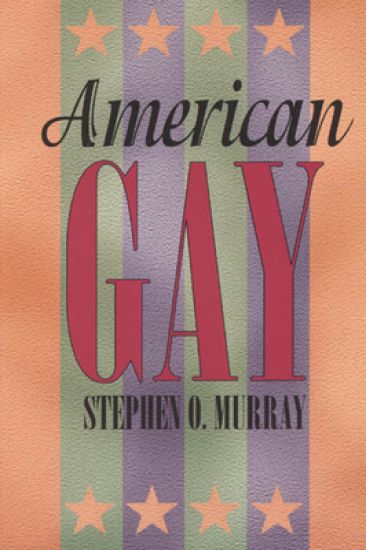
American Gay

American Gay

Stephen O. Murray

University of Chicago Press
1996
sidottu
This text provides an investigation into how people have been gay or lesbian in America. The author examines the emergence of gay and lesbian social life, the creation of lesbigay communities, and the forces of resistance that have mobilized and fostered a group identity. Murray also considers the extent to which there is a single "modern" homosexuality and discusses the range of homosexual behaviours, typifications, self-identifications and meanings. Murray challenges prevailing assumptions about gay history and society. He questions conventional wisdom about the importance of World War II and the Stonewall riots for conceiving and challenging shared oppression. He reviews gay complicity in the repathologizing of homosexuality during the early years of the AIDS epidemic. Discussing recent demands for inclusion in the "straight" institutions of marriage and the US military, he concludes that these are new forms of resistance, not attempts to assimilate. Finally, Murray examines racial and ethnic differences in self-representation and identification. Drawing on two decades of studying gay life in North America, this "tour de force" of empirical documentation and social theory critically reviews what is known about the emergence, growth and internal diversity of communities of openly gay men and lesbians. The book thus deepens our understanding of the ways individuals construct sexualities through working and living together. Stephen O. Murray is the author of six books, including "Latin American Male Homosexualities" and "Oceanic Homosexualities".
American Gay

American Gay

Stephen O. Murray

University of Chicago Press
1996
nidottu
This text provides an investigation into how people have been gay or lesbian in America. The author examines the emergence of gay and lesbian social life, the creation of "lesbigay" communities, and the forces of resistance that have mobilized and fostered a group identity. Murray also considers the extent to which there is a single "modern" homosexuality and discusses the range of homosexual behaviours, typifications, self-identifications and meanings. Murray challenges prevailing assumptions about gay history and society. He questions conventional wisdom about the importance of World War II and the Stonewall riots for conceiving and challenging shared oppression. He reviews gay complicity in the repathologizing of homosexuality during the early years of the AIDS epidemic. Discussing recent demands for inclusion in the "straight" institutions of marriage and the US military, he concludes that these are new forms of resistance, not attempts to assimilate. Finally, Murray examines racial and ethnic differences in self-representation and identification. Drawing on two decades of studying gay life in North America, this "tour de force" of empirical documentation and social theory critically reviews what is known about the emergence, growth and internal diversity of communities of openly gay men and lesbians. The book thus deepens our understanding of the ways individuals construct sexualities through working and living together. Stephen O. Murray is the author of six books, including "Latin American Male Homosexualities" and "Oceanic Homosexualities".
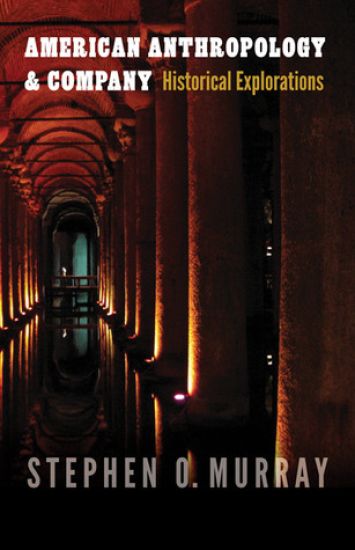
American Anthropology and Company

American Anthropology and Company

Stephen O. Murray

University of Nebraska Press
2013
sidottu
In American Anthropology and Company, linguist and sociologist Stephen O. Murray explores the connections between anthropology, linguistics, sociology, psychology, and history, in broad-ranging essays on the history of anthropology and allied disciplines. On subjects ranging from Native American linguistics to the pitfalls of American, Latin American, and East Asian fieldwork, among other topics, American Anthropology and Company presents the views of a historian of anthropology interested in the theoretical and institutional connections between disciplines that have always been in conversation with anthropology. Recurring characters include Edward Sapir, Alfred Kroeber, Robert Redfield, W. I. and Dorothy Thomas, and William Ogburn. While histories of anthropology rarely cross disciplinary boundaries, Murray moves in essay after essay toward an examination of the institutions, theories, and social networks of scholars as never before, maintaining a healthy skepticism toward anthropologists' views of their own methods and theories.