Kirjojen hintavertailu. Mukana 11 717 486 kirjaa ja 12 kauppaa.

Kirjahaku

Etsi kirjoja tekijän nimen, kirjan nimen tai ISBN:n perusteella.

6 kirjaa tekijältä Stephen P. Cohen

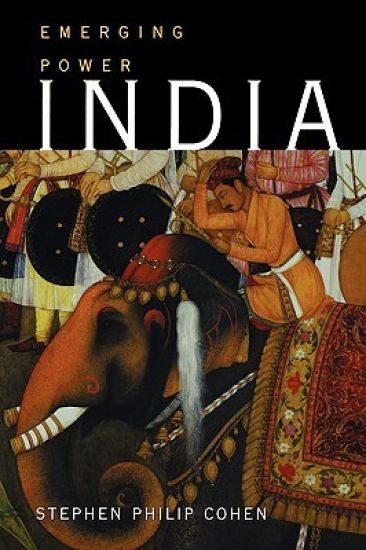
India

India

Stephen P. Cohen

Brookings Institution
2002
nidottu
"For years, Americans have seen India as a giant but inept state. That negative image is now obsolete. After a decade of drift and uncertainty, India is taking its expected place as one of the three major states of Asia. Its pluralist, secular democracy has allowed the rise of hitherto deprived castes and ethnic communities. Economic liberalization is gathering steam, with six percent annual growth and annual exports in excess of $30 billion. India also has a modest capacity to project military power. The country will soon have a two-carrier navy and it is developing a nuclear-armed missile capable of reaching all of Asia. This landmark book provides the first comprehensive assessment of India as a political and strategic power since India's nuclear tests, its 1999 war with Pakistan, and its breakthrough economic achievements. Stephen P. Cohen examines the domestic and international causes of India's ""emergence,"" he discusses the way social structure and tradition shape Delhi's perceptions of the world, and he explores India's relations with neighboring Pakistan and China, as well as the United States. Cohen argues that American policy needs to be adjusted to cope with a rising India—and that a relationship well short of alliance, but far more intimate than in the past, is appropriate for both countries."
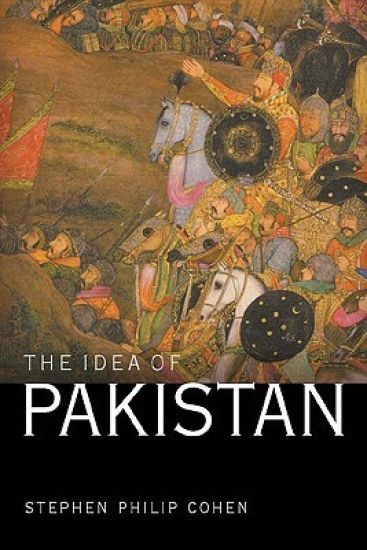
The Idea of Pakistan

The Idea of Pakistan

Stephen P. Cohen

Brookings Institution
2006
nidottu
"Stephen Cohen updates his critically acclaimed book with a discerning view of significant recent events in the region, particularly the devastating earthquake in Kashmir and its after affects. The quake killed over 70,000 people and left another 3 million homeless in one of the most remote, inhospitable parts of the world. Cohen observes how the catastrophic event has affected Pakistan's political, military, and economic structures, as well as its relationships with other countries. Praise for the previous edition: ""A lucid, penetrating and brilliantly constructed book on the state and nation of Pakistan. Cohen, an old South Asia hand, brings to the fore all his knowledge and expertise of one of America's most important allies in the war against terror.""—Choice ""Cohen's facts are indisputable, his logic cold and clear, and his omissions deliberate and meaningful.""—Foreign Affairs ""A singularly successful effort to explain Pakistan.... The intellectual power and rare insight with which the book breaks through the complexity of the subject rivals that of classics that have explained other societies posing a comparable challenge to understanding.""—Middle East Journal ""Cohen knows Pakistan well and his analysis is very perceptive.""—Newsline (Karachi, Pakistan) ""A personal, perceptive, and policy-oriented study of Pakistan. This is an important work, by a leading expert of South Asia.""—Economic and Political Weekly (India) Book Review ""[Cohen's] survey of how the country has developed and why it is at the crossroads it is now is most insightful and useful. A first class primer and more as I commence my work.""—David B. Collins, high commissioner of Canada, Islamabad "
The Future of Pakistan

The Future of Pakistan

Stephen P. Cohen

Brookings Institution
2011
nidottu
"With each passing day, Pakistan becomes an even more crucial player in world affairs. Home of the world's second-largest Muslim population, epicenter of the global jihad, location of perhaps the planet's most dangerous borderlands, and armed with nuclear weapons, this South Asian nation will go a long way toward determining what the world looks like ten years from now. The Future of Pakistan presents and evaluates several scenarios for how the country will develop, evolve, and act in the near future, as well as the geopolitical implications of each.Led by renowned South Asia expert Stephen P. Cohen, a team of authoritative contributors looks at several pieces of the Pakistan puzzle. The book begins with Cohen's broad yet detailed overview of Pakistan, placing it within the context of current-day geopolitics and international economics. Cohen's piece is then followed by a number of shorter, more tightly focused essays addressing more specific issues of concern.Cohen's fellow contributors hail from America, Europe, India, and Pakistan itself, giving the book a uniquely international and comparative perspective. They address critical factors such as the role and impact of radical groups and militants, developments in specific key regions such as Punjab and the rugged frontier with Afghanistan, and the influence of—and interactions with—India, Pakistan's archrival since birth. The book also breaks down relations with other international powers such as China and the United States. The all-important military and internal security apparatus come under scrutiny, as do rapidly morphing social and gender issues. Political and party developments are examined along with the often amorphous division of power between Islamabad and the nation's regions and local powers.Uncertainty about Pakistan's trajectory persists. The Future of Pakistan helps us understand the current circumstances, the relevant actors and their motivation, the critical issues at hand, the different outcomes they might produce, and what it all means for Pakistanis, Indians, the United States, and the entire world.Praise for the work of Stephen P. Cohen The Idea of Pakistan: ""The intellectual power and rare insight with which Cohen breaks through the complexity of the subject rivals that of classics that have explained other societies posting a comparable challenge to understanding.""— Middle East Journal India: Emerging Power: ""In light of the events of September 11, 2001, Cohen's perceptive, insightful, and balanced account of emergent India will be essential reading for U.S. foreign policymakers, scholars, and informed citizens.""— Choice"
Shooting for a Century

Shooting for a Century

Stephen P. Cohen

Brookings Institution
2013
sidottu
The rivalry between India and Pakistan has proven to be one of the world's most intractable international conflicts, ever since 1947 when the British botched their departure from the South Asian subcontinent. And the enmity is likely to continue for another thirty-five years, reaching the century mark. This has critical implications for both countries and the rest of the world. Renowned South Asia expert Stephen P. Cohen explains why he expects this rivalry to continue in this first comprehensive survey of the deep historical, cultural, and strategic differences that underpin the hostility.In recent years the stakes have increased as India and Pakistan have each acquired a hundred or more nuclear weapons, blundered into several serious crises, and become victims of terrorism, some of it from across their borders. America is puzzled by the problem of dealing with a rising India and a struggling Pakistan, and Cohen offers a fresh approach for U.S. policy in dealing with these two powers. Drawing on his rich experience in South Asia to explore the character, depth, and origin of Indian and Pakistani attitudes toward each other, Cohen develops a comprehensive theory of why the dispute between New Delhi and Islamabad is likely to persist. He also describes the terrible cost of this animosity for the citizens of India and Pakistan, including the region's high levels of violence and low level of economic integration. On a more hopeful note, however, he goes on to suggest developments that could ameliorate the tension, including a more active role for the UnitedStates in addressing a range of issues that divide the nations. Kashmir is one of these issues, but as much a consequence as a cause of the rivalry. Can India and Pakistan resolve their many territorial and identity issues? Perhaps the best they can expect in the near term is a limited degree of normalization, including bottom-up ideas generated by the peace and business communities, as well as a realistic assessment by strategic elites of the two states' shared common interests. “Right now, full normalization seems unlikely,” Cohen writes in the preface, “so this book is suffused with conditional pessimism: normalization would be desirable, but there are worse futures than a projection of the present rivalry for another thirty years or more”.
Shooting for a Century

Shooting for a Century

Stephen P. Cohen

Brookings Institution
2013
nidottu
"The rivalry between India and Pakistan has proven to be one of the world's most intractable international conflicts, ever since 1947 when the British botched their departure from the South Asian subcontinent. And the enmity is likely to continue for another thirty-five years, reaching the century mark. This has critical implications for both countries and the rest of the world. Renowned South Asia expert Stephen P. Cohen explains why he expects this rivalry to continue in this first comprehensive survey of the deep historical, cultural, and strategic differences that underpin the hostility.In recent years the stakes have increased as India and Pakistan have each acquired a hundred or more nuclear weapons, blundered into several serious crises, and become victims of terrorism, some of it from across their borders. America is puzzled by the problem of dealing with a rising India and a struggling Pakistan, and Cohen offers a fresh approach for U.S. policy in dealing with these two powers.Drawing on his rich experience in South Asia to explore the character, depth, and origin of Indian and Pakistani attitudes toward each other, Cohen develops a comprehensive theory of why the dispute between New Delhi and Islamabad is likely to persist. He also describes the terrible cost of this animosity for the citizens of India and Pakistan, including the region's high levels of violence and low level of economic integration. On a more hopeful note, however, he goes on to suggest developments that could ameliorate the tension, including a more active role for the UnitedStates in addressing a range of issues that divide the nations. Kashmir is one of these issues, but as much a consequence as a cause of the rivalry.Can India and Pakistan resolve their many territorial and identity issues? Perhaps the best they can expect in the near term is a limited degree of normalization, including bottom-up ideas generated by the peace and business communities, as well as a realistic assessment by strategic elites of the two states' shared common interests.""Right now, full normalization seems unlikely,"" Cohen writes in the preface, ""so this book is suffused with conditional pessimism: normalization would be desirable, but there are worse futures than a projection of the present rivalry for another thirty years or more."""
The South Asia Papers

The South Asia Papers

Stephen P. Cohen

Brookings Institution
2016
nidottu
Stephen Philip Cohen, the scholar who virtually created the field of South Asian security studies, has curated a unique collection of the most interesting and important articles, chapters, and speeches from his fifty-year career. Cohen, often described as the “dean” of U.S. South Asian studies, is a dominant figure in the fields of military history, military sociology, and South Asia’s strategic emergence.This exceptional collection includes material that have never appeared in book form, including Cohen’s original essays on the region’s military history, the transition from British rule to independence, the role of the armed forces in India and Pakistan, the pathologies of India-Pakistan relations, South Asia’s growing nuclear arsenal, and America’s fitful (and forgetful) regional policy. These original writings show how Cohen developed a still-relevant theory of regional conflict, and how his views evolved over the years—tracking the development of South Asian security studies.