Kirjojen hintavertailu. Mukana 11 342 296 kirjaa ja 12 kauppaa.

Kirjahaku

Etsi kirjoja tekijän nimen, kirjan nimen tai ISBN:n perusteella.

15 kirjaa tekijältä Stephen P. Turner

Max Weber

Max Weber

Stephen P. Turner

Routledge
1994
nidottu
This book is the first account of the way in which Weber appropriated and modified sources in the legal tradition, in which he was trained, to construct his sociology. It leads directly to a new understanding of Weber's intent and his relations to the tradition of social and political theory. the book takes the reader into the heart of Weber's conceptualizations of action and social science, without ever giving the impression that these are rarefied and marginal issues. This is an important book for understanding the significance of one of the key sociologist's of the twentieth century.
The Politics of Expertise

The Politics of Expertise

Stephen P. Turner

Routledge
2013
sidottu
This book collects case studies and theoretical papers on expertise, focusing on four major themes: legitimation, the aggregation of knowledge, the distribution of knowledge and the distribution of power. It focuses on the institutional means by which the distribution of knowledge and the distribution of power are connected, and how the problems of aggregating knowledge and legitimating it are solved by these structures. The radical novelty of this approach is that it places the traditional discussion of expertise in democracy into a much larger framework of knowledge and power relations, and in addition begins to raise the questions of epistemology that a serious account of these problems requires.
Understanding the Tacit

Understanding the Tacit

Stephen P. Turner

Routledge
2013
sidottu
This book outlines a new account of the tacit, meaning tacit knowledge, presuppositions, practices, traditions, and so forth. It includes essays on topics such as underdetermination and mutual understanding, and critical discussions of the major alternative approaches to the tacit, including Bourdieu’s habitus and various practice theories, Oakeshott’s account of tradition, Quentin Skinner’s theory of historical meaning, Harry Collins’s idea of collective tacit knowledge, as well as discussions of relevant cognitive science concepts, such as non-conceptual content, connectionism, and mirror neurons. The new account of tacit knowledge focuses on the fact that in making the tacit explicit, a person is not, as many past accounts have supposed, reading off the content of some sort of shared and fixed tacit scheme of presuppositions, but rather responding to the needs of the Other for understanding.
Sociological Explanation As Translation

Sociological Explanation As Translation

Stephen P. Turner

Cambridge University Press
1980
pokkari
First published in 1980, this book examines the nature of sociological explanation. The tactics of interpretive sociology have often remained obscure because of confusion over the nature of the evidence for interpretation and the nature of decisions among alternative interpretations. In providing an account of the problem of interpretive sociological claims, the author argues that there is rationality to interpretation. He also presents a fresh view of the relationship between qualitative and statistical claims and shows their complementary character. Dr. Turner's lucid and comprehensive analysis breaks new ground in its fundamental re-examination of the conceptual basis for “explaining” social behaviour. By its call for more rigourous conceptual sophistication in attempted explanations of social behaviour, this book will stimulate controversy and lively discussion among sociologists.
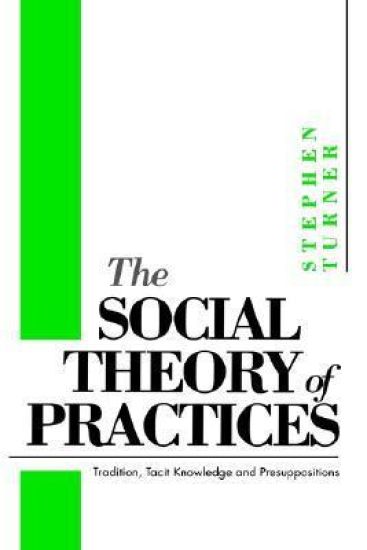
The Social Theory of Practices

The Social Theory of Practices

Stephen P. Turner

Polity Press
1994
nidottu
This book presents the first analysis and critique of the idea of practice as it has developed in the various theoretical traditions of the social sciences and the humanities. The concept of a practice, understood broadly as a tacit possession that is 'shared' by and the same for different people, has a fatal difficulty, the author argues. This object must in some way be transmitted, 'reproduced', in Bourdieu's famous phrase, in different persons. But there is no plausible mechanism by which such a process occurs. The historical uses of the concept, from Durkheim to Kripke's version of Wittgenstein, provide examples of the contortions that thinkers have been forced into by this problem, and show the ultimate implausibility of the idea of the interpersonal transmission of these supposed objects. Without the notion of 'sameness' the concept of practice collapses into the concept of habit. The conclusion sketches a picture of what happens when we do without the notion of a shared practice, and how this bears on social theory and philosophy. It explains why social theory cannot get beyond the stage of constructing fuzzy analogies, and why the standard constructions of the contemporary philosophical problem of relativism depend upon this defective notion.
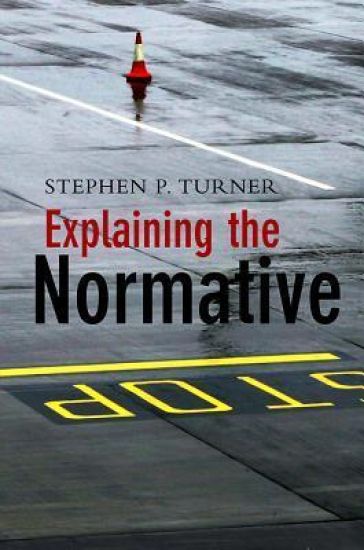
Explaining the Normative

Explaining the Normative

Stephen P. Turner

Polity Press
2010
sidottu
Normativity is what gives reasons their force, makes words meaningful, and makes rules and laws binding. It is present whenever we use such terms as ‘correct,' ‘ought,' ‘must,' and the language of obligation, responsibility, and logical compulsion. Yet normativists, the philosophers committed to this idea, admit that the idea of a non-causal normative realm and a body of normative objects is spooky. Explaining the Normative is the first systematic, historically grounded critique of normativism. It identifies the standard normativist pattern of argument, and shows how this pattern depends on circularities, assumptions about the unique correctness of preferred descriptions, problematic transcendental arguments, and regress arguments that end in mysteries. The book considers in detail a paradigm case: legal normativity as constructed by Hans Kelsen. This case exemplifies the problems with normativist arguments. But it also shows how normativism was constructed as an alternative to ordinary social science explanation. The normativist argument is that social science explanations themselves are forced to rely on normative conceptsÑminimally, on normative rationality and on a normative view of ‘concepts' themselves. Empathic understanding of the reasoning and meanings of others, however, can solve the regress problems about meaning and rationality that are central to the appeal of normativism. This account has no need for a parallel normative world, and has a surprising and revealing lineage in the history of philosophy, as well as a basis in neuroscience.
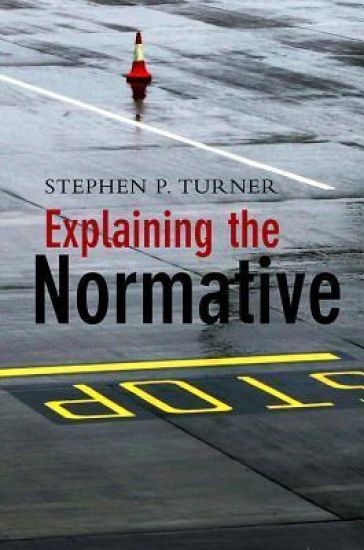
Explaining the Normative

Explaining the Normative

Stephen P. Turner

Polity Press
2010
nidottu
Normativity is what gives reasons their force, makes words meaningful, and makes rules and laws binding. It is present whenever we use such terms as ‘correct,' ‘ought,' ‘must,' and the language of obligation, responsibility, and logical compulsion. Yet normativists, the philosophers committed to this idea, admit that the idea of a non-causal normative realm and a body of normative objects is spooky. Explaining the Normative is the first systematic, historically grounded critique of normativism. It identifies the standard normativist pattern of argument, and shows how this pattern depends on circularities, assumptions about the unique correctness of preferred descriptions, problematic transcendental arguments, and regress arguments that end in mysteries. The book considers in detail a paradigm case: legal normativity as constructed by Hans Kelsen. This case exemplifies the problems with normativist arguments. But it also shows how normativism was constructed as an alternative to ordinary social science explanation. The normativist argument is that social science explanations themselves are forced to rely on normative conceptsÑminimally, on normative rationality and on a normative view of ‘concepts' themselves. Empathic understanding of the reasoning and meanings of others, however, can solve the regress problems about meaning and rationality that are central to the appeal of normativism. This account has no need for a parallel normative world, and has a surprising and revealing lineage in the history of philosophy, as well as a basis in neuroscience.
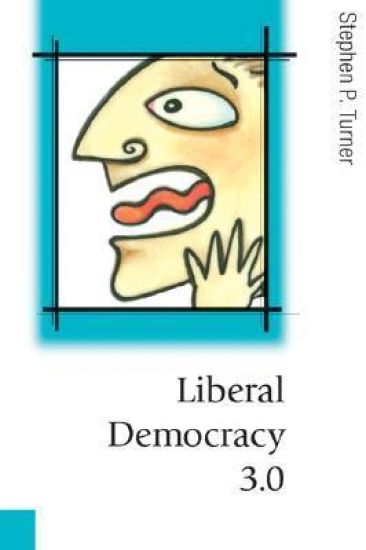
Liberal Democracy 3.0

Liberal Democracy 3.0

Stephen P. Turner

SAGE Publications Inc
2003
sidottu
`This is a very fine text, a powerful piece of work that deserves to be read widely. The analysis is truly panoramic. It ranges across central concerns in the fields of social theory, political theory, and science studies and engages with and/or draws upon the ideas of key classical and contemporary thinkers, including Tocqueville, Weber, Schumpeter, Polyani, Habermas, Foucault, Schmitt and Beck' - Barry Smart, Professor of Sociology, University of Portsmouth What are the political implications of 'expert' knowledge and especially scientific knowledge for liberal democracy? If knowledge is not evenly distributed upon what basis can the philosophy of equal rights be sustained? This important book points to the crisis in knowledge in liberal democracies. This crisis, simply put, is that most citizens cannot understand, much less judge, the claims scientists make. One response is the appointment of public commissions to provide conclusions for policy-makers to act upon. There are also `commissions from below', such as grass roots associations that quiz the limits of expert knowledge and power and make rival knowledge claims. Do these commissions represent a new stage in the development of liberal democracy? Or is it merely a pragmatic device of no political consequence. The central argument of the book is that in a `knowledge society' in which specialized knowledge is increasingly important to politics, more has to be delegated because democratic discussion can't handle it. This limitation in the scope of liberal democracy threatens its fundamental character. The book will be required reading in the fields of social theory, political theory and science studies.
Liberal Democracy 3.0

Liberal Democracy 3.0

Stephen P. Turner

SAGE Publications Inc
2003
nidottu
`This is a very fine text, a powerful piece of work that deserves to be read widely. The analysis is truly panoramic. It ranges across central concerns in the fields of social theory, political theory, and science studies and engages with and/or draws upon the ideas of key classical and contemporary thinkers, including Tocqueville, Weber, Schumpeter, Polyani, Habermas, Foucault, Schmitt and Beck' - Barry Smart, Professor of Sociology, University of Portsmouth What are the political implications of 'expert' knowledge and especially scientific knowledge for liberal democracy? If knowledge is not evenly distributed upon what basis can the philosophy of equal rights be sustained? This important book points to the crisis in knowledge in liberal democracies. This crisis, simply put, is that most citizens cannot understand, much less judge, the claims scientists make. One response is the appointment of public commissions to provide conclusions for policy-makers to act upon. There are also `commissions from below', such as grass roots associations that quiz the limits of expert knowledge and power and make rival knowledge claims. Do these commissions represent a new stage in the development of liberal democracy? Or is it merely a pragmatic device of no political consequence. The central argument of the book is that in a `knowledge society' in which specialized knowledge is increasingly important to politics, more has to be delegated because democratic discussion can't handle it. This limitation in the scope of liberal democracy threatens its fundamental character. The book will be required reading in the fields of social theory, political theory and science studies.
Cognitive Science and the Social

Cognitive Science and the Social

Stephen P. Turner

CRC Press Inc
2018
sidottu
The rise of cognitive neuroscience is the most important scientific and intellectual development of the last thirty years. Findings pour forth, and major initiatives for brain research continue. The social sciences have responded to this development slowly--for good reasons. The implications of particular controversial findings, such as the discovery of mirror neurons, have been ambiguous, controversial within neuroscience itself, and difficult to integrate with conventional social science. Yet many of these findings, such as those of experimental neuro-economics, pose very direct challenges to standard social science. At the same time, however, the known facts of social science, for example about linguistic and moral diversity, pose a significant challenge to standard neuroscience approaches, which tend to focus on "universal" aspects of human and animal cognition. A serious encounter between cognitive neuroscience and social science is likely to be challenging, and transformative, for both parties. Although a literature has developed on proposals to integrate neuroscience and social science, these proposals go in divergent directions. None of them has a developed conception of social life. This book surveys these issues, introduces the basic alternative conceptions both of the mental world and the social world, and show how, with sufficient modification, they can be fit together in plausible ways. The book is not a "new theory " of anything, but rather an exploration of the critical issues that relate to the social aspects of cognition which expands the topic from the social neuroscience of immediate interpersonal interaction to the whole range of places where social variation interacts with the cognitive. The focus is on the conceptual problems produced by any attempt to take these issues seriously, and also on the new resources and considerations relevant to doing so. But it is also on the need for a revision of social theoretical concepts in order to utilize these resources. The book points to some conclusions, especially about how the process of what was known as socialization needs to be understood in cognitive science friendly terms. But there is no attempt to resolve the underlying issues within cognitive science, which will doubtless persist.
Cognitive Science and the Social

Cognitive Science and the Social

Stephen P. Turner

CRC Press Inc
2018
nidottu
The rise of cognitive neuroscience is the most important scientific and intellectual development of the last thirty years. Findings pour forth, and major initiatives for brain research continue. The social sciences have responded to this development slowly--for good reasons. The implications of particular controversial findings, such as the discovery of mirror neurons, have been ambiguous, controversial within neuroscience itself, and difficult to integrate with conventional social science. Yet many of these findings, such as those of experimental neuro-economics, pose very direct challenges to standard social science. At the same time, however, the known facts of social science, for example about linguistic and moral diversity, pose a significant challenge to standard neuroscience approaches, which tend to focus on "universal" aspects of human and animal cognition. A serious encounter between cognitive neuroscience and social science is likely to be challenging, and transformative, for both parties. Although a literature has developed on proposals to integrate neuroscience and social science, these proposals go in divergent directions. None of them has a developed conception of social life. This book surveys these issues, introduces the basic alternative conceptions both of the mental world and the social world, and show how, with sufficient modification, they can be fit together in plausible ways. The book is not a "new theory " of anything, but rather an exploration of the critical issues that relate to the social aspects of cognition which expands the topic from the social neuroscience of immediate interpersonal interaction to the whole range of places where social variation interacts with the cognitive. The focus is on the conceptual problems produced by any attempt to take these issues seriously, and also on the new resources and considerations relevant to doing so. But it is also on the need for a revision of social theoretical concepts in order to utilize these resources. The book points to some conclusions, especially about how the process of what was known as socialization needs to be understood in cognitive science friendly terms. But there is no attempt to resolve the underlying issues within cognitive science, which will doubtless persist.

Max Weber

Max Weber

Stephen P. Turner

Routledge
2017
sidottu
This book is the first account of the way in which Weber appropriated and modified sources in the legal tradition, in which he was trained, to construct his sociology. It leads directly to a new understanding of Weber's intent and his relations to the tradition of social and political theory. the book takes the reader into the heart of Weber's conceptualizations of action and social science, without ever giving the impression that these are rarefied and marginal issues. This is an important book for understanding the significance of one of the key sociologist's of the twentieth century.
The Politics of Expertise

The Politics of Expertise

Stephen P. Turner

Routledge
2015
nidottu
This book collects case studies and theoretical papers on expertise, focusing on four major themes: legitimation, the aggregation of knowledge, the distribution of knowledge and the distribution of power. It focuses on the institutional means by which the distribution of knowledge and the distribution of power are connected, and how the problems of aggregating knowledge and legitimating it are solved by these structures. The radical novelty of this approach is that it places the traditional discussion of expertise in democracy into a much larger framework of knowledge and power relations, and in addition begins to raise the questions of epistemology that a serious account of these problems requires.
Understanding the Tacit

Understanding the Tacit

Stephen P. Turner

Routledge
2015
nidottu
This book outlines a new account of the tacit, meaning tacit knowledge, presuppositions, practices, traditions, and so forth. It includes essays on topics such as underdetermination and mutual understanding, and critical discussions of the major alternative approaches to the tacit, including Bourdieu’s habitus and various practice theories, Oakeshott’s account of tradition, Quentin Skinner’s theory of historical meaning, Harry Collins’s idea of collective tacit knowledge, as well as discussions of relevant cognitive science concepts, such as non-conceptual content, connectionism, and mirror neurons. The new account of tacit knowledge focuses on the fact that in making the tacit explicit, a person is not, as many past accounts have supposed, reading off the content of some sort of shared and fixed tacit scheme of presuppositions, but rather responding to the needs of the Other for understanding.