Kirjojen hintavertailu. Mukana 11 358 258 kirjaa ja 12 kauppaa.

Kirjahaku

Etsi kirjoja tekijän nimen, kirjan nimen tai ISBN:n perusteella.

4 kirjaa tekijältä Stephen Quirke

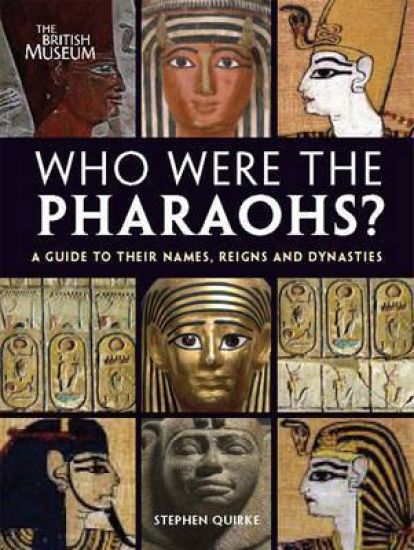
Who Were the Pharaohs?

Who Were the Pharaohs?

Stephen Quirke

British Museum Press
2010
nidottu
Keynote An accessible and informative guide to the major pharaohs of Ancient Egypt, their names and their cartouches Sales points A concise guide arranged chronologically Illustrated with colour photographs for the first time Perfect reference for beginners and scholars alike Description In Ancient Egypt, a name did more than express one’s identity; it incorporated it, forming a profound element of it. Names of kings were especially important as the king of Egypt acted as the earthly counterpart to the sun-god. At his accession to the throne, a pharaoh would take five names to distinguish him from ordinary human beings; the first being his birth name and the remaining four composed specially for the coronation. The first four chapters of this book are divided by period, covering 3000 years of history from the dawn of Egyptian writing to the use of royal names under the Roman emperors in Egypt. With the help of ancient hieroglyphic texts and modern reserach, they give an indepth but accessible history of Ancient Egyptian royalty and society. The final chapter provides an extensive list of royal names and displays the principal cartouches for all the major kings of Ancient Egypt as well as some lesser-known but equally intriguing pharaohs. It also details the key events and characteristics of each reign. This book is an indispensible guide to the identity of the Egyptian pharaohs for people of all levels of knowledge. The Author Stephen Quirke was formerly a Curator in the Department of Egyptian Antiquities in the British Museum. He is now Curator of the Petrie Museum of Egyptian Archaeology in the Institute of Archaeology at UCL.
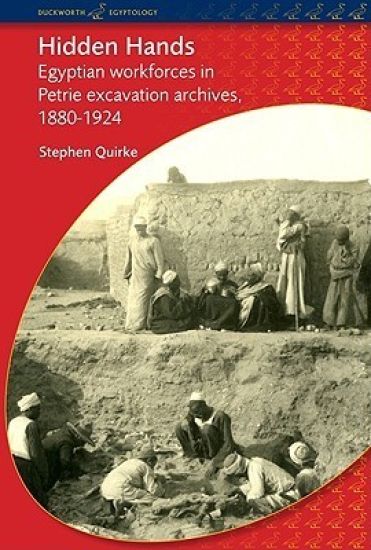
Hidden Hands

Hidden Hands

Stephen Quirke

Bristol Classical Press
2010
nidottu
Despite major movements for change, in practice archaeologists still pursue the past to the exclusion of the present inhabitants of archaeological landscapes. Archaeological archives hold a key to the formation of archaeology as a separate study, but they may be overlooked in current debates on ethics in archaeology and anthropology. This study focuses on the great archive that records the work of Flinders Petrie in Egypt, first in 1880-1882 under a nationalist government, and then during the English military occupation that lasted from 1882 until after his death in 1942. The archive brings to life the main Egyptian supervisors who enabled Petrie to function as an archaeologist, while payroll lists record the names of hundreds more men and children on the full labour force. None of these Egyptians have received recognition as an archaeologist in history-writing, foreign or Egyptian. This archival ground offers a new open resource to those within Egypt and elsewhere opposed to the neo-colonial regime of the disciplines.
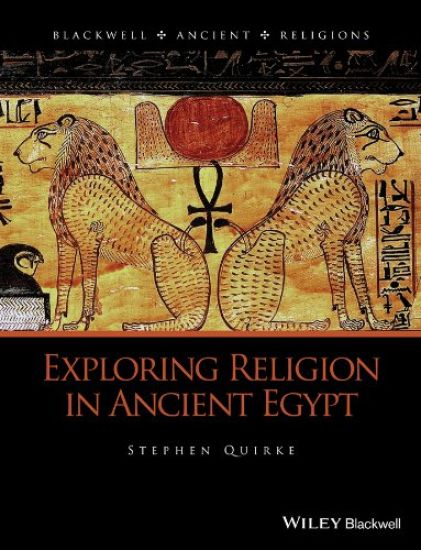
Exploring Religion in Ancient Egypt

Exploring Religion in Ancient Egypt

Stephen Quirke

Wiley-Blackwell (an imprint of John Wiley Sons Ltd)
2014
sidottu
Exploring Religion in Ancient Egypt offers a stimulating overview of the study of ancient Egyptian religion by examining research drawn from beyond the customary boundaries of Egyptology and shedding new light on entrenched assumptions. Discusses the evolution of religion in ancient Egypt – a belief system that endured for 3,000 yearsDispels several modern preconceptions about ancient Egyptian religious practicesReveals how people in ancient Egypt struggled to secure well-being in the present life and the afterlife
Exploring Religion in Ancient Egypt

Exploring Religion in Ancient Egypt

Stephen Quirke

Wiley-Blackwell (an imprint of John Wiley Sons Ltd)
2014
nidottu
Exploring Religion in Ancient Egypt offers a stimulating overview of the study of ancient Egyptian religion by examining research drawn from beyond the customary boundaries of Egyptology and shedding new light on entrenched assumptions. Discusses the evolution of religion in ancient Egypt – a belief system that endured for 3,000 yearsDispels several modern preconceptions about ancient Egyptian religious practicesReveals how people in ancient Egypt struggled to secure well-being in the present life and the afterlife